Category
Survival MD Chapter by Chapter
All 19 chapters of Survival MD, one article each: what the chapter covers, real pages, and who it helps.
21 articles
-
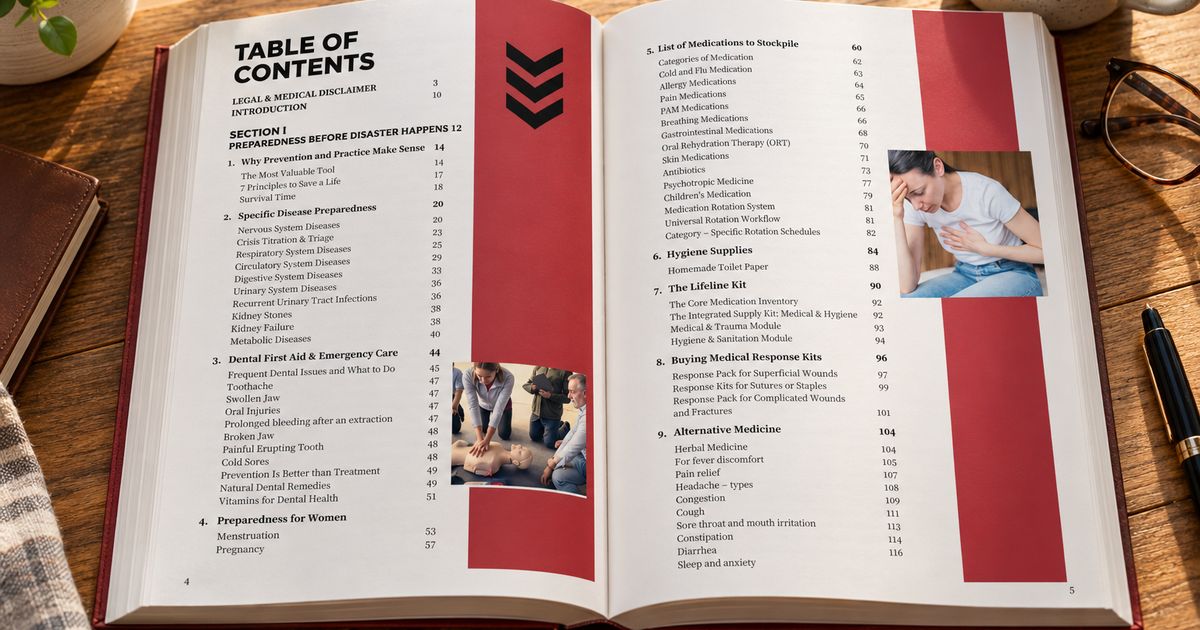 Survival MD Chapter 1: Why Prevention and Practice Make Sense
A look inside Chapter 1 of Survival MD by Dr. Radu Scurtu: the mindset, the 7 Principles to Save a Life, the Human Body Limits table and why the book starts with prevention instead of bandages.
-
Survival MD Chapter 2: Specific Disease Preparedness
A guided tour of Chapter 2 of Survival MD: how Dr. Radu Scurtu prepares families for chronic conditions in a crisis, from stroke and dementia to asthma, heart disease, kidney problems and diabetes.
-
Survival MD Chapter 3: Dental First Aid & Emergency Care
A look inside Chapter 3 of Survival MD: how to handle toothaches, swollen jaws, knocked-out teeth, broken jaws and dental bleeding when the dentist is closed, and why most survival books skip this completely.
-
Survival MD Chapter 4: Preparedness for Women
A look inside Chapter 4 of Survival MD: how to prepare for menstruation, contraception, pregnancy and delivery when stores and clinics are closed, a part of preparedness most books ignore.
-
Survival MD Chapter 5: List of Medications to Stockpile
A look inside Chapter 5 of Survival MD: how to build a safe home medicine reserve, organized by category, with recommended quantities, rotation schedules and the mistakes that make stockpiles dangerous.
-
Survival MD Chapter 6: Hygiene Supplies
A look inside Chapter 6 of Survival MD: why hygiene is the biggest factor in disease after a disaster, what belongs in a family hygiene kit, safe disinfecting, and even how to make soap and toilet paper when supplies run out.
-
Survival MD Chapter 7: The Lifeline Kit
A look inside Chapter 7 of Survival MD: how Dr. Radu Scurtu turns separate lists for medicines and hygiene into one organized, layered medical kit, with modules, quantities and rotation notes your family can check off.
-
Survival MD Chapter 8: Buying Medical Response Kits
A look inside Chapter 8 of Survival MD: the three response packs every prepared home should have, for minor wounds, wounds that need closing, and serious wounds and fractures, plus how to keep them sterile on a shelf for years.
-
Survival MD Chapter 9: Alternative Medicine
A look inside Chapter 9 of Survival MD: how to use herbs and simple mind-body techniques safely when pharmacies are closed, with quick-look tables for 14 common problems, a Crisis Herbal Stockpile Checklist and clear "when to get help" lines.
-
Survival MD Chapter 10: Preparing for First Aid
A look inside Chapter 10 of Survival MD: four ready-to-build kits (basic first aid, comprehensive first aid, bug-out bag and bug-out vehicle), the 147-item Crisis Preparedness Master Inventory and the first aid techniques everyone should learn.
-
Survival MD Chapter 11: Emergency Sanitation
A look inside Chapter 11 of Survival MD: what to stockpile when the garbage trucks stop and the toilets don't flush, how to set up a portable toilet and handwashing station, and how to keep a family clean and disease-free off the grid.
-
Survival MD Chapter 12: What to Do When There Is No Doctor Around
A look inside Chapter 12 of Survival MD: the TeCaMoLo Principle, how to spot medical distress, a head-to-toe body check, when you truly need a doctor, clean technique and the hardest moment of all, deciding who to help first.
-
Survival MD Chapter 13: Medical Emergency Protocol
A look inside Chapter 13 of Survival MD: how to save as many people as possible when several are injured and no doctor is coming, using a simple four-color triage system, homemade triage tags and a casualty collection point.
-
Survival MD Chapter 14: Understanding CPR
A look inside Chapter 14 of Survival MD: CPR for untrained and trained rescuers, why the order changed from ABC to CAB, how to use an AED, how to recognize shock, CPR on children and babies, and choking relief, with step-by-step flowcharts.
-
Survival MD Chapter 15: Common Illnesses in a Crisis
A look inside Chapter 15 of Survival MD, the biggest chapter in the book: how people really get hurt in disasters, how to stop bleeding, clean and close wounds, and handle trauma to every part of the body, from head injuries to fractures, puncture wounds and burns.
-
Survival MD Chapter 16: Non-Traumatic Illnesses
A look inside Chapter 16 of Survival MD: how to tell viral from bacterial and parasitic infections, prevent their spread, handle fever, hypothermia and heat illness, recognize heart attack, stroke and abdominal emergencies, and respond to radiation exposure.
-
Survival MD Chapter 17: Infectious Diseases
A look inside Chapter 17 of Survival MD: the infections that spread fastest after a disaster, through food, water and air, how to recognize them, how to prevent them and when they become dangerous.
-
Survival MD Chapter 18: Climate-Specific Diseases
A look inside Chapter 18 of Survival MD: how your region changes your emergency health risks, from hurricanes and mosquito-borne viruses in the Southeast to ticks in the Northeast, Valley fever in the Southwest and tsunami risk on the West Coast.
-
Survival MD Chapter 19: How to Survive Without Prescriptions
A look inside the final chapter of Survival MD: how to plan for running out of prescription medication in a crisis, which medicines must never be stopped suddenly, how to prioritize, and how to protect your health when modern medicine isn't available.
-
The Most Important Chapter in Survival MD
Which chapter of Survival MD matters most? Our pick, the runners-up, and a simple guide to the chapter you should read first based on who lives in your home, from young kids to daily prescriptions.
-
 How This Overlooked Item Could Save Your Life
Most families stock water, food, flashlights and a first aid kit, but forget the one item that tells them what to do with all of it. Here's what it is, why it's so often missing, and how it could make the difference when no doctor can be reached.