When the Problem Isn't an Injury
Not every emergency comes with a wound you can see. In the weeks after a disaster, as people crowd into shelters, share water and go without proper hygiene, a different kind of problem takes over: illness.
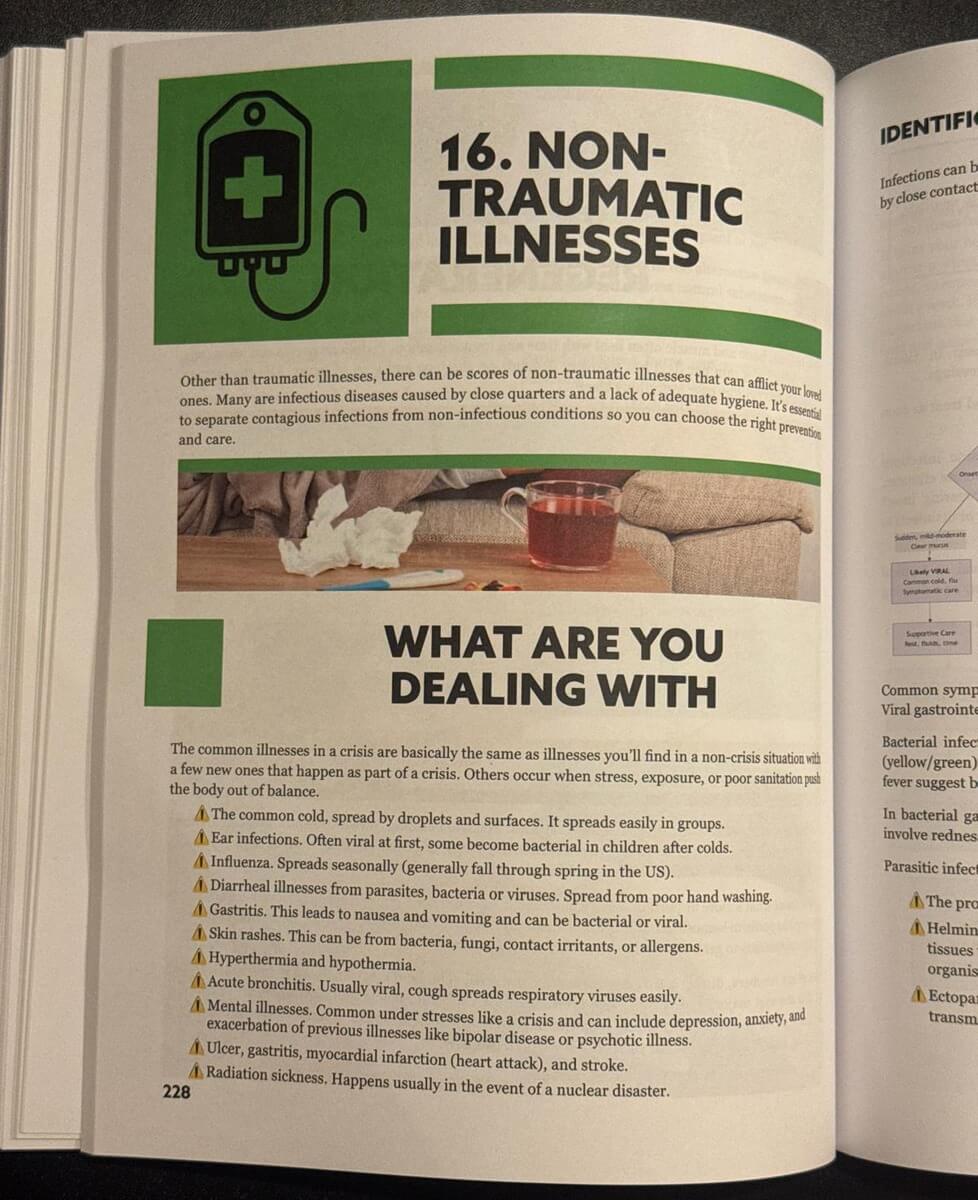
Chapter 16 of Survival MD, "Non-Traumatic Illnesses" (pages 228–245), is about exactly that. Dr. Radu Scurtu explains that the common illnesses in a crisis are "basically the same as illnesses you'll find in a non-crisis situation with a few new ones that happen as part of a crisis." The difference is that the doctor's office is closed.
So the chapter teaches you to do what a doctor does first: figure out what you're dealing with.
Part 1: What Are You Dealing With?
The chapter opens with a list of the illnesses you're most likely to see in a crisis, from colds, flu and ear infections to diarrheal illness, skin rashes and bronchitis. It also includes some you might not expect on the list:
- Mental health conditions, which are common under the stress of a crisis and can include depression, anxiety and worsening of existing conditions
- Heart attack and stroke
- Heat illness and hypothermia
- Radiation sickness, in the event of a nuclear disaster
It's a realistic picture of what families actually face, not just the dramatic scenarios.
Part 2: Viral, Bacterial or Parasitic?
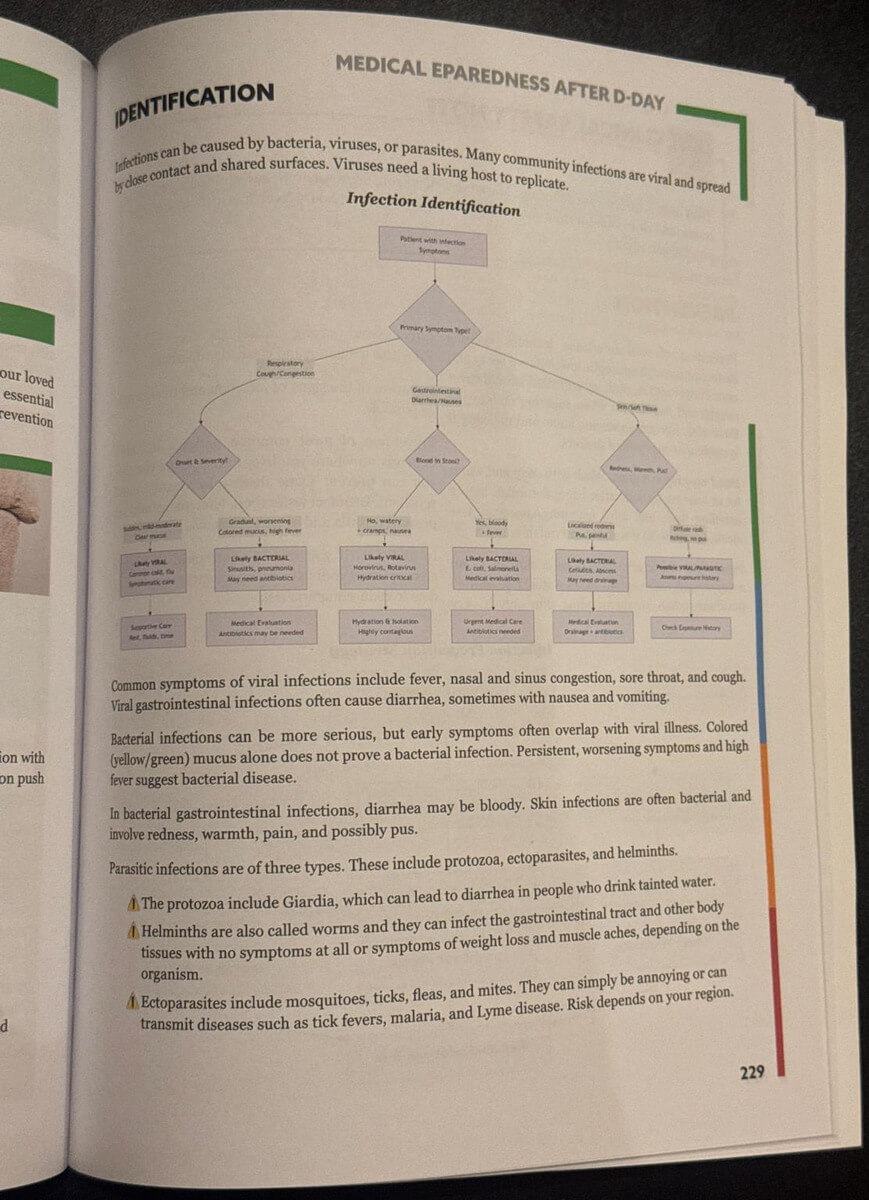
This is one of the most practical sections in the chapter. The right care depends on what's causing the illness, and Survival MD explains how to tell the difference between viral, bacterial and parasitic infections, in plain language.
It includes an Infection Identification flowchart that starts from the main symptom (respiratory, gastrointestinal or skin) and walks you toward the likely cause and the right next step.
One fact from this section we'll share, because so many people get it wrong: colored (yellow or green) mucus alone does not prove a bacterial infection.
Part 3: Prevention and Treatment
Next, the chapter covers how to stop infections from spreading in your household or shelter, and how to approach treatment.
The prevention section includes a Clinical Safety Note we'll share, because it's simple and it works: treat early symptoms as contagious. Mask the sick person, use separate towels and utensils, ventilate rooms, clean high-touch surfaces, and keep these precautions until 24 hours fever-free without medication, or as a clinician advises.
There's also an Infection Prevention Strategy chart, plus guidance on preventing parasitic diseases depending on where you live.
The treatment section explains the basics for common infections and, just as importantly, when antibiotics are not the answer. And it includes a Myth vs. Fact box worth knowing:
Myth vs. Fact
Myth: Fever must be driven down to normal for the body to beat infection.
Fact: Mild to moderate fever helps immune function. Treat for comfort and hydration.
Part 4: Too Cold, Too Hot
Without heating or air conditioning, body temperature becomes a real danger. This section covers both hypothermia and hyperthermia (heat illness): the warning signs, how to rewarm or cool someone safely, and what to avoid.
One point we'll share: alcohol doesn't warm you up. The book explains why it actually makes you lose heat while feeling warmer.
There's also a Clinical Safety Note on a dangerous phenomenon called "afterdrop", and the right order for rewarming the body. The details are in the book.
Part 5: When Your Internal Organs Cry for Help
This is the part of the chapter that deals with the most serious illnesses, the ones that can kill quickly when no hospital is available. It opens with a memorable line: "You live as long as your blood vessels last."
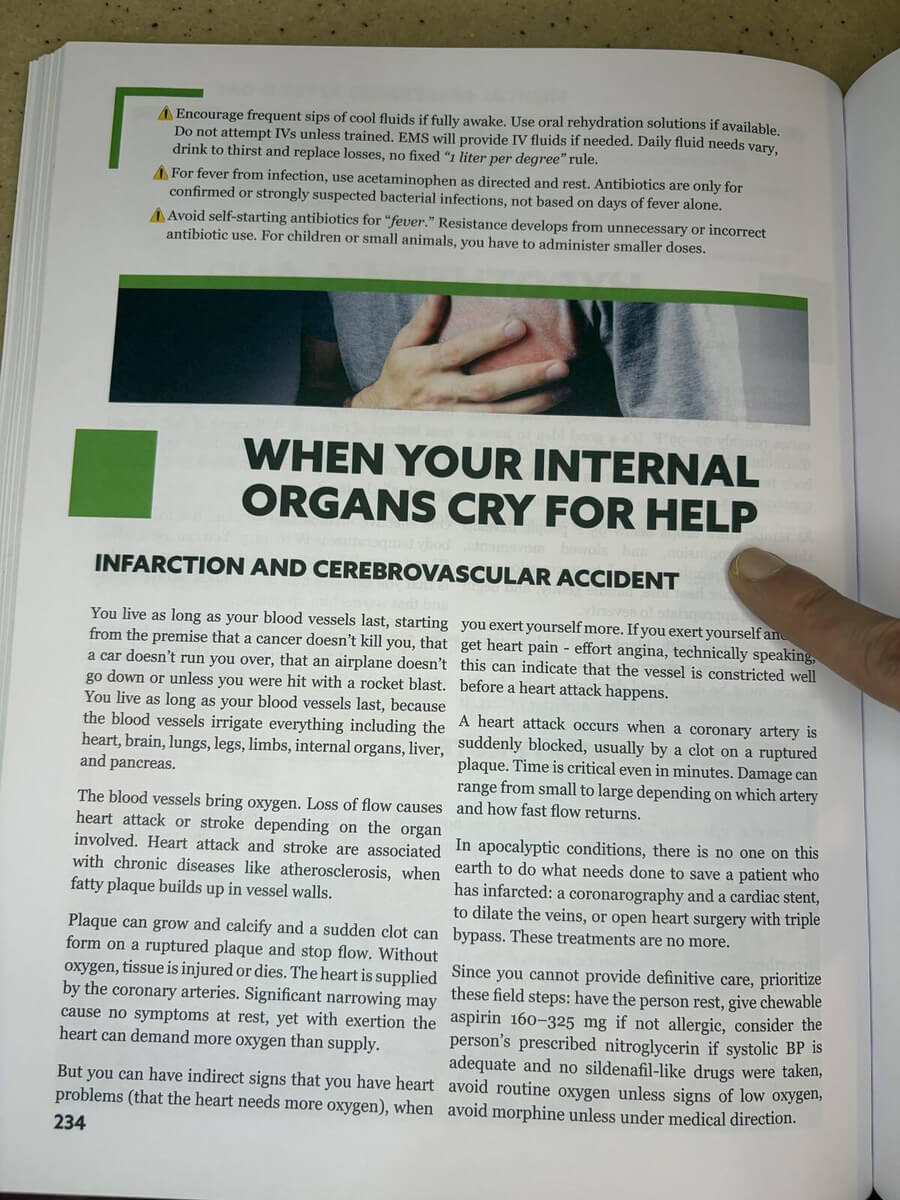
It covers:
- Heart attack and stroke: the warning signs, the early clues that come long before a heart attack, and the field steps to prioritize when definitive care isn't possible
- Lung problems
- Ulcers
- Peritonitis and intestinal obstruction: the abdominal emergencies that are hardest to manage outside a hospital
- The lymphatic system: what a swollen lymph node can mean, with a Lymph Node Assessment flowchart
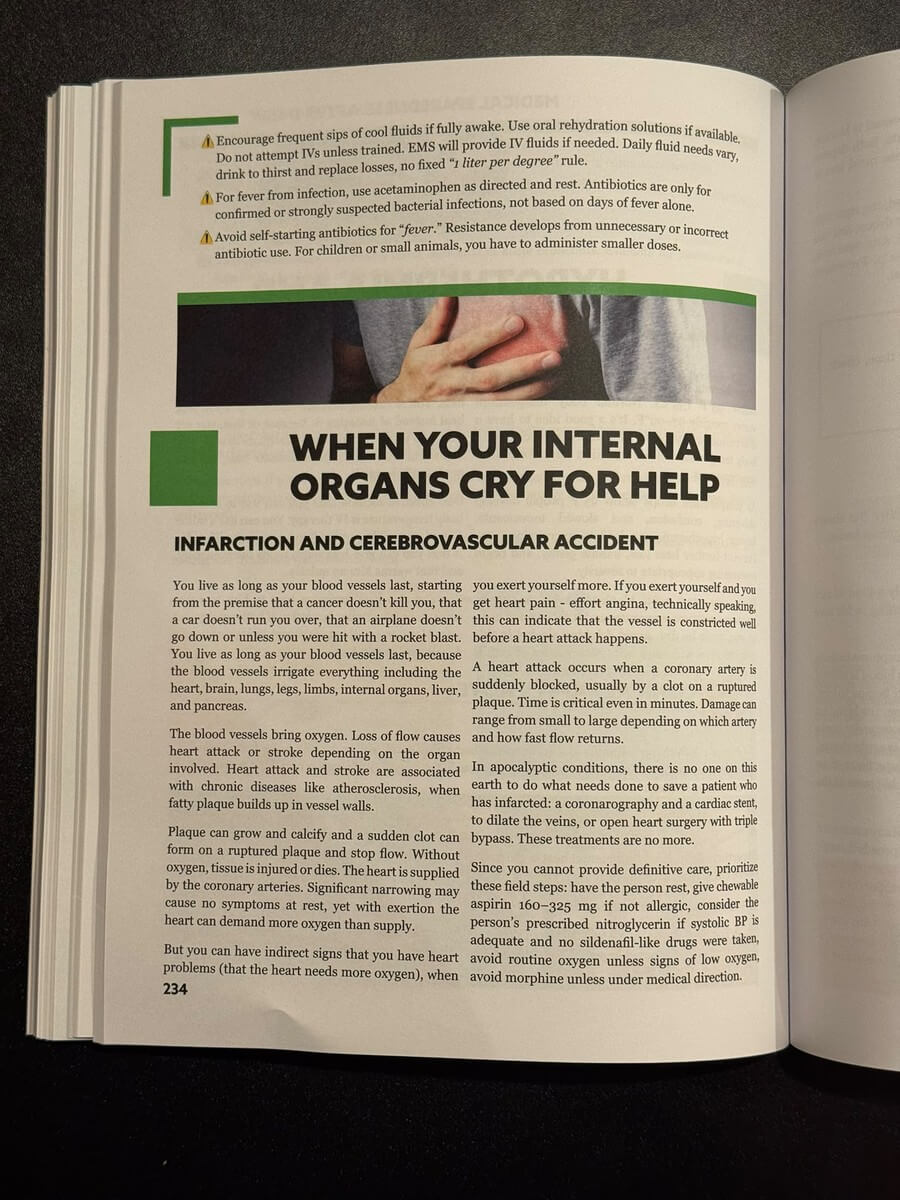
This section also includes Myth vs. Fact boxes on two dangerous assumptions: that a clear chest X-ray rules out pneumonia, and that no fever means no peritonitis. The answers could change what you do in a crisis.
Part 6: Radiation Sickness
The chapter ends with the scenario most people hope never to face: radiation exposure after a nuclear disaster.
Survival MD keeps it honest and practical. Its first rule is simple: stay away, far away. Time, distance and shielding are your basic protections, and since you can't see or smell radiation, a detector helps.
The section explains the stages of radiation sickness, how to recognize symptoms, what medical treatment involves and how to care for someone who has received a very high dose.
It also corrects a common misunderstanding about potassium iodide (KI), including when it actually works and what it protects against. The answer is in the book.
Why Chapter 16 Matters
- It covers the long phase of a crisis. After the first days, illness often matters more than injuries.
- It helps you think like a doctor. Viral, bacterial or parasitic, and what that means for care.
- It prevents spread. Simple steps to protect the rest of your household.
- It covers the serious ones. Heart attack, stroke, abdominal emergencies and radiation.
- It's responsible about antibiotics. Clear guidance on when they're needed and when they aren't.
And if you want to go further, the bonus guide When There's No Pharmacy builds on this chapter with more on managing illness without regular access to prescriptions.
What Comes After Chapter 16
Next is Chapter 17, Infectious Diseases, covering foodborne, waterborne and airborne illnesses: the top causes, how they spread and how to protect your family. Then come climate-specific diseases and the final chapter, how to survive without prescriptions.
Frequently Asked Questions
What is Chapter 16 of Survival MD about?
Chapter 16, "Non-Traumatic Illnesses" (pp. 228–245), covers common illnesses in a crisis, how to identify viral, bacterial and parasitic infections, prevention and treatment, hypothermia and heat illness, heart attack, stroke, lung and abdominal problems, swollen lymph nodes and radiation sickness.
Does green mucus mean you need antibiotics?
Not on its own. Survival MD notes that colored mucus alone does not prove a bacterial infection.
Should you always bring a fever down?
No. According to Survival MD, mild to moderate fever helps immune function. Treat for comfort and hydration.
Does alcohol help warm up someone who is cold?
No. Survival MD explains that alcohol makes the body lose heat even though it feels warming.
Does Survival MD cover radiation exposure?
Yes. It covers protection (time, distance and shielding), recognizing radiation sickness, medical treatment and a common myth about potassium iodide.
The Bottom Line
Chapter 16 prepares you for the part of a crisis that lasts longest: illness. It teaches you to recognize what you're dealing with, stop it from spreading, manage what you can and spot the emergencies that need help fast, from a heart attack to radiation exposure.
You've had a preview. The full flowcharts, treatment guidance and myth answers are in the book.
Medical disclaimer: this article is for general information only and isn't medical advice. Don't start or change medications, including antibiotics, without talking to a doctor or pharmacist. Signs of a heart attack or stroke need emergency care: call 911 or your local emergency number.