The Biggest Chapter in the Book
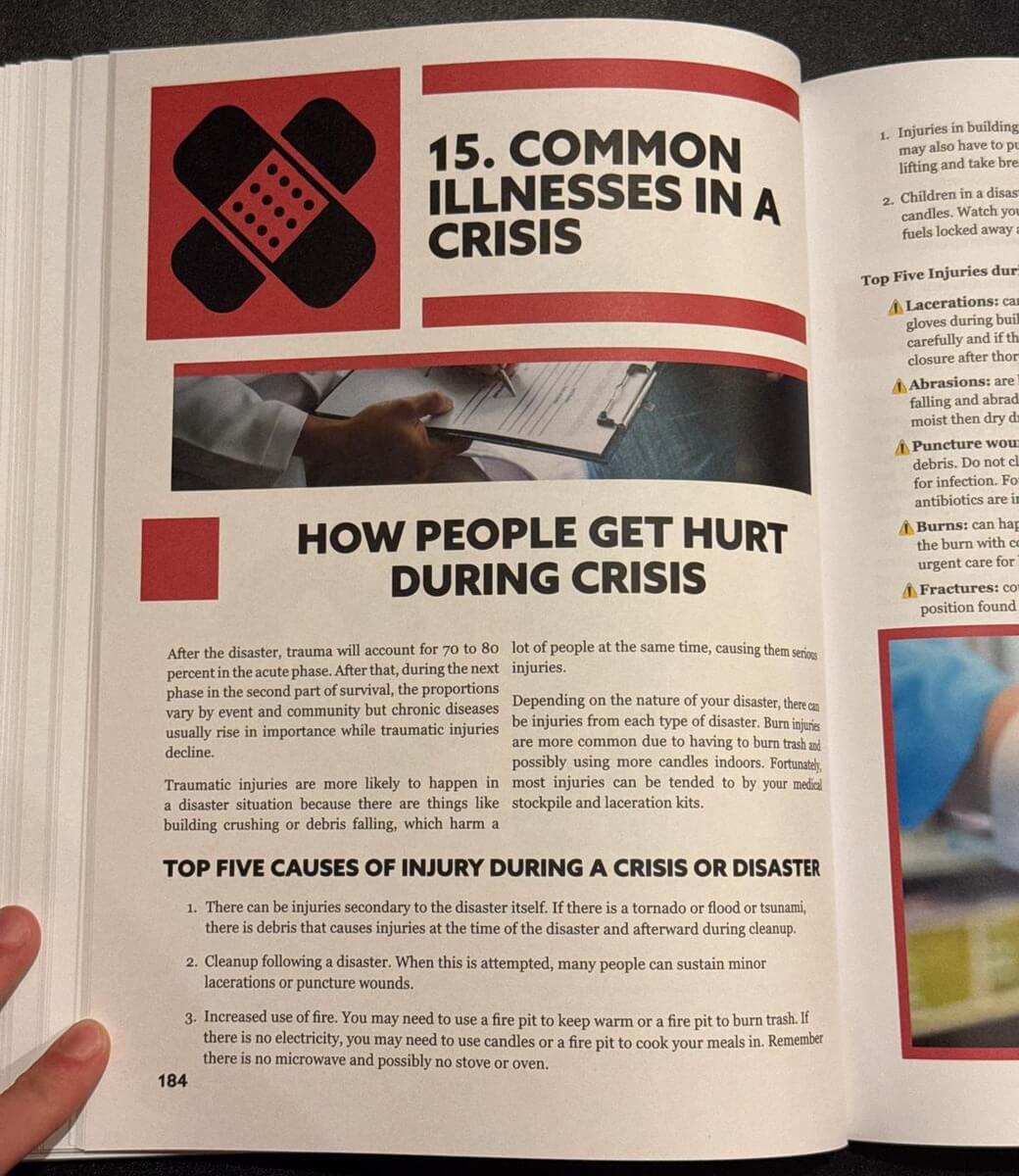
If Survival MD has a centerpiece, this is it. Chapter 15, "Common Illnesses in a Crisis" (pages 184–227), runs 44 pages, by far the longest chapter in the book, and it covers the problem you're most likely to face after any disaster: injuries.
Dr. Radu Scurtu explains why right at the start: after a disaster, "trauma will account for 70 to 80 percent in the acute phase." Collapsed buildings, flying debris, cleanup work, fires for cooking and heat. In the first days and weeks, injuries are what fill the emergency rooms, if the emergency rooms are even open.
This chapter is built for exactly that situation: when someone is hurt and you can't reach a doctor at all.
Part 1: How People Really Get Hurt in a Disaster
The chapter starts with something most first aid books skip: why injuries happen after a disaster, so you can prevent many of them in the first place.
It lists the top five causes of injury during a crisis:
- The disaster itself, and the debris it leaves behind
- Cleanup, when many people get cuts and puncture wounds
- More use of fire for heat, cooking and burning trash
- Building things, like outhouses and fire pits, often by people who don't usually do that kind of work
- Children, who face new dangers from debris, candles and fuel
Then it covers the top five injuries you're most likely to see, and the different types of wounds, from simple scrapes to bites and burns, with first steps for each.
Here's a Myth vs. Fact box from this section we'll share:
Myth vs. Fact
Myth: Tetanus comes from rust itself, so only rusty nails are risky.
Fact: Tetanus is caused by bacteria in soil and dust.
Part 2: Wounds, From First Look to Healing
The next part of the chapter walks through wound care step by step:
- New wounds vs. old wounds: why the age of a wound changes everything you do
- How to stop bleeding: the difference between arterial and venous bleeding, and what works when pressure alone isn't enough
- How to clean an injury properly, with what you're likely to have
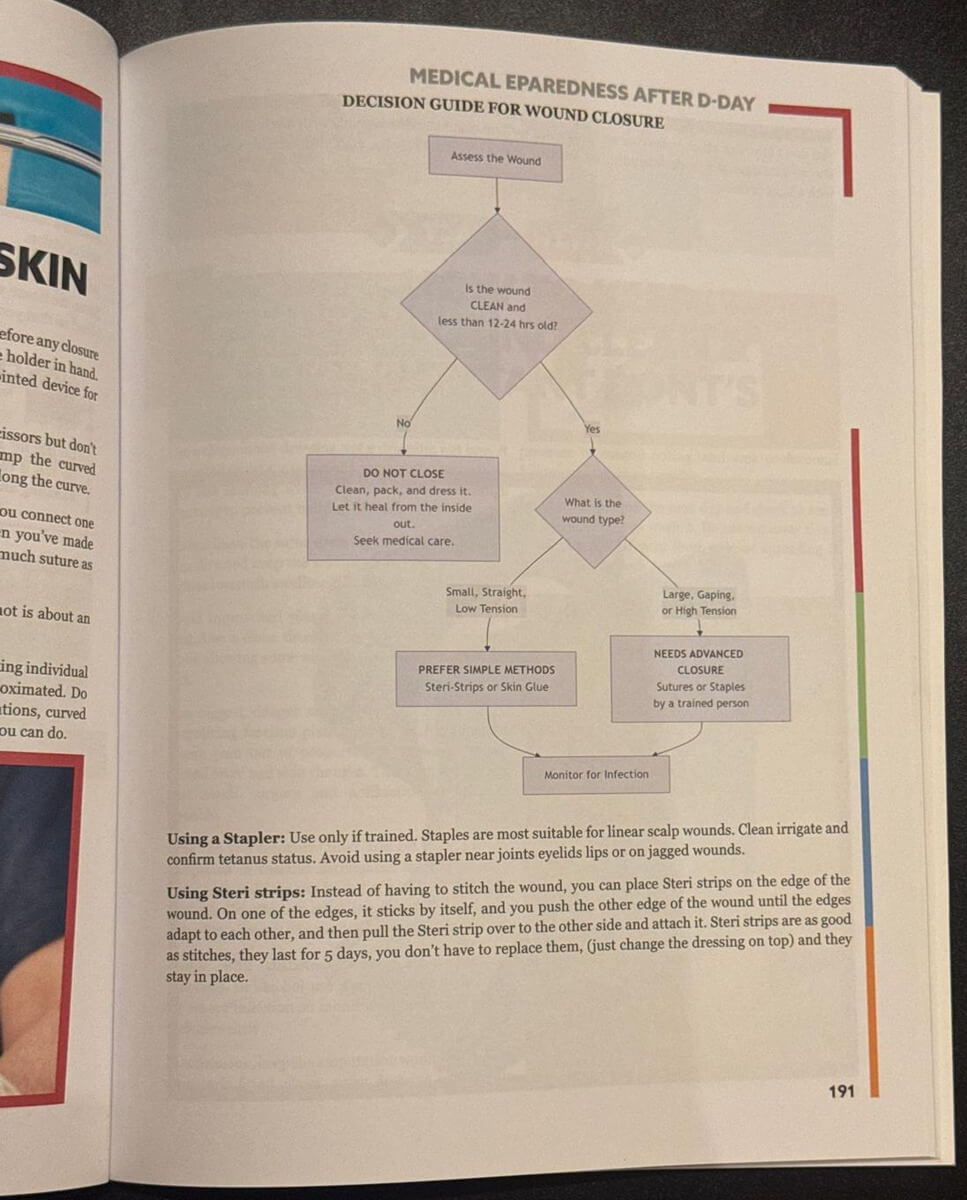
- How to close a wound: stitches, staples, closure strips and skin adhesive, and which one fits which wound
- How to keep a wound clean, plus a list of important don'ts
- How to apply a cast for a fracture
There's also a Decision Guide for Wound Closure, a visual chart that helps you decide whether a wound should be closed at all, and if so, how. It's one of the most useful tools in the chapter, because closing the wrong wound can cause a serious infection.
And another Myth vs. Fact we'll share, because so many people try it:
Myth vs. Fact
Myth: Household super glue is a substitute for medical skin adhesive.
Fact: Hardware glues are harsher and can burn tissue or run into the eyes. Only medical-grade skin adhesive belongs on skin, and only for small, low-tension wounds after proper cleaning.
Part 3: Trauma, From Head to Toe
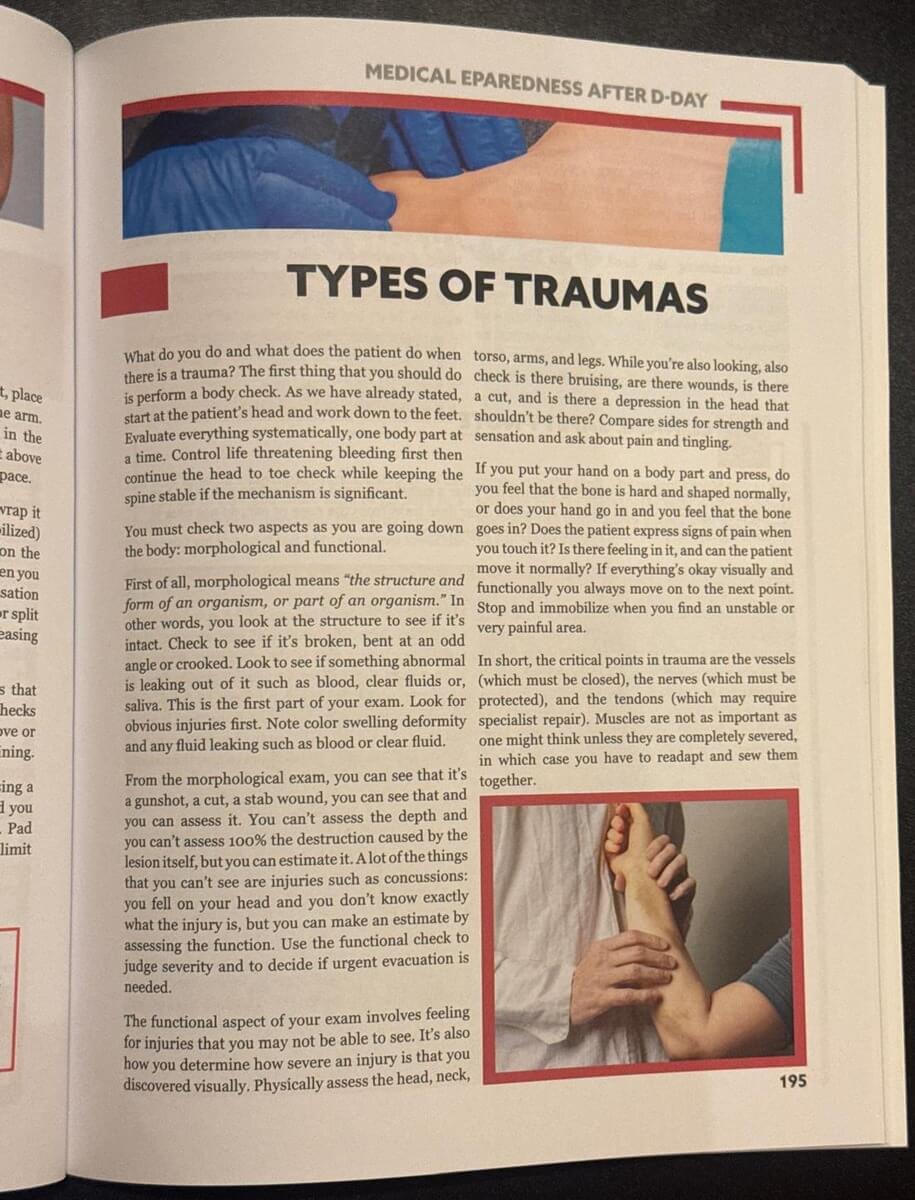
This is the heart of the chapter: a guided tour of injuries to every part of the body. It starts with how to examine an injured person, looking at both the structure (what you can see) and the function (what still works), and then goes region by region:
| Body area | What's covered |
|---|---|
| Head | Head injuries and concussion, and the warning signs that something is getting worse |
| Eyes and ears | Eye and ear injuries, and what not to do |
| Neck and airway | Neck injuries, injuries to the windpipe |
| Chest | Chest injuries, collapsed lungs and rib fractures |
| Abdomen and pelvis | Abdominal injuries and pelvic fractures |
| Arms and legs | Injuries to the limbs, including tendons, nerves and blood vessels |
For each area, the book explains what's dangerous, what you can do, what you shouldn't do, and when evacuation is urgent.
Part 4: Fractures, Dislocations and Sprains
Broken bones are among the most common injuries after a disaster. This part of the chapter covers:
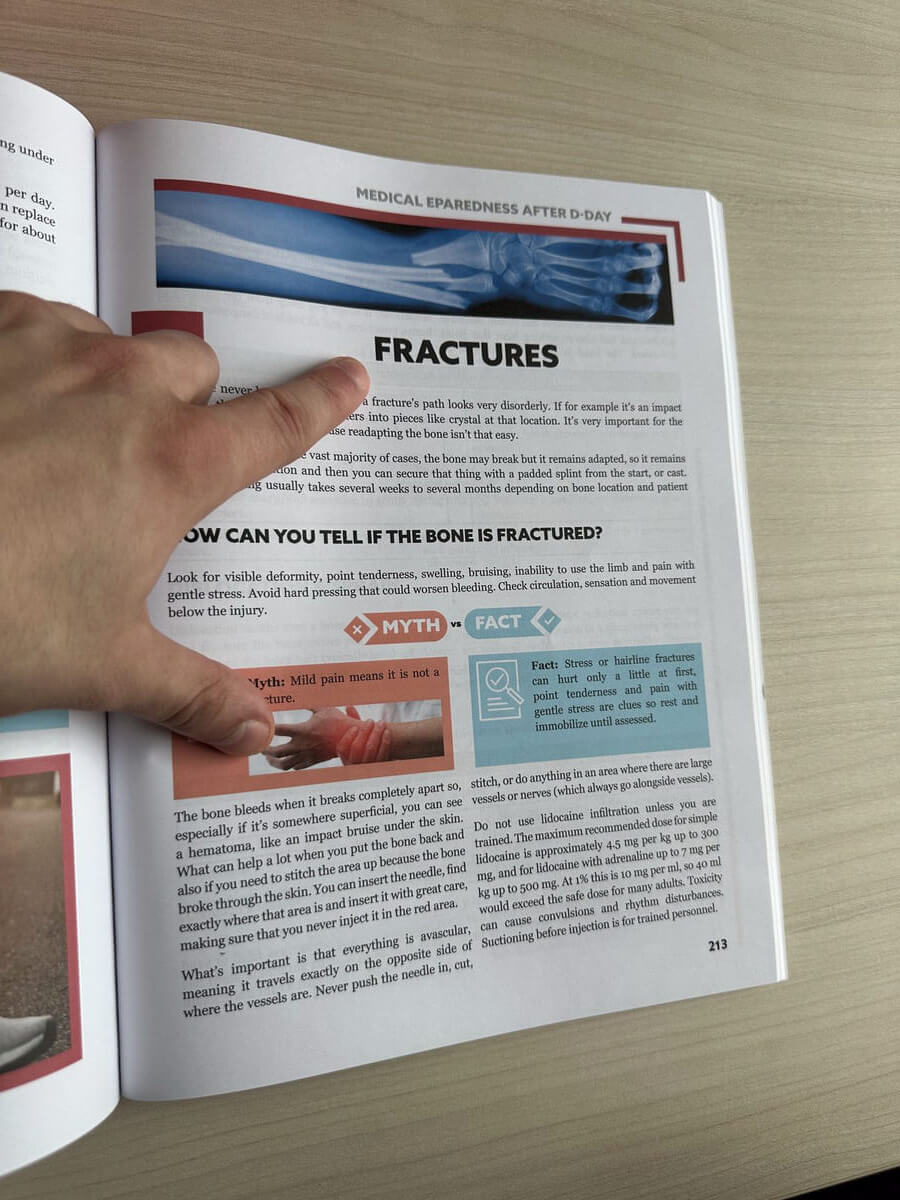
- How to tell if a bone is broken, even when it doesn't look like it
- How nerves suffer in fractures, and why you should check them before and after splinting
- The difference between a dislocation and a sprain
- How to treat a non-displaced leg fracture, step by step
Part 5: Amputation, Puncture Wounds, Knife and Bullet Wounds
The chapter doesn't shy away from the most serious injuries. It covers amputation, puncture wounds and infection, knife wounds and bullet wounds, always with the same focus: control bleeding first, prevent infection and get to definitive care.
It includes a few memorable stories from the author's own experience, including one about a family member who lived for decades with shrapnel he was never able to remove, and one about a surgeon's lesson on how bleeding usually stops with proper pressure.
Part 6: Burns
Burns become much more common in a crisis, with more candles indoors, more open fires and more trash being burned. This section explains how burns are classified, what each degree looks like, how to cool and cover a burn, and which burns need urgent care.
Part 7: Regeneration and Priorities
The chapter ends with how the body heals after trauma, and the order of priorities when someone has multiple injuries at once, using a simple, memorable framework so you always know what to deal with first.
The Myths That Make Injuries Worse
Chapter 15 contains more Myth vs. Fact boxes than almost any other chapter. Besides the two we shared, it answers questions like:
- Does a belt make a good tourniquet?
- Should you never let someone with a concussion sleep?
- Do ear candles safely draw out wax?
- Should you straighten a twisted neck?
- Can a ballpoint pen reinflate a collapsed lung?
- If a cut finger still moves a little, are the tendons fine?
- Should you massage a sudden painful calf?
- Does mild pain mean a bone isn't broken?
- Does a loud pop mean a joint "popped back in"?
- Should you close a stab wound quickly?
- Are bullets sterilized by heat as they're fired?
- Should you pull off melted clothing after a burn?
Several of these could cost a life if you get them wrong. The answers are in the book.
Why Chapter 15 Matters
- It covers what's most likely. Trauma makes up the large majority of injuries right after a disaster.
- It's complete. From a scraped knee to a gunshot wound, from the head to the feet.
- It's practical. Step-by-step wound care, a closure decision guide and fracture care.
- It prevents harm. More than a dozen myths that make injuries worse, corrected.
- It's honest about limits. Clear lines on what lay rescuers shouldn't attempt, and when to evacuate.
If you're comparing preparedness books, this chapter alone is a strong reason to choose Survival MD.
What Comes After Chapter 15
Next is Chapter 16, Non-traumatic Illnesses: how to identify, prevent and treat illness when there's no doctor, including hypothermia and hyperthermia, heart attack and stroke, lung problems, ulcers and more.
Frequently Asked Questions
What is Chapter 15 of Survival MD about?
Despite its title, "Common Illnesses in a Crisis" (pp. 184–227) focuses on injuries: how people get hurt in disasters, wound care, bleeding control, wound closure, trauma to every body region, fractures, amputation, puncture, knife and bullet wounds, and burns.
How long is Chapter 15?
It's 44 pages long, the largest chapter in Survival MD.
Does Survival MD explain how to close a wound?
Yes. It covers stitches, staples, closure strips and skin adhesive, with a Decision Guide for Wound Closure that helps you decide whether a wound should be closed at all.
Can you use super glue to close a cut?
Not household super glue. Survival MD warns that hardware glues can burn tissue, and that only medical-grade skin adhesive belongs on skin, for small, low-tension wounds.
Does tetanus only come from rusty nails?
No. According to Survival MD, tetanus is caused by bacteria in soil and dust.
The Bottom Line
Chapter 15 is the core of Survival MD's emergency care: 44 pages on the injuries you're most likely to face when the hospitals are overwhelmed or out of reach. It teaches you how to clean, close and protect wounds, how to handle trauma from head to toe and which common "fixes" do more harm than good.
You've had a preview. The full steps, decision guide and myth answers are in the book.
Medical disclaimer: this article is for general information only and isn't medical advice. Procedures such as wound closure require proper training. Seek professional care whenever it's available. In an emergency, call 911 or your local emergency number.