The Chapter for the People Most at Risk
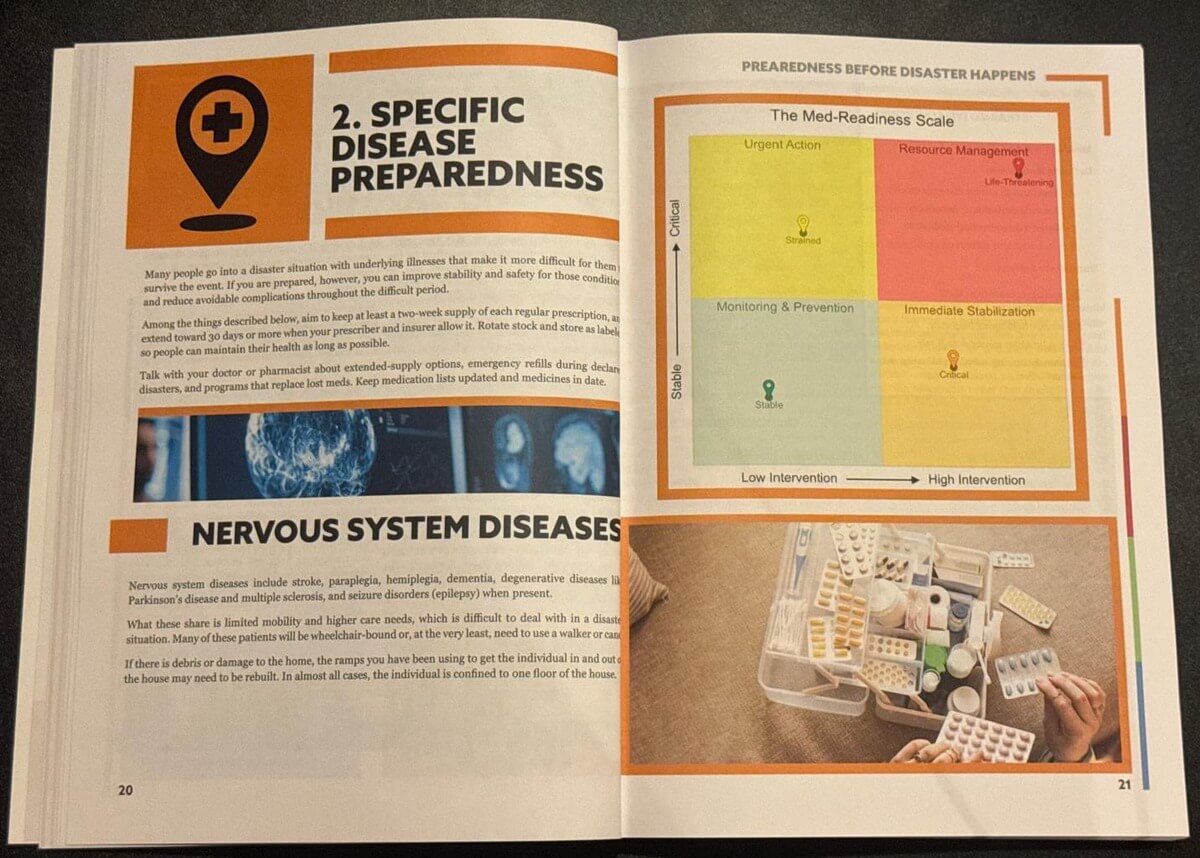
Chapter 1 of Survival MD sets the mindset. Chapter 2, "Specific Disease Preparedness" (pages 20–43), puts it to work for the people who have the most to lose when pharmacies close and doctors can't be reached: anyone living with a chronic condition.
Dr. Radu Scurtu opens the chapter with a simple observation: many people go into a disaster with an underlying illness that makes it harder to get through. But, as the book puts it, "If you are prepared, however, you can improve stability and safety for those conditions and reduce avoidable complications throughout the difficult period."
At 24 pages, it's one of the longest and most detailed chapters in the book. Here's a tour of what it covers, and why it's worth reading in full.
How Every Section Is Built
Before we go through the conditions, it helps to know the structure. Each major section of Chapter 2 follows the same practical pattern:
- What the condition looks like and how it behaves when care is disrupted
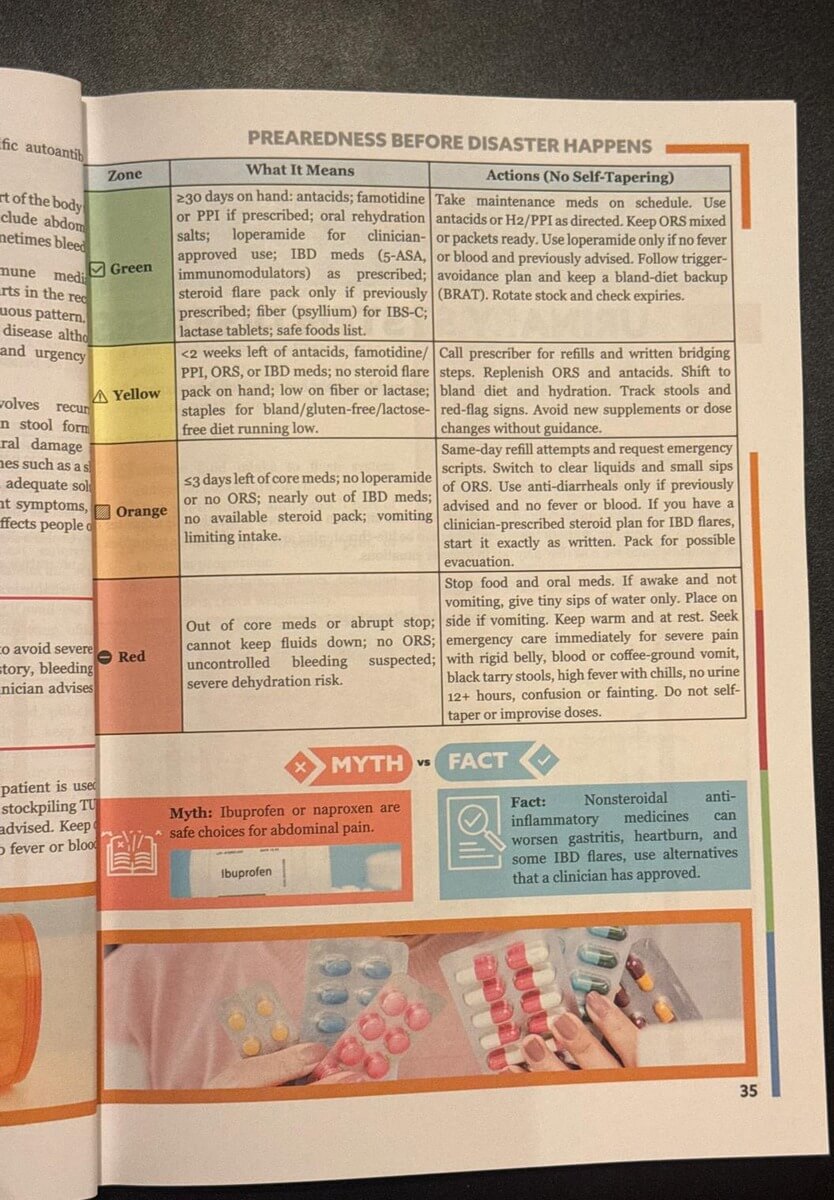
- A four-zone symptom chart (Green, Yellow, Orange, Red), each with its own mindset, warning signs and immediate actions
- A stockpile list built around that condition
- A medication supply plan showing what to do as supplies run low, with one firm rule: "No Self-Tapering"
- Clinical Safety Notes and Myth vs. Fact boxes that prevent common, dangerous mistakes
Once you've read one section, you know how to use them all, which is exactly what you want when you're stressed and short on time.
The chapter also opens with a baseline every family should know: keep at least a two-week supply of each regular prescription, and work toward 30 days or more when your prescriber and insurer allow it.
Section 1: Nervous System Diseases
Covers: stroke, paraplegia and hemiplegia, dementia, Parkinson's disease, multiple sclerosis and seizure disorders.
These conditions often come with limited mobility and higher care needs, which are hard to manage in a crisis. The book covers practical realities most guides never mention: getting someone in and out of a damaged home, keeping them safe on one floor, preventing falls, and why keeping the environment quiet matters for people with dementia or after a stroke.
The stockpile list includes some items you might not expect, such as a way to prepare food without electricity. And the section's Myth vs. Fact box tackles one of the most widespread and dangerous misconceptions about seizures.
Bonus section: Crisis Titration & Triage
Tucked into this part of the chapter is a section many readers find especially valuable: a calm, color-coded plan for the question "What do I do when I'm almost out of my daily medication?", with a focus on medications for anxiety and depression. It covers what to arrange with your prescriber in advance and the non-drug supports that help in the meantime, without ever suggesting self-directed dose changes.
Section 2: Respiratory System Diseases
Covers: asthma, COPD and emphysema, and breathing problems caused by smoke, dust or poor air quality during disasters.
The section explains what to stockpile, why inhaler technique should be practiced ahead of time, how to watch for warning signs that breathing is getting worse, and when a respiratory problem may be turning into something more serious.
It also recommends a small, inexpensive device for monitoring someone's breathing at home, and includes a Myth vs. Fact box with something every user of that device should know: pulse oximeters aren't equally accurate for everyone, and readings can overestimate oxygen levels in people with darker skin, so you should watch trends alongside symptoms.
Section 3: Circulatory System Diseases
Covers: peripheral artery disease (poor circulation in the legs and feet), heart disease and angina, and people on blood thinners.
This section explains why foot care becomes so important for people with poor circulation, what heart patients should keep on hand, and what to do, and not do, if supplies run low. A Clinical Safety Note warns about a dangerous combination involving a common heart medication, and another explains why a common way of warming cold feet can actually cause harm.
There's also a Myth vs. Fact box about a simple check for circulation problems that many people assume requires a hospital.
Section 4: Digestive System Diseases
Covers: chronic heartburn and gastritis, celiac disease and gluten sensitivity, lactose intolerance, Crohn's disease, ulcerative colitis and irritable bowel syndrome.
In a crisis, you often have to eat whatever is available, which can be a real problem for people with these conditions. The section covers what to stockpile, how to adjust diet when choices are limited, which warning signs mean an emergency, and an important safety rule for anyone on long-term steroids.
Here's one tip we'll share from the section's Myth vs. Fact box: ibuprofen and naproxen are not automatically safe choices for abdominal pain. They can worsen gastritis, heartburn and some bowel flares. The book explains what to use instead.
Section 5: Urinary System Diseases
Covers: recurrent urinary tract infections, kidney stones and kidney failure, including people on dialysis.
The book is blunt here: when there's a disaster, "some of these conditions can be life-threatening and even fatal." The section explains the warning signs that an infection may be spreading, why water access matters so much, what to stockpile, and how people on dialysis can plan ahead with their care team, including what to do if the power goes out.
And one myth the section corrects that we'll share: dark soda doesn't help kidney stones pass faster. There's no good evidence for it, and some colas may even raise stone risk.
Section 6: Metabolic Diseases
Covers: type 1 and type 2 diabetes.
The chapter closes with one of its most important sections. It explains how quickly things can become dangerous for someone with diabetes when supplies run out, what to keep on hand beyond insulin and pills, how to protect insulin when there's no power, what to do if a pump or glucose monitor fails, and how to recognize the warning signs of dangerously low or high blood sugar.
The diabetes supply plan tracks every item that matters, not just medication, so a caregiver knows exactly where things stand at a glance.
Why Chapter 2 Is One of the Most Valuable in the Book
Most survival and first-aid books act as if everyone is young and healthy. Chapter 2 is written for the real world, where millions of families include someone with diabetes, a heart condition, asthma, kidney disease or a neurological condition.
- It's practical. Stockpile lists, supply plans and warning signs, not theory.
- It's safe. "No self-tapering," "do not ration" and "talk to your clinician" run through every section.
- It's built for caregivers. A family member can follow it, not just the patient.
- It's made for when you can't reach a doctor. The goal is to keep people stable until real care is available again.
For a closer look at how the zone system and supply plans work, see How Survival MD Handles Chronic Disease in a Crisis.
What Comes After Chapter 2
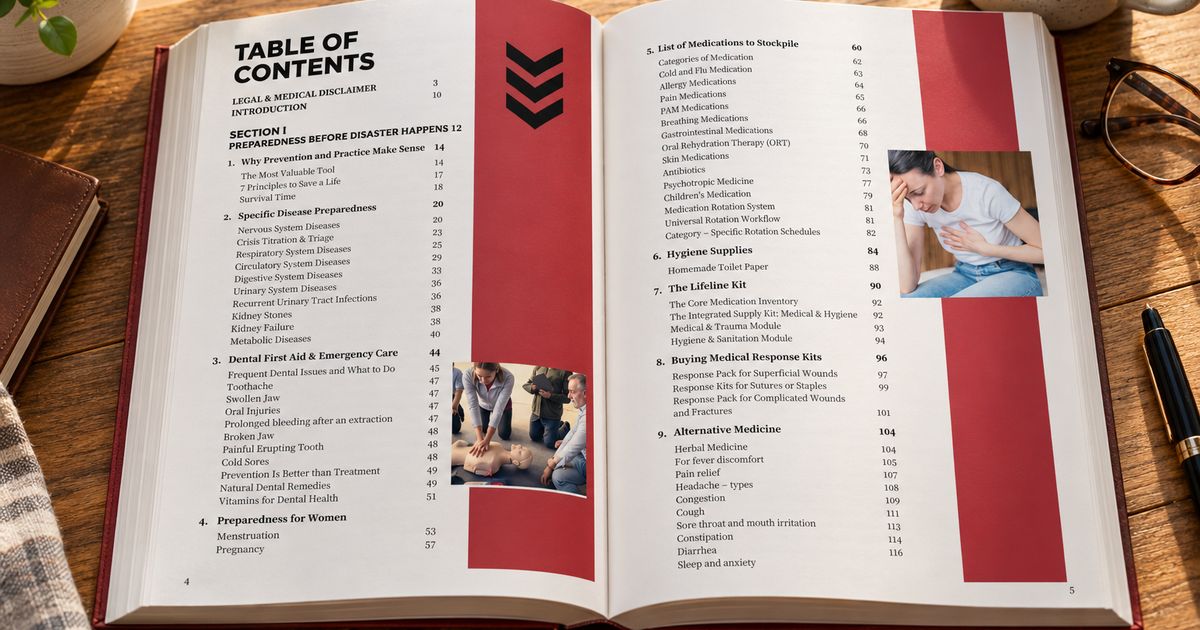
Chapter 2 is followed by chapters on dental first aid, preparedness for women, medications to stockpile and rotate, hygiene supplies, the Lifeline Kit, first aid kits and much more, before the second half of the book turns to what to do when an emergency actually happens.
Frequently Asked Questions
What is Chapter 2 of Survival MD about?
Chapter 2, "Specific Disease Preparedness" (pp. 20–43), covers how to prepare for and manage chronic conditions during a crisis: nervous system, respiratory, circulatory, digestive, urinary and metabolic diseases, plus a section on mental health medications.
Which conditions does Chapter 2 cover?
Stroke, dementia, Parkinson's, multiple sclerosis, seizure disorders, asthma, COPD, heart disease, peripheral artery disease, heartburn, celiac disease, Crohn's, ulcerative colitis, IBS, urinary tract infections, kidney stones, kidney failure and diabetes.
Does Chapter 2 tell you to ration or change medications?
No. Every supply plan follows a "No Self-Tapering" rule and tells you to arrange a written plan with your prescriber in advance.
How much medication should I keep on hand?
The chapter recommends at least a two-week supply of each regular prescription, working toward 30 days or more when your prescriber and insurer allow it.
The Bottom Line
Chapter 2 is where Survival MD shows how seriously it takes real families. In 24 pages, it gives people with chronic conditions, and the people who care for them, a clear plan for staying stable when the usual system isn't there.
You've seen the outline. The full charts, stockpile lists and supply plans are in the book.