The Medicine Cabinet, Rebuilt for a Crisis
Open most family medicine cabinets and you'll find a random mix: half a bottle of painkillers, some expired cough syrup, something for allergies from three years ago. That's fine on a normal Tuesday. It's not fine when the pharmacy is closed, the roads are blocked and someone in the house is sick.
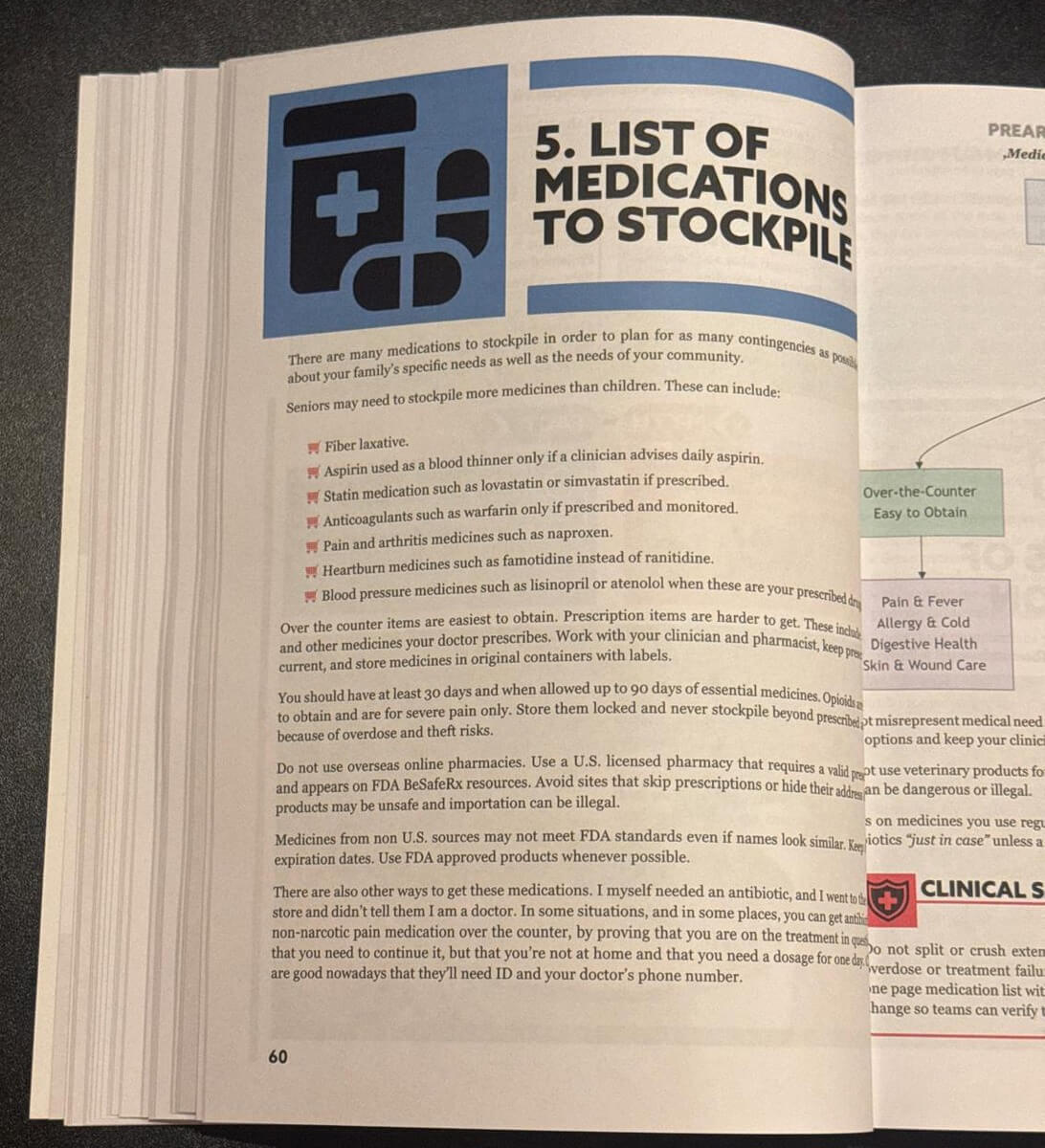
Chapter 5 of Survival MD, "List of Medications to Stockpile" (pages 60–83), turns that random cabinet into an organized, safe home medicine reserve. At 24 pages, it's one of the longest and most practical chapters in the book.
Dr. Radu Scurtu's starting point is simple: "Think about your family's specific needs as well as the needs of your community." And then the chapter shows you exactly how.
Part 1: How Much to Keep, and Where to Get It Safely
The chapter opens with the ground rules:
- How much to keep: the book recommends at least 30 days of essential medicines, and up to 90 days when allowed
- Different needs by age: why older adults usually need to stockpile more, and what that list typically includes
- Prescription vs. over the counter: what's easy to get, what's harder, and how to work with your doctor and pharmacist legally
- Storage basics: original containers, labels, and how to organize medicines by group so you can find them fast
It also includes important safety warnings that we'll share, because they protect people:
- Don't use overseas online pharmacies that skip prescriptions or hide their address. Use a licensed U.S. pharmacy.
- Don't use veterinary products for people. Formulations and quality controls differ.
- Don't split or crush extended-release or coated pills to make a supply last longer. It can cause an overdose or make the medicine stop working.
Part 2: The 10 Categories of Medication
The heart of the chapter is a category-by-category guide. For each one, Survival MD explains what the medicines are for, which options make sense, safety warnings and, in most sections, a Medication Checklist table with:
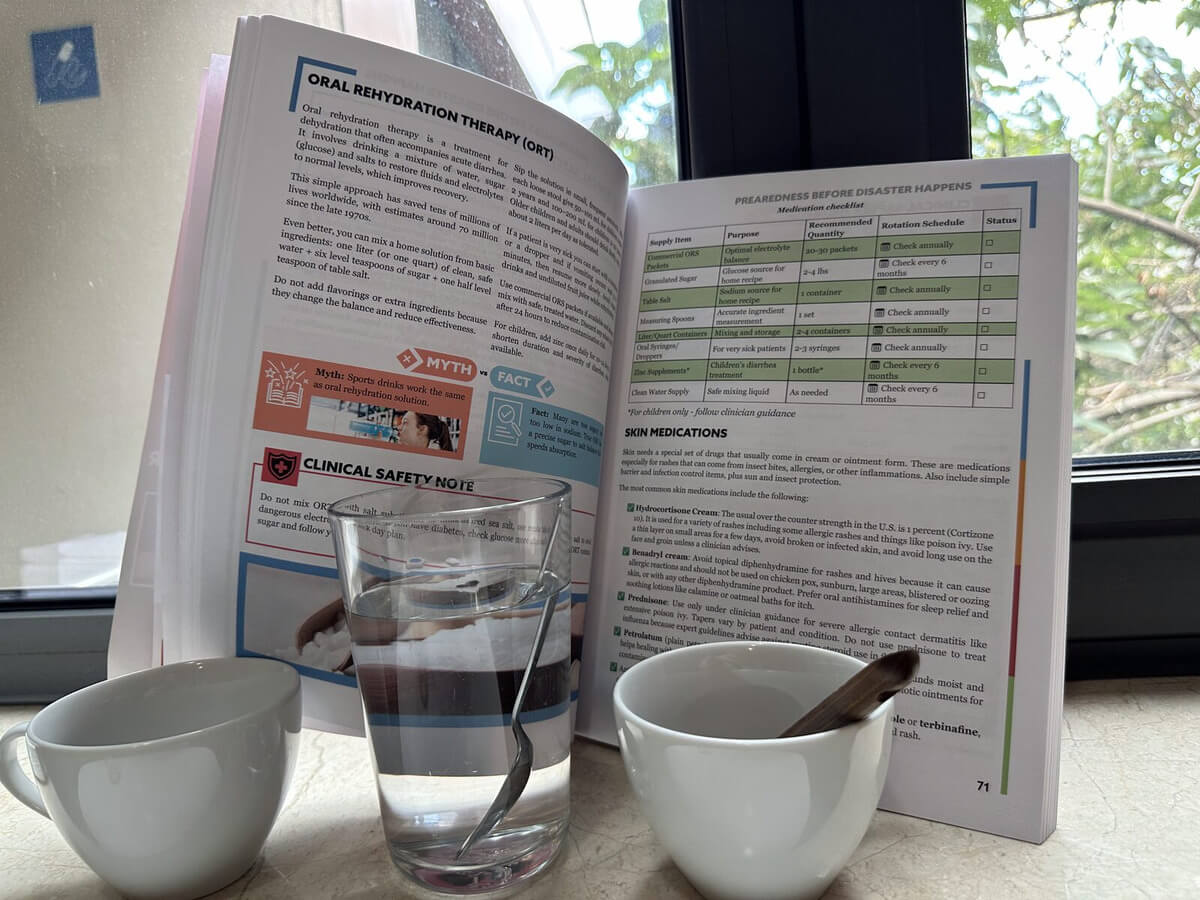
- What each medication is for
- Recommended quantity to keep
- How often to check it
- A box to tick off
Here's what's covered:
| Category | What it helps with |
|---|---|
| Cold and flu | Congestion, cough, sore throat and body aches |
| Allergy | Sedating and non-sedating options, plus severe reactions |
| Pain | Over-the-counter and prescription options, safely |
| Breathing | Inhalers and how to use them correctly |
| Gastrointestinal | Heartburn, nausea, diarrhea and constipation |
| Oral rehydration | The single most important supply for serious diarrhea |
| Skin | Rashes, wounds, sun protection and more |
| Antibiotics | When they belong in a home reserve, and when they don't |
| Birth control | Keeping contraception going during a disruption |
| Psychotropic medicines | Medications for sleep and anxiety, handled with care |
And a dedicated section on children's medication, because kids need weight-based, age-appropriate options and some adult medicines are dangerous for them.
Part 3: The Myths That Make Medicine Cabinets Dangerous
Chapter 5 is packed with "Myth vs. Fact" boxes, and they're some of the most eye-opening in the book. Here's one we'll share:
Myth vs. Fact
Myth: Refrigeration always makes medicines last longer.
Fact: Many tablets prefer room temperature and can pick up moisture in the fridge. Refrigerate only when the label or pharmacist says to.
The others answer questions most families have never thought to ask:
- Does a hot toddy really help you sleep off a cold?
- Can you use allergy eye drops while wearing contact lenses?
- Is a nebulizer always stronger than an inhaler?
- Do fizzy drinks really settle an upset stomach?
- Are "broad-spectrum" antibiotics stronger for every infection?
- Does more melatonin mean better sleep?
- Is codeine cough syrup safe for children?
The answers, and what to do instead, are in the book.
Part 4: Antibiotics, Handled Responsibly
Many preparedness books encourage people to stockpile antibiotics "just in case." Survival MD takes a more careful approach: antibiotics belong in a home reserve only when a clinician has provided a written plan for specific conditions. That protects your family from side effects and helps prevent resistance.
The section explains which antibiotics are commonly used for which types of infection, why "stronger" isn't the same as "better," and how to have that conversation with your doctor before a crisis.
Part 5: The Medication Rotation System
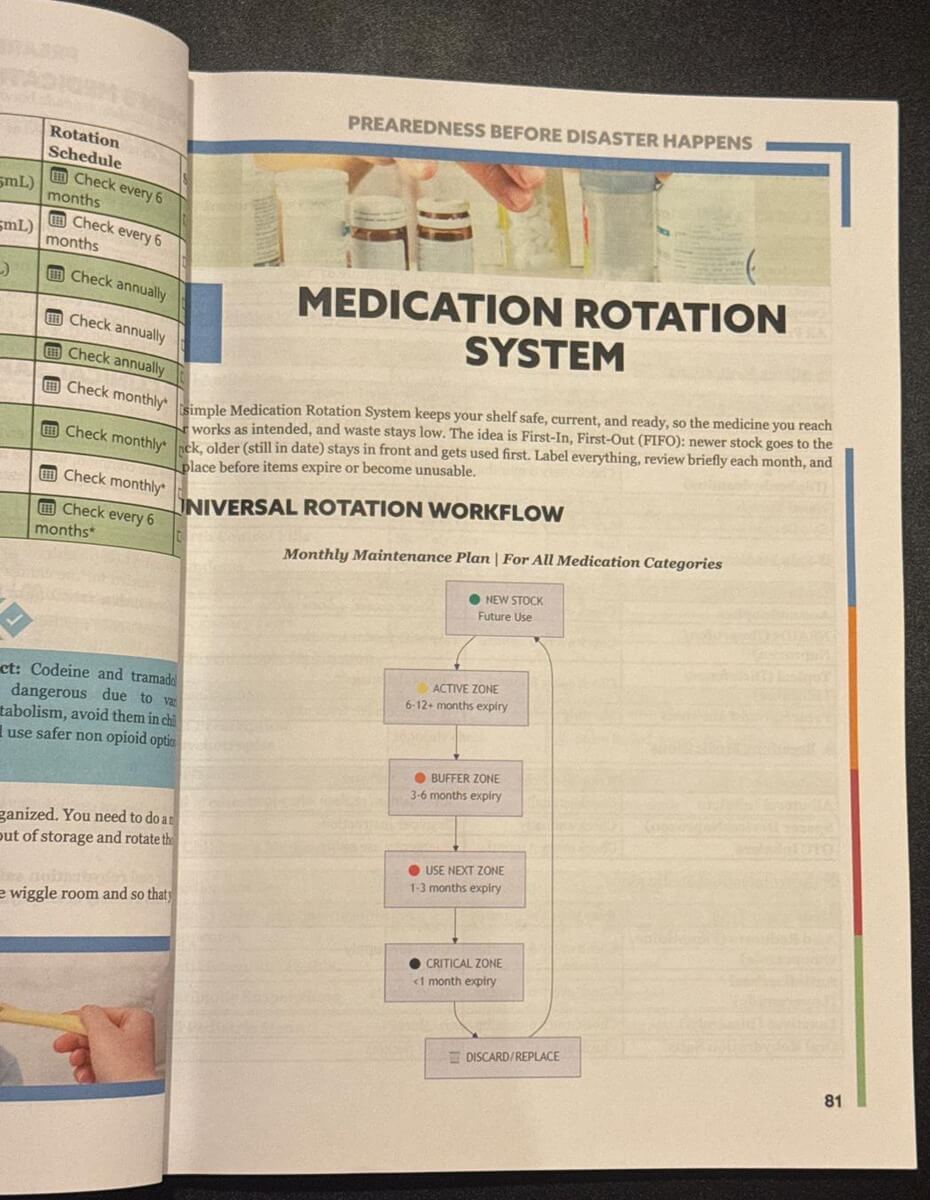
A stockpile is only useful if it's still good when you need it. The chapter closes with a Medication Rotation System built on a simple principle, First-In, First-Out: newer stock goes to the back, older (still in date) stock stays in front and gets used first.
It includes:
- A Universal Rotation Workflow, a visual monthly maintenance plan that moves every medicine through color-coded zones from "new stock" to "replace"
- Category-specific rotation schedules, showing how often to check each type of medication and what to watch for
It's the system that keeps your reserve safe, current and ready, without waste.
Why Chapter 5 Matters
- It's organized. Medicines grouped by purpose, with checklists you can tick off.
- It tells you how much. Recommended quantities instead of guesswork.
- It's safe and legal. No shortcuts, no overseas pharmacies, no veterinary products, no risky pill-splitting.
- It prevents waste. A rotation system keeps everything in date.
- It covers the whole family. From children's medicine to the extra needs of older adults.
And if you want to go even further, the bonus guide When There's No Pharmacy builds on this chapter with more on creating a real home medical reserve.
What Comes After Chapter 5
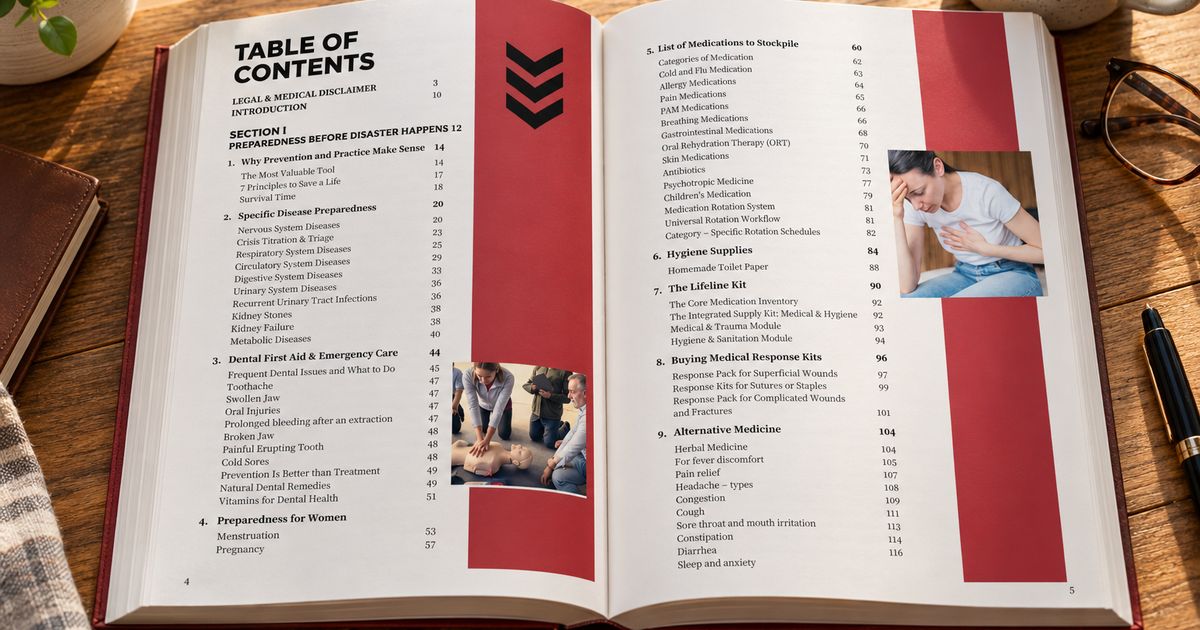
Next, Survival MD covers hygiene supplies, the Lifeline Kit (your core medication and supply inventory), buying medical response kits, alternative and herbal medicine, first aid kits and emergency sanitation, before the second half of the book turns to what to do when an emergency actually happens.
Frequently Asked Questions
What is Chapter 5 of Survival MD about?
Chapter 5, "List of Medications to Stockpile" (pp. 60–83), explains how to build a safe home medicine reserve: how much to keep, 10 medication categories plus children's medicine, recommended quantities, safety warnings, myths and a medication rotation system.
How much medication should I stockpile?
Survival MD recommends at least 30 days of essential medicines, and up to 90 days when allowed by your prescriber and pharmacy.
Does Survival MD recommend stockpiling antibiotics?
Only when a clinician has provided a written plan for specific conditions. The book explains why holding antibiotics "just in case" isn't a good idea.
Can I use fish or veterinary antibiotics?
No. Survival MD warns against using veterinary products for people, because formulations, dosing and quality controls differ.
How do I keep medicines from expiring?
The chapter's Medication Rotation System uses a First-In, First-Out approach, a monthly workflow and category-specific check schedules.
The Bottom Line
Chapter 5 turns a messy medicine cabinet into a real plan: the right medicines, the right amounts, stored safely and rotated so they're ready when you need them. It's one of the most practical chapters in Survival MD, and one most families will use right away.
You've had a preview. The full checklists, quantities and rotation schedules are in the book.