The Chapter the Whole Book Is Built For
Everything in the first half of Survival MD prepares you for one moment: the moment someone is hurt or sick, and no doctor is coming.
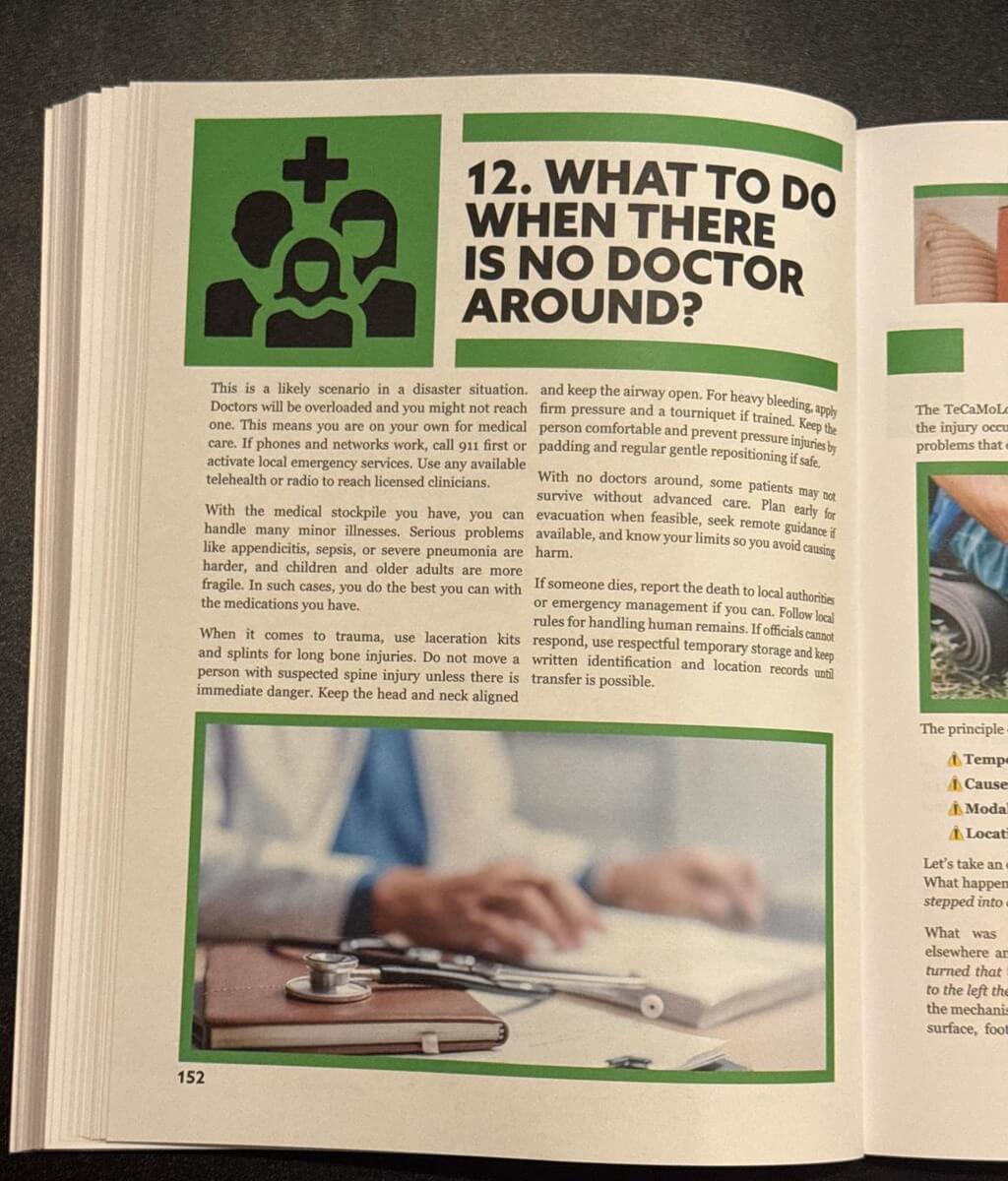
Chapter 12, "What to Do When There Is No Doctor Around?" (pages 152–163), opens the second half of the book, "Medical Preparedness After D-Day." And it starts with a sentence most people would rather not think about: "This is a likely scenario in a disaster situation. Doctors will be overloaded and you might not reach one. This means you are on your own for medical care."
This chapter is about what to do next. Not with a hospital's equipment, but with your eyes, your hands, a few simple questions and a clear head.
First, an Honest Starting Point
Chapter 12 doesn't pretend you can handle everything. It's refreshingly honest:
- Call for help first if phones or networks work, and use telehealth or radio to reach licensed clinicians if you can.
- With a good stockpile, you can handle many minor illnesses.
- Some problems are much harder to manage without a hospital, and children and older adults are more fragile.
- Know your limits so you don't cause harm, and plan early for evacuation when it's possible.
It even covers the hardest situation of all, what to do if someone dies and officials can't respond, with the same calm, respectful tone.
That honesty is what makes the rest of the chapter so useful. It focuses on what an ordinary person can do well.
Part 1: The TeCaMoLo Principle
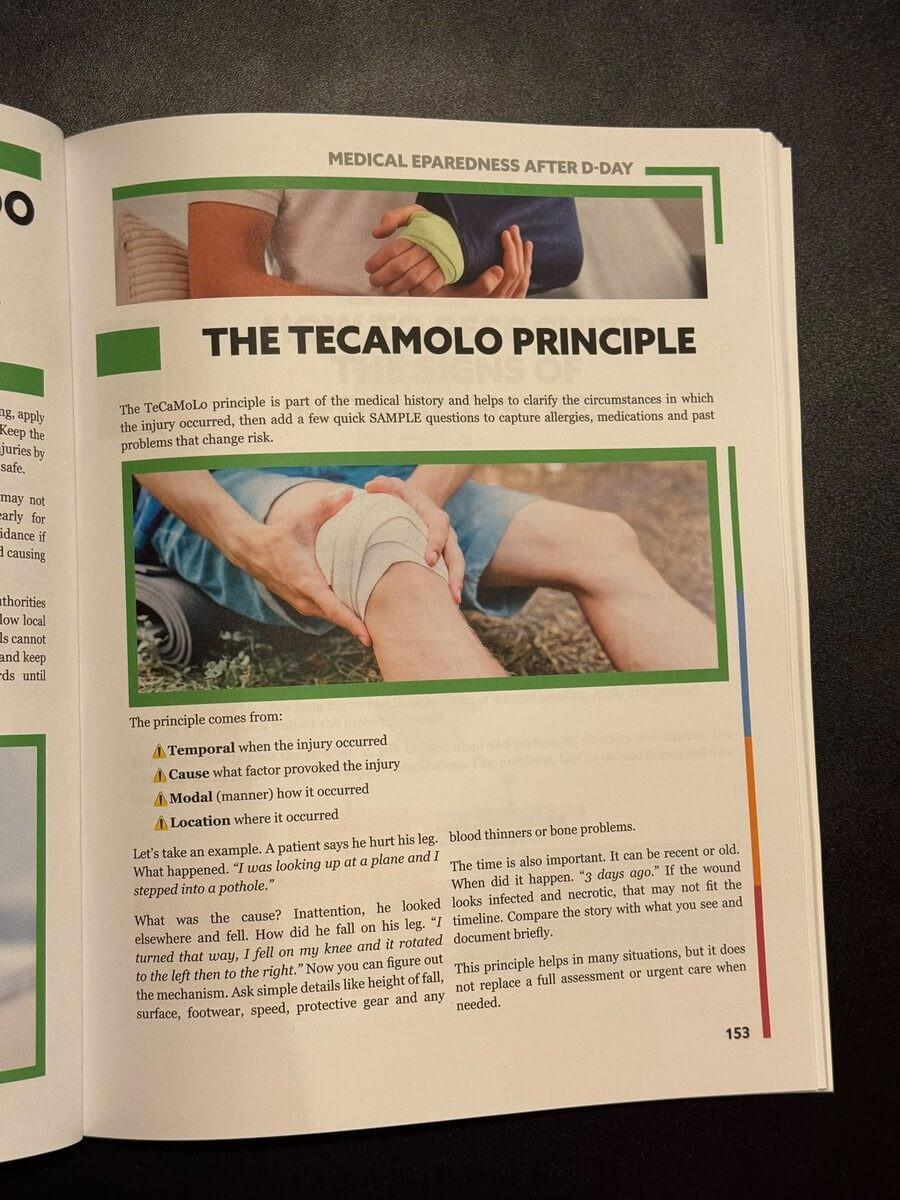
This is the tool readers remember most from Chapter 12. TeCaMoLo is a simple way to understand an injury by asking four questions:
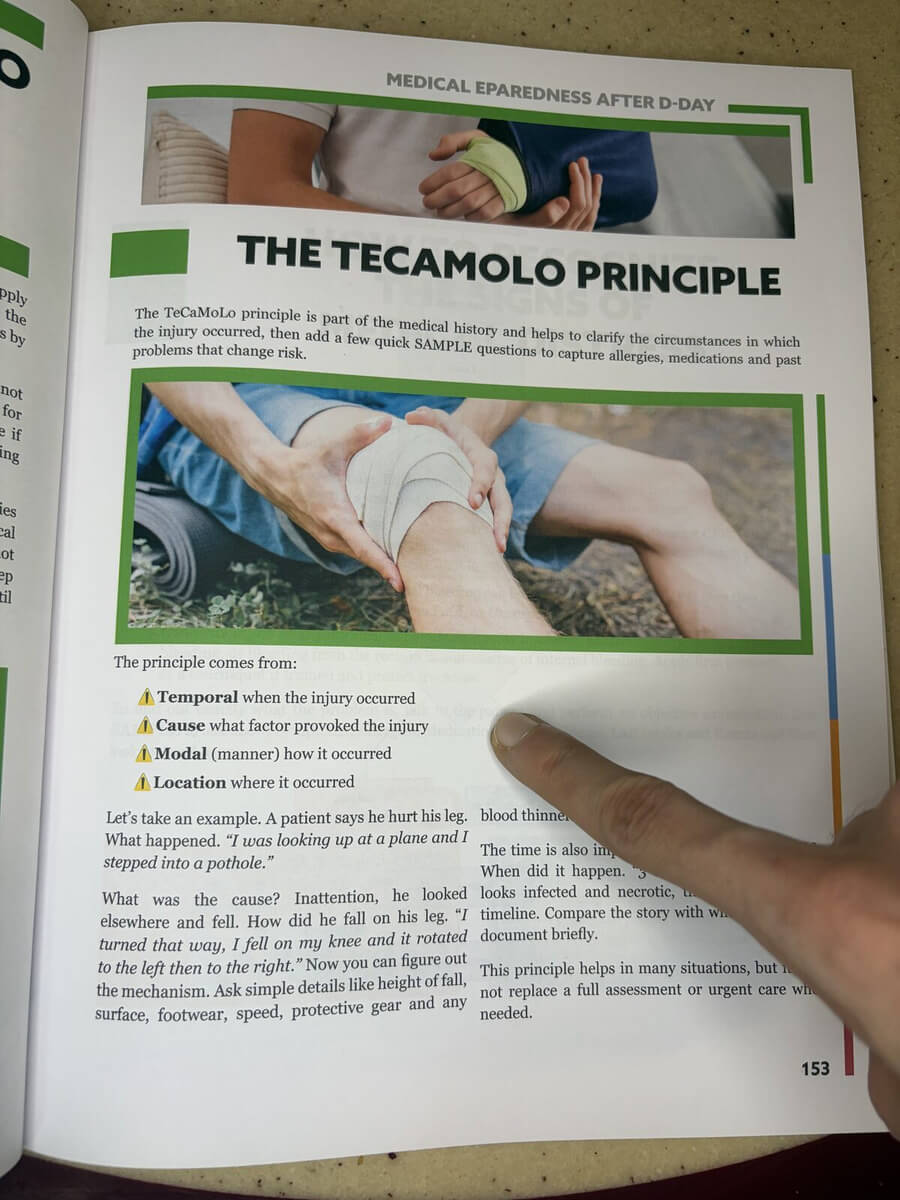
- Temporal: when did it happen?
- Cause: what caused it?
- Modal: how did it happen?
- Location: where did it happen?
It sounds simple, but the answers tell you a lot: how the injury happened, how serious it might be, and whether the story matches what you're seeing. The book walks through a real example, a man who hurt his leg while looking up at a plane, and shows how each answer changes what you look for.
It also adds a short set of follow-up questions about allergies, medications and past problems, the details that change the risk for each patient.
Part 2: How to Recognize Medical Distress
"A person can be injured and still show no surface signs." That's the warning at the start of this section, and it's why it's so important.
The chapter teaches you the key warning signs that separate a minor case from a serious one, including what a person's skin color, pulse and level of alertness can tell you, and a simple four-step way to check how alert someone is.
It also includes a Myth vs. Fact box that could save a family:
Myth vs. Fact
Myth: A pink face and a pulse oximeter reading near one hundred means oxygen is fine.
Fact: Carbon monoxide can make skin look normal and can fool some oximeters. Think exposure when several people feel headache, nausea or dizziness in the same space.
Part 3: The Head-to-Toe Body Check
Next, the chapter shows you how to examine someone from head to toe, the way a doctor would, in a way a non-medical person can follow.
It covers the four parts of an examination (look, feel, tap and listen), which parts to skip if you're not trained, and what to check in each area of the body, from the skull to the feet. It also explains how to check a pulse properly, and why you shouldn't waste time searching for a pulse when someone isn't breathing normally.
A few details stood out to us:
- A memorable story about an injured puppy that explains why a fracture hurts so much, and what that pain is telling you to do
- A Clinical Safety Note we'll share: remove rings, watches and tight bands from an injured or swelling limb early, before they cut off blood flow
- A tip to write down the numbers with the time, because trends guide decisions better than a single reading
The section comes with a Rapid Assessment Flowchart, and the chapter opens with a Quick Assessment Flowchart, so you can follow the steps even under stress.
Part 4: Self-Diagnosis and When You Truly Need a Doctor
You won't be able to see a doctor for every problem in a crisis, so you need to know when it really matters.
This section includes a list of situations where getting to a doctor is vital, from infections that keep getting worse to signs of a heart attack, a stroke or a severe allergic reaction. It also comes with a Self-Diagnosis & Crisis Medical Decision Guide, a visual chart to help you decide what to do.
And another Myth vs. Fact box worth knowing:
Myth vs. Fact
Myth: No pain means no dangerous condition.
Fact: Serious problems can be painless or oddly mild, such as silent heart attacks in people with diabetes.
Part 5: Clean Technique When Nothing Is Sterile
What happens when you need to treat a wound and there's no sterile operating room? This section explains what's realistic at home, and what isn't.
It covers the difference between cleaning, disinfecting and true sterilization, a common belief about boiling that isn't quite right, a short history of why surgeons started washing their hands, and a simple clean zone / dirty zone system you can set up anywhere.
It also explains why medicine is a lot like flying: there are always two pilots, checklists before, during and after, and a clear chain of command. The book shows how to apply the same idea when you're caring for someone with a helper at your side.
And it gives clear guidance on what to do with a wound you can't treat in clean conditions. The full guidance is in the book.
Part 6: Moment X
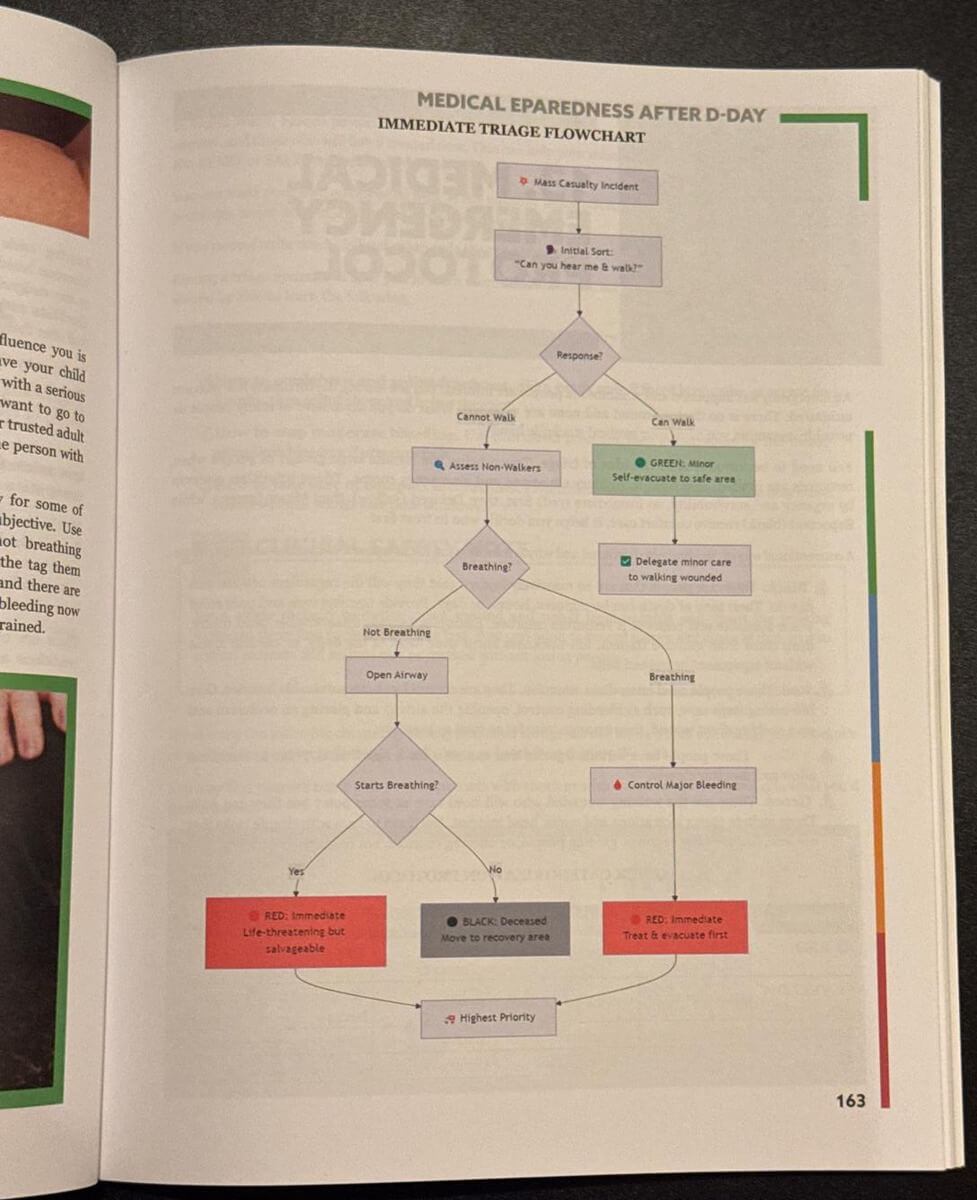
The chapter ends with the section many readers say they'll never forget: Moment X, the moment you have to decide who to help first.
It's the hardest decision in any emergency, especially when one of the injured is someone you love. Survival MD doesn't pretend it's easy. Instead, it gives you a simple method to reduce guesswork, explains how to delegate so you're not alone, and shows why planning roles in advance protects both your family and others.
It ends with an Immediate Triage Flowchart, a step-by-step visual guide for sorting injured people by priority when there are more patients than helpers.
Why Chapter 12 Matters
- It's the core of the book. This is what "Survival MD" means: medical care when there's no doctor.
- It gives you a method. TeCaMoLo, a body check and four flowcharts turn panic into steps.
- It tells you when to get help. A clear list of situations where a doctor is vital.
- It's honest. Clear limits, no risky heroics, and safety notes throughout.
- It prepares you emotionally. Moment X helps you think through the hardest decision before you face it.
What Comes After Chapter 12
Next, Survival MD covers the Medical Emergency Protocol (Chapter 13) and Understanding CPR (Chapter 14), including how to quickly assess a patient and the CAB sequence, before moving on to common illnesses in a crisis, bleeding, wounds, burns and fractures.
Frequently Asked Questions
What is Chapter 12 of Survival MD about?
Chapter 12, "What to Do When There Is No Doctor Around?" (pp. 152–163), covers the TeCaMoLo Principle, recognizing medical distress, a head-to-toe body check, self-diagnosis and when to see a doctor, clean technique and triage ("Moment X").
What is the TeCaMoLo Principle?
It's a way to understand an injury using four questions: Temporal (when), Cause (what), Modal (how) and Location (where). Survival MD explains how to use the answers, with a real example.
Does Survival MD explain how to examine an injured person?
Yes. Chapter 12 includes a step-by-step head-to-toe body check written for people without medical training, plus a Quick Assessment Flowchart and a Rapid Assessment Flowchart.
Does Chapter 12 cover triage?
Yes. The "Moment X" section explains how to decide who to help first, with a simple method and an Immediate Triage Flowchart.
Does no pain mean a condition isn't serious?
No. Survival MD warns that serious problems can be painless or oddly mild, such as silent heart attacks in people with diabetes.
The Bottom Line
Chapter 12 is the heart of Survival MD. It turns the question everyone dreads, "What do I do if no doctor is coming?", into a clear method: ask the right questions, check the body, recognize danger, know when help is essential and decide calmly who needs you first.
You've had a preview. The full method, body check, decision guide and flowcharts are in the book.