The Question Millions of Families Never Ask
Nearly half of all Americans take at least one prescription medication. Most of us never think about what would happen if we couldn't refill it: if the pharmacy were closed, the roads were blocked or the supply chain simply stopped.
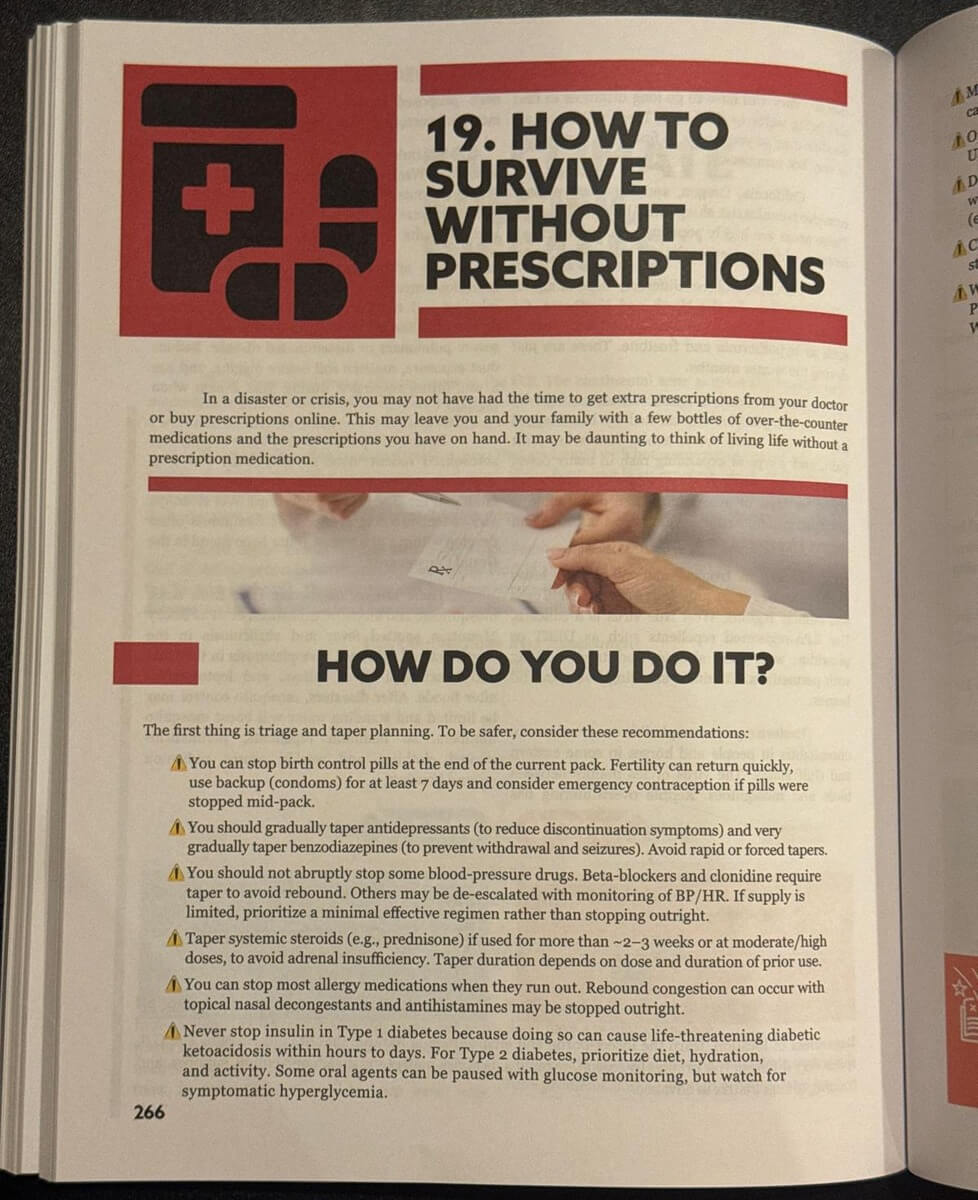
Chapter 19 of Survival MD, "How to Survive Without Prescriptions" (pages 266–270), is the final chapter of the book, and it tackles that question directly. As Dr. Radu Scurtu writes: "It may be daunting to think of living life without a prescription medication."
This chapter turns that fear into a plan: what to protect at all costs, what needs a slow and careful approach, and what can safely wait.
Part 1: Not All Medications Are Equal
The most important lesson in this chapter is that every medication behaves differently when it runs out. Some can be stopped with little risk. Others can cause dangerous rebound or withdrawal if they're stopped suddenly. And some must never be stopped at all.
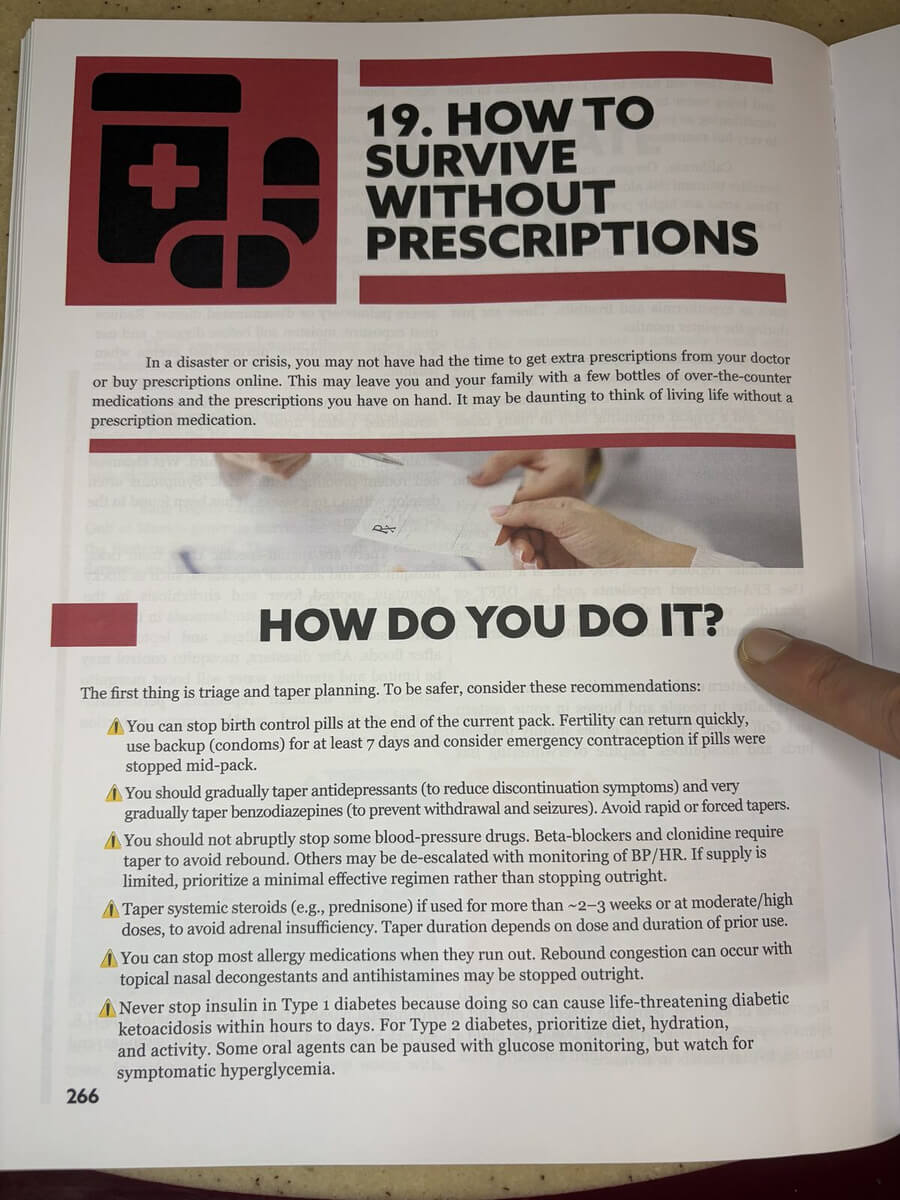
The book calls the first step "triage and taper planning," and it walks through the most common types of prescription medications one by one: what happens when each runs out, and what's safer to do.
A few of the warnings we'll share, because they can save lives:
- Never stop insulin in type 1 diabetes. It can cause a life-threatening emergency within hours to days.
- Don't stop blood thinners without a plan. Stopping suddenly can raise the risk of stroke or clots.
- Some blood pressure medications shouldn't be stopped abruptly, because of dangerous rebound effects.
- Certain medicines for mood, anxiety, pain and inflammation need to be reduced gradually, never stopped all at once.
The chapter covers many more medication types, including which ones can be paused more safely when supplies run out. Always plan these steps with your doctor or pharmacist in advance.
Part 2: The Medication Management Decision Chart
To make the decisions easier, Chapter 19 includes a Medication Management Decision chart. It starts from one situation, "Medication supply running low," and sorts medicines into three groups:
- Life-sustaining medications
- Medications with withdrawal risk
- Medications for symptom control
For each group, the chart shows the priority and the next steps.
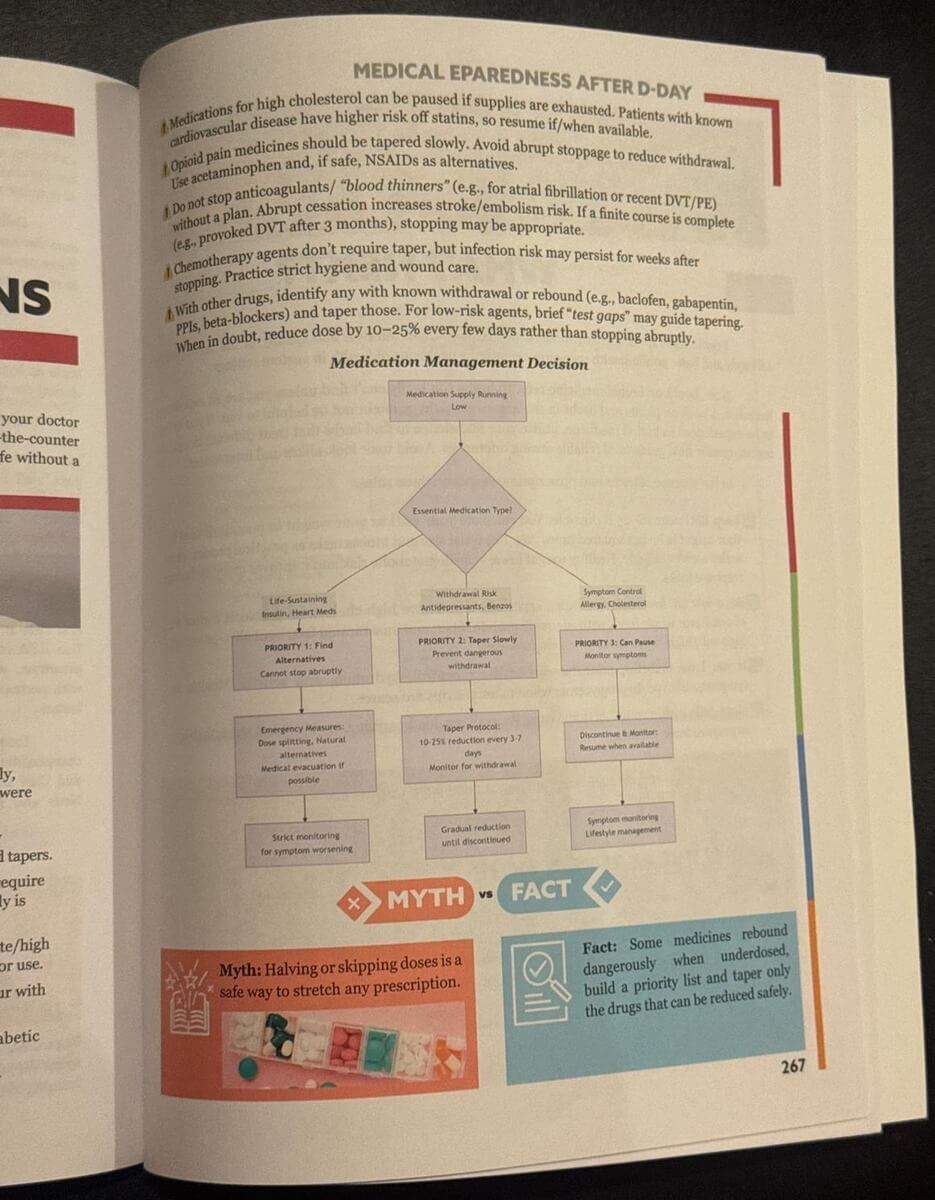
And it comes with a Myth vs. Fact box that every family should read:
Myth vs. Fact
Myth: Halving or skipping doses is a safe way to stretch any prescription.
Fact: Some medicines rebound dangerously when underdosed. Build a priority list and taper only the drugs that can be reduced safely.
Part 3: What Next? Health Without Modern Medicine
The second half of the chapter asks a bigger question: if modern medicine stays unavailable for a long time, what keeps people healthy?
The book's honest answer: "Lifestyle and basic public-health measures remain the backbone of health in austere settings." It gives a short set of practical rules for weight, diet, blood sugar control and daily movement, written so they double as preparedness training.
It also includes a Clinical Safety Note with a simple, smart method we'll share: the "one-change rule." When trying any new routine, whether a diet change, an activity or an herb, change one thing at a time for a few days, keep a simple symptom log, and know the warning signs that mean you should stop and get help. The full list of stop signals is in the book.
Part 4: The Post-Collapse Health Management Framework
The chapter's final chart, the Post-Collapse Health Management Framework, sums up the book's long-term philosophy in three pillars:
- Lifestyle medicine: diet, exercise and weight, to prevent chronic disease and keep people mobile
- Natural remedies: herbs, topicals and mind-body techniques, to manage symptoms and reduce suffering
- Community health: shared knowledge, bartering and pooled resources
It ties together what you learned in earlier chapters, especially the Alternative Medicine chapter, into one plan for the long haul.
Last Page, First Move
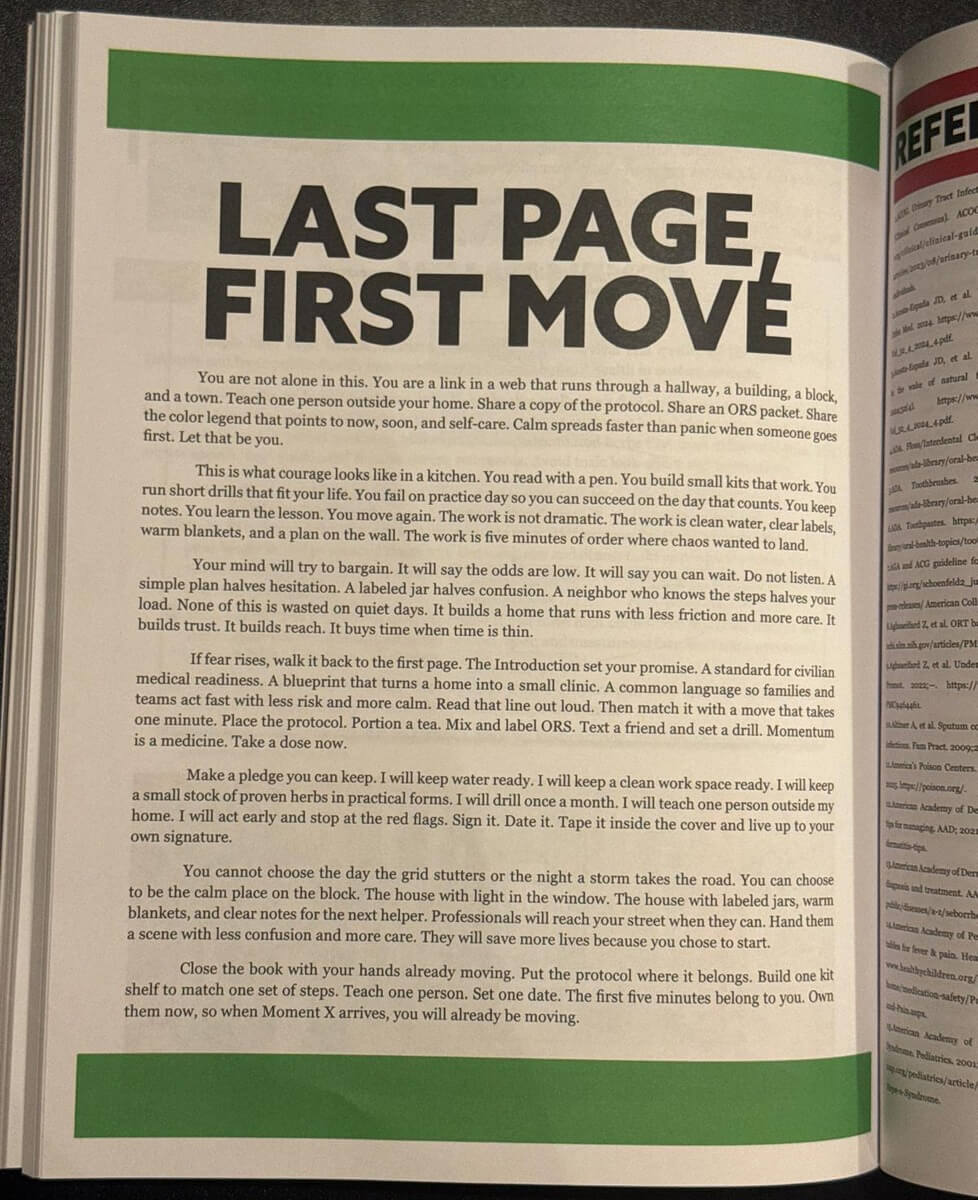
Survival MD doesn't end with a summary. It ends with a call to action: a final page called "Last Page, First Move."
It's one of the most motivating pages in the book. It talks about what courage looks like in an ordinary kitchen, why a simple plan beats hesitation, and how one prepared home can become "the calm place on the block." It even includes a short personal pledge to sign, date and tape inside the cover.
We won't spoil it. But it's the kind of page that makes you close the book and start right away.
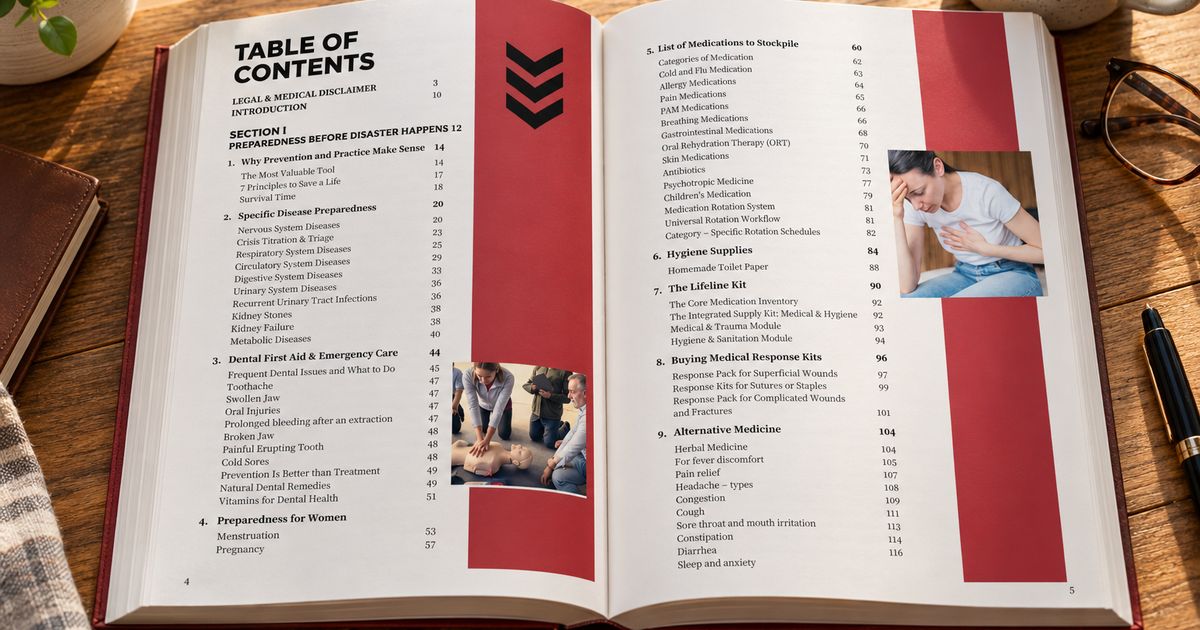
After the final chapter come the book's references (350+ sources) and a full index, so you can find any topic in seconds when it matters.
Why Chapter 19 Matters
- It addresses a real, widespread risk. Millions of families depend on daily prescriptions.
- It prevents dangerous mistakes. Which medicines must never be stopped suddenly, and why "stretching" doses can backfire.
- It gives you a framework. Three medication groups and clear priorities.
- It plans for the long term. Lifestyle, natural remedies and community, when modern medicine isn't there.
- It ends with action. A final page and a pledge that turn reading into doing.
And if this is the chapter that matters most to your family, the bonus guide When There's No Pharmacy goes even further.
The Whole Book, in One Line
With Chapter 19, Survival MD comes full circle. It begins with prevention and practice in Chapter 1, builds your supplies and skills through the preparation chapters, teaches you what to do when the emergency comes, and ends with how to stay healthy when the systems we rely on don't come back quickly.
Want to explore other chapters? Start with Chapter 1: Why Prevention and Practice Make Sense.
Frequently Asked Questions
What is Chapter 19 of Survival MD about?
Chapter 19, "How to Survive Without Prescriptions" (pp. 266–270), explains how to plan for running out of prescription medications, which medicines need careful tapering or must never be stopped, a Medication Management Decision chart, long-term health without modern medicine and the book's closing page, "Last Page, First Move."
Can you stop insulin if you run out?
Not in type 1 diabetes. Survival MD warns that stopping insulin can cause a life-threatening emergency within hours to days.
Is it safe to halve or skip doses to make a prescription last longer?
Not for every medication. Survival MD warns that some medicines rebound dangerously when underdosed, and recommends building a priority list with your clinician.
What is the "one-change rule"?
It's Survival MD's advice to change only one thing at a time, such as a diet change, an activity or an herb, keep a symptom log, and stop and seek help if warning signs appear.
Is Chapter 19 the last chapter of Survival MD?
Yes. It's followed by the closing page "Last Page, First Move," 350+ references and a full index.
The Bottom Line
Chapter 19 answers one of the most frightening questions in preparedness: what happens when the medicine runs out? It shows you what to protect, what to taper, what can wait, and how to keep your family healthy for the long haul, and then it sends you off with a plan to start today.
You've had a preview. The full medication guidance, decision chart and closing pledge are in the book.