The Emergency Almost Every Other Book Forgets
Ask most people what a medical emergency looks like and they'll describe bleeding, burns or broken bones. Almost nobody mentions teeth.
But dental problems are some of the most common, and most miserable, emergencies there are. And as Chapter 3 of Survival MD points out, dental care is often harder to reach than general medical care, "especially early in a disaster." Your dentist may not have office hours, or the office may be impossible to get to.
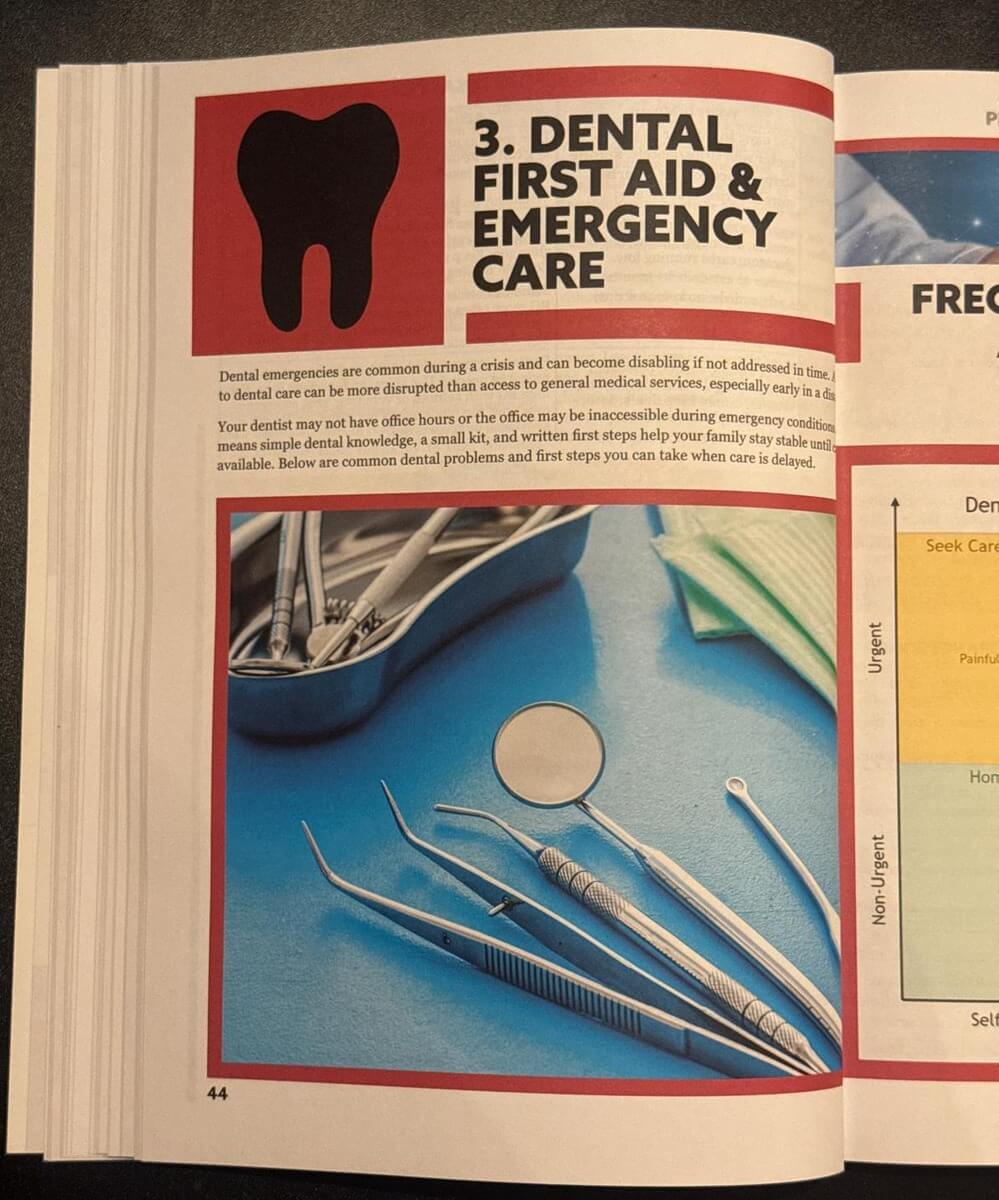
That's why Dr. Radu Scurtu gave dental emergencies a chapter of their own: "Dental First Aid & Emergency Care" (pages 44–51). It's short, practical and, frankly, something we haven't seen covered this well in any other preparedness book.
Why a Toothache Can Become a Real Emergency
It's easy to think of a toothache as an inconvenience. Chapter 3 explains why that's not always true.
Sometimes a toothache fades in a few hours or days. Other times, it signals an infection beneath the tooth that won't go away on its own. Without treatment, a dental infection can spread, and in serious cases it can even threaten the airway.
The chapter shows you how to tell the difference: which problems you can manage at home for now, which need professional care soon, and which signs mean you need emergency help immediately.
The Dental Zone Chart
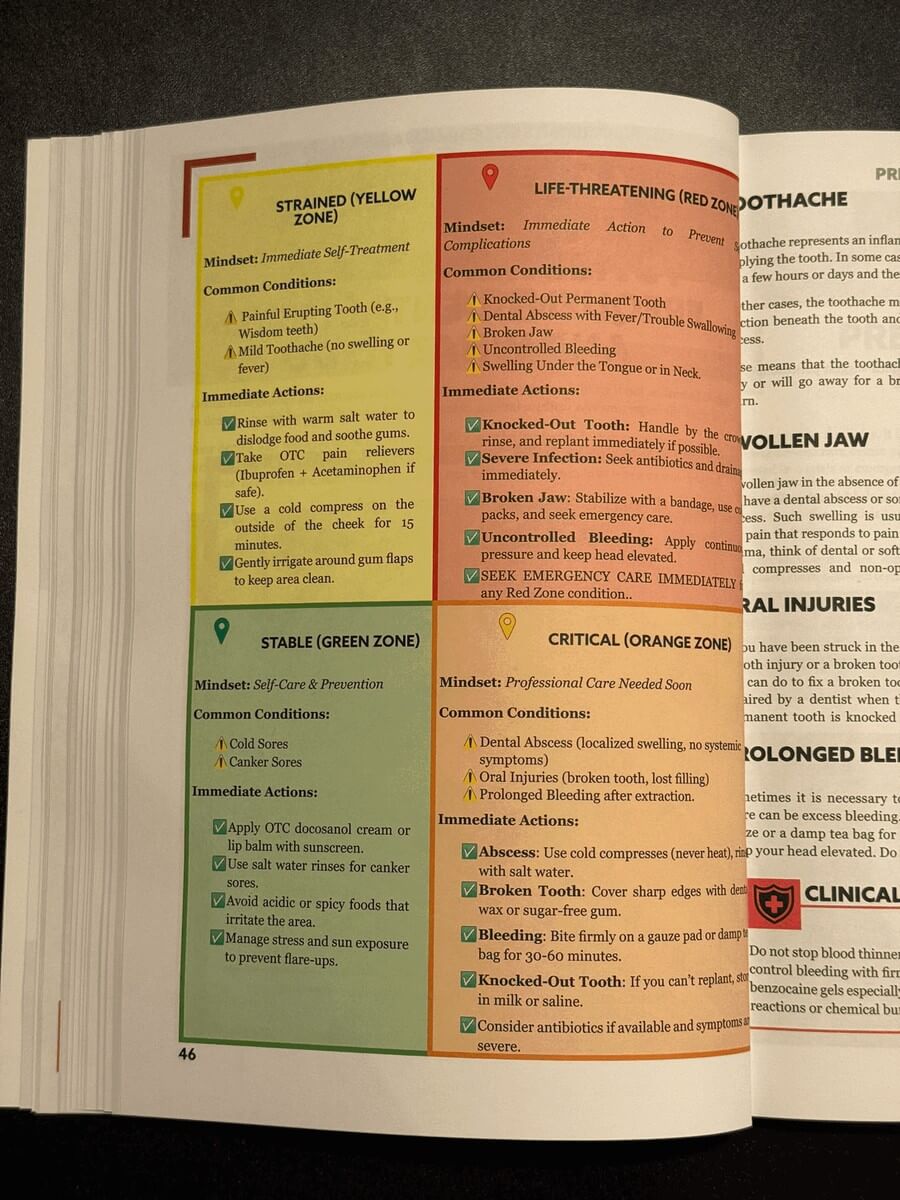
Like many sections of Survival MD, Chapter 3 uses a four-zone color system so you can judge a dental problem at a glance:
| Zone | Mindset | Examples of what's covered |
|---|---|---|
| 🟢 Stable | Self-care and prevention | Cold sores, canker sores |
| 🟡 Strained | Immediate self-treatment | Mild toothache, painful erupting tooth (like wisdom teeth) |
| 🟠 Critical | Professional care needed soon | Localized abscess, broken tooth, lost filling, bleeding after an extraction |
| 🔴 Life-threatening | Immediate action | Knocked-out permanent tooth, abscess with fever or trouble swallowing, broken jaw, uncontrolled bleeding, swelling under the tongue or in the neck |
Each zone in the book comes with its own immediate actions, the exact first steps for each situation. That's the part you'll want on your shelf.
What Chapter 3 Walks You Through
The chapter covers the dental problems families are most likely to face, each with clear first steps:
Toothache
How to tell a passing toothache from one caused by infection, how to relieve the pain safely, and one common instinct that can make an infected tooth worse. It also explains when antibiotics are actually needed, and when they aren't.
Swollen Jaw
What a swollen jaw usually means when there's been no injury, how to manage it, and the specific warning signs that mean you should seek urgent care right away.
Oral Injuries and Knocked-Out Teeth
A knocked-out permanent tooth is one of the few dental emergencies where minutes matter. The book explains exactly how to handle the tooth, what to do with it, and what to store it in if it can't go back in right away. It also explains why you should never try to put back a baby tooth.
Prolonged Bleeding After an Extraction
A simple way to control bleeding using something most people already have in the kitchen, plus what to avoid while it heals, and when bleeding means it's time to get help.
Broken Jaw
Why it's serious, how to stabilize it and protect the airway, and what not to attempt at home.
Painful Erupting Teeth, Cold Sores and Canker Sores
The smaller problems that still make life miserable, and how to manage them until care is available.
A Myth That Causes Real Harm
Chapter 3 includes a Myth vs. Fact box about one of the most common toothache "remedies" there is, and we'll share it because it matters:
Myth vs. Fact
Myth: Put an aspirin tablet on the gum to stop a toothache.
Fact: Aspirin placed on the tissue can cause a chemical burn.
The book explains what to do instead, along with a Clinical Safety Note on another popular product many parents use for tooth pain that can cause dangerous reactions, especially in children.
Prevention Is Better Than Treatment
True to the book's overall philosophy, Chapter 3 spends as much time on prevention as on emergencies. The message is simple: get dental problems fixed before a crisis, because a cavity or broken tooth can't really be treated properly when the dentist isn't available.
The chapter covers everyday habits that matter even more when care is limited, why a small oral care kit and a one-page plan at home are worth having, and a preventive step for children and teens that many parents never think to ask their dentist about.
Natural Remedies and Vitamins, Done Responsibly
The chapter ends with two sections many readers find interesting:
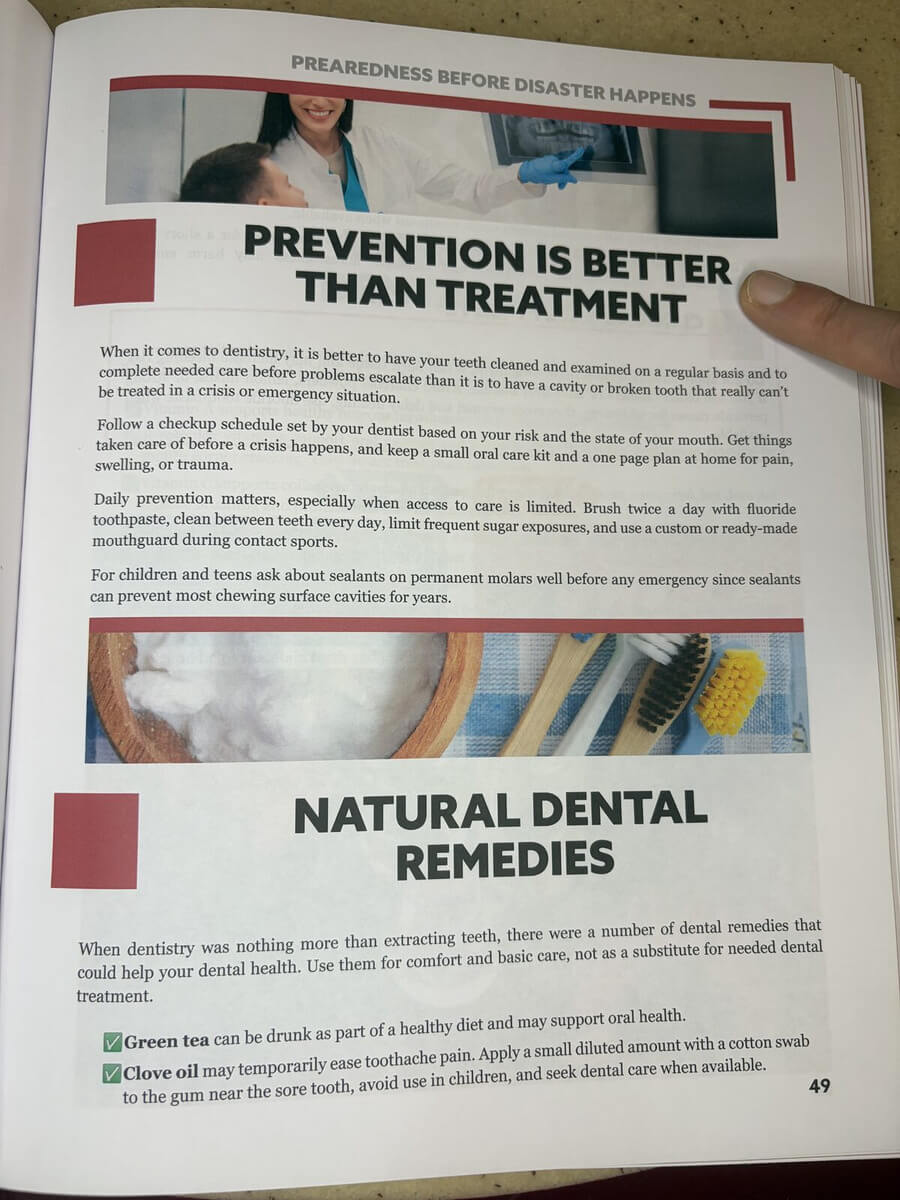
- Natural dental remedies: a handful of traditional options that can help with comfort, including a well-known toothache remedy that works temporarily only when used correctly, plus a Clinical Safety Note on how it can burn tissue if it isn't. The book is clear these are for comfort, not a substitute for dental treatment.
- Vitamins for dental health: which vitamins and minerals support teeth, gums and jawbone, why a food-first approach comes before supplements, and a surprising warning about a type of vitamin that can actually increase cavity risk.
As always, Survival MD tells you where natural remedies help, and where they stop.
Why Chapter 3 Matters
- It fills a real gap. Dental emergencies are common, painful and often ignored by other preparedness books.
- It tells you what's urgent. The zone chart helps you tell an inconvenience from an emergency.
- It stops harmful home remedies. Myths and safety notes prevent the mistakes people make out of desperation.
- It's practical. First steps you can take with simple supplies, until a dentist is available.
What Comes After Chapter 3
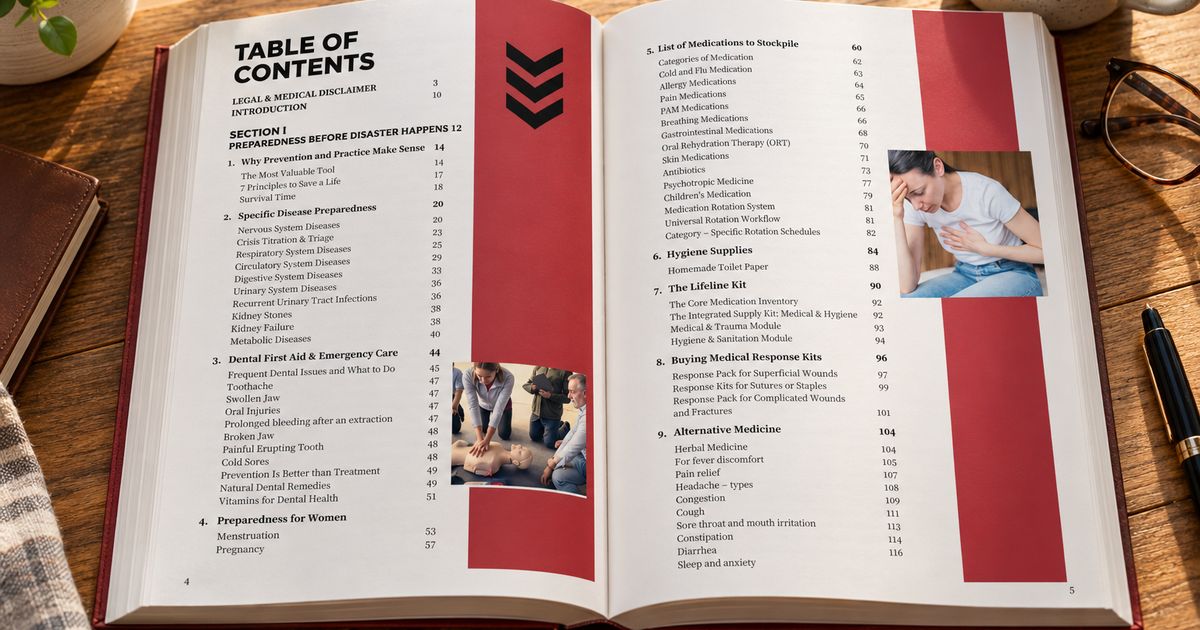
After dental care, Survival MD moves on to preparedness for women (menstruation and pregnancy), then medications to stockpile and rotate, hygiene supplies, the Lifeline Kit and first aid kits, before the second half of the book turns to what to do when an emergency actually happens.
Frequently Asked Questions
What is Chapter 3 of Survival MD about?
Chapter 3, "Dental First Aid & Emergency Care" (pp. 44–51), covers dental emergencies when a dentist isn't available: toothaches, swollen jaws, knocked-out teeth, broken jaws, bleeding after an extraction, painful erupting teeth, cold sores and canker sores, plus prevention, natural remedies and vitamins for dental health.
Can a toothache really be an emergency?
Yes. Some toothaches signal an infection that can spread. Chapter 3 explains the warning signs, including trouble swallowing and swelling under the tongue or in the neck, that mean you need emergency care.
Does Chapter 3 explain what to do with a knocked-out tooth?
Yes. It explains how to handle the tooth, what to do with it and what to store it in if it can't be put back right away.
Is it safe to put aspirin on a sore tooth?
No. Survival MD warns that aspirin placed on the gum can cause a chemical burn.
The Bottom Line
Chapter 3 is proof of how thorough Survival MD really is. It takes an emergency most families never prepare for and turns it into a clear plan: what's minor, what's urgent, what to do first, and what never to do.
You've had a preview. The full zone chart, first steps and safety notes are in the book.