The Threats You Can't See
After a disaster, the most dangerous thing in your home may not be the broken glass or the fallen tree. It may be the leftovers in a warm fridge, a glass of water that looks perfectly clear, or the air in a crowded room.
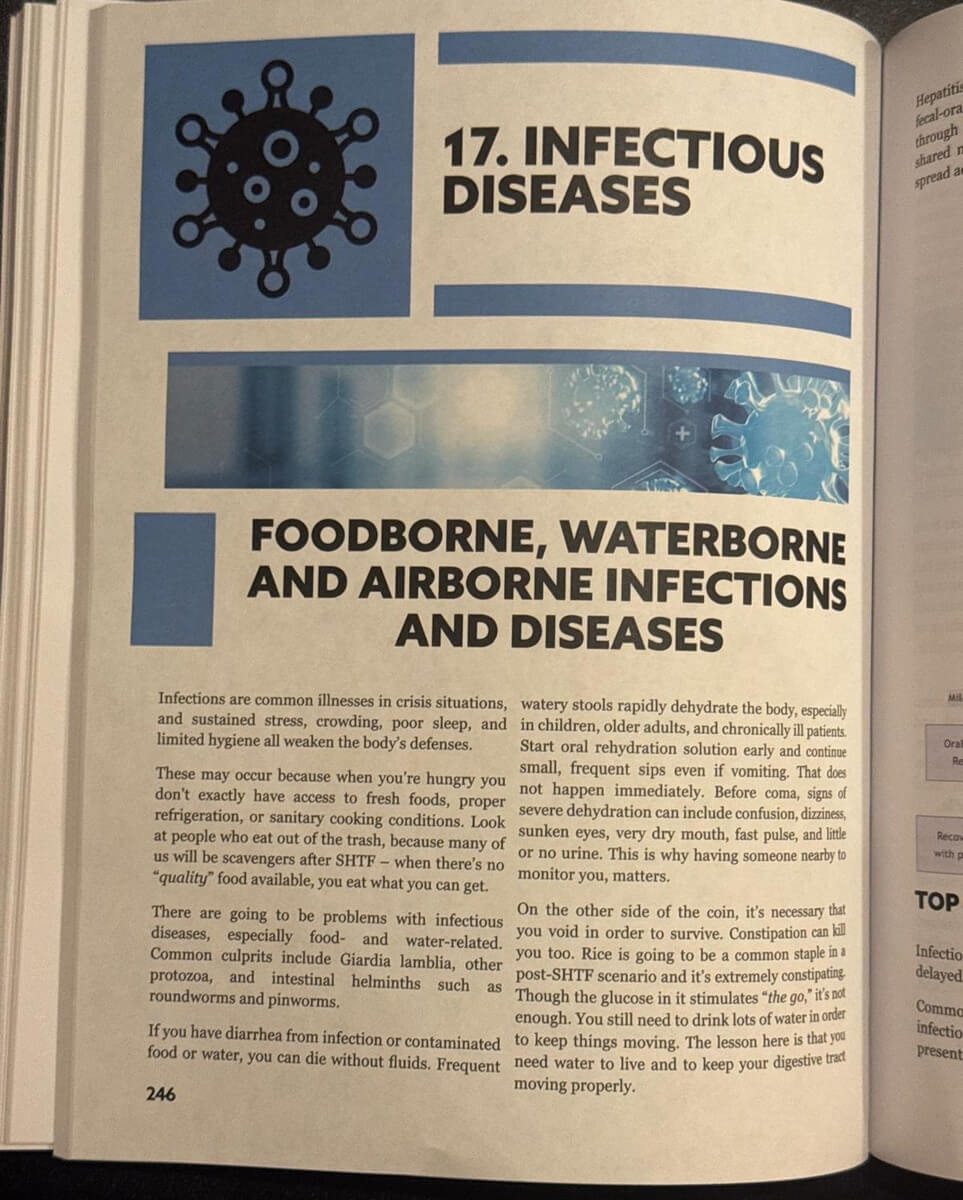
Chapter 17 of Survival MD, "Infectious Diseases" (pages 246–262), is about those invisible threats. As Dr. Radu Scurtu explains, "sustained stress, crowding, poor sleep, and limited hygiene all weaken the body's defenses." At the same time, fresh food, refrigeration, clean water and safe cooking become hard to find.
The result is predictable: infections spread fast. This chapter shows you how they spread, how to recognize them and how to stop them, organized around the three routes that matter most: food, water and air.
How Chapter 17 Differs From Chapter 16
The previous chapter, Non-Traumatic Illnesses, teaches you to identify an illness and covers serious conditions like heart attack, stroke and radiation sickness. Chapter 17 zooms in on how infections travel in a crisis, and what you can do to cut off each route before your family gets sick.
Part 1: Why Infections Explode in a Crisis
The chapter opens with the big picture: why infections spread so easily after a disaster, and why dehydration is what makes many of them deadly. It explains the warning signs of severe dehydration, like confusion, dizziness, sunken eyes, a very dry mouth, a fast pulse and little or no urine, and why someone should always be nearby to keep an eye on a sick person.
It also includes a surprising warning about the opposite problem, and why one of the most common survival foods can make it worse.
Then it covers the top five types of infection in a disaster, from respiratory and stomach infections to urinary and skin infections, with the key symptoms of each. There's an Infection Response chart, and a Myth vs. Fact box we'll share:
Myth vs. Fact
Myth: No fever means you are not contagious.
Fact: Many respiratory viruses spread before symptoms or without fever. Improve airflow, mask when sick and keep hands away from your face.
Part 2: Foodborne Illness
When the power goes out, food becomes risky fast. This section covers the top five causes of food-related infections in a crisis, including the obvious (no refrigeration) and the less obvious (cooking over a fire, where meat can look done outside and still be raw inside).
It includes:
- How long refrigerated and frozen food stays safe without power, with exact hours for a closed fridge, a full freezer and a half-full freezer
- A Clinical Safety Note with a simple time-based rule for deciding whether to cook, eat or throw out perishables, because, as the book puts it, "time beats the sniff test"
- Safe cooking temperatures for ground meat, poultry, pork and other cuts
- The most common foodborne bacteria and how each one makes people sick
- How to treat food poisoning
There's also a Myth vs. Fact box about a kitchen habit almost everyone has, thawing meat on the counter. The answer is in the book.
Part 3: Waterborne Illness
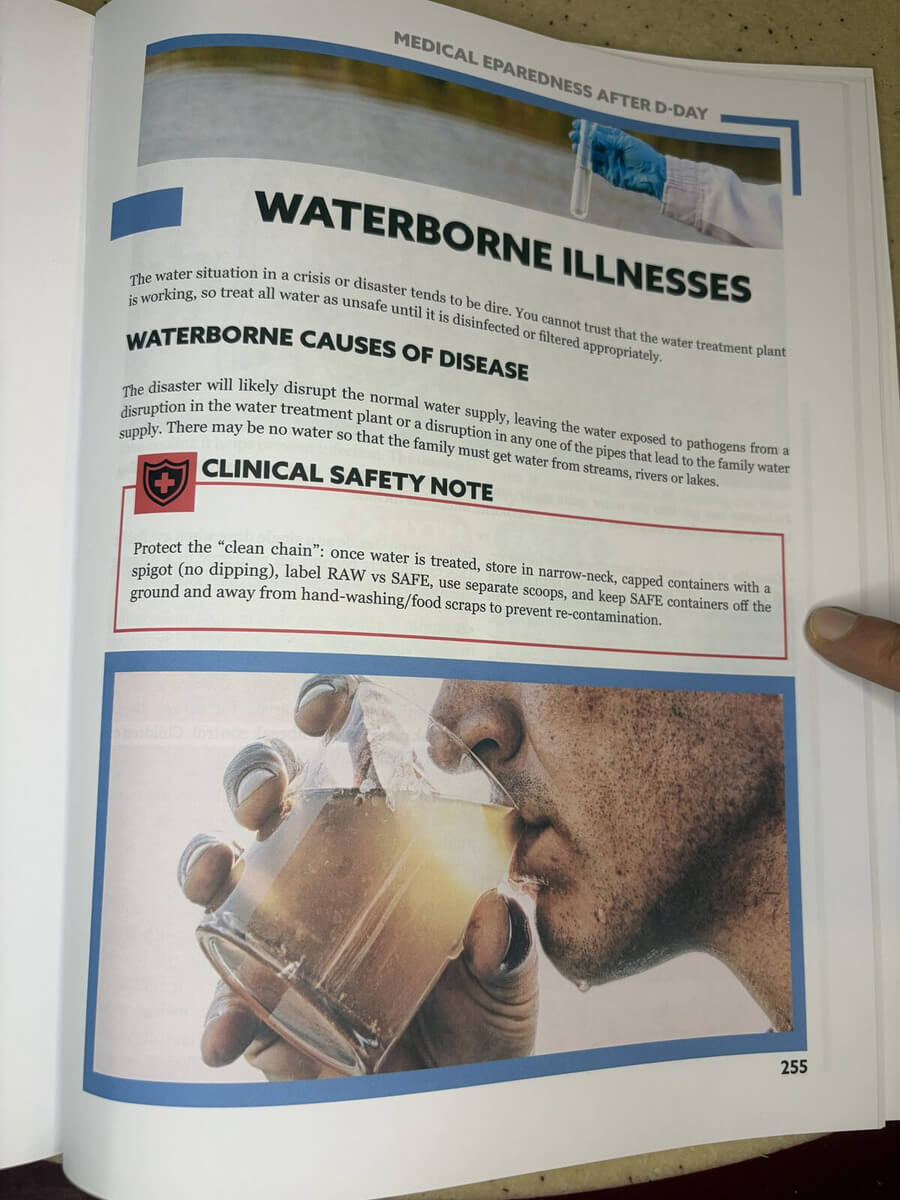
The book's rule here is blunt: treat all water as unsafe until it has been disinfected or filtered appropriately. You can't trust that the treatment plant is working, or that the pipes leading to your home are intact.
This section covers:
- How a disaster contaminates the water supply
- The top waterborne infections, from parasites to bacteria and viruses, with symptoms and how they're treated
- Which purification methods work for which germs, including one common household method that isn't reliable against certain parasites
It also includes a Clinical Safety Note on protecting the "clean chain": once you've treated water, it's easy to contaminate it again. The book explains how to store, label and handle safe water so that doesn't happen.
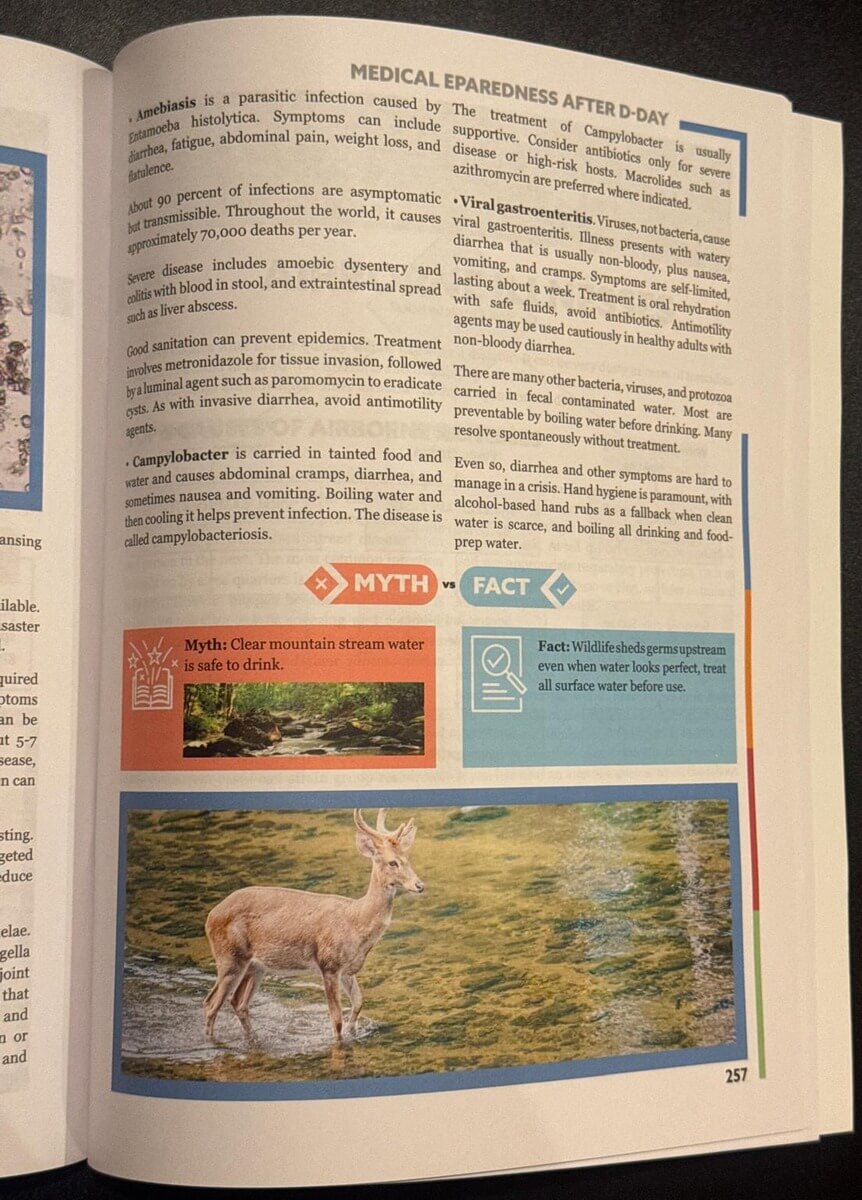
And one of the most important Myth vs. Fact boxes in the book for anyone who hikes or camps:
Part 4: Airborne Illness
After a disaster, you have no idea what's in the air. This section covers the top five causes of airborne illness, including crowded shelters, dust, mold from flooded and damaged buildings, asbestos from older structures and even nuclear fallout.
Then it covers the top airborne illnesses in a disaster, from the common cold and influenza to tuberculosis and illness caused by mold, plus how each spreads and how to protect your household.
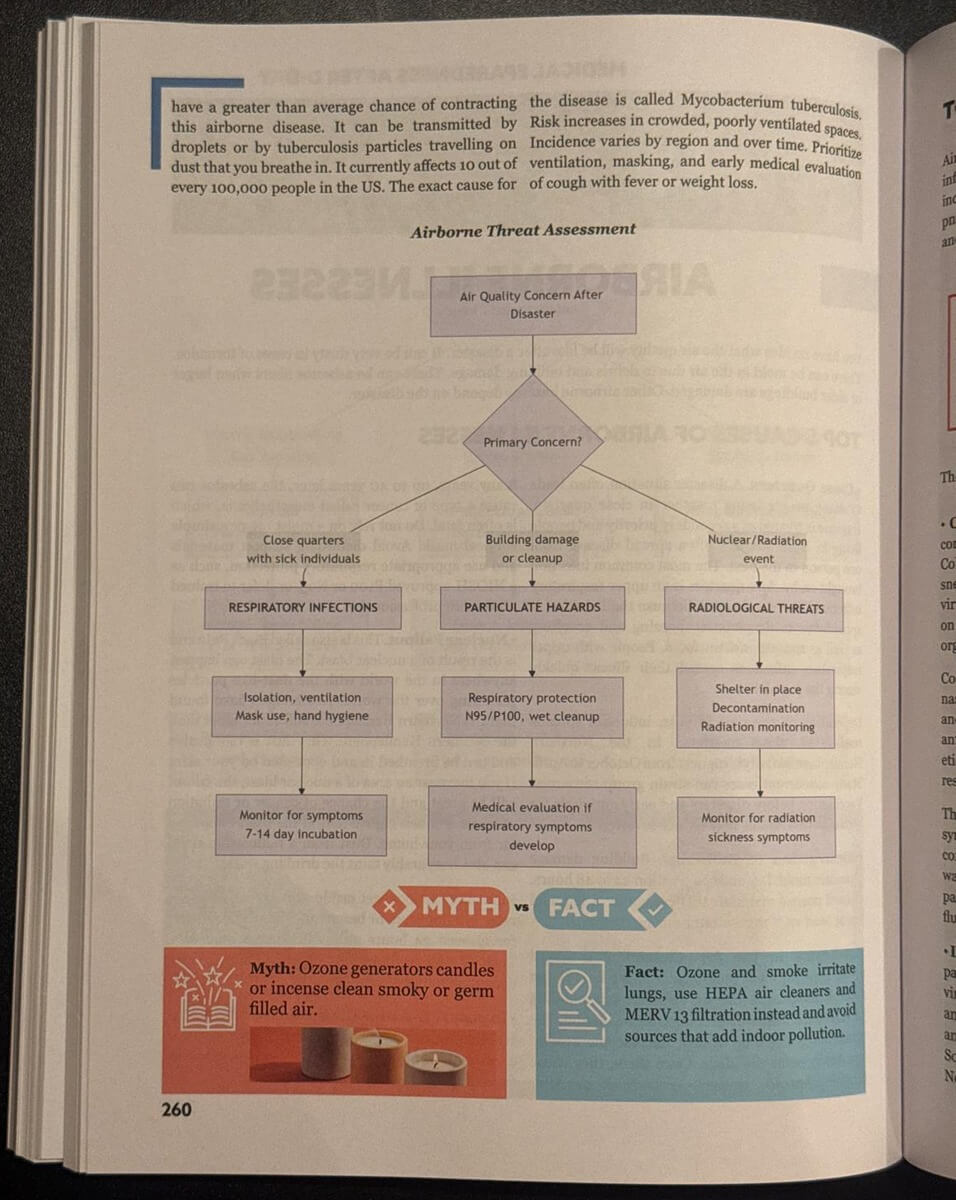
There's an Airborne Threat Assessment chart that sorts the danger into three groups (respiratory infections, particulate hazards and radiological threats) and shows what to do for each.
It also includes a Clinical Safety Note on what to do the moment someone in your group starts coughing or running a fever, a simple plan to keep one sick person from becoming many. And it corrects a popular belief about using candles, incense or ozone generators to "clean" the air.
A Word on Antibiotics
Chapter 17 also explains which types of antibiotics are worth discussing with your doctor for a home medical reserve, and why the book recommends using the narrowest effective drug for the shortest effective time. It's consistent with the book's careful approach throughout: antibiotics have a place, but only with clear indications and a clinician's guidance.
Why Chapter 17 Matters
- It covers the biggest killers after the first days. Infection and dehydration, not injuries.
- It's organized by route. Food, water and air, so you can protect against each one.
- It's practical. Exact food-safety times, cooking temperatures, water storage rules and isolation steps.
- It corrects dangerous myths. About fevers, thawing meat, mountain streams and "air cleaning."
- It protects the whole group. Simple steps to keep one sick person from becoming an outbreak.
What Comes After Chapter 17
Next comes Chapter 18, Climate-Specific Diseases, and the final chapter, Chapter 19, How to Survive Without Prescriptions.
Frequently Asked Questions
What is Chapter 17 of Survival MD about?
Chapter 17, "Infectious Diseases" (pp. 246–262), covers infections that spread in a crisis through food, water and air: the top causes, the most common infections, symptoms, prevention and treatment.
Can you be contagious without a fever?
Yes. Survival MD notes that many respiratory viruses spread before symptoms appear or without fever.
Is clear mountain stream water safe to drink?
No. Survival MD warns that wildlife sheds germs upstream even when water looks perfect, and says to treat all surface water before use.
How long does food stay safe in a fridge or freezer without power?
Chapter 17 gives exact times for a closed refrigerator, a full freezer and a half-full freezer, plus a time-based rule for deciding what to cook, eat or throw away.
Do candles or ozone generators clean the air?
No. Survival MD explains that ozone and smoke irritate the lungs, and recommends proper air filtration instead.
The Bottom Line
Chapter 17 prepares you for the threats you can't see. It shows how infections travel through food, water and air after a disaster, and gives you simple, practical rules to stop each one, so a power outage or a flood doesn't turn into an outbreak in your own home.
You've had a preview. The full food, water and air guidance is in the book.
Medical disclaimer: this article is for general information only and isn't medical advice. Don't start antibiotics without a clinician's guidance. Severe dehydration, bloody diarrhea or high fever need medical care. In an emergency, call 911 or your local emergency number.