More Injuries, and Nowhere to Take Them
On a normal day, a deep cut or a sprained ankle means a quick trip to urgent care. In a disaster, that option disappears, and the number of injuries usually goes up.
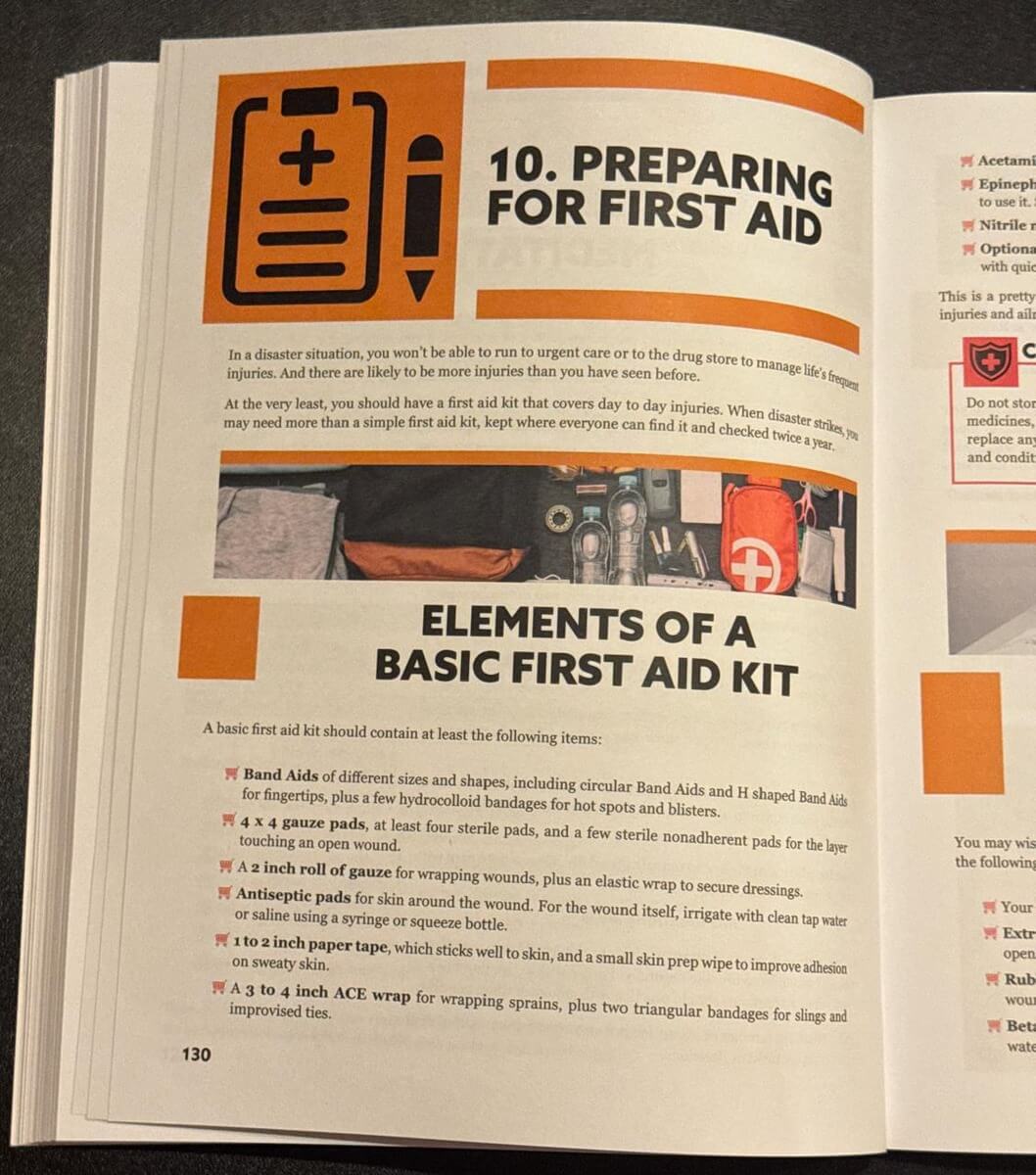
Chapter 10 of Survival MD, "Preparing for First Aid" (pages 130–142), starts with exactly that warning: "In a disaster situation, you won't be able to run to urgent care or to the drug store to manage life's frequent injuries. And there are likely to be more injuries than you have seen before."
This is the chapter where all the preparation in the first half of the book becomes concrete: four kits you can actually build, a master inventory to track them, and the first aid techniques you need to use them.
Four Kits, From Your Kitchen to Your Car
Chapter 10 is built around four kits, each one designed for a different situation:
| Kit | What it's for | Items in the inventory |
|---|---|---|
| Basic First Aid Kit | Everyday cuts, scrapes, sprains and minor injuries | 21 |
| Comprehensive First Aid Kit | Complex problems: serious bleeding, burns, bites, eye injuries | 30 |
| Bug-Out Bag Kit | Your main survival bag for the first 72 hours on the move | 67 |
| Bug-Out Vehicle Kit | Everything you need to leave by car, and keep the car going | 29 |
Each one gets a full item-by-item explanation in the chapter, with notes on what each item is for and how to choose the right version.
Kit 1: The Basic First Aid Kit
This is the kit every home should have, disaster or not. The book lists exactly what goes in it, down to details most store-bought kits miss, like the specific bandage shapes that fit fingertips and the dressings that won't stick to an open wound.
It also includes a Clinical Safety Note we'll share, because so many families get it wrong:
- Don't store first aid kits in hot cars or damp bathrooms. Heat and moisture weaken gloves, degrade medicines and ruin adhesive dressings.
- Check your kit every six months, and replace anything opened, wet or expired.
- Add a small card with each person's allergies and conditions, in case labels go missing.
Kit 2: The Comprehensive First Aid Kit
This kit builds on the basic one for the injuries that ordinary first aid boxes can't handle. It covers supplies for life-threatening bleeding, burns, eye injuries, snakebites and more, plus protective gear for the person giving care.
It also tells you what not to keep, or not to use the way most people do, including a common household product that shouldn't be poured routinely into open wounds.
And it includes a Myth vs. Fact box we'll share in full:
Myth vs. Fact
Myth: Tight bandaging stops snakebite venom.
Fact: Avoid tourniquets and cutting or suction kits. Keep the person still, gently immobilize the limb with a splint, mark swelling times and move toward expert care.
Kit 3: The Bug-Out Bag
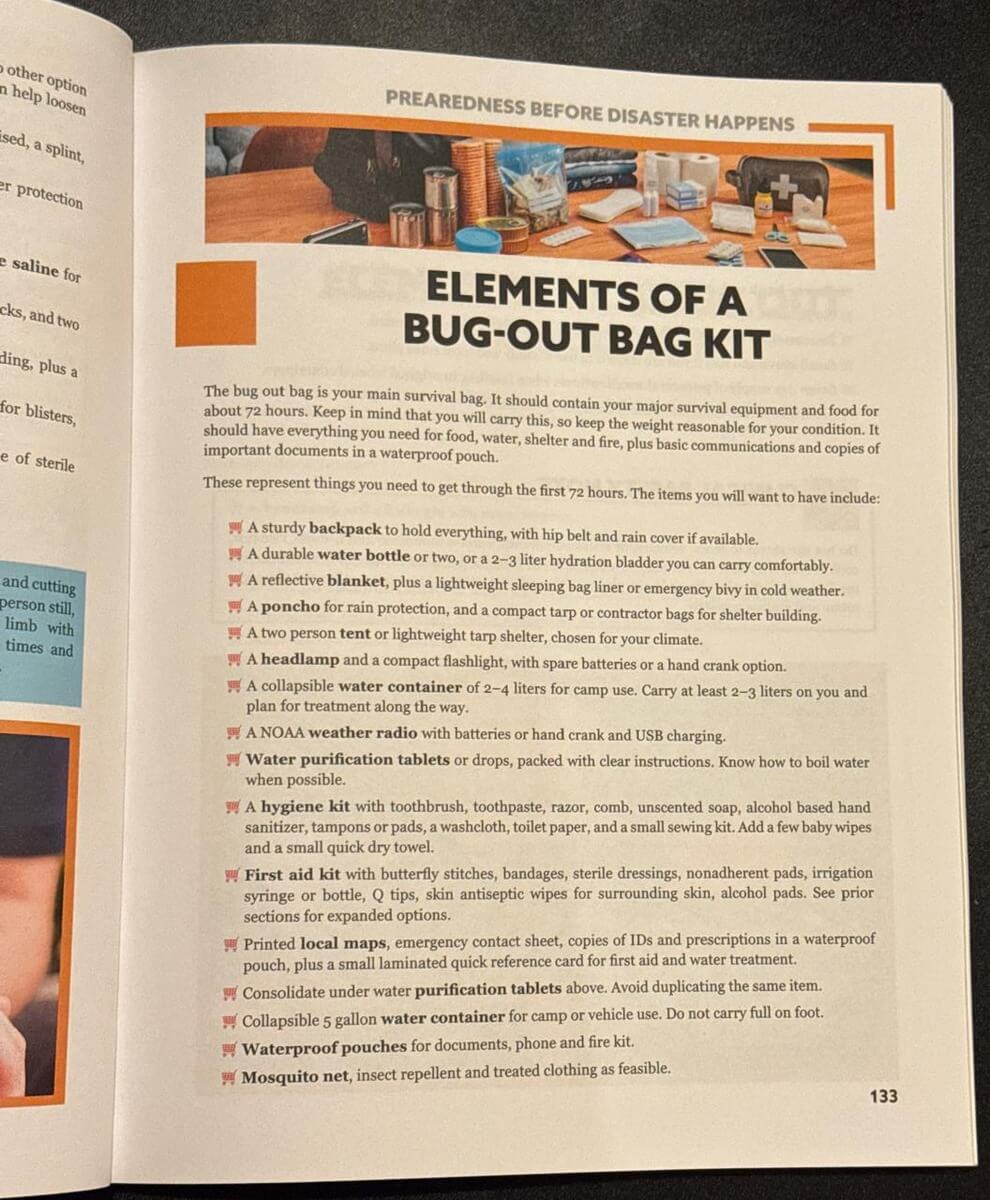
If you ever have to leave home fast, the bug-out bag is what you grab. Survival MD defines it as your main survival bag, with everything you need for about 72 hours: food, water, shelter, fire, basic communications and copies of important documents.
What we liked is how practical the advice is. The book reminds you that you'll be carrying this bag, so the weight has to match your physical condition. It also covers details people forget, like waterproofing documents, carrying a few days of personal medications in labeled containers, and caring for your feet on a long walk.
There's also a safety note about cooking stoves and carbon monoxide, and how to keep heat-sensitive medicines like insulin and epinephrine within safe temperatures on the move.
Kit 4: The Bug-Out Vehicle Kit
If you're lucky enough to leave by car, you'll need more than a full tank. This section covers what to keep in the vehicle, from light, shelter and water to the tools that get a stuck or broken-down car moving again, plus seasonal gear for winter roads.
It also corrects a dangerous myth about staying warm in a car during a storm. The book explains why running the engine nonstop can be deadly, and the safer way to stay warm.
The 147-Item Crisis Preparedness Master Inventory
All four kits come together in one of the most popular parts of the book: the Crisis Preparedness Master Inventory, a five-page printable checklist with 147 items, quantities calculated for 2 adults and 1 child for 30 days.
Every item is color-coded by priority, from critical (life-saving) to optional, so you know what to buy first if your budget is limited. 85 items are marked critical. At the bottom, there's a scorecard to track your completion rate and your next review date.
We wrote a full article about it here: The 147-Item Home Medical Inventory.
The First Aid Techniques You Need to Learn
A kit is only as good as the person using it. That's why Chapter 10 ends with two short sections on technique.
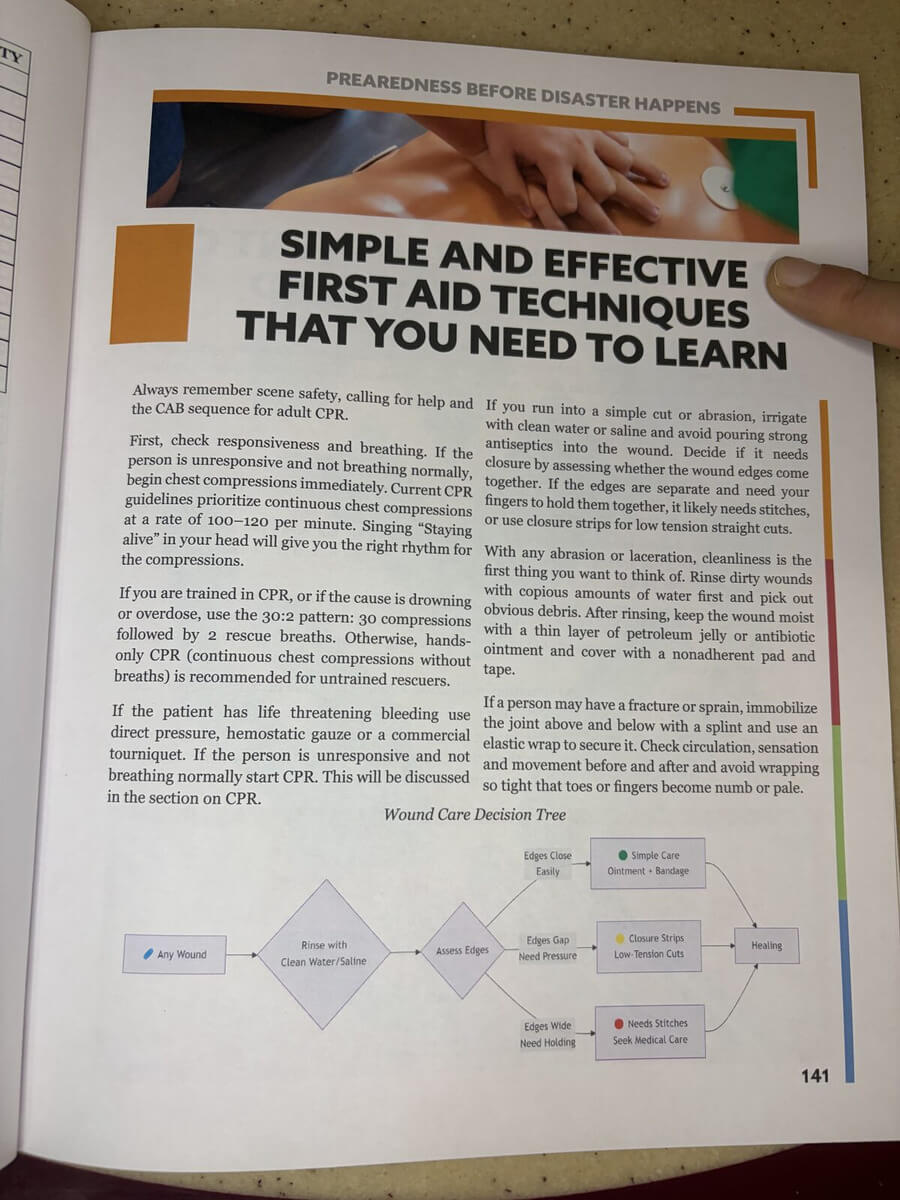
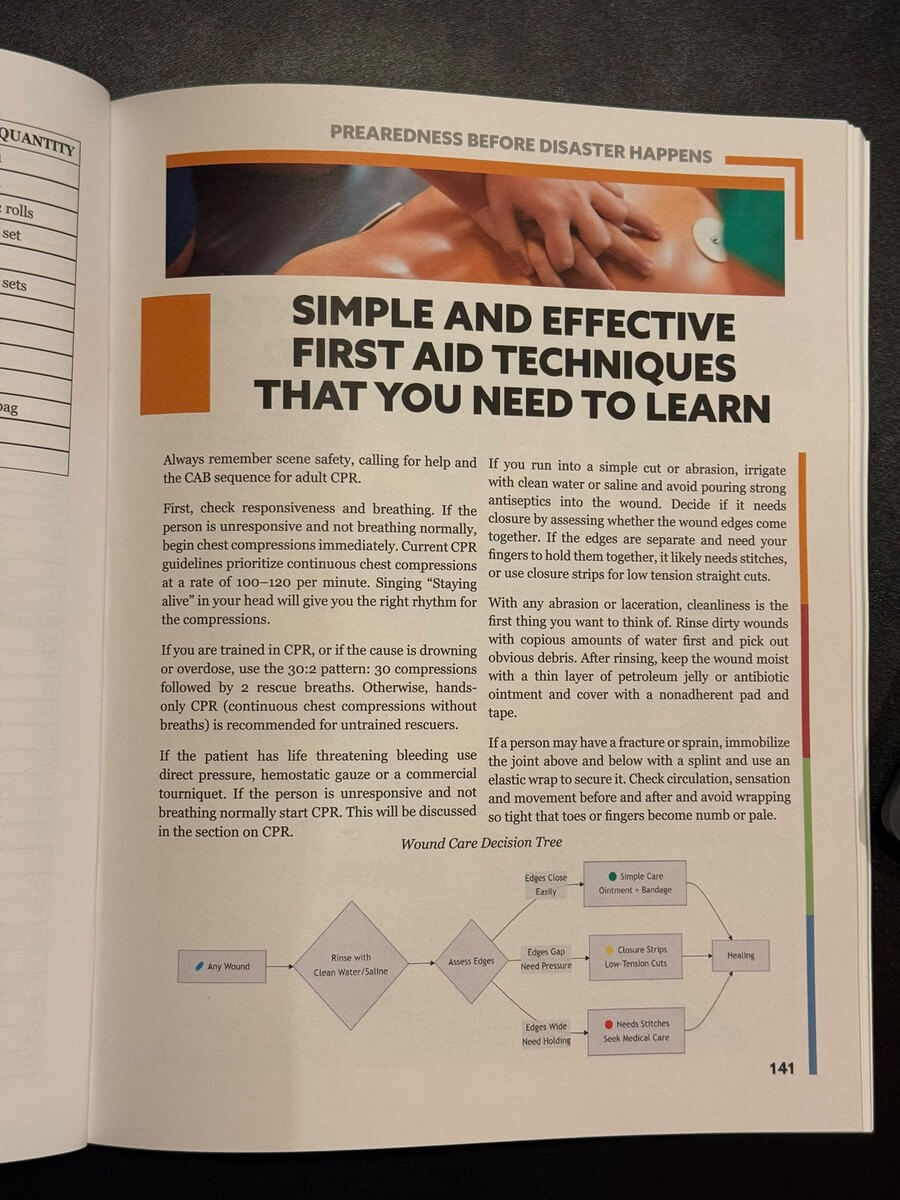
Simple and Effective First Aid Techniques
This section covers the basics everyone should know: scene safety, calling for help, the order of steps for CPR, controlling serious bleeding, deciding whether a cut needs closing, keeping wounds clean and immobilizing a possible fracture.
One tip we'll share: when doing chest compressions, the book recommends a rate of 100 to 120 per minute, and singing "Stayin' Alive" in your head gives you the right rhythm.
The section also includes a Wound Care Decision Tree: a simple visual that helps you decide whether a wound needs simple care, closure strips or stitches. The full chart is in the book.
Treatment of a Bullet Wound
The final page covers something most families hope never to face: a gunshot wound. The book walks through a clear, step-by-step ABCDE approach, from protecting the airway to controlling bleeding and preventing hypothermia, so that anyone can act calmly until help arrives.
Why Chapter 10 Matters
- It's ready to build. Four kits, item by item, for home, travel and evacuation.
- It tells you what matters most. A 147-item inventory, color-coded by priority.
- It's sized for a real family. Quantities calculated for 2 adults and 1 child for 30 days.
- It's safe. Clear notes on storage, carbon monoxide and the myths that cause harm.
- It teaches you to use it. Core first aid techniques, from CPR to bleeding control.
If you only read one preparation chapter before a storm season, this is the one.
What Comes After Chapter 10
Next comes Chapter 11, Emergency Sanitation, the last of the preparation chapters. Then the second half of Survival MD turns to what to do when an emergency actually happens: what to do when there is no doctor, the medical emergency protocol, CPR for adults, children and babies, and common illnesses in a crisis.
Frequently Asked Questions
What is Chapter 10 of Survival MD about?
Chapter 10, "Preparing for First Aid" (pp. 130–142), covers four kits (basic first aid, comprehensive first aid, bug-out bag and bug-out vehicle), the 147-item Crisis Preparedness Master Inventory, simple first aid techniques and how to treat a bullet wound.
What is the 147-item Master Inventory?
It's a printable checklist in Chapter 10 that combines all four kits into 147 items, with quantities for 2 adults and 1 child for 30 days, color-coded by priority. 85 items are marked critical.
How long should a bug-out bag last?
Survival MD recommends packing a bug-out bag with everything you need for about 72 hours.
Where should I store a first aid kit?
In a cool, dry place where everyone can find it. Survival MD warns against hot cars and damp bathrooms and recommends checking the kit every six months.
Should you use a tight bandage or suction kit for a snakebite?
No. Survival MD says to avoid tourniquets and cutting or suction kits, keep the person still, gently immobilize the limb and move toward expert care.
The Bottom Line
Chapter 10 is where Survival MD stops talking about preparation and hands you the plan: four kits, one master inventory and the first aid skills to use them. It's the chapter most families will print, highlight and come back to again and again.
You've had a preview. The full kit lists, master inventory and techniques are in the book.
Medical disclaimer: this article is for general information only and isn't medical advice. Take a certified first aid and CPR course whenever you can. In an emergency, call 911 or your local emergency number.