When the Pharmacy Is Closed and the Garden Isn't
Picture it: a week into a power outage, the roads are still blocked, someone in the house has a fever and a cough, and the medicine cabinet is running low. What's left is what's in the kitchen and the garden.
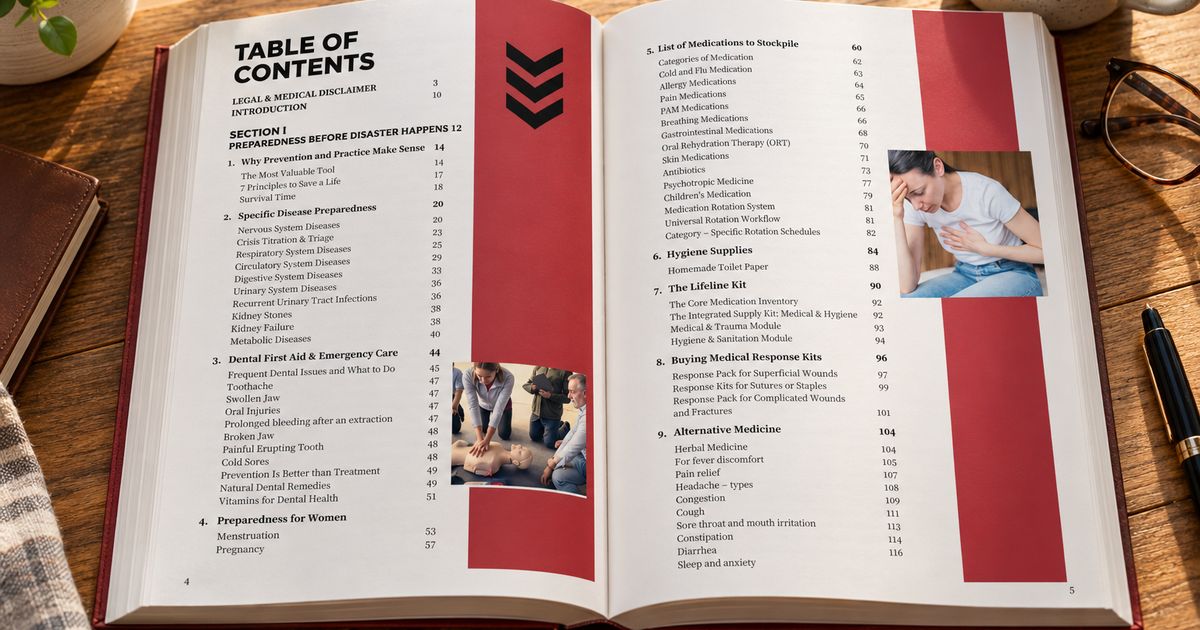
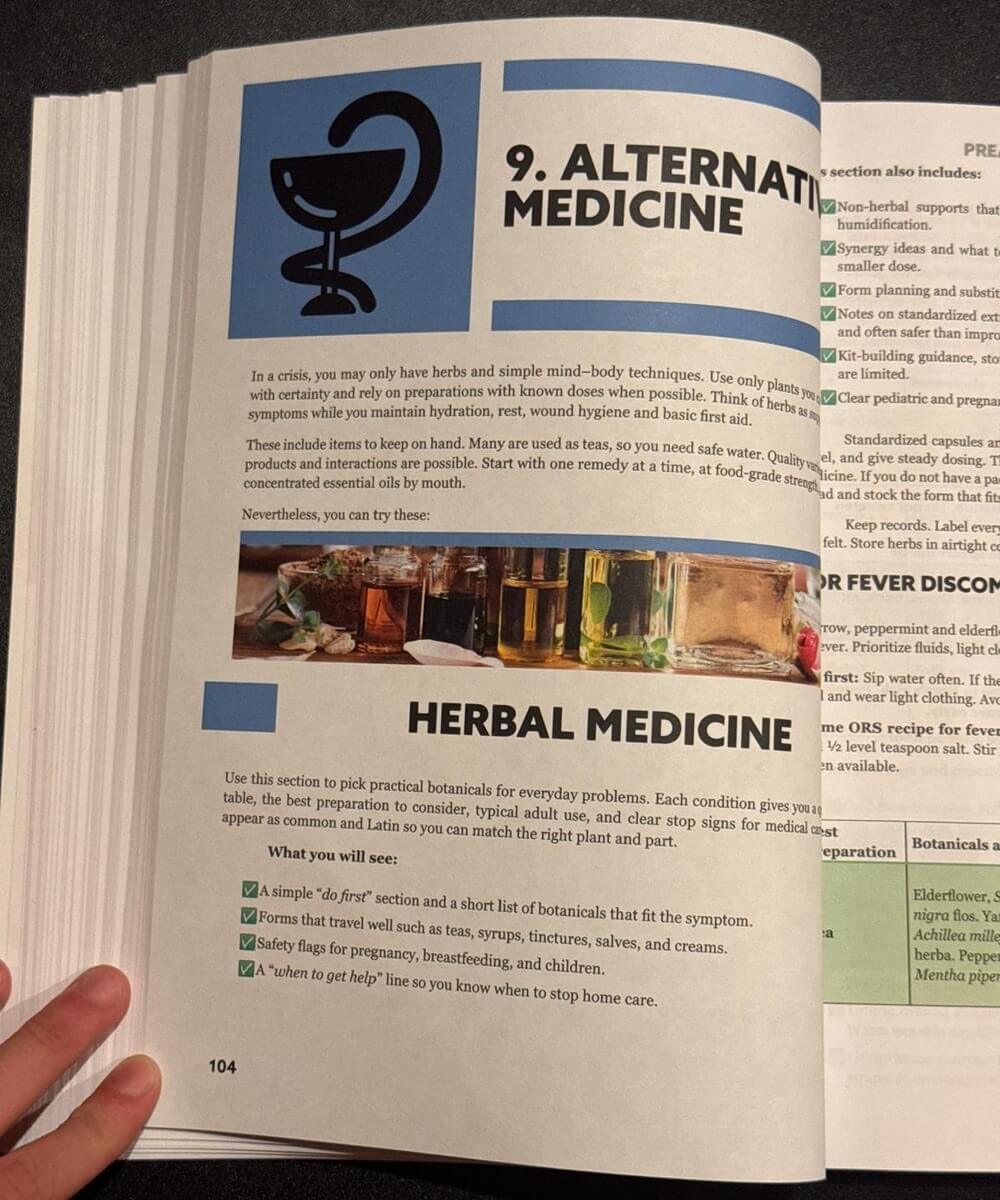
That's the situation Chapter 9 of Survival MD, "Alternative Medicine" (pages 104–129), prepares you for. It opens with a realistic line: "In a crisis, you may only have herbs and simple mind–body techniques."
But this isn't a chapter full of folk cures and wishful thinking. Dr. Radu Scurtu treats natural remedies the way a doctor would: what helps, how much, for whom, what to avoid and, most importantly, when to stop home care and get help. At 26 pages, it's the longest chapter in the first half of the book.
The Ground Rules for Using Herbs Safely
Before a single remedy, the chapter sets out its rules, and they're the reason we trust it:
- Use only plants you can identify with certainty. Plants are listed by common and Latin name, so you can match the right plant and the right part.
- Prefer preparations with known doses whenever possible.
- Start with one remedy at a time, at food-grade strength.
- Never take concentrated essential oils by mouth.
- Herbs support, they don't replace hydration, rest, wound hygiene and basic first aid.
It also explains why standardized extracts have a place in a home kit (they store well, travel well and give steady dosing) and how to keep simple records: label every jar with the plant, the part, the form, the date and the source.
How Every Section Works
Chapter 9 covers 14 common problems, and each one follows the same easy structure:
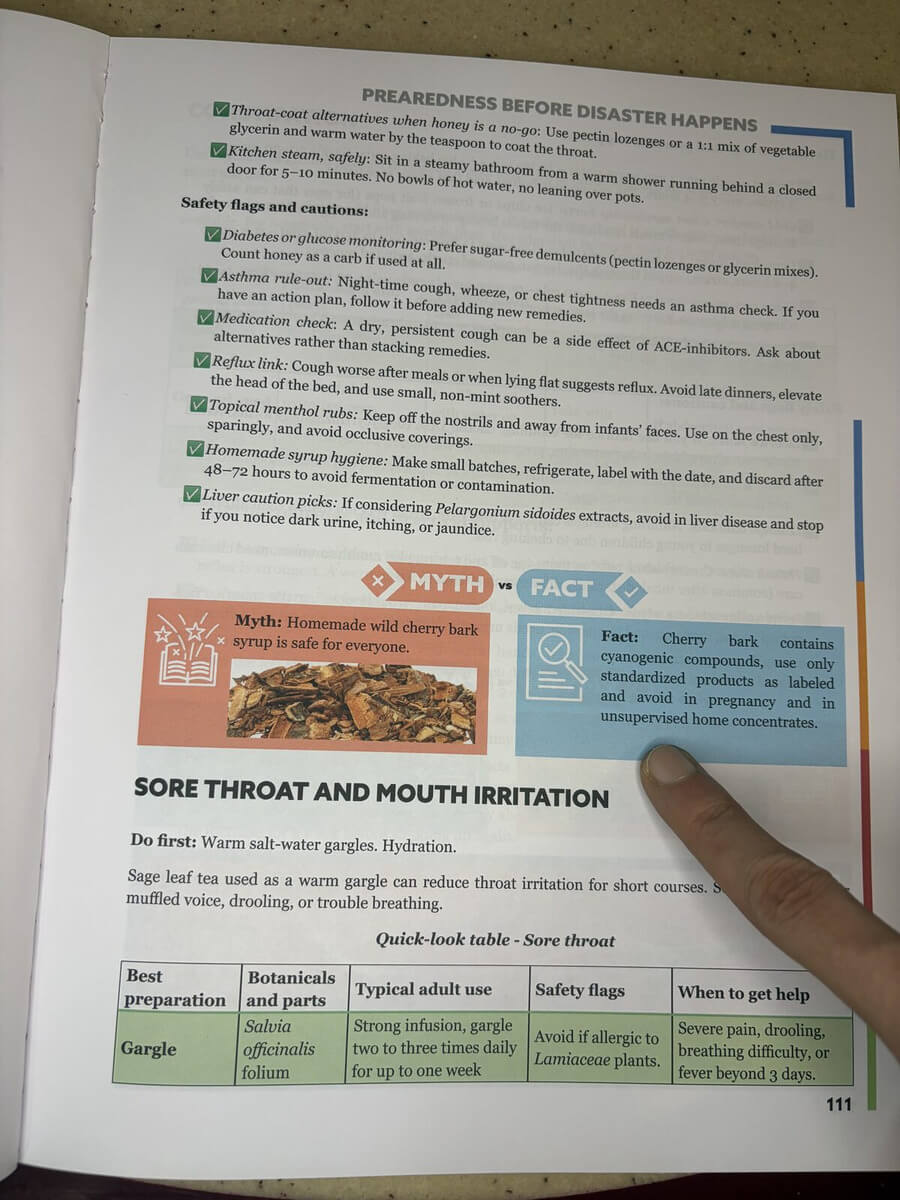
- Do first: the simple, non-herbal steps that matter most
- A quick-look table: the best preparation, the plants and parts to use, typical adult use, safety flags and when to get help
- Herbal pairings and practical supports: small tricks that get more comfort from a smaller dose
- Safety flags and cautions: with clear warnings for pregnancy, breastfeeding, children and common medications
- A Myth vs. Fact box: correcting a popular "natural" remedy that doesn't work, or does harm
Once you've read one section, you can use them all, even when you're tired, stressed and looking after someone who's sick.
The 14 Problems Covered
| Area | What the chapter covers |
|---|---|
| Fever and pain | Fever discomfort, aches and strains, headache types |
| Breathing and throat | Congestion, cough, sore throat and mouth irritation |
| Digestion | Constipation, diarrhea, nausea and motion sickness |
| Mind and body | Sleep and anxiety, stress and energy support |
| Skin and other | Minor skin issues, bites, stings and itch, urinary tract support |
Each section includes practical extras that most herbal guides never mention: how to set up a sick room, how to pace fluids when someone is vomiting, a simple breathing routine to help clear mucus, a better gargle mix for a sore throat, a posture trick for constipation and much more.
There's also a home oral rehydration recipe for fever and diarrhea, using ingredients almost every kitchen has. Exact amounts are in the book.
The Myths That Make "Natural" Dangerous
Natural doesn't always mean safe, and Chapter 9 is packed with Myth vs. Fact boxes that prove it. Here's one we'll share:
Myth vs. Fact
Myth: Arnica is safe to take by mouth and to rub on any painful area because it is natural.
Fact: Concentrated arnica taken orally can be toxic to the heart and liver, and topical arnica belongs only on intact skin.
The other myths answer questions many families get wrong:
- Do vinegar-soaked socks really bring a fever down?
- Is oregano oil a natural cure for sinus infections?
- Is homemade wild cherry bark syrup safe for everyone?
- Do cayenne gargles "burn out" a throat infection?
- Do herbal colon cleanses remove toxins?
- Is very strong black tea a harmless fix for loose stools?
- Does more valerian mean better sleep?
- Do garlic or onion poultices help skin problems?
The answers, and what to do instead, are in the book.
Safety Built Into Every Page
What we like most about this chapter is how seriously it takes safety. A few examples of the warnings it includes:
- Babies under 3 months with any fever need medical evaluation.
- No honey for children under 1 year.
- Never give aspirin to children or teens.
- Some herbs interact with blood thinners and other medicines, and the book flags them.
- Some herbs reduce milk supply while breastfeeding, and the book suggests swaps.
Every section ends with a clear "when to get help" line, so you know exactly when home care isn't enough anymore.
The Crisis Herbal Stockpile Checklist
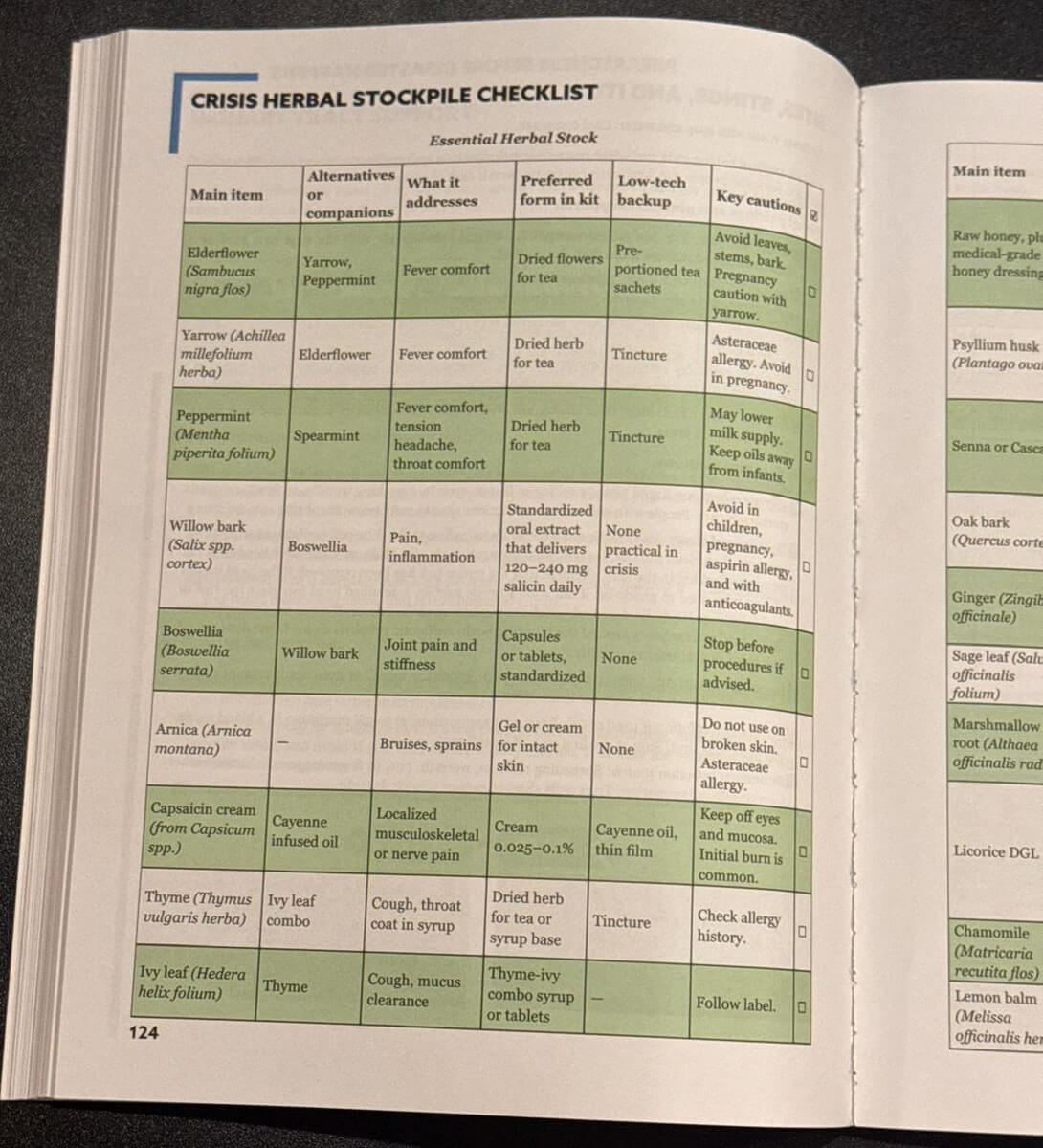
After the 14 conditions, the chapter turns everything into a multi-page, printable stockpile checklist. For each main item, it lists:
- Alternatives or companion herbs
- What it addresses
- The preferred form to keep in your kit
- A low-tech backup if you can't get that form
- Key cautions
- A box to tick off
It's organized into groups like essential herbal stock, hydration and digestion support, and skin and wound care, followed by a list of preparation supplies (everything you need to make teas, syrups, tinctures and ointments) and practical supports that boost what herbs can do.
Meditation: The Remedy That Needs No Supplies
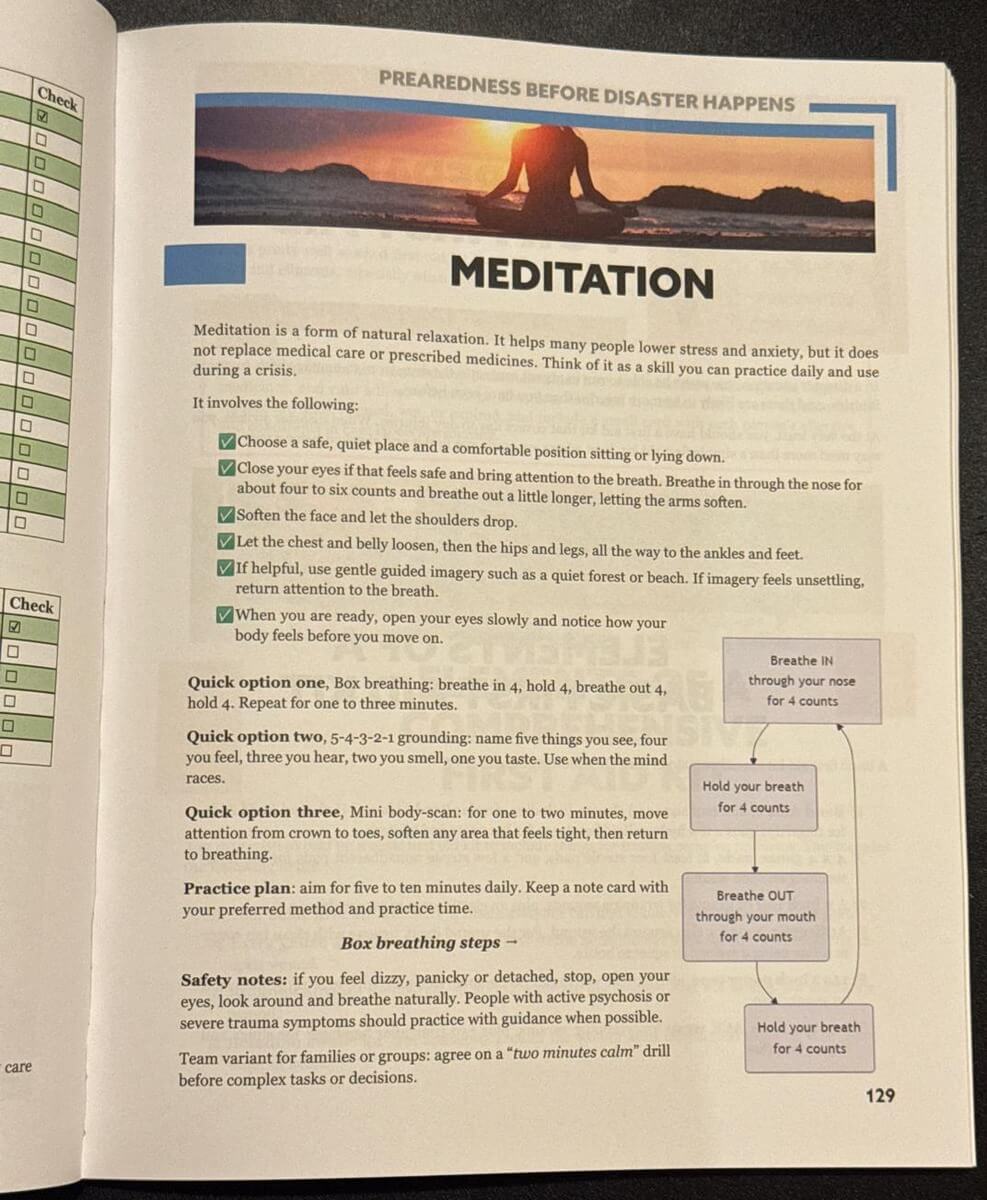
The chapter ends with a short section on meditation, a skill you can practice daily and use in a crisis, with no supplies at all. The book is clear that it doesn't replace medical care, but it helps many people lower stress and anxiety when everything else feels out of control.
One technique we'll share: box breathing. Breathe in for 4 counts, hold for 4, breathe out for 4, hold for 4. Repeat for one to three minutes.
The book adds two more quick options, a simple daily practice plan, safety notes and a "two minutes calm" drill for families and groups before hard decisions.
Why Chapter 9 Matters
- It works when medicine runs out. Practical options for common problems when the pharmacy isn't an option.
- It's evidence-minded. It tells you where herbs help, and where they don't.
- It's safe. Clear flags for children, pregnancy, breastfeeding and medication interactions.
- It's organized. The same five-part structure for every condition, plus a printable stockpile checklist.
- It knows its limits. Every section tells you when to stop and get help.
And if you want to go further, the bonus guide When There's No Pharmacy builds on this chapter with more on managing without prescriptions.
What Comes After Chapter 9
Next, Survival MD covers preparing for first aid, including the full 147-item Crisis Preparedness Master Inventory, and emergency sanitation, before the second half of the book turns to what to do when an emergency actually happens.
Frequently Asked Questions
What is Chapter 9 of Survival MD about?
Chapter 9, "Alternative Medicine" (pp. 104–129), explains how to use herbs and simple mind-body techniques safely in a crisis, covering 14 common problems, a Crisis Herbal Stockpile Checklist and a section on meditation.
Which conditions does Chapter 9 cover?
Fever, aches and strains, headache, congestion, cough, sore throat, constipation, diarrhea, sleep and anxiety, nausea and motion sickness, minor skin issues, stress and energy, urinary tract support, and bites, stings and itch.
Does Survival MD say herbs can replace medicine?
No. The book presents herbs as supportive care for symptoms, alongside hydration, rest, hygiene and first aid, and every section includes a "when to get help" line.
Is it safe to take essential oils by mouth?
No. Survival MD warns that concentrated essential oils should never be taken by mouth.
Does Chapter 9 include a stockpile list?
Yes. The Crisis Herbal Stockpile Checklist covers herbs, preferred forms, low-tech backups, key cautions, preparation supplies and practical supports.
The Bottom Line
Chapter 9 gives you what most herbal books don't: natural remedies with real guardrails. It shows what to use, how to use it, who should avoid it and when to stop and get help, so that when the medicine cabinet is empty, you still have options that are safe.
You've had a preview. The full quick-look tables, safety flags, recipes and stockpile checklist are in the book.