The Problem Nobody Wants to Talk About
Here's a question most preparedness plans skip: what happens when the toilet stops flushing and the garbage truck stops coming?
It happens faster than people think. After floods, hurricanes and long power outages, water and sewer systems fail, trash collection stops, and within days waste is piling up inside and around homes. That's when diseases spread, often hitting the people you most want to protect.
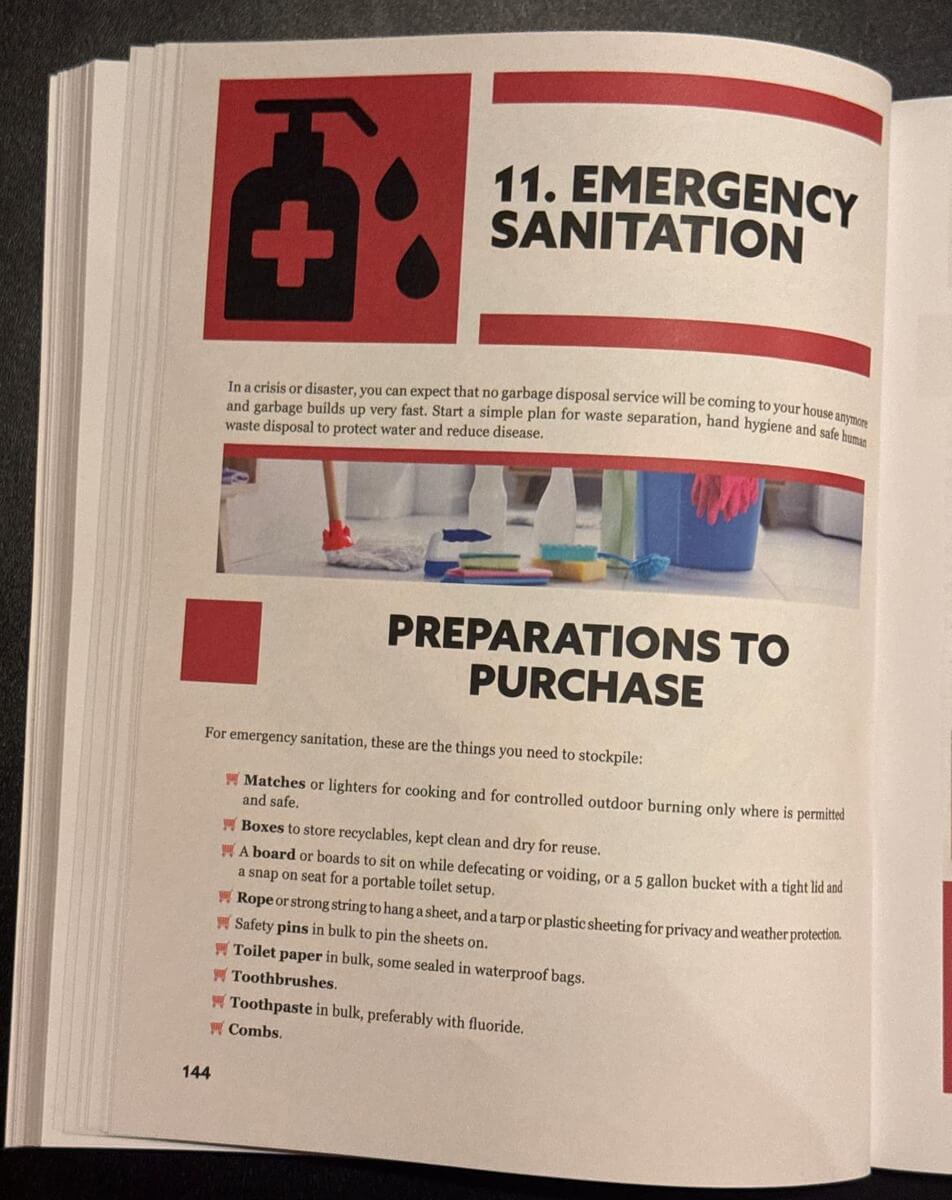
Chapter 11 of Survival MD, "Emergency Sanitation" (pages 144–148), tackles the subject head-on. As Dr. Radu Scurtu puts it: "In a crisis or disaster, you can expect that no garbage disposal service will be coming to your house anymore and garbage builds up very fast."
His answer is a simple plan built on three things: waste separation, hand hygiene and safe human waste disposal, to protect your water and reduce disease when you can't reach a doctor.
How Chapter 11 Is Different From the Hygiene Chapter
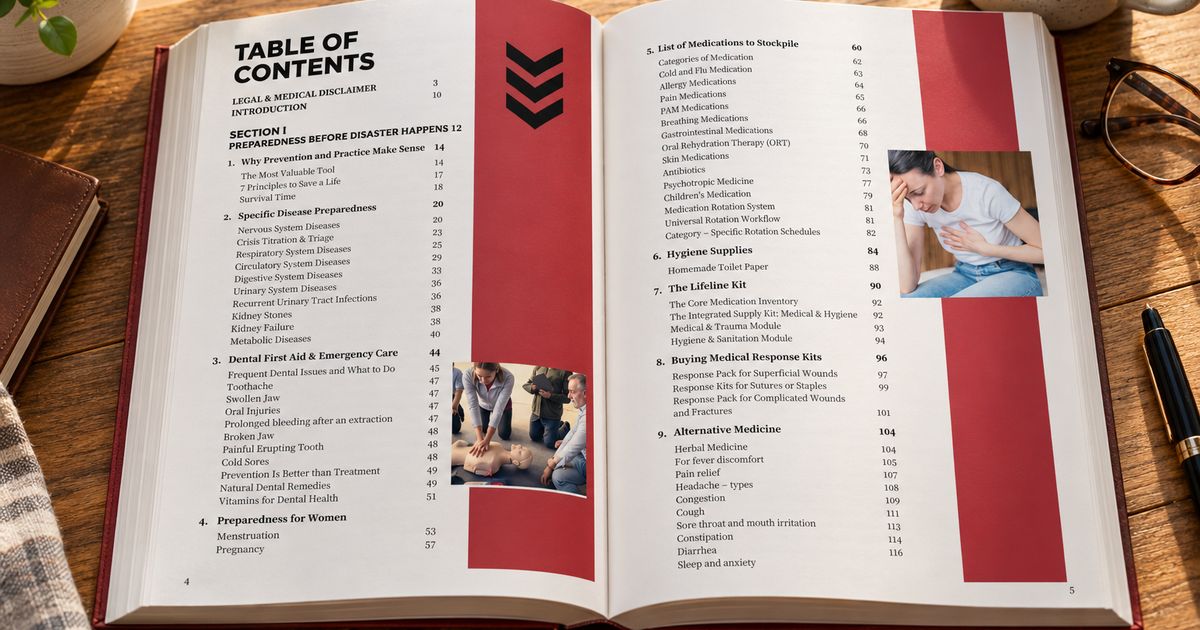
Earlier in the book, Chapter 6 covers hygiene supplies: the soap, toothbrushes and cleaning products that keep people clean. Chapter 11 goes a step further and covers sanitation, the systems that keep a whole household safe when the normal infrastructure fails:
- Where everyone goes to the bathroom when the toilet doesn't work
- How to contain and store waste safely
- How to set up a working handwashing station without running water
- How to wash clothes and bodies without contaminating drinking water
- What to do with food scraps and organic waste
It's the practical, unglamorous side of preparedness, and it's exactly why families who plan for it stay healthier.
Part 1: The Sanitation Stockpile
The heart of the chapter is a list of more than 25 items to buy now, while stores are open and prices are normal. It's grouped around a few practical needs:
| Need | What the list covers |
|---|---|
| A working toilet | A portable toilet setup and the supplies that make it safe and odor-free |
| Privacy and shelter | Simple materials to create a private space, even outdoors |
| Waste containment | Bags, ties and covering materials to store and move waste safely |
| Handwashing | Everything for a simple handwashing station, without running water |
| Laundry | A low-tech setup for washing and drying clothes |
| Personal care | The everyday items that keep people clean and comfortable |
| Protection and disinfecting | Gloves, eye protection and the right disinfectant for the job |
Many of the items cost just a few dollars, and some of the most useful ones you might already have in the garage. The full list, with the details of the portable toilet setup, is in the book.
A Safety Note Everyone Should Read
Disinfecting is a big part of sanitation, and the wrong approach can be dangerous. Chapter 11 includes a Clinical Safety Note we'll share in full:
- Don't premix or store bleach or calcium hypochlorite solutions in closed bottles. Gas pressure can build up and containers can burst.
- Keep calcium hypochlorite dry and away from acids, fuels and metals.
- Mix outdoors with clean water only, make fresh disinfectant each day and label it clearly.
Part 2: Personal Hygiene Off the Grid
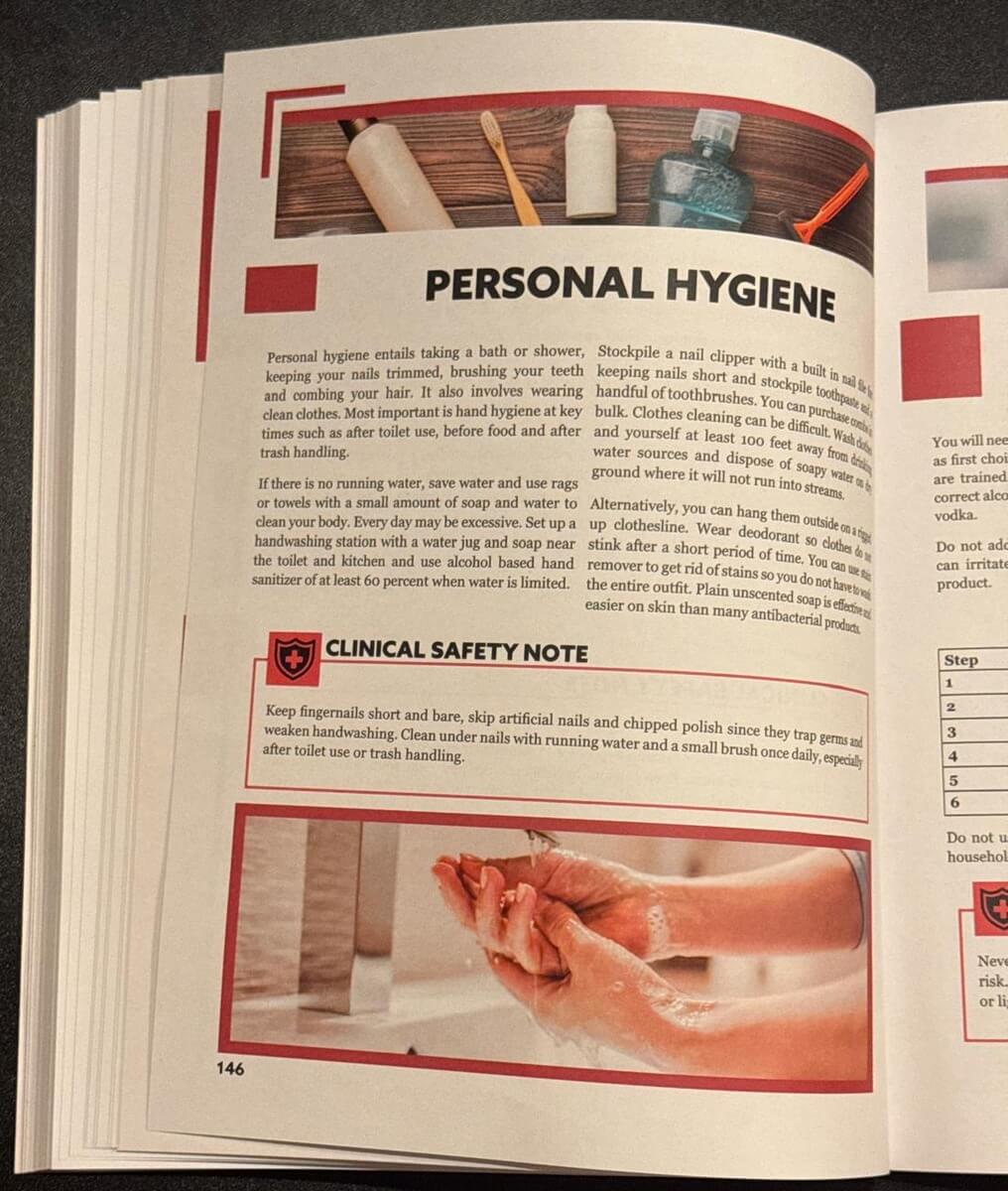
The second section explains how to stay clean when there's no running water, with a realistic, water-saving approach. Among other things, it covers:
- When hand hygiene matters most, and where to place a handwashing station so people actually use it
- How to clean your body with very little water (and why washing every day may not be necessary)
- How far to stay from drinking water sources when washing clothes or yourself, and where to dump soapy water
- A few simple tricks to make clothes last longer between washes
It also includes a Clinical Safety Note on something most people never think about in a crisis: fingernails. Short, bare nails make handwashing far more effective, and the book explains why artificial nails and chipped polish are a problem.
Part 3: Making Homemade Hand Sanitizer
What if the stores are empty and you run out of hand sanitizer? Chapter 11 includes a section on making your own, but it does it responsibly.
The book is clear that commercial sanitizer or soap and water should always come first, and that home production is a last resort. When it's truly necessary, it follows a WHO-style formulation with exact quantities and a six-step production process table, each step with its own critical check.
It also warns against the shortcuts people try in desperation:
- Don't use whiskey, rum or vodka. They aren't strong enough.
- Don't add scents, essential oils or coloring. They can irritate skin and tempt children to drink it.
- Never use methanol or industrial alcohol, and never store sanitizer in drink bottles.
- Vinegar doesn't disinfect hands.
The exact formula and steps are in the book.
Part 4: Composting Your Waste
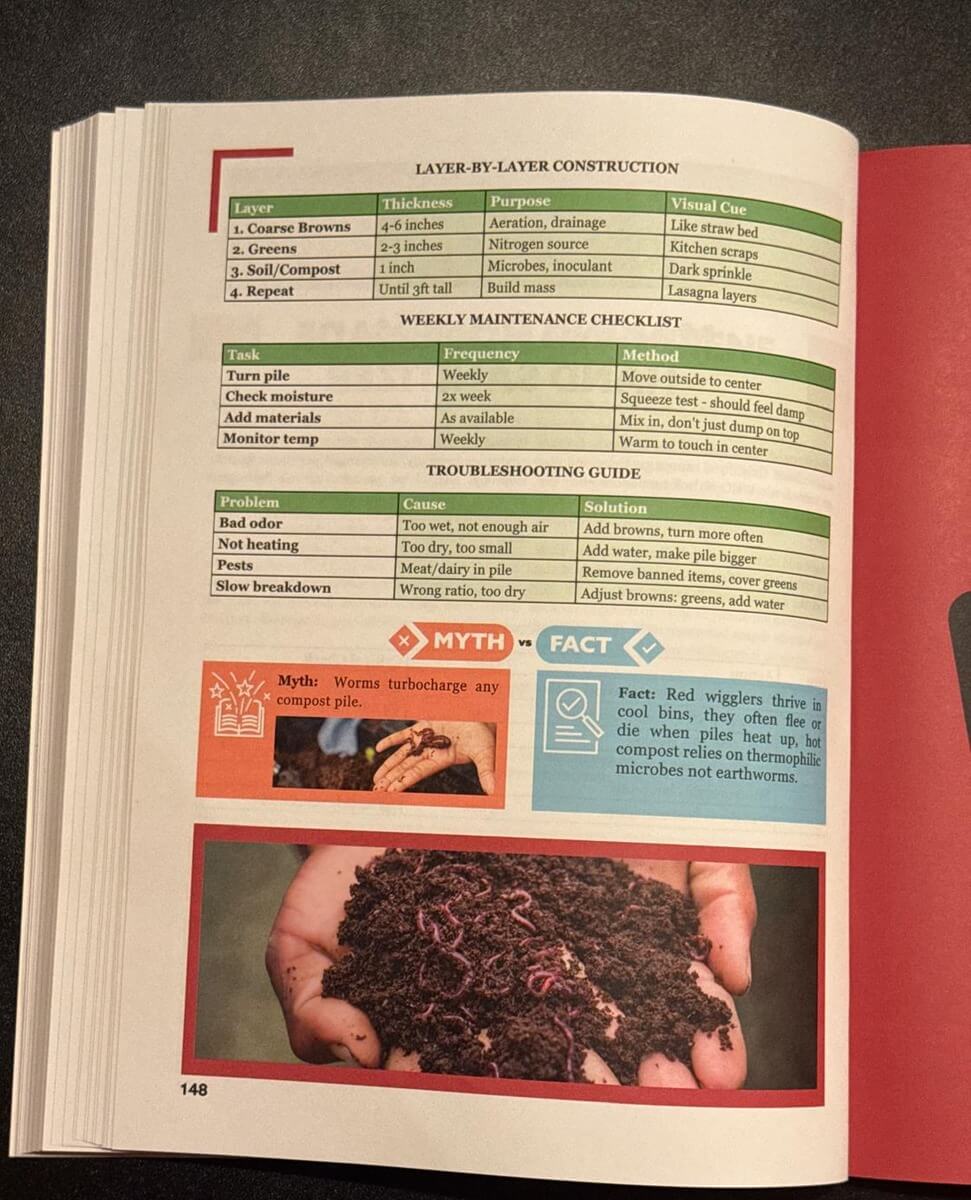
The chapter ends with something you might not expect in a medical book: a practical guide to composting food scraps and organic waste, so it doesn't pile up and attract pests.
It's laid out in three simple tables:
- Layer-by-layer construction: how to build a working pile, with thicknesses and a visual cue for each layer
- Weekly maintenance checklist: what to check, how often and how
- Troubleshooting guide: what to do if the pile smells, won't heat up, attracts pests or breaks down too slowly
And it closes with a Myth vs. Fact box that surprises most gardeners:
Why Chapter 11 Matters
- It prevents disease at the source. Safe waste and hand hygiene stop infections before they start.
- It covers what others skip. Toilets, trash and laundry are rarely in preparedness books, but they're unavoidable in a real crisis.
- It's cheap to prepare. Most items are inexpensive and easy to find.
- It's safe. Clear rules for disinfectants, homemade sanitizer and protecting drinking water.
- It's practical. Simple setups anyone in the family can manage.
The End of Section I, and What Comes Next
Chapter 11 closes Section I of Survival MD, the preparation half of the book. From here, Section II, "Medical Preparedness After D-Day," turns to what to do when an emergency actually happens:
- What to do when there is no doctor around, including the book's TeCaMoLo Principle and how to recognize the signs of medical distress
- The medical emergency protocol
- CPR for adults, children and babies
- Common illnesses in a crisis, bleeding, wounds, burns, fractures and much more
Frequently Asked Questions
What is Chapter 11 of Survival MD about?
Chapter 11, "Emergency Sanitation" (pp. 144–148), covers what to stockpile for sanitation in a crisis, personal hygiene without running water, making homemade hand sanitizer safely and composting organic waste.
What's the difference between Chapter 6 and Chapter 11?
Chapter 6 covers hygiene supplies such as soap, toothbrushes and cleaning products. Chapter 11 covers sanitation: toilets, waste containment, handwashing stations, laundry and composting when normal services stop.
Does Survival MD explain how to make hand sanitizer?
Yes. It includes a WHO-style formula and a step-by-step production table, while stressing that commercial sanitizer or soap and water should come first.
Can you make hand sanitizer with vodka?
No. Survival MD warns against using whiskey, rum or vodka, because they aren't strong enough.
Is it safe to store mixed bleach solution?
No. The book warns not to premix or store bleach or calcium hypochlorite solutions in closed bottles, because pressure can build and containers can burst. Make fresh disinfectant each day.
The Bottom Line
Chapter 11 handles the part of a disaster nobody likes to think about, and it does it in a calm, practical way. Toilets, trash, clean hands and clean clothes may not sound like medicine, but they prevent more illness than almost anything else you can do.
You've had a preview. The full stockpile list, sanitizer formula and composting guide are in the book.
Medical disclaimer: this article is for general information only and isn't medical advice. Handle disinfectants and alcohol with care and keep them away from children and open flames. In an emergency, call 911 or your local emergency number.