The Quiet Threat After Every Disaster
When people picture a disaster, they picture the event itself: the storm, the flood, the collapsed roof. What they rarely picture is what comes in the days and weeks after, when water is scarce, trash piles up and nobody has had a proper wash in a week.
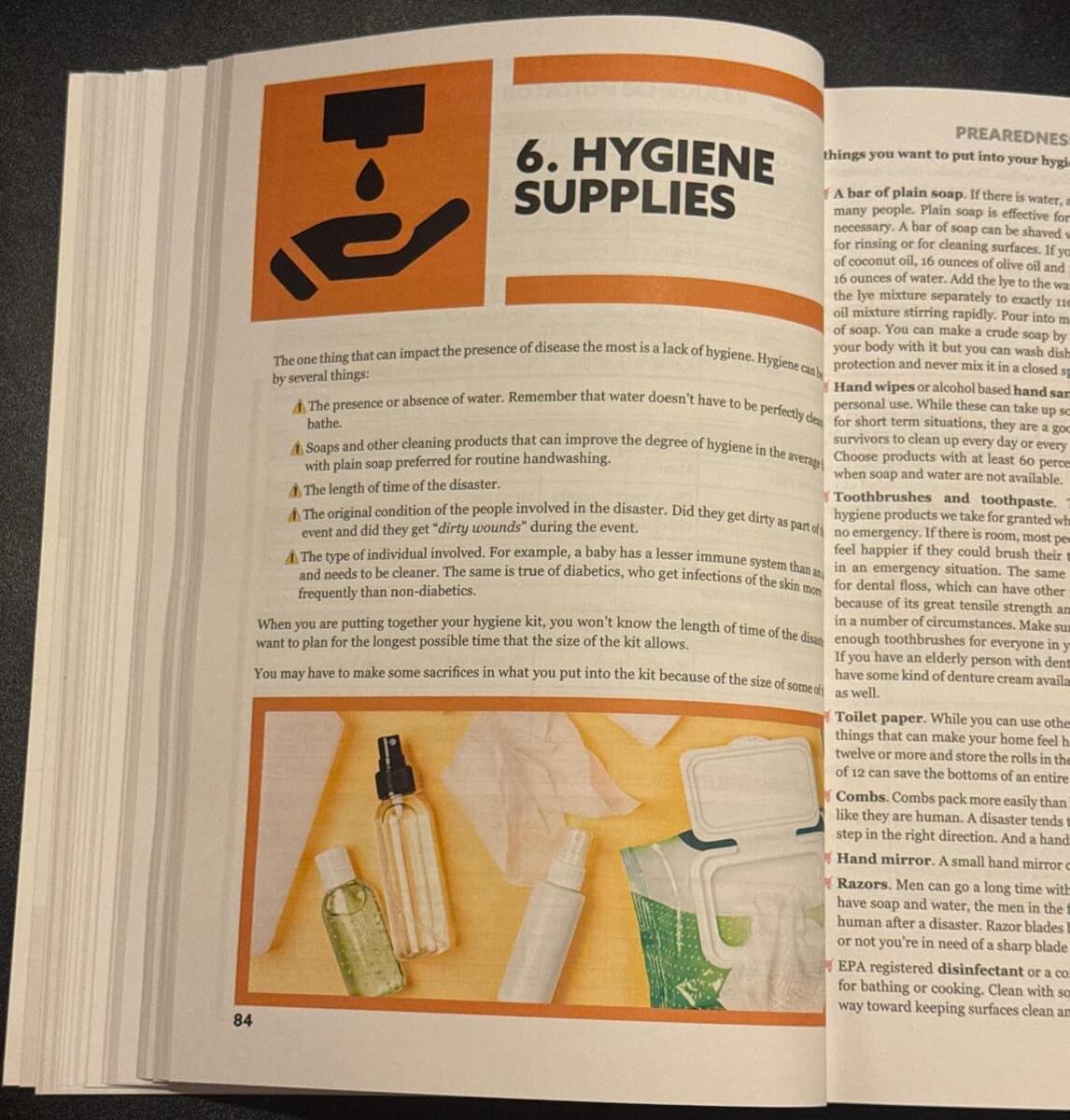
That's when infections spread. And that's why Chapter 6 of Survival MD, "Hygiene Supplies" (pages 84–88), opens with one of the most important sentences in the book:
"The one thing that can impact the presence of disease the most is a lack of hygiene."
Survival MD
Not a lack of antibiotics. Not a lack of bandages. A lack of hygiene. Dr. Radu Scurtu's point is simple: if you can keep your family clean, you prevent a large share of the medical problems you'd otherwise have to treat, often in situations where you can't reach a doctor at all.
Part 1: The Five Things That Decide How Clean You Can Stay
Chapter 6 doesn't jump straight into a shopping list. It first explains what actually affects hygiene in a disaster, so you can plan around your own situation:
- Water. Whether you have it, and how much. (One reassuring point from the book: water doesn't have to be perfectly clean for bathing.)
- Soap and cleaning products. What you have on hand, and what really works.
- How long the disaster lasts. A three-day outage and a three-month crisis need very different kits.
- The condition people are in. Did they get dirty during the event? Did anyone pick up "dirty wounds"?
- Who you're caring for. Some people need to be kept cleaner than others.
That last point is one most families miss. The book explains that babies have weaker immune systems and need to be kept cleaner than adults, and that people with diabetes get skin infections more often. If either lives in your home, your hygiene plan matters even more.
The chapter's planning rule is worth remembering: since you never know how long a disaster will last, plan for the longest stretch your kit's size allows, and the book explains where you can afford to make sacrifices.
Part 2: The Disaster Hygiene Kit
The heart of the chapter is a complete hygiene kit list: around 20 items, each with a short explanation of why it's there, how to use it and, in many cases, a second use you might not have thought of.
Here's how the kit breaks down:
| Group | What it covers |
|---|---|
| Washing | Soap, hand sanitizer, wipes, towels and rags |
| Oral care | Toothbrushes, toothpaste, floss and denture care |
| Grooming | The small items that keep people looking and feeling like themselves |
| Cleaning and disinfecting | Surface disinfectants, bleach and the right way to use them |
| Water and kitchen | The one pot every kit should include, and how to use it to make water safe |
| Family-specific | Babies, women and teens, and protection from sun and weather |
A few details we liked:
- Plain soap is enough. The book explains that antibacterial additives aren't necessary for routine handwashing, and shows a clever way to make a single bar of soap go much further when water is limited.
- Hand sanitizer has a minimum strength. The book gives the alcohol percentage to look for, and explains when sanitizer is (and isn't) a substitute for soap and water.
- Dental floss is more than floss. Its strength makes it useful for far more than teeth.
- One-ply beats two-ply in a stockpile, and the book explains why.
The full list, with every item and its purpose, is in the book.
Part 3: Feeling Human Is Part of Survival
This is the part of Chapter 6 that surprised us most.
Several items in the kit aren't strictly medical. They're there because, as the book puts it, "A disaster tends to dehumanize us so anything we can do to feel human is a step in the right direction."
A comb. A hand mirror. Something to shave with. Lip balm. Small things that take up almost no space, but make a real difference to morale when everything else has fallen apart. And morale matters: people who feel like themselves are more likely to keep up the habits that keep them healthy.
It's a small detail, but it's typical of Survival MD. The book treats people as people, not just patients.
Part 4: Disinfecting Safely, Without Hurting Anyone
Cleaning products can protect your family, or harm them if they're used the wrong way. Chapter 6 explains the difference between cleaning and disinfecting, the correct order to do them in, and which products to keep for which job.
It also includes a Bleach Dilution Guide so you can mix a disinfecting solution correctly, rather than guessing.
And there's a Clinical Safety Note we'll share in full, because these mistakes are common and dangerous:
- Never use surface disinfectants on skin or wounds. They can cause burns.
- Store bleach, lye and alcohol-based sanitizers in childproof containers, away from heat and open flames, and separate from food and medicines.
- Never mix bleach with ammonia or acids.
Part 5: A Myth About Handwashing
Chapter 6 includes a Myth vs. Fact box that most people get wrong:
Myth vs. Fact
Myth: You need hot water to wash away germs.
Fact: Water temperature isn't the key. Thorough scrubbing with soap for about twenty seconds, and good rinsing, do the real work.
That's good news in a disaster, when hot water may be the first thing you lose.
Part 6: When the Shelves Are Empty, Make Your Own
What happens when the store-bought supplies run out? Chapter 6 doesn't leave you stuck.
Homemade Soap
If you run out of soap, the book shows you how to make it yourself: a full recipe with exact ingredients, quantities and temperatures, plus the safety precautions you need when working with lye. It also explains a cruder, simpler alternative that won't work for bathing, but will clean dishes and surfaces.
Homemade Toilet Paper
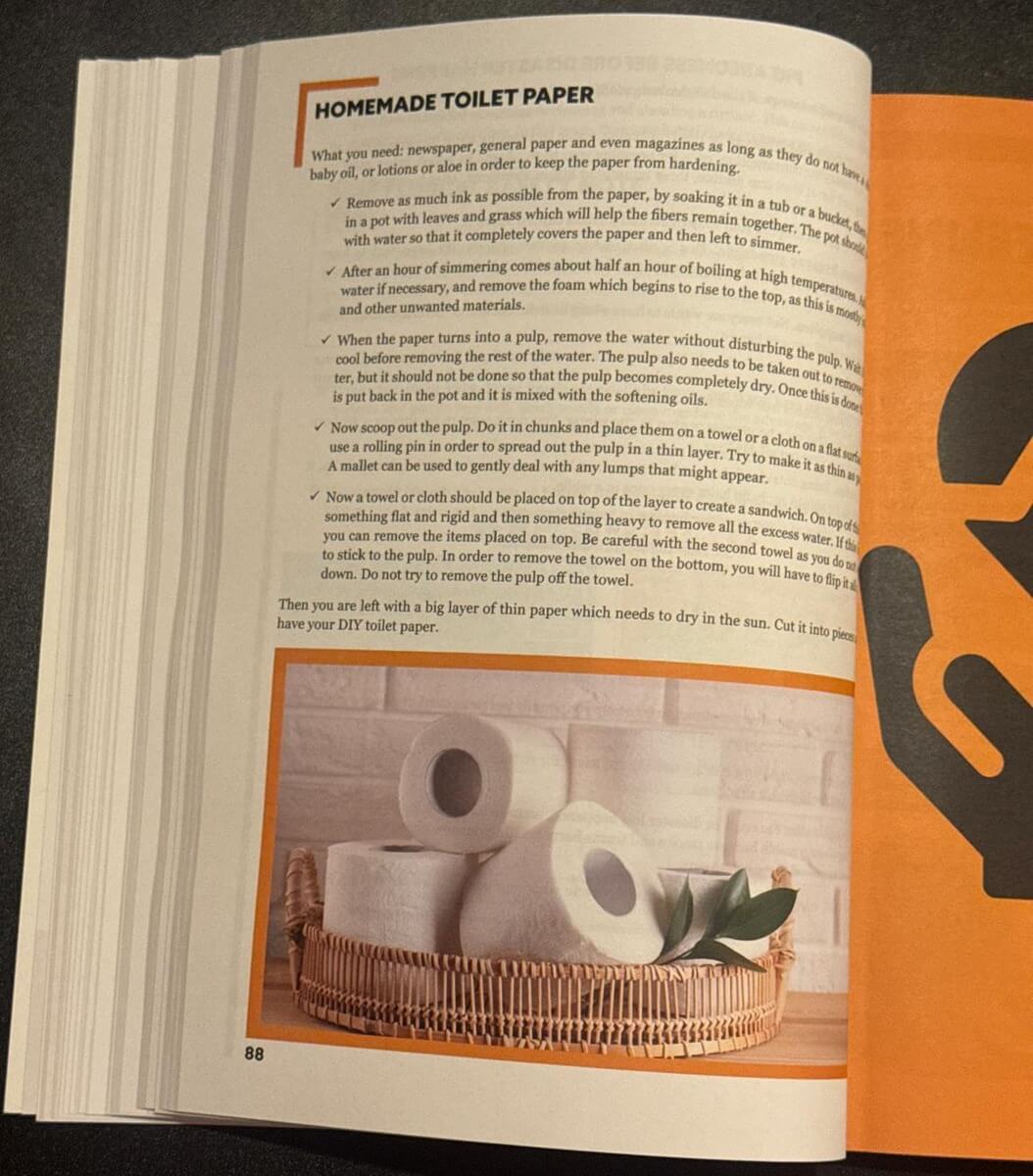
Yes, really. Chapter 6 ends with a full-page, step-by-step guide to making your own toilet paper from materials most households already have. It's one of those pages readers mention again and again, because it's both surprising and genuinely useful in a long crisis.
We won't give away the method here. You'll find the materials list and every step on page 88.
Part 7: Trash, the Problem Nobody Plans For
After a disaster, garbage collection can stop for weeks. Chapter 6 closes with practical guidance on managing trash safely: how to separate and store it, and why open burning, especially of plastics and treated wood, should be avoided, since the smoke and toxins can harm your family's health.
It's a short section, and it leads into the book's full chapter on emergency sanitation later on.
Why Chapter 6 Matters
- It prevents problems before they start. Good hygiene stops infections you'd otherwise have to treat without a doctor.
- It's complete. About 20 kit items, each explained, with second uses for many of them.
- It's safe. Clear rules for disinfecting, storing chemicals and protecting children.
- It's realistic. It plans for limited water, long disasters and running out of supplies.
- It's human. It understands that feeling clean and normal is part of getting through.
What Comes After Chapter 6
Next, Survival MD covers the Lifeline Kit (your core medical and supply inventory), buying medical response kits, alternative and herbal medicine, preparing for first aid and emergency sanitation, before the second half of the book turns to what to do when an emergency actually happens.
Want the bigger picture of what to stock? See The 147-Item Home Medical Inventory.
Frequently Asked Questions
What is Chapter 6 of Survival MD about?
Chapter 6, "Hygiene Supplies" (pp. 84–88), explains why hygiene is the biggest factor in preventing disease after a disaster, what to put in a family hygiene kit, how to disinfect safely, how to manage trash, and how to make your own soap and toilet paper.
What should be in a disaster hygiene kit?
Survival MD lists around 20 items, covering washing, oral care, grooming, cleaning and disinfecting, safe water and family-specific needs for babies, women and teens. The full list, with the purpose of each item, is in the book.
Do you need hot water to wash away germs?
No. According to Survival MD, about twenty seconds of scrubbing with soap and good rinsing matter far more than water temperature.
Is antibacterial soap better in an emergency?
No. The book explains that plain soap is effective for routine handwashing and antibacterial additives aren't necessary.
Does Survival MD really explain how to make toilet paper?
Yes. Page 88 has a step-by-step method using common household materials, along with a recipe for homemade soap.
The Bottom Line
Chapter 6 is short, but it may prevent more illness than any other chapter in the first half of the book. It turns hygiene from an afterthought into a plan: what to pack, how to use it safely, and what to do when the supplies run out.
You've had a preview. The full kit list, dilution guide, soap recipe and toilet paper method are in the book.
Medical disclaimer: this article is for general information only and isn't medical advice. Handle cleaning chemicals and lye with care and keep them away from children. In an emergency, call 911 or your local emergency number.