The Part of Preparedness Most Books Leave Out
Most preparedness guides talk about water, food, flashlights and first aid. Very few talk honestly about what happens to women's health needs when stores, pharmacies and clinics are closed for days or weeks.
Chapter 4 of Survival MD, "Preparedness for Women: Sanitation and Hygiene" (pages 54–59), fills that gap. Dr. Radu Scurtu opens it with a simple, overdue point: women can face "distinct sanitation and hygiene needs during menstruation and reproductive health, especially when services are disrupted."
It's a short chapter, but a practical and respectful one, covering menstruation, contraception, pregnancy, delivery and the weeks after birth.
Part 1: Menstruation When Stores Are Closed
A period doesn't pause for a hurricane or a power outage. Chapter 4 helps you plan for it before you need to.
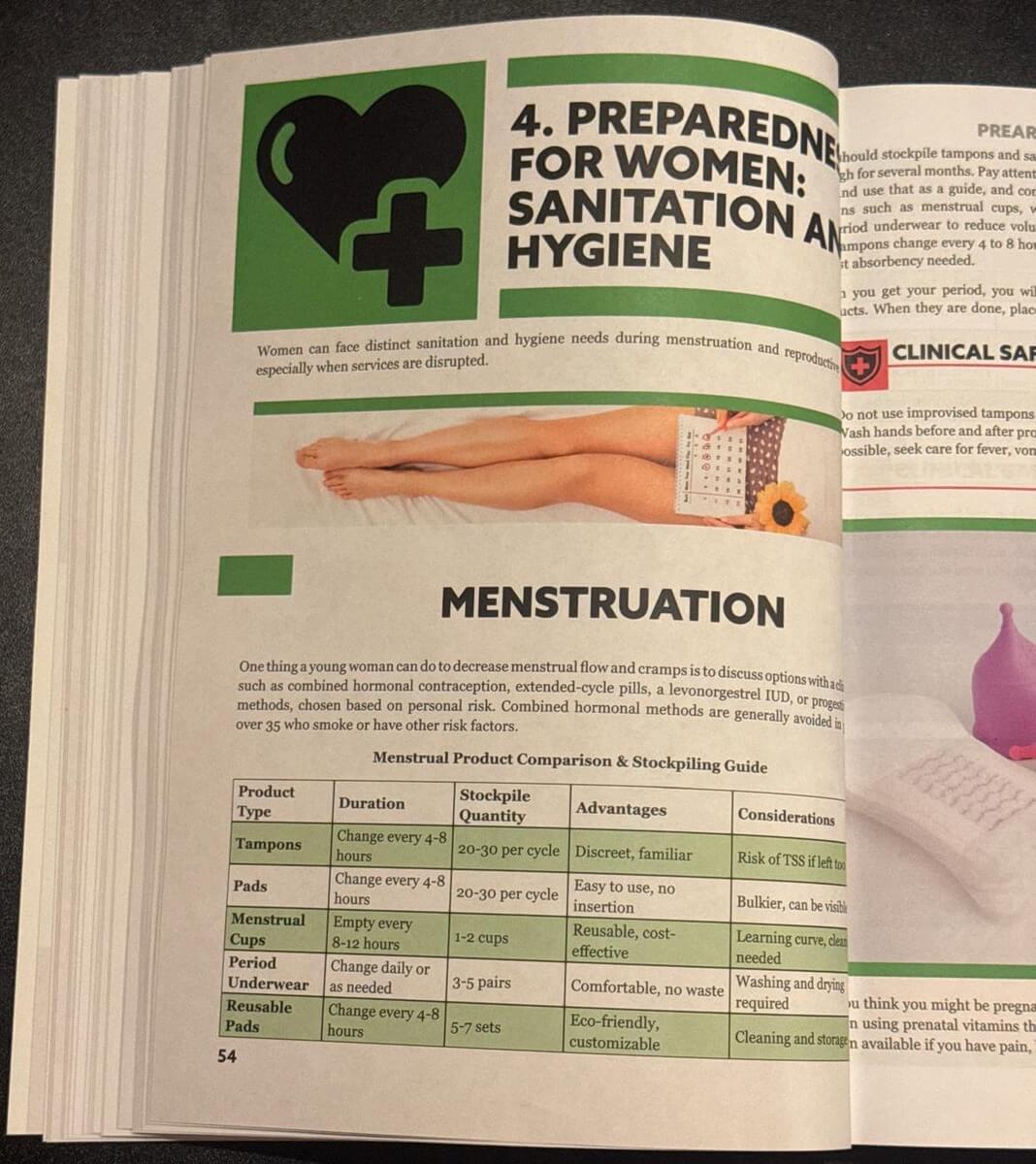
The section includes a Menstrual Product Comparison & Stockpiling Guide, a clear table comparing five options: tampons, pads, menstrual cups, period underwear and reusable pads. For each, it covers:
- How long each one lasts before it needs changing or emptying
- How much to stockpile
- The advantages
- The things to watch out for
It also covers options to discuss with a clinician for lighter, more manageable periods, how to dispose of used products safely when normal services aren't running, and why some "hygiene" habits actually do more harm than good.
One safety point we'll share straight from the book: don't improvise tampons or use internal cleansers. They raise the risk of infection and toxic shock. The book's Clinical Safety Note explains what to do instead, and which symptoms mean it's time to get care.
Part 2: A Go-Bag Kit Built for Women
Chapter 4 includes a short list for a personal menstrual kit to keep in your go-bag: the items that make an evacuation or a stay in a shelter far more manageable.
It also addresses something rarely mentioned in survival books: privacy and dignity. The book explains how to plan for a private space to wash and change, and why that matters for both comfort and infection prevention during a crisis.
Part 3: Contraception During a Disruption
When pharmacies close or supply chains break down, family planning becomes harder. Chapter 4 includes a Contraception Options table comparing five methods by:
- Effectiveness
- Crisis suitability: how well each one holds up when you can't get to a pharmacy or clinic
- Special considerations
It also clears up a common myth about pregnancy prevention, and recommends keeping a written backup plan for when your usual method isn't available.
Part 4: Pregnancy in a Crisis
This is the most serious part of the chapter, and it's handled with care.
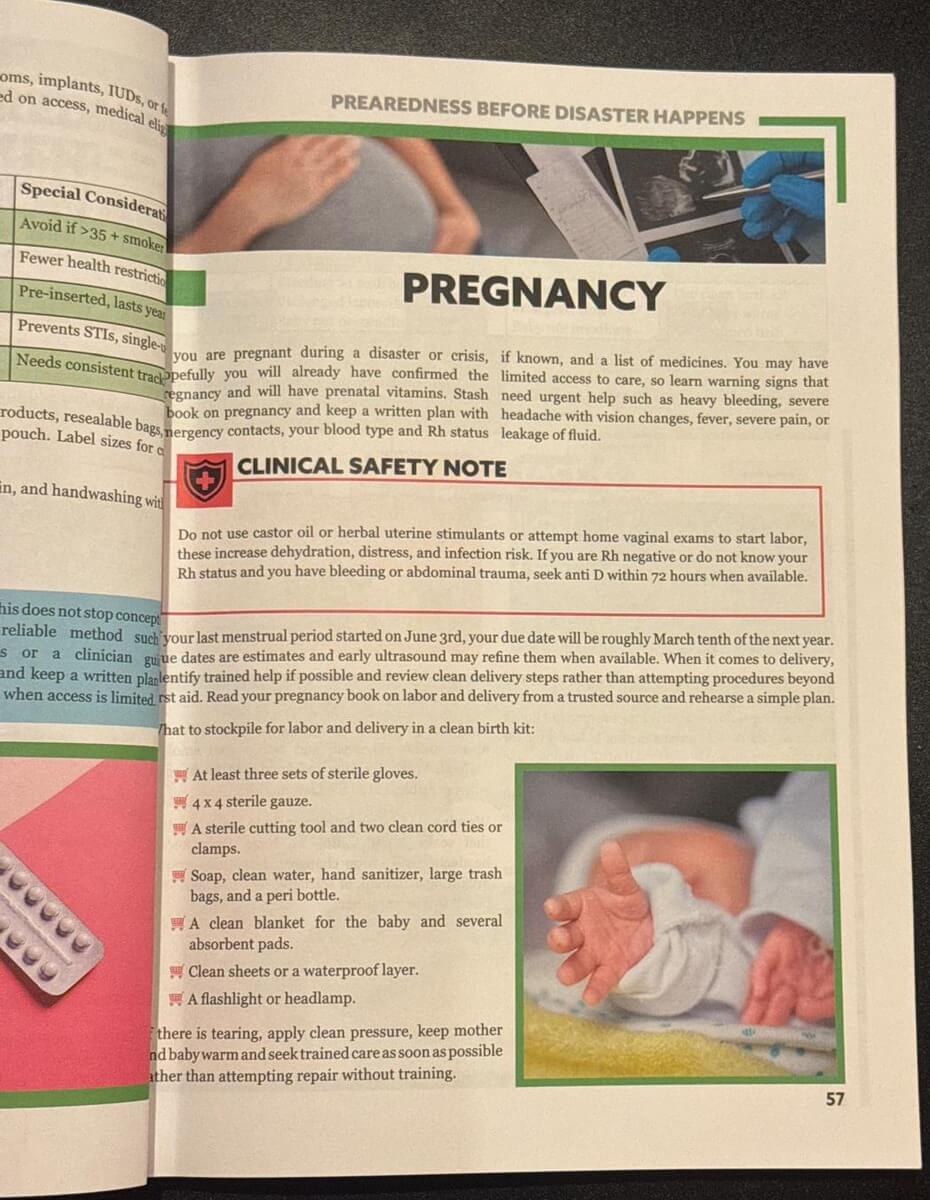
The pregnancy section covers what to have ready before a crisis: a written plan, emergency contacts, key medical details and the information a care provider would need if you can't reach your usual doctor. It also explains a simple way to estimate a due date.
Most importantly, it teaches the warning signs that need urgent help, such as heavy bleeding, severe headache with vision changes, fever, severe pain or leaking fluid, so an expectant mother and her family know when not to wait.
A Clean Birth Kit
Births don't always wait for an ambulance. Chapter 4 includes a checklist for a clean birth kit, the basic supplies to have ready if a baby arrives before help does. True to the book's philosophy, it focuses on cleanliness, warmth and getting trained help, not on attempting procedures beyond first aid.
A Clinical Safety Note also warns against several "natural" ways people try to start labor at home, and explains why they can be dangerous.
Part 5: After the Baby Arrives
The chapter continues past delivery, covering:
- Feeding the baby when supplies are limited, including the important difference between powdered and liquid formula
- Vaccines that protect both mother and baby
- Food safety during pregnancy when refrigeration isn't reliable
- Warning signs after delivery that mean the mother needs help fast
And it corrects a dangerous myth many families might consider during a shortage: stretching baby formula with extra water is not a safe way to make it last. It can cause serious problems for the baby. The book explains why and what to do instead.
The Emergency Warning Signs Table
The chapter closes with one of its most useful tools: an Emergency Warning Signs Table organized by time period:
| Time period | What the table covers |
|---|---|
| During pregnancy | Warning signs for the mother and the baby, and what to do |
| During labor | Signs that labor isn't progressing safely, and what to do |
| After delivery | Warning signs for the mother and the newborn, and what to do |
It's a single page that a partner or family member can follow even if they've never been through a birth before.
Why Chapter 4 Matters
- It's practical. Stockpile quantities, product comparisons, kits and checklists.
- It's honest. It covers topics most preparedness books skip, without embarrassment or fluff.
- It's safe. It warns against risky improvisations and makes the warning signs clear.
- It's for the whole family. Partners, parents and caregivers can use it too.
If there's a woman in your household, a pregnancy on the way or a newborn in your future, this chapter alone is a strong reason to own Survival MD.
What Comes After Chapter 4
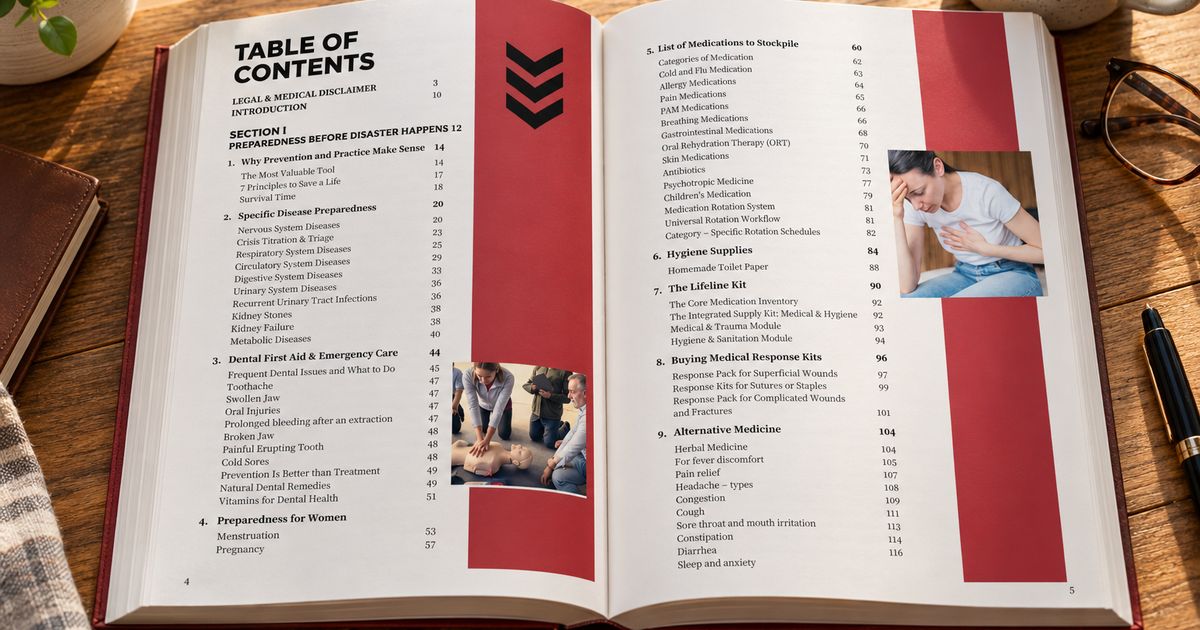
Next, Survival MD covers medications to stockpile and how to rotate them, hygiene supplies, the Lifeline Kit, first aid kits and emergency sanitation, before the second half of the book turns to what to do when an emergency actually happens. The bonus guide When There's No Doctor For Your Child picks up where the newborn section leaves off.
Frequently Asked Questions
What is Chapter 4 of Survival MD about?
Chapter 4, "Preparedness for Women: Sanitation and Hygiene" (pp. 54–59), covers menstruation, product stockpiling, contraception, pregnancy, preparing for delivery, newborn feeding and warning signs before, during and after birth.
Does Survival MD cover pregnancy and childbirth?
Yes. It covers planning ahead, warning signs that need urgent care, a clean birth kit checklist, feeding a newborn and warning signs after delivery. It focuses on safe first steps and getting trained help, not on procedures beyond first aid.
Does it say how many menstrual products to stockpile?
Yes. The chapter includes a comparison and stockpiling guide for tampons, pads, menstrual cups, period underwear and reusable pads.
Is it safe to dilute baby formula to make it last longer?
No. Survival MD warns that diluting formula can cause dangerous problems for the baby.
The Bottom Line
Chapter 4 shows how complete Survival MD really is. It takes women's health needs, which most survival books ignore, and gives them the same practical, safety-first treatment as every other emergency in the book.
You've had a preview. The full guides, tables and checklists are in the book.