If You Could Read Only One Chapter Tonight
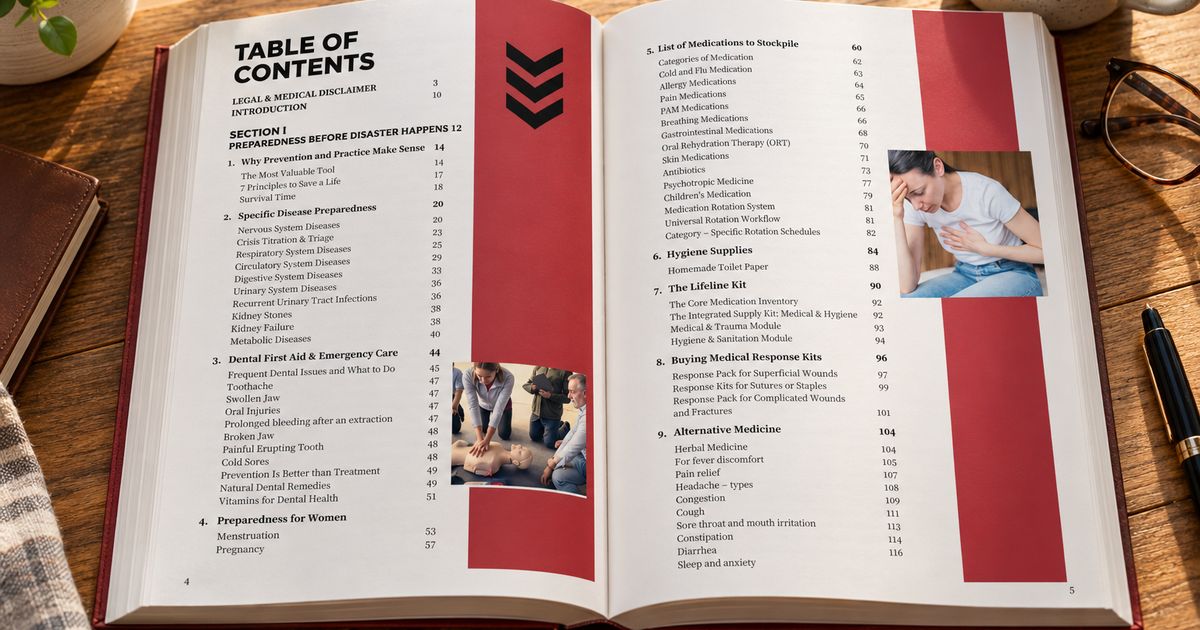
Survival MD by Dr. Radu Scurtu has 19 chapters, 280+ pages and 150+ topics. That's a lot of book. So we asked ourselves a simple question:
If a storm were coming tomorrow and you only had time to read one chapter tonight, which one should it be?
We went through the whole book to answer it. Here's our pick, the runners-up, and, more usefully, how to find the chapter that matters most for your family.
Our Pick: Chapter 12, "What to Do When There Is No Doctor Around?"
If we had to choose just one, it's Chapter 12.
Here's why. Every other chapter in Survival MD answers a specific question: how to stop bleeding, what to stockpile, how to do CPR. Chapter 12 answers the question underneath all of them, the one that gives the book its name:
"Doctors will be overloaded and you might not reach one. This means you are on your own for medical care."
Survival MD
Chapter 12 is where the second half of the book begins, "Medical Preparedness After D-Day," and it gives you the method you'll use in every emergency that follows:
- The TeCaMoLo Principle: four simple questions that help you understand any injury
- How to recognize medical distress, even when someone looks fine on the outside
- A head-to-toe body check written for people with no medical training
- When you truly need a doctor, and when you can handle it yourself
- Clean technique when nothing is sterile
- "Moment X": how to decide who to help first when more than one person is hurt
It also comes with four flowcharts that turn panic into steps. If you understand Chapter 12, every other chapter becomes easier to use.
More here: Survival MD Chapter 12: What to Do When There Is No Doctor Around.
The Runners-Up
Picking one chapter wasn't easy. These three came very close:
Chapter 14: Understanding CPR
The chapter you hope you never need, and the one you'll be most grateful to have read. It covers CPR for adults, children and babies, using an AED, recognizing shock and helping someone who is choking, with step-by-step flowcharts. When someone stops breathing, minutes decide everything. Read our Chapter 14 overview.
Chapter 15: Common Illnesses in a Crisis
At 44 pages, it's the largest chapter in the book, and for good reason. After a disaster, injuries make up the large majority of medical problems in the first days. This chapter covers wounds, bleeding, wound closure, fractures, burns and trauma to every part of the body. Read our Chapter 15 overview.
Chapter 10: Preparing for First Aid
The chapter most families will print. It covers four kits (basic first aid, comprehensive first aid, bug-out bag and bug-out vehicle) and the 147-item Crisis Preparedness Master Inventory, color-coded by priority. Read our Chapter 10 overview.
The Real Answer: It Depends on Who Lives in Your Home
Here's the honest truth: the most important chapter is the one that matches your family's biggest risk. A grandparent on blood thinners, a newborn and a teenager with asthma all need different things in a crisis.
Use this guide to find your starting point:
| If your household includes... | Start with |
|---|---|
| Someone with diabetes, heart disease, asthma, kidney disease or another chronic condition | Chapter 2: Specific Disease Preparedness |
| Anyone who depends on daily prescriptions | Chapter 5: Medications to Stockpile and Chapter 19: How to Survive Without Prescriptions |
| Babies or young children | Chapter 14: Understanding CPR (CPR on children and babies, choking) |
| A woman, a pregnancy or a newborn on the way | Chapter 4: Preparedness for Women |
| Older adults | Chapter 2 and Chapter 12 |
| No preparation yet at all | Chapter 1: Why Prevention and Practice Make Sense, then Chapter 10 |
| A home in a hurricane, flood or wildfire zone | Chapter 17: Infectious Diseases and Chapter 18: Climate-Specific Diseases |
| A tight budget | Chapter 9: Alternative Medicine and Chapter 7: The Lifeline Kit |
Most families will find themselves in more than one row, which leads to the most important point of all.
Why "One Chapter" Is the Wrong Question
Real emergencies don't arrive one chapter at a time.
Picture it: a storm knocks out power for a week. On day two, someone cuts their hand clearing debris. On day four, a child runs a fever. On day six, your father is down to his last few heart pills. In one week, you'd need Chapters 8, 12, 15, 16 and 19, and probably more.
That's how Survival MD is designed. The chapters work together:
- The kits you build in Chapters 7, 8 and 10 are the ones you use in Chapters 14 and 15.
- The assessment method in Chapter 12 guides the triage in Chapter 13.
- The medication plans in Chapters 2 and 5 connect directly to Chapter 19.
- The hygiene and sanitation in Chapters 6 and 11 prevent the infections in Chapters 16 and 17.
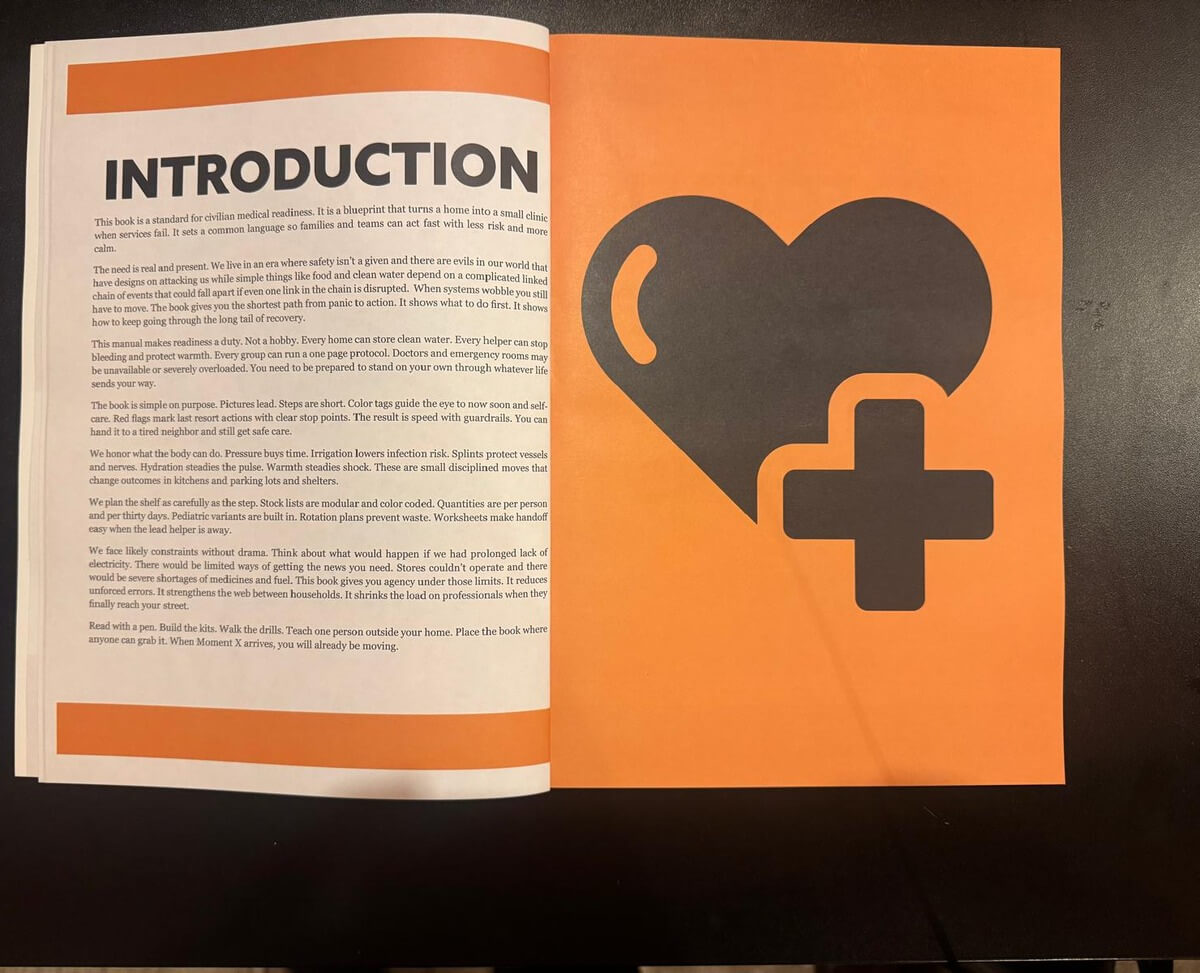
Take one chapter out and the plan has a gap. Keep all 19 and you have what the book's introduction promises:
What That Costs per Chapter
At $37 for 19 chapters, Survival MD works out to less than $2 per chapter. That's less than a single box of bandages for each chapter, and any one of them could matter more than everything else in your medicine cabinet on the wrong day.
And you also get 4 bonus guides, plus a 60-day refund where you keep everything.
Frequently Asked Questions
What is the most important chapter in Survival MD?
Our pick is Chapter 12, "What to Do When There Is No Doctor Around?", because it teaches the method you'll use in every emergency: assessing an injury, recognizing distress, a body check, knowing when you need a doctor and deciding who to help first.
Which chapter should I read first?
It depends on your household. Families with chronic illness should start with Chapter 2, families with babies with Chapter 14, anyone on daily prescriptions with Chapters 5 and 19, and complete beginners with Chapter 1 and then Chapter 10.
What is the longest chapter in Survival MD?
Chapter 15, "Common Illnesses in a Crisis," at 44 pages. It covers injuries and trauma from head to toe.
How many chapters are in Survival MD?
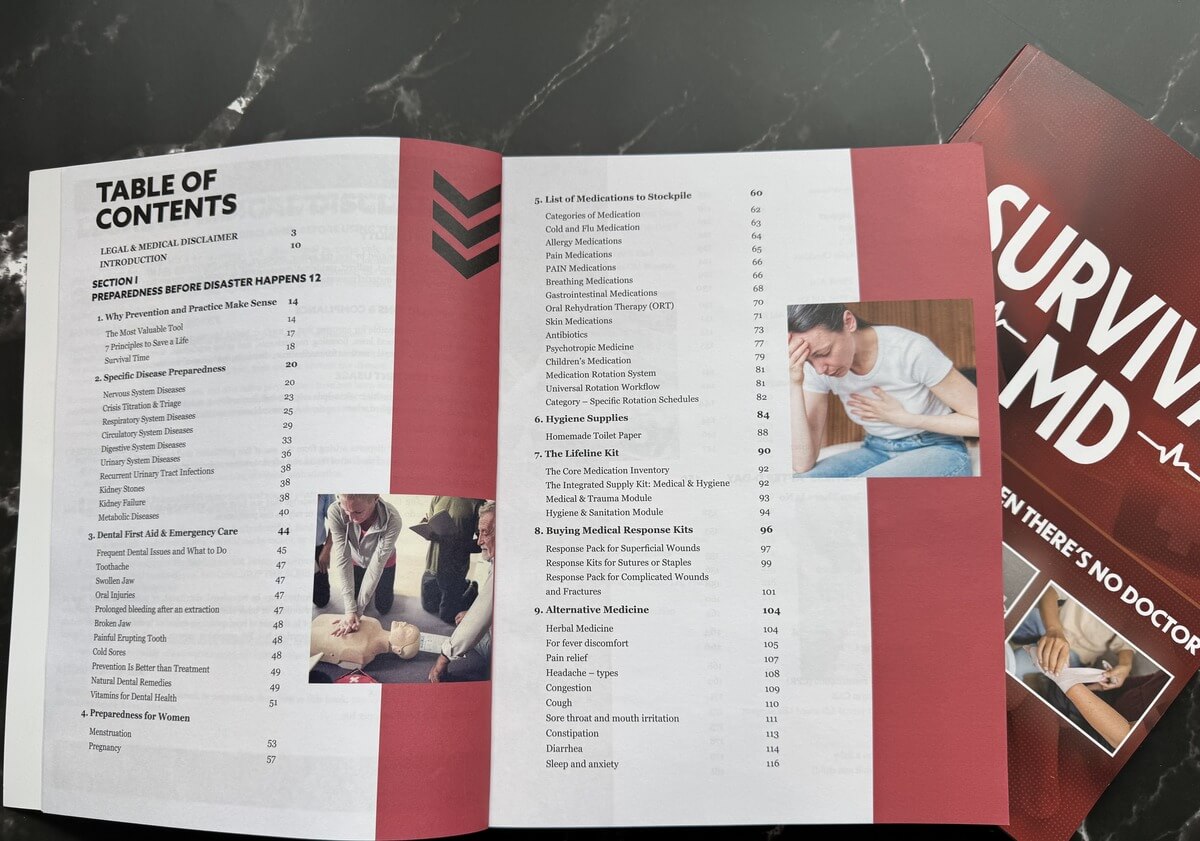
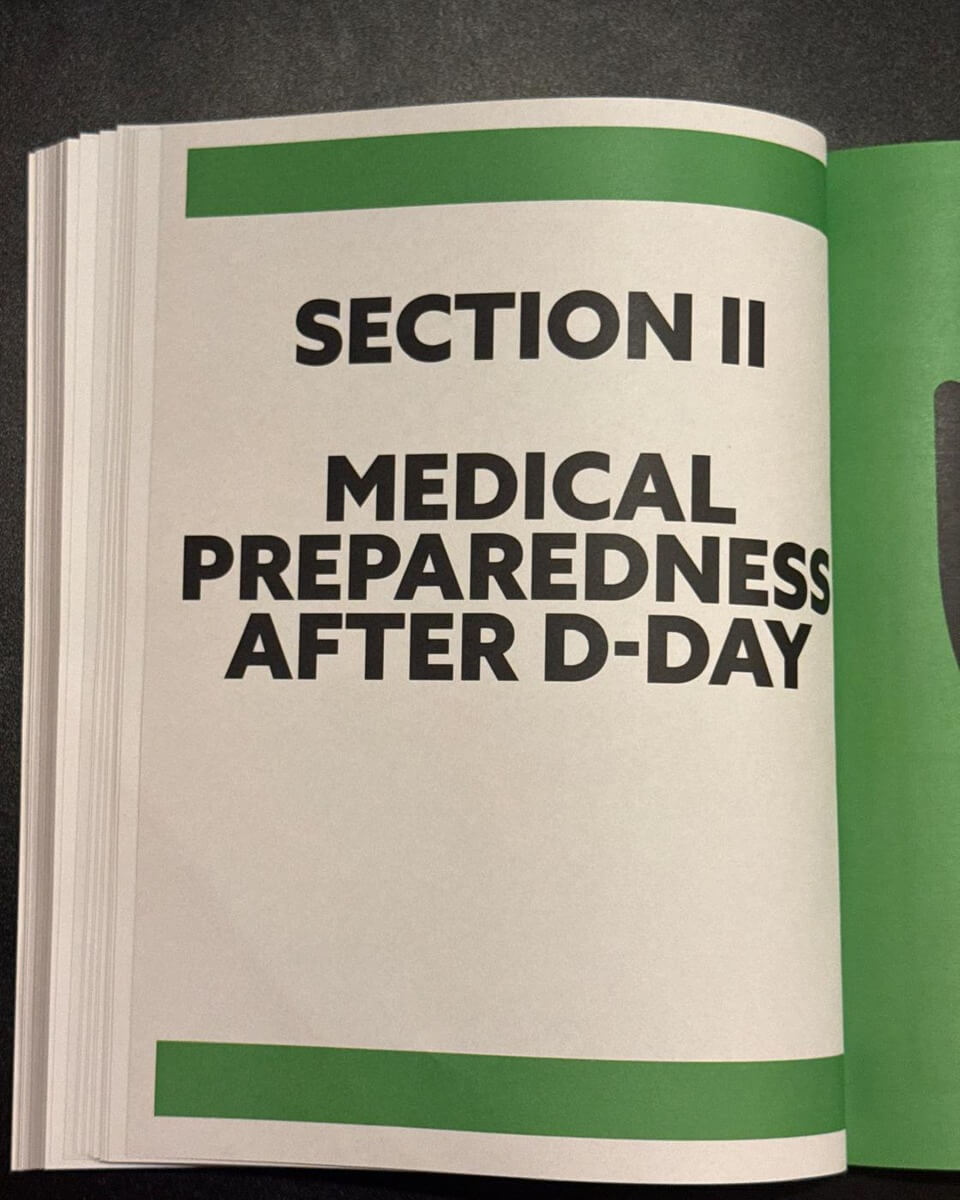
19 chapters in two sections: "Preparedness Before Disaster Happens" (Chapters 1–11) and "Medical Preparedness After D-Day" (Chapters 12–19).
Can I buy just one chapter?
No. Survival MD is sold as one complete book for $37, with 4 bonus guides.
The Bottom Line
If we had to choose, Chapter 12 is the most important chapter in Survival MD: it's the core of what the book is about, medical care when no doctor is coming. But the real strength of the book is that the right chapter for your family is already in there, along with the 18 others you might need next.
Medical disclaimer: this article is for general information only and isn't medical advice. Survival MD doesn't replace professional care. In an emergency, call 911 or your local emergency number.