Your Zip Code Is Part of Your Medical Plan
A family in Minnesota and a family in Florida can follow the same preparedness checklist and still face completely different dangers. One is worried about surviving a winter without heat. The other is worried about a hurricane, floodwater and mosquitoes.
That's the idea behind Chapter 18 of Survival MD, "Climate-Specific Diseases" (pages 264–265). Dr. Radu Scurtu's point is simple: "Each region carries distinct emergency risks." The illnesses you need to prepare for depend on where you live, and on the season.
It's a short chapter, just two pages, but it may change what you put in your kit.
The U.S. Climate Zone Risk Assessment
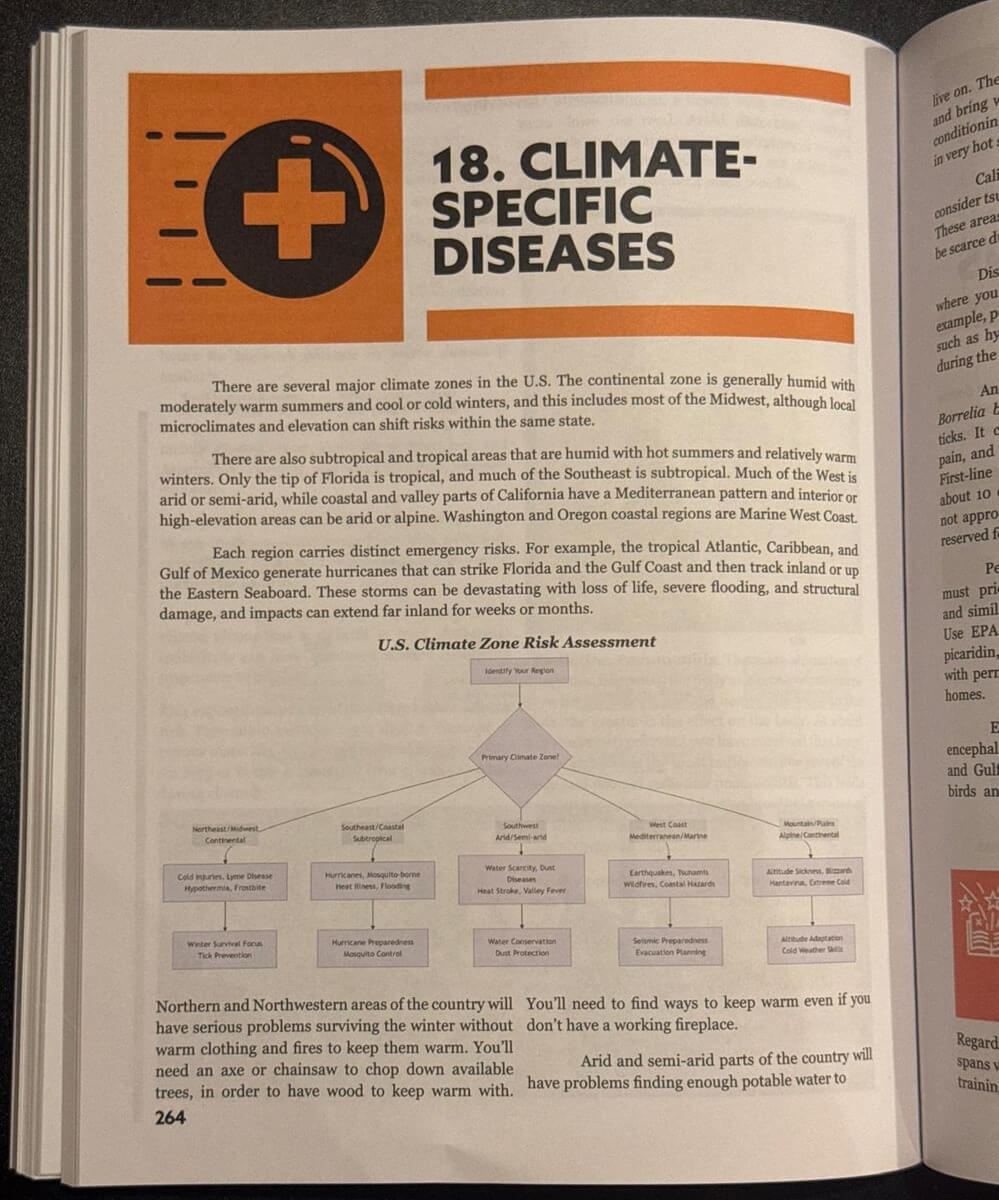
The chapter starts by breaking the country into its major climate zones, from the continental Midwest and the subtropical Southeast to the arid Southwest, the Mediterranean and marine West Coast and the alpine and mountain regions.
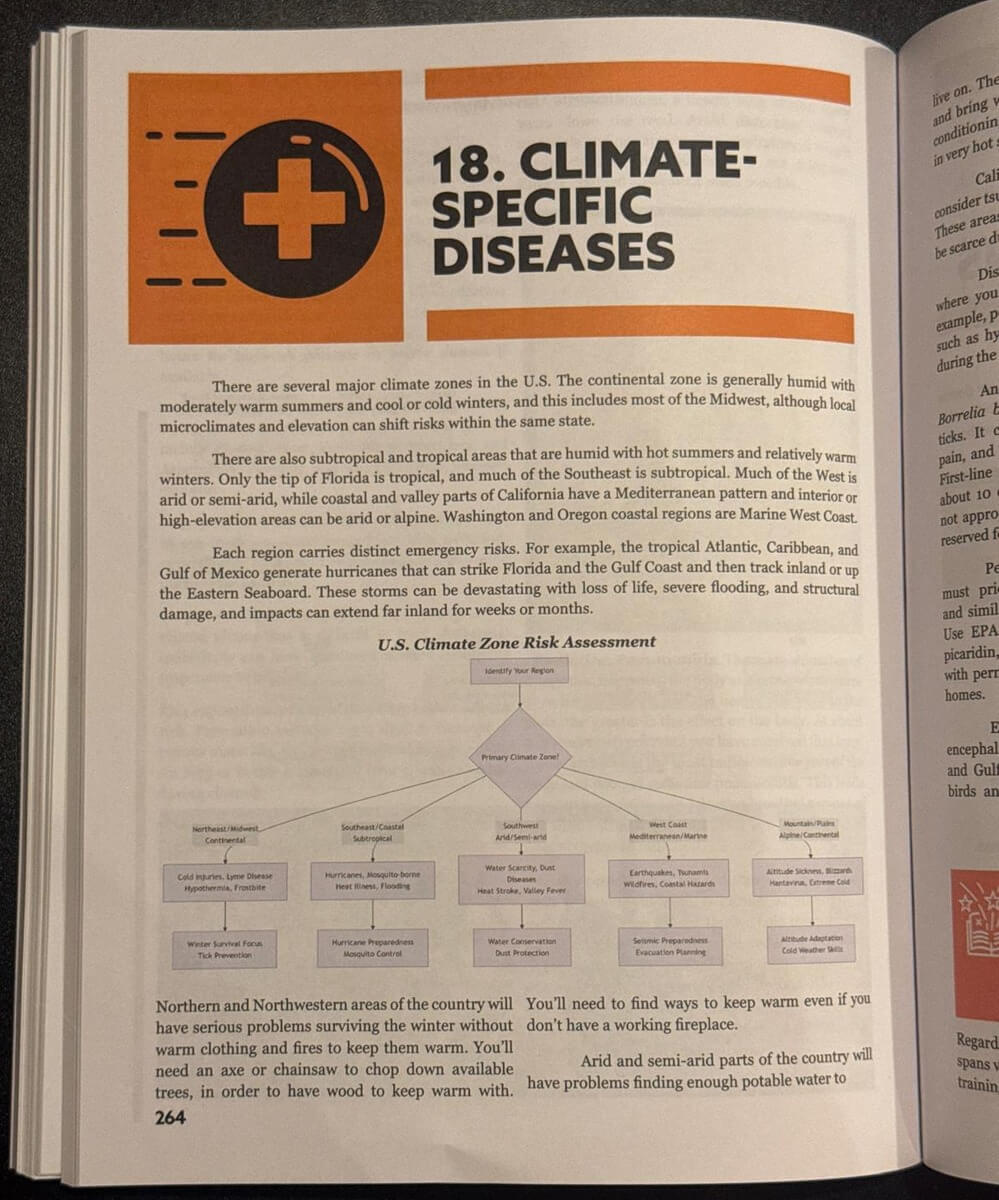
Then it gives you a U.S. Climate Zone Risk Assessment, a visual chart that starts with one question, "What's your region?", and shows the main emergency health risks for each zone, plus what to prioritize in your preparation.
What Each Region Faces
Here's a look at the kinds of risks the chapter covers, region by region:
| Region | The kinds of risks covered |
|---|---|
| North and Northeast | Surviving winter without heat, cold injuries and tick-borne disease |
| Southeast and Gulf Coast | Hurricanes, flooding and mosquito-borne viruses |
| Southwest | Water scarcity, extreme heat and illnesses linked to dust and desert environments |
| West Coast | Tsunamis, earthquakes and crowded regions where resources run out fast |
| Mountain and Plains | Altitude, blizzards and extreme cold |
For many of these, the book names the specific illnesses to watch for, explains how they spread, what the early symptoms look like and what you can do to lower the risk. A few of the conditions covered:
- Lyme disease, spread by ticks
- West Nile virus and other mosquito-borne infections
- Valley fever, a fungal infection you can get by breathing in desert dust
- Hantavirus, linked to rodent droppings in cabins and sheds
- Leptospirosis, a risk after floods
Some of these are rare in normal times. After a disaster, when mosquito control stops, floodwater stands for days and people are cleaning out damaged buildings, the risk goes up.
A Myth That Catches People Every Year
Chapter 18 includes a Myth vs. Fact box we'll share, because it's one of the most common mistakes people make with ticks:
Myth vs. Fact
Myth: Ticks die after the first frost, so winter is safe.
Fact: Blacklegged ticks can stay active on mild days above about 40°F. Check for ticks all year round in leaf litter and brush.
Prevention Built Around Where You Live
What makes this chapter useful is that it doesn't stop at listing risks. For many of them, it gives practical prevention steps, from repellents and treated clothing to reducing standing water around your home and lowering your exposure to dust and rodents.
And it ends with advice that's worth applying to the whole book: build a local risk matrix. Learn the insect-borne and environmental hazards that fit your climate and season, then match your prevention, supplies and training to that matrix in advance.
Why Chapter 18 Matters
- It personalizes your plan. Your region and season decide which risks matter most.
- It covers the overlooked threats. Ticks, mosquitoes, fungi and rodents, not just storms.
- It connects disasters and disease. Floods, heat and damaged buildings change what makes people sick.
- It's practical. Clear prevention steps you can start before anything happens.
- It's short and easy to use. Two pages and one chart you can come back to every season.
What Comes After Chapter 18
The last chapter of the book is Chapter 19, How to Survive Without Prescriptions, about what to do when the pharmacy is closed and your usual medications are hard to get.
Frequently Asked Questions
What is Chapter 18 of Survival MD about?
Chapter 18, "Climate-Specific Diseases" (pp. 264–265), explains how emergency health risks change across U.S. climate zones, with a U.S. Climate Zone Risk Assessment chart and region-specific illnesses and prevention steps.
Which climate zones does Survival MD cover?
Northeast/Midwest (continental), Southeast/Coastal (subtropical), Southwest (arid/semi-arid), West Coast (Mediterranean/marine) and Mountain/Plains (alpine/continental).
Are ticks a risk in winter?
Yes. Survival MD notes that blacklegged ticks can stay active on mild days above about 40°F, so you should check for ticks year-round.
What diseases does Chapter 18 mention?
Among others: Lyme disease, West Nile virus and other mosquito-borne infections, Valley fever, hantavirus and leptospirosis after floods.
Why does climate matter for emergency preparedness?
Because each region faces different disasters and different diseases. Survival MD recommends building a local risk matrix and matching your supplies and training to it.
The Bottom Line
Chapter 18 is a reminder that preparedness isn't one-size-fits-all. Where you live decides which storms you'll face, which insects you'll fight and which illnesses you're most likely to see. Two pages and one chart help you build a plan that fits your part of the country.
You've had a preview. The full regional risk chart and prevention advice are in the book.
Medical disclaimer: this article is for general information only and isn't medical advice. See a doctor for fever, a spreading rash or illness after a tick or mosquito bite. In an emergency, call 911 or your local emergency number.