From Scattered Lists to One Kit You Can Actually Use
Most families who start preparing end up with the same problem: a bag of bandages in the closet, some medicine in the kitchen, a few bottles of bleach under the sink and no idea whether any of it adds up to a real plan.
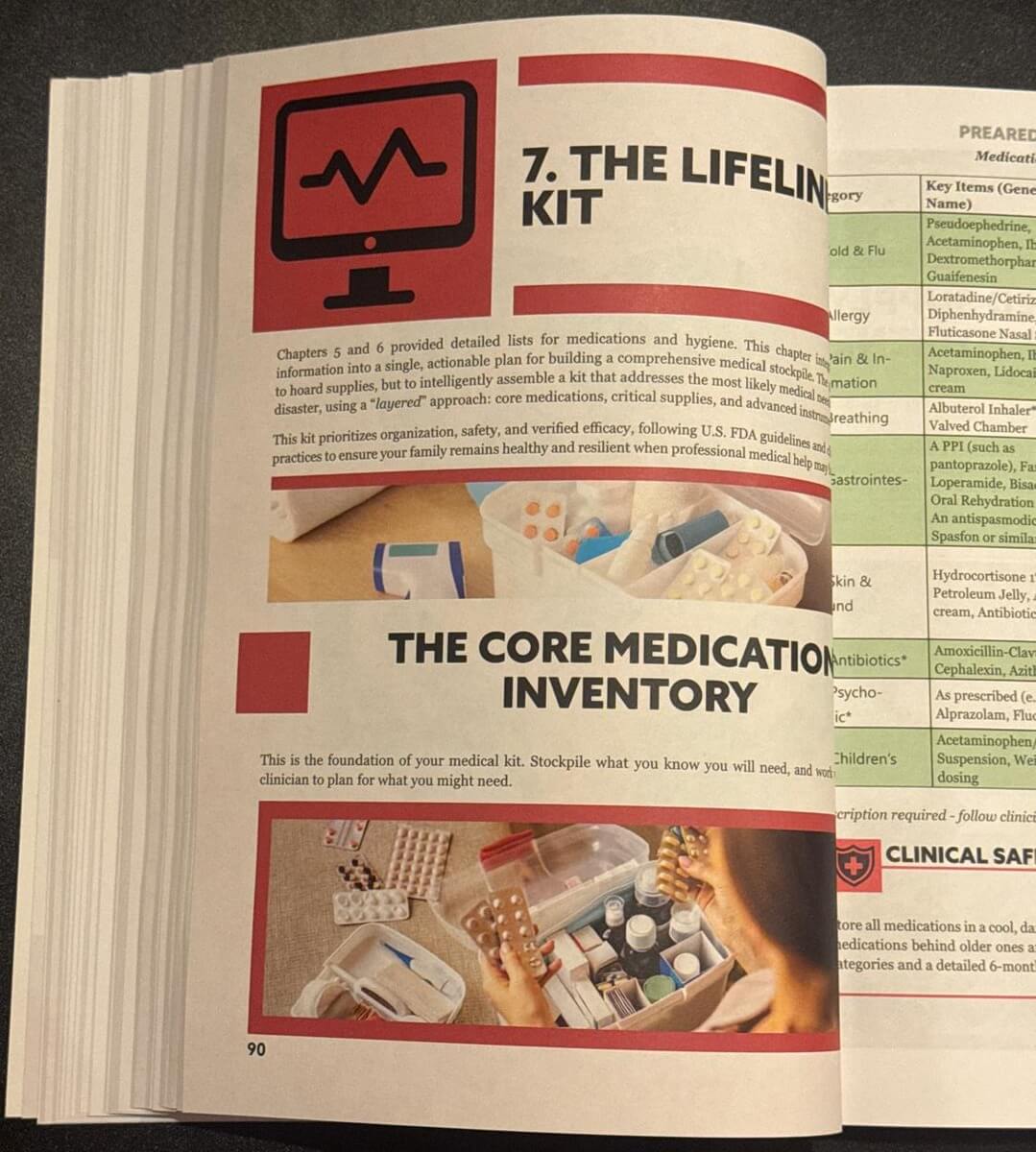
Chapter 7 of Survival MD, "The Lifeline Kit" (pages 90–94), fixes that. It takes everything from the chapters on medications and hygiene and pulls it together into one organized, printable plan.
Dr. Radu Scurtu is clear about the goal from the first paragraph: "The goal is not to hoard supplies, but to intelligently assemble a kit that addresses the most likely medical needs during a disaster."
In other words, not more stuff. The right stuff, in the right amounts, organized so anyone in the family can find it when help is delayed or a doctor can't be reached at all.
The Layered Approach
What makes the Lifeline Kit different from a store-bought first aid box is its structure. The book builds it in three layers:
- Core medications: the medicines you're most likely to need
- Critical supplies: the physical tools to treat injuries and prevent infection
- Advanced instruments: the tools that let you assess someone's condition, not just bandage it
Each layer builds on the one before it. You can start with the first, add the second when you're ready and finish with the third, and at every stage your kit is more useful than a random collection of supplies.
Layer 1: The Core Medication Inventory
The foundation of the kit is a one-page Medication Stockpile Master Checklist. Instead of flipping back and forth through a long chapter, you get every medication category on a single table, with four columns:
- Key items, listed by generic name so you can buy the cheaper version
- What each one is for
- Target quantity to keep
- How often to check it
It covers nine categories: cold and flu, allergy, pain and inflammation, breathing, digestive problems, skin and wounds, antibiotics, psychotropic medicines and children's medicine. Prescription items are clearly marked, with a reminder to follow your clinician's guidance exactly.
The chapter's guidance is sensible: stockpile what you know you'll need, and work with your clinician to plan for what you might need.
Layer 2 and 3: The Integrated Supply Kit
Here's a point from the book that stuck with us: "Medications are your first line of defense, but they are only one component of crisis medical care. An injury or a breakdown in sanitation can quickly overwhelm the benefits of any pill."
That's why the second half of the chapter merges medical supplies and hygiene items into one integrated kit, built around multi-use items and infection prevention. It's split into two modules.
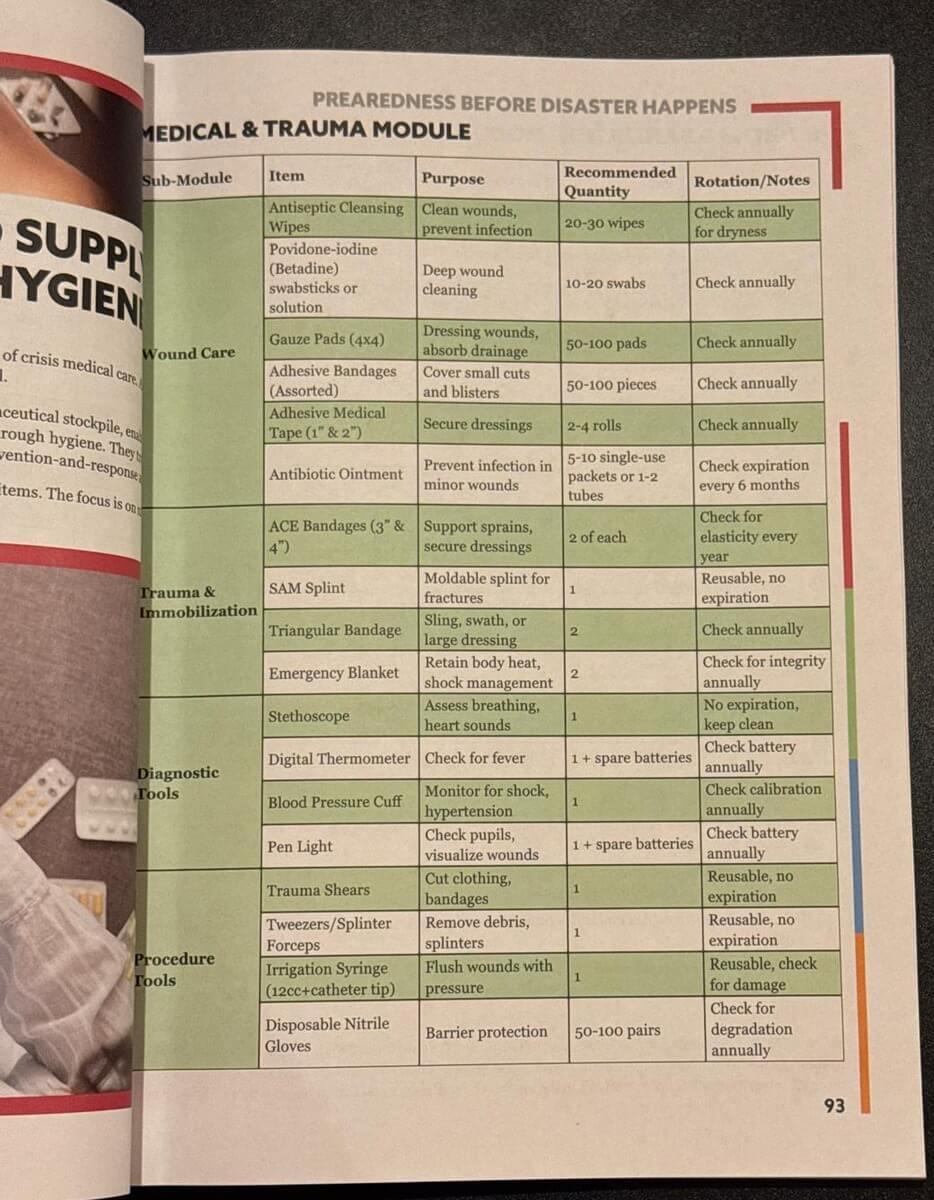
The Medical & Trauma Module
This module is divided into four sub-modules:
| Sub-module | What it's for |
|---|---|
| Wound care | Cleaning, dressing and protecting wounds |
| Trauma & immobilization | Sprains, fractures, shock and keeping someone warm |
| Diagnostic tools | Checking fever, breathing, heart sounds and signs of shock |
| Procedure tools | Cutting, removing debris, flushing wounds and protecting yourself |
The diagnostic tools are what really set this kit apart. Most home kits can cover a cut. Very few let you check someone's blood pressure, listen to their breathing or look for signs of shock, which is exactly the information you need when there's no doctor to ask.
For each item, the table gives the purpose, recommended quantity and rotation notes, so you know what to buy, how much and when to check it.
The Hygiene & Sanitation Module
The second module turns Chapter 6's hygiene advice into exact quantities, split into personal hygiene and environmental sanitation: everything from soap and toothbrushes to disinfecting supplies and waste containment.
A small example of how practical it is: the book gives you a simple rule of thumb for how much toilet paper to store per person, per week, so you're not guessing when you stock up. The rest of the quantities, from soap bars to bleach, are in the table.
How to Store and Organize It
A kit is only useful if you can find what you need in seconds. Chapter 7 ends with simple, practical notes on:
- Storage: where to keep the kit and what kind of containers protect it from moisture and pests
- Organization: a labeling and color-coding system by module, so anyone in the family can grab the right bag fast
- Customization: how to adjust quantities for your family's size and special needs, such as infants, older adults and even pets
There's also a Clinical Safety Note we'll share, because it applies to every medicine cabinet: store medications in a cool, dark, dry place, use First-In, First-Out (newer medicines go behind older ones, and the oldest are used first), and do a brief monthly check plus a detailed review every six months to replace anything expired.
The book also describes the tables as "a living document that you can print and check off as you assemble your kit."
Why Chapter 7 Matters
- It ties everything together. Medications, medical supplies and hygiene in one plan, instead of three separate lists.
- It tells you how much. Recommended quantities for every item, not guesswork.
- It keeps the kit fresh. Rotation notes for every item, so nothing fails you when you need it.
- It goes beyond bandages. Diagnostic tools let you assess, not just patch up.
- It's printable. Check items off as you build your kit, one layer at a time.
The chapter ends with a line that sums up the whole book: "The ultimate integrity check is not just what's in the kit, but the confidence and competence of those who will use it." That's why the second half of Survival MD teaches you how to use every item.
What Comes After Chapter 7
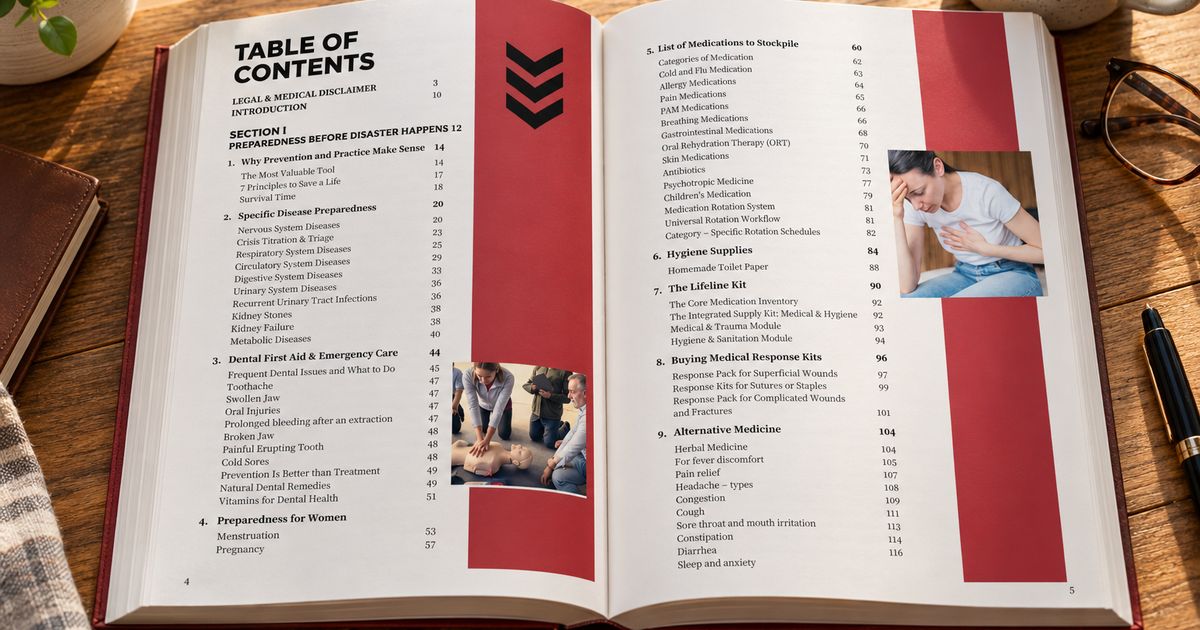
Next, Survival MD covers buying medical response kits (what to look for if you'd rather buy than build), alternative and herbal medicine, preparing for first aid and emergency sanitation. Later in the book, you'll also find the full 147-item Crisis Preparedness Master Inventory. (More here: The 147-Item Home Medical Inventory.)
Frequently Asked Questions
What is the Lifeline Kit in Survival MD?
It's the subject of Chapter 7 (pp. 90–94): a layered home medical kit that combines core medications, critical medical and trauma supplies, diagnostic tools and hygiene items into one organized, printable plan.
What are the layers of the Lifeline Kit?
Core medications, critical supplies and advanced instruments. The book organizes them into a Medication Stockpile Master Checklist, a Medical & Trauma Module and a Hygiene & Sanitation Module.
Does Chapter 7 include quantities?
Yes. Every table includes recommended or target quantities, plus rotation and check schedules.
How should I store a home medical kit?
Survival MD recommends a cool, dark, dry place, sealed containers, labeled and color-coded modules, and a First-In, First-Out system with monthly and six-month checks.
Is the Lifeline Kit the same as the 147-item Master Inventory?
No. The Lifeline Kit in Chapter 7 is the medical and hygiene kit. The 147-item Crisis Preparedness Master Inventory appears later in the book and covers a wider set of supplies.
The Bottom Line
Chapter 7 is where Survival MD's preparation chapters come together. It turns long lists into one clear, layered kit that you can build step by step, check off as you go and keep fresh with a few minutes of maintenance a month.
You've had a preview. The full checklist, module tables, quantities and rotation notes are in the book.
Medical disclaimer: this article is for general information only and isn't medical advice. Talk to your doctor or pharmacist before stockpiling or using any medication, especially prescription medicines. In an emergency, call 911 or your local emergency number.