The Book You Choose Today Is the Advice You'll Follow Tomorrow
An emergency medical book is a strange purchase. You buy it hoping you'll never need it. But if the day comes when the roads are closed, the phones are down and no doctor can be reached, that book becomes the most important voice in the room. Whatever it says is what you'll do.
That's why choosing the right one matters. Some books are written by people with no medical training. Some are outdated. Some are so dense you'd never find the right page in time. And some push risky shortcuts that can make things worse.
Here's a simple 10-point checklist to judge any emergency medical book before you trust it with your family. At the end, we'll show you the one that checks every box.
1. A Real Doctor Wrote It
Start with the author. Look for a medical degree on the cover, and look inside for signs of real clinical experience: specific patient stories, hospital situations and a careful, practical tone.
Be wary of vague titles like "health expert," "survival guru" or "wellness coach." Emergency medicine isn't the place for guesswork.
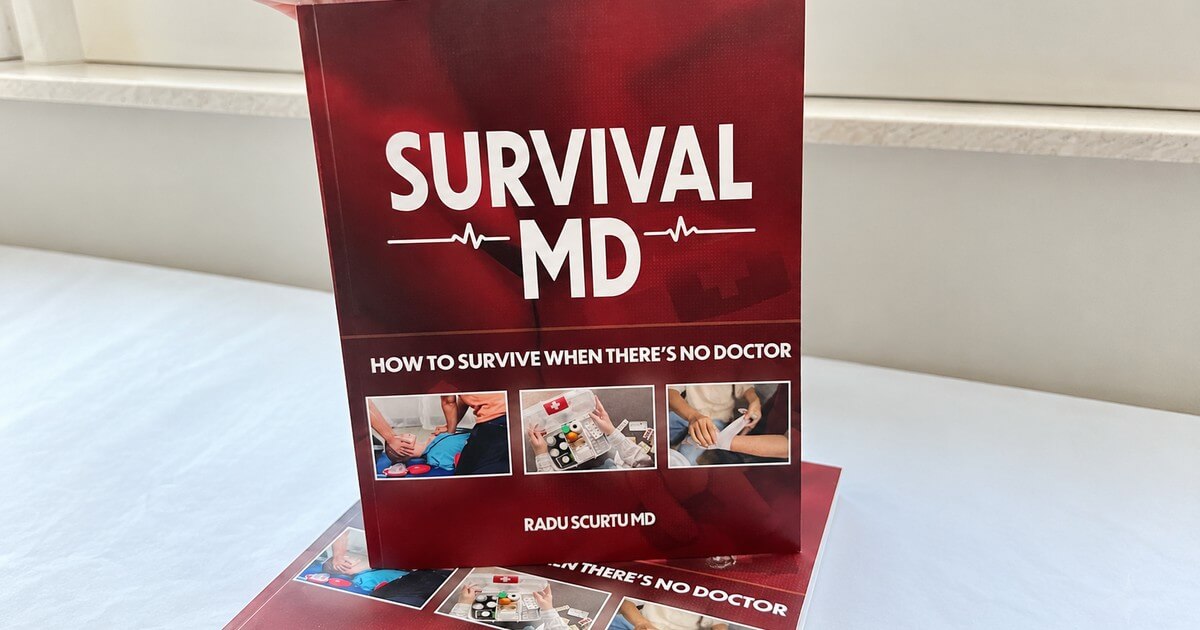
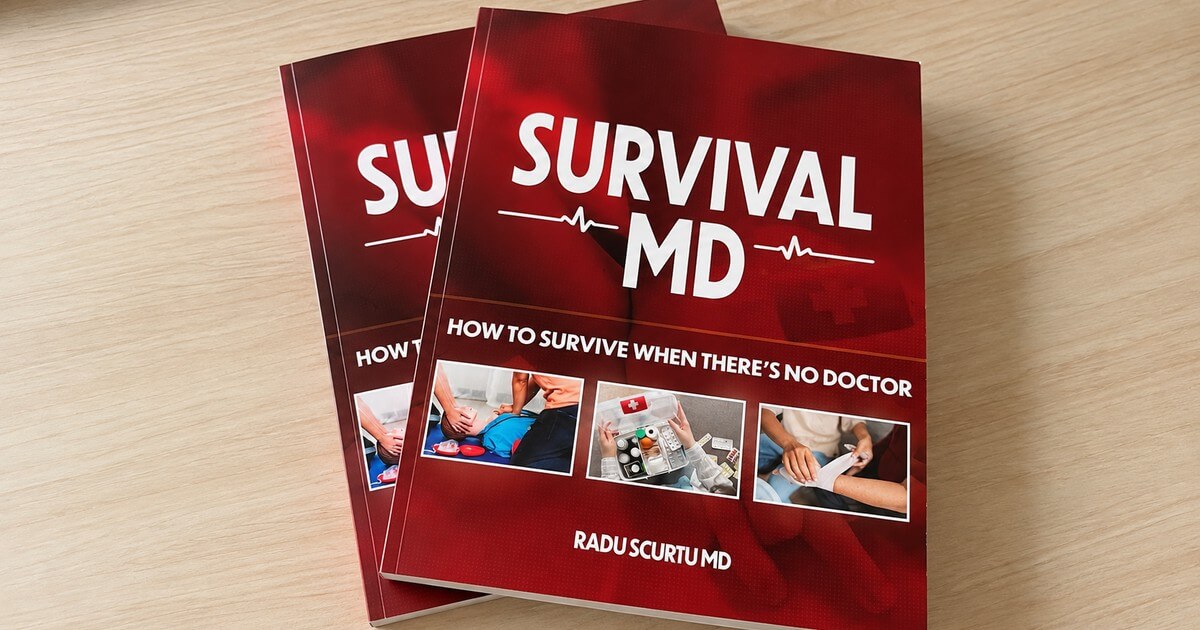
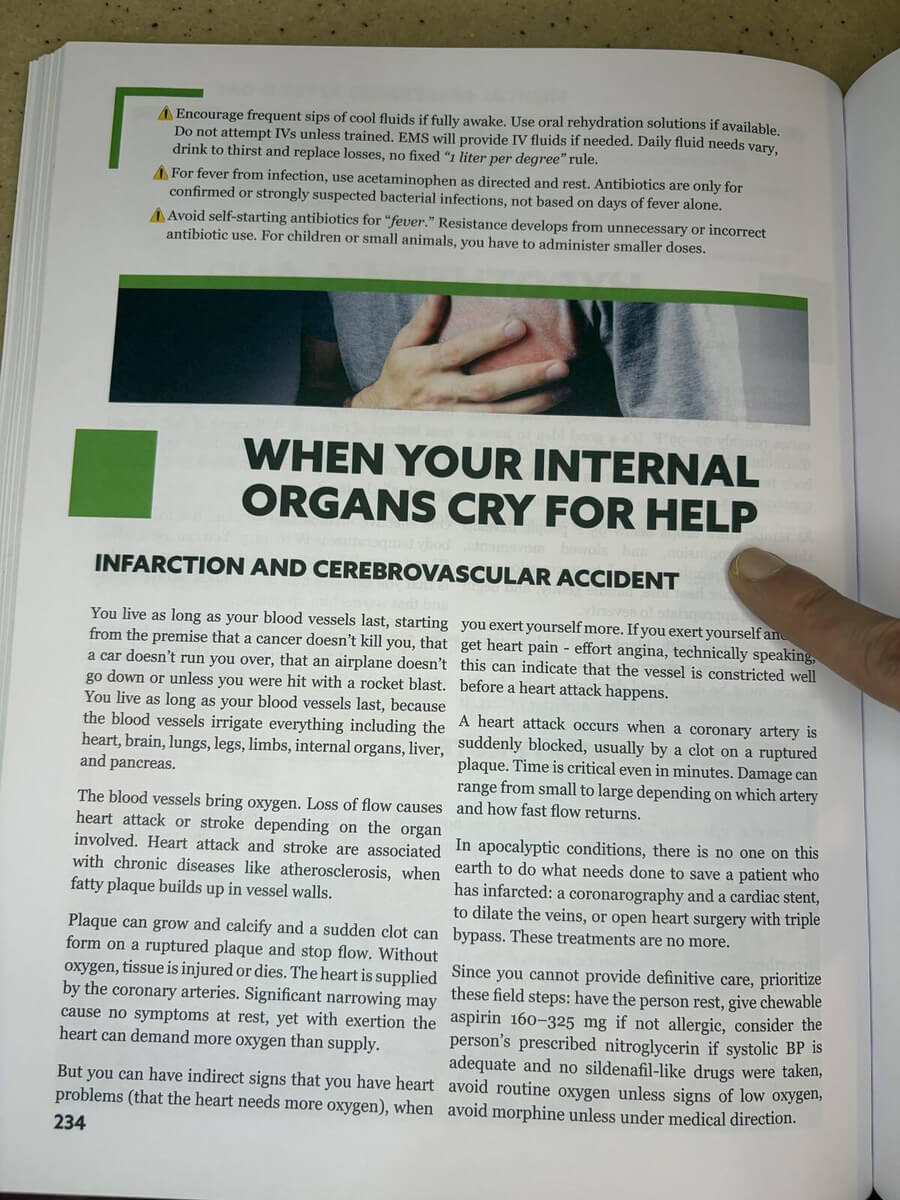
✅ Survival MD: Written by Dr. Radu Scurtu, MD, who shares first-hand cases from the hospitals where he worked in Romania and Germany. More here: Is Dr. Radu Scurtu a Real Doctor? How to Verify
2. It's Built for When Help Isn't Coming
Most first aid books are written for the few minutes before an ambulance arrives. That's useful, but it's not what a home emergency book is for. You need a book that assumes the opposite: help may not come for hours or days.
Ask yourself: does this book tell me what to do on day two, day five, day ten?
✅ Survival MD: Its entire second section, "Medical Preparedness After D-Day," is written for the moment you can't reach a doctor at all.
3. It Helps You Prepare Before Anything Happens
The best emergency book doesn't wait for an emergency. It helps you get your home ready now, with supply lists, medication planning and practical checklists, so you're not improvising later.
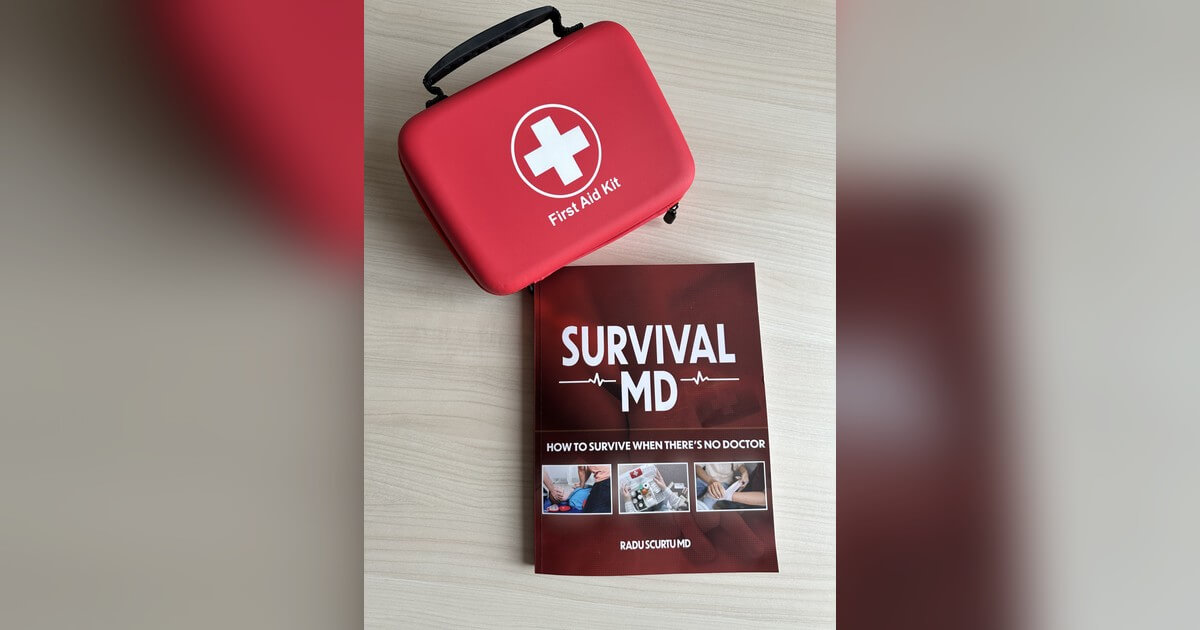
✅ Survival MD: Its first section, "Preparedness Before Disaster Happens," has 11 chapters on preparation, including a 147-item home medical inventory with quantities for 2 adults + 1 child for 30 days, medication stockpiling and rotation, hygiene and sanitation, and kit lists for your home, a bug-out bag and your vehicle.
4. It Covers Chronic Disease and Medications
For many families, the biggest danger in a long emergency isn't an injury. It's a chronic condition that spirals when the pharmacy closes: diabetes, asthma, heart disease, kidney problems.
A good home medical book should help you plan for these conditions, explain what to stockpile and set firm rules about what not to do with medications.
✅ Survival MD: A full chapter on Specific Disease Preparedness by body system, with color-coded action zones for each condition, a chapter on medications to stockpile, and a chapter on how to survive without prescriptions. It follows strict safety rules: no self-tapering, antibiotics only with a clinician's written plan, and never veterinary antibiotics for people.
5. It Covers Your Whole Family
Children aren't small adults. Pregnancy changes everything. And many households have older parents with special needs. Check that the book covers the people in your home, not just a generic adult.
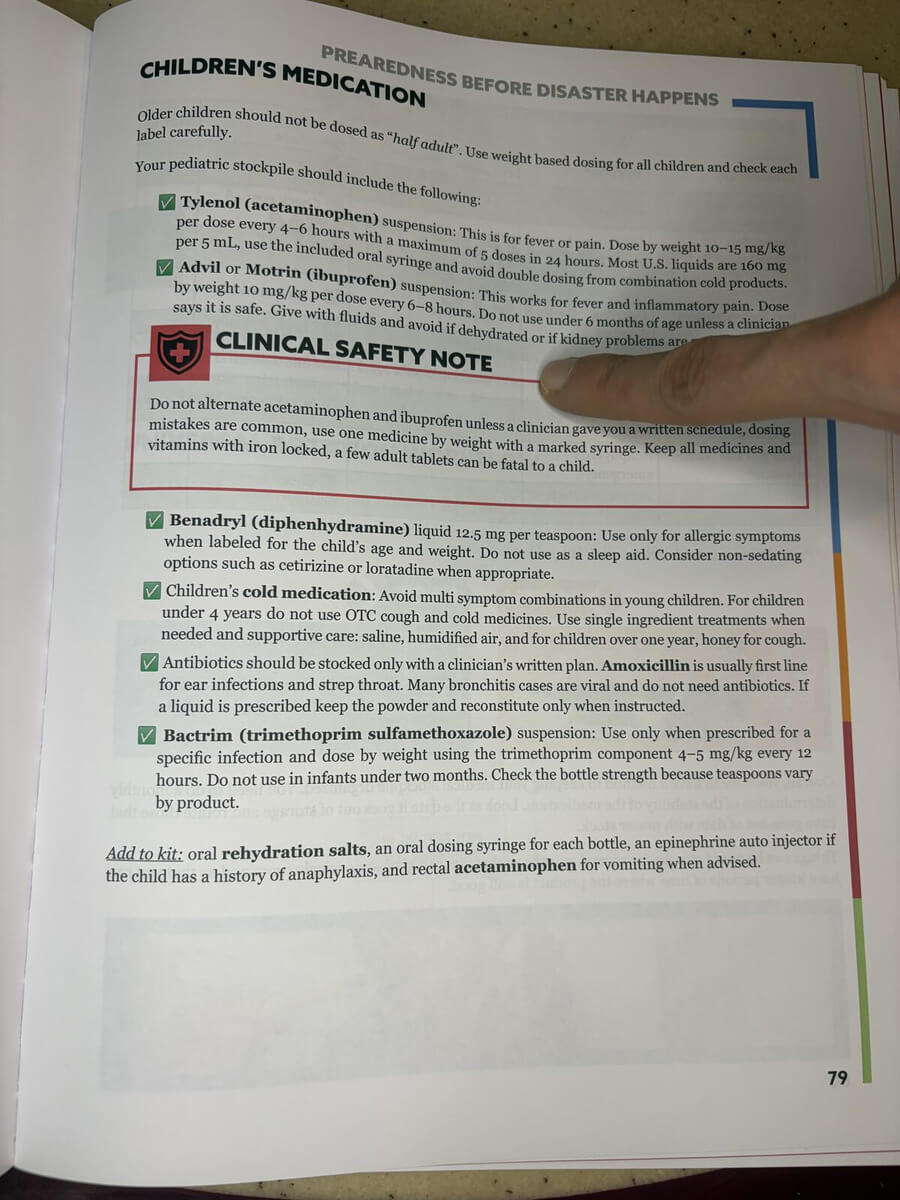
✅ Survival MD: CPR for adults, children and babies, choking relief for adults and children, children's medications, a chapter on women's health and pregnancy, plus chronic disease plans that matter most for older adults. The 4 bonus guides add When There's No Doctor For Your Child and even When There's No Vet for your pets.
6. It's Usable Under Stress
In a real emergency, your heart is pounding and your hands may be shaking. A book that's hundreds of pages of dense text won't help you in that moment.
Look for decision tools: flowcharts, color-coding, short steps, clear headings and a good index.
✅ Survival MD: 8 flowcharts, color-coded zones (green, yellow, orange, red) that show how serious a situation is, short steps, color photos and a full index, all printed in full color on large 11 x 8.5 inch pages. More here: Can You Use Survival MD Without Medical Training?
7. It Puts Safety First
This may be the most important point on the list. A good emergency medical book doesn't just tell you what to do. It tells you what not to do, marks steps that require training and makes it clear when home care is no longer enough.
Red flags to watch for:
- Books that promise you can replace a doctor
- Encouragement to use fish or veterinary antibiotics
- Advice to stop or change prescriptions on your own
- Miracle cures with no limits or warnings
- No guidance on when to get professional help
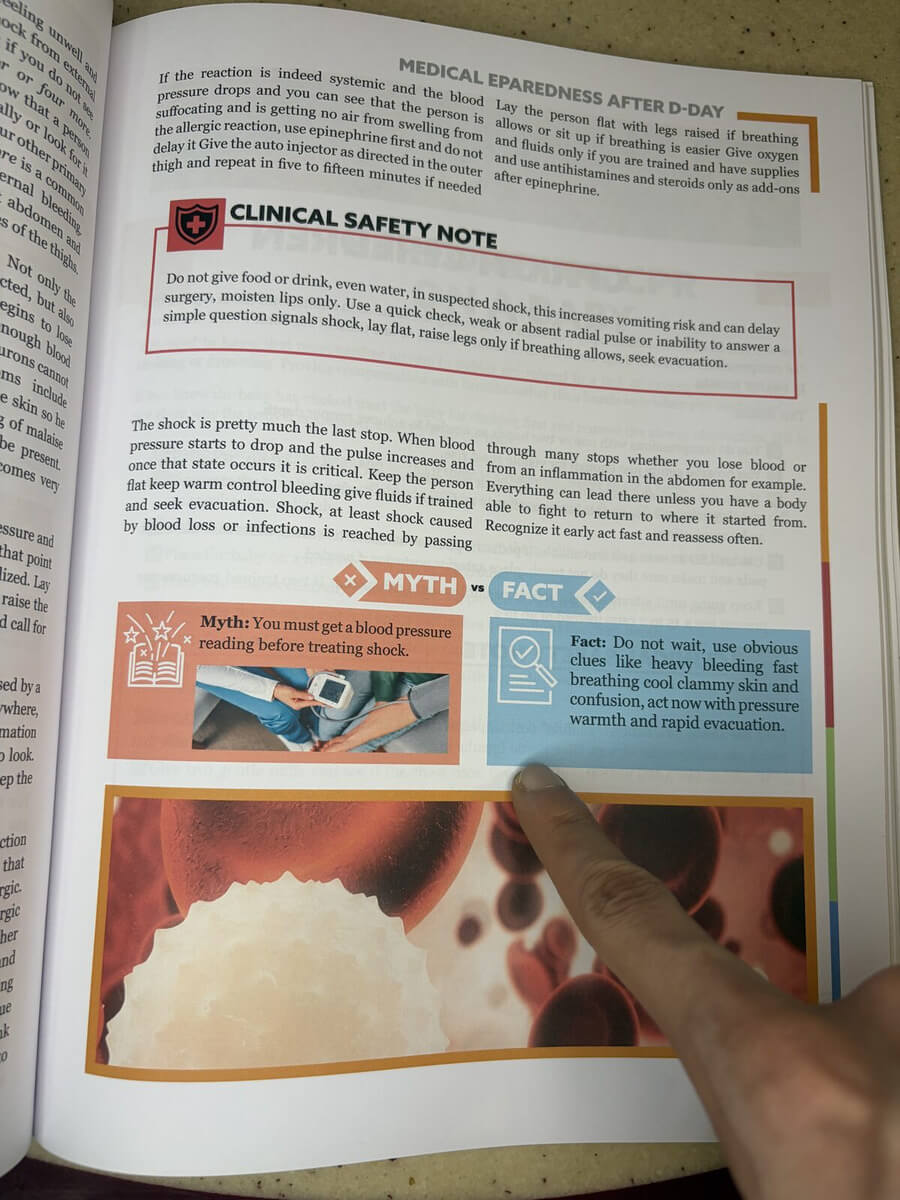
✅ Survival MD: Built on the oldest rule in medicine, "first, do no harm." It opens with a full medical disclaimer, marks advanced steps "if trained," includes 50+ Clinical Safety Notes and 70 Myth vs. Fact boxes, and recommends taking an accredited CPR class.
8. Its Advice Is Current and Referenced
Medical guidance changes. CPR, for example, moved from the old ABC order to CAB, starting with chest compressions for adults who suddenly collapse. An older or unreferenced book may still teach outdated steps.
Check two things: does the book cite its sources, and how recent are they?
✅ Survival MD: 350+ references to sources like the CDC, FDA, NIH, Cochrane reviews and the American Heart Association, many published in 2024 and 2025. It teaches the current CAB sequence.
9. It's Printed
An app or a PDF needs a charged device, and in a real disaster, the power and the signal are often the first things to go. Your phone also has more important jobs, like calling for help.
A printed book works with no power, no internet and no signal, and anyone in the house can pick it up without a passcode. More here: Why "I'll Just Google It" Fails in a Real Emergency
✅ Survival MD: A 288-page, full-color printed book, shipped to your door with tracking.
10. It Comes From a Trusted Seller With a Real Guarantee
Finally, check who you're buying from. Unauthorized copies printed from pirated files are often smaller, blurry and missing content, and they come with no guarantee. A legitimate book is sold through established retailers and stands behind its product.
✅ Survival MD: Sold through the official page, with checkout by Digistore24 or ClickBank, plus a 60-day refund: your money back within 5 business days, and you keep everything, including the printed book. More here: Official vs. Fake: How to Spot Unauthorized Survival MD Sellers
The Checklist at a Glance
| What to look for | Why it matters | Survival MD |
|---|---|---|
| Written by a real doctor | Medical advice needs medical training | ✅ Dr. Radu Scurtu, MD |
| Built for when help isn't coming | Disasters can last for days | ✅ A full section for after D-Day |
| Preparation before disaster | Planning beats improvising | ✅ 11 chapters and a 147-item inventory |
| Chronic disease and medications | The most common long-term risk | ✅ Color-coded zones and strict safety rules |
| The whole family | Kids, pregnancy and older adults need different care | ✅ Children, babies, pregnancy, plus bonus guides |
| Usable under stress | Panic and dense text don't mix | ✅ 8 flowcharts, color zones, full color |
| Safety first | Bad advice can make things worse | ✅ 50+ Safety Notes, 70 Myth vs. Fact boxes |
| Current sources | Medicine changes | ✅ 350+ references, many from 2024–2025 |
| Printed | No power, no signal, no problem | ✅ 288-page printed book |
| Trusted seller and guarantee | Protects you from fakes and bad purchases | ✅ Digistore24 or ClickBank, 60-day refund |
10 out of 10.
What You Get for $37
- Survival MD, the full-color printed book: 288 pages, 19 chapters, 150+ topics
- 4 bonus guides: When There's No Doctor For Your Child, When There's No Pharmacy, Herbal First Aid For When There's No Doctor and When There's No Vet
- A 60-day refund: your money back within 5 business days, and you keep everything
Frequently Asked Questions
What should I look for in an emergency medical book?
A real doctor as the author, a focus on situations when help isn't coming, guidance on preparation, chronic disease and medications, coverage for the whole family, decision tools you can use under stress, a safety-first approach, current references, a printed format and a trusted seller with a guarantee.
Should an emergency medical book be printed or digital?
Printed. In a disaster, power, internet and phone service often fail, and your phone is needed for calling for help. A printed book always works.
What are the red flags in a survival medicine book?
Promises to replace a doctor, encouragement to use fish or veterinary antibiotics, advice to change prescriptions on your own, miracle cures and no guidance on when to get professional help.
Which emergency medical book do you recommend for a family?
Survival MD by Dr. Radu Scurtu. It meets all 10 points on this checklist and costs $37, with 4 bonus guides and a 60-day refund in which you keep everything.
Do I still need a first aid class if I have a good medical book?
A class is a great addition for hands-on practice, and Survival MD itself recommends an accredited CPR class. The book covers what a class doesn't: long-term care when no doctor can be reached. More here: I Already Took a First Aid Class. Do I Still Need This?
The Bottom Line
The right emergency medical book is written by a real doctor, built for when help isn't coming, safe, current, easy to use under stress, printed and sold by a seller who stands behind it. Use this checklist on any book you're considering. When we did, Survival MD was the one that checked all 10 boxes.