First, Well Done
If you've taken a first aid or CPR class, you're already ahead of most people. You've practiced compressions on a mannequin, learned how to control bleeding and know what to do in the first few minutes of an emergency. That matters, and nothing in this article is meant to take it away.
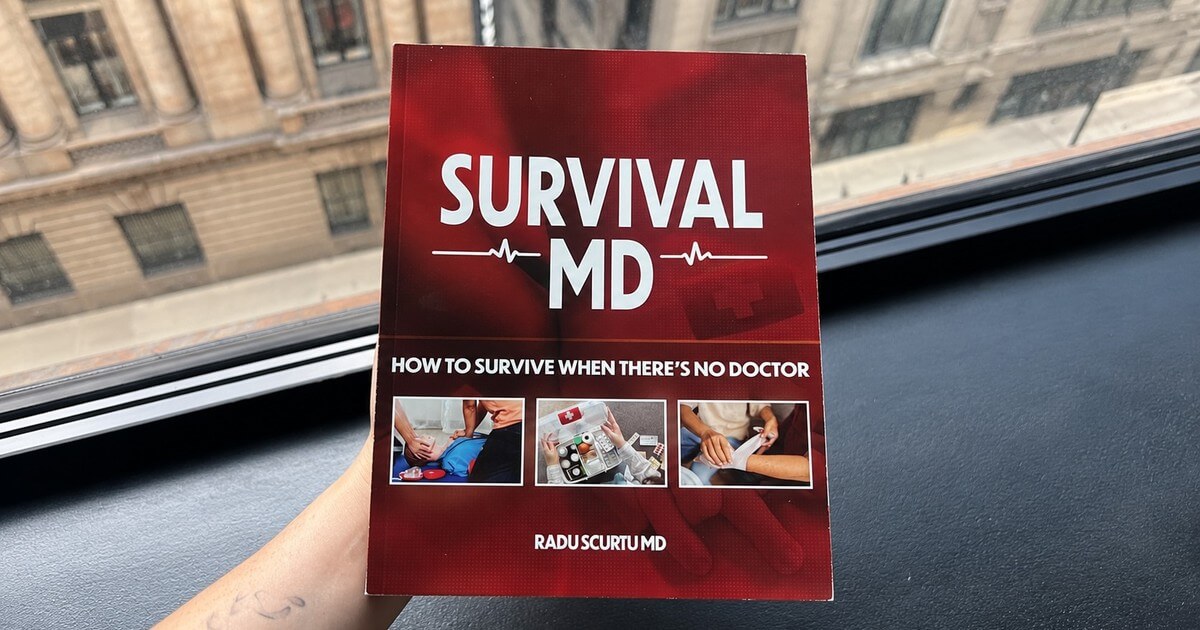
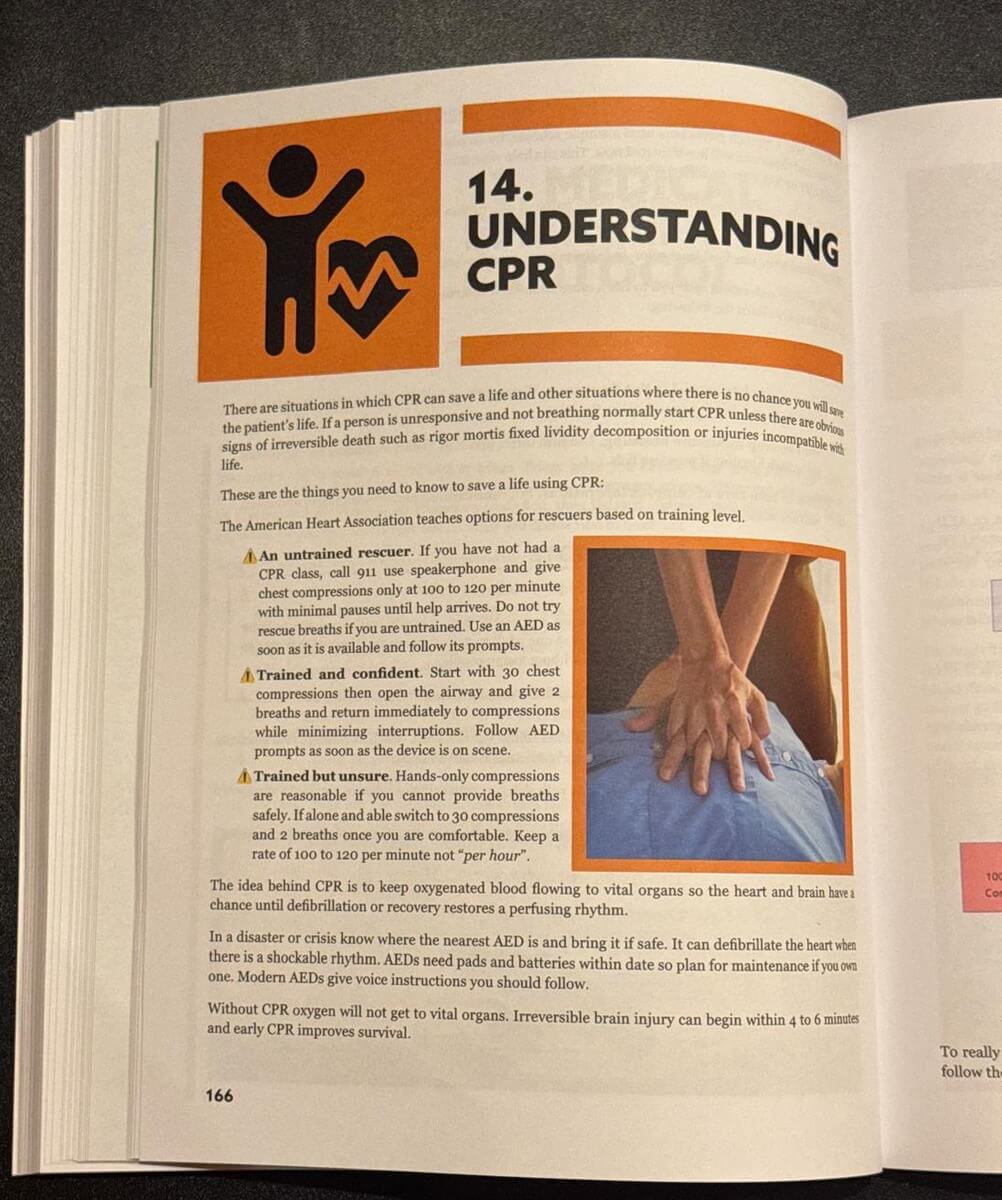
Even Survival MD agrees. In its CPR chapter, Dr. Radu Scurtu writes: "To really understand CPR, you should take an accredited class."
So the question isn't whether your class was worth it. It was. The question is: what happens after the part your class prepared you for?
The Assumption Built Into Every First Aid Class
Most standard first aid courses are built around one assumption: professional help is on the way.
You call 911. You keep the person stable. You hand them over to paramedics a few minutes later. Everything you learn is designed to bridge that gap.
That's exactly right for a car accident on a normal Tuesday. But a major disaster breaks the assumption. Survival MD describes the situation plainly:
"Doctors will be overloaded and you might not reach one. This means you are on your own for medical care."
Survival MD
When the ambulance can't get through, the hospital is overwhelmed and the pharmacy is closed, those few minutes can turn into days or weeks. That's the gap Survival MD was written for.
Class vs. Book: What Each One Covers
Here's how a typical first aid class compares with what Survival MD covers:
| Typical first aid class | Survival MD | |
|---|---|---|
| Assumes | Help arrives within minutes | Help may not come for days or weeks |
| Time frame | The first minutes | The first minutes through the long recovery |
| Chronic illness | Rarely covered | A full chapter on diabetes, heart disease, asthma, kidney disease and more |
| Medications | Rarely covered | What to stockpile, how to rotate it and what to do when prescriptions run out |
| Dental emergencies | Rarely covered | A full chapter |
| Women's health and pregnancy | Rarely covered | A full chapter, including a clean birth kit and warning signs |
| Infections | Basic wound care | Food, water and airborne infections, and how to stop them spreading |
| Sanitation | Not covered | Toilets, waste, handwashing stations and safe water storage |
| Many injured at once | Usually one patient | Triage with a color system and a decision flowchart |
| What you take home | A certificate and a handout | A 280+ page full-color reference you can open any time |
A class gives you skills for the first minutes. Survival MD gives you a plan for everything after.
Your Class Skills, Put to Work
Here's the good news: everything you learned in class makes Survival MD more useful, not less.
The book is written to meet you at your level. In the CPR chapter, for example, it explains what to do whether you're untrained, trained and confident or trained but unsure. That last one is honest, because many people who took a class years ago aren't sure they still remember the details.
Five Things Your Class Probably Didn't Teach You
Here are a few situations that most first aid classes don't prepare you for, and Survival MD does:
1. Your father runs out of his heart medication
A class teaches you what to do if someone has a heart attack. It doesn't usually tell you what to do when someone's daily medication runs out and the pharmacy is closed. Survival MD explains which medicines must never be stopped suddenly, which need careful planning, and how to prepare with your doctor before a crisis.
2. Three people are hurt and you're the only one standing
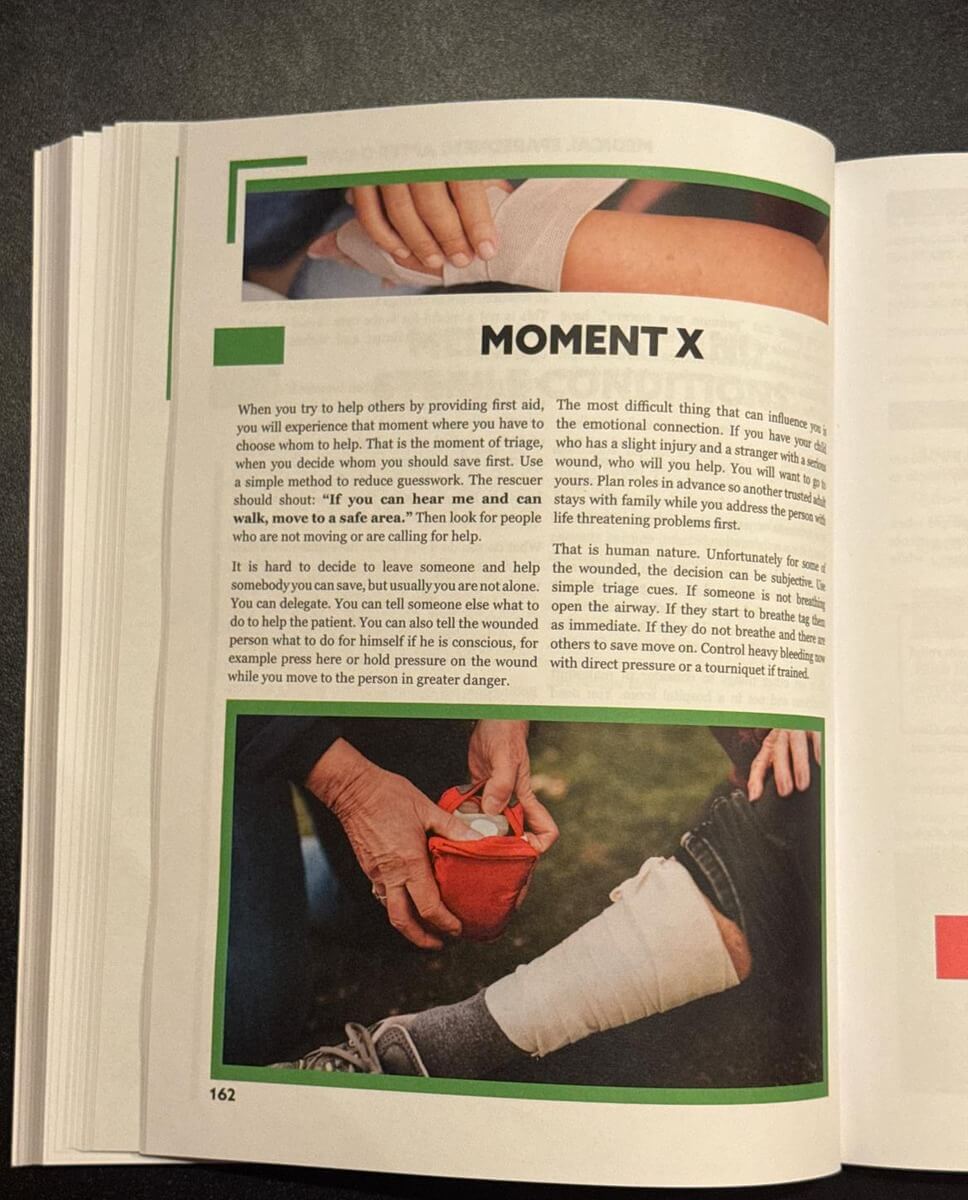
Classes usually train you on one patient at a time. Survival MD's Moment X section deals with the hardest decision in any emergency: who to help first when there are more patients than hands. It gives you a simple method and a triage flowchart.
3. A cut you cleaned on day one is infected by day four
Your class taught you to cover a wound and send the person to a doctor. When there's no doctor, you need to know how to properly clean a wound, which wounds should never be closed, and the warning signs that an infection is spreading.
4. A toothache turns into a swollen jaw
Dental emergencies are almost never part of a first aid class. Survival MD gives them a full chapter, including the warning signs that a dental infection has become dangerous.
5. Everyone in the shelter starts getting sick
Stomach bugs, contaminated water and respiratory infections spread fast in crowded spaces. Survival MD covers how to recognize them, how to stop them spreading and how to manage them without a clinic.
Skills Fade. A Book Stays on the Shelf.
There's one more reason to keep a reference at home, even if you're well trained: it's hard to remember everything under stress, especially details you learned once and haven't practiced since.
Survival MD is built to be used in the moment, not just read once:
- 8 flowcharts that walk you through decisions step by step
- 70 Myth vs. Fact boxes that correct common mistakes
- 50+ Clinical Safety Notes
- Checklists for kits, medications and supplies
- A full index, so you can find any topic in seconds
It's also printed, so it works when there's no power, no internet and no phone signal.
So, Do You Still Need It?
If your plan for an emergency is "call 911 and keep them stable until help arrives," your first aid class has you covered.
If you want to be ready for the days when help doesn't arrive, when you can't reach a doctor at all, the class is only the beginning. Keep your training. Add the book. The two work best together.
Frequently Asked Questions
Does Survival MD replace a first aid or CPR class?
No. The book itself recommends taking an accredited CPR class. Survival MD complements your training by covering what happens when professional help isn't available for days or weeks.
What does Survival MD cover that a first aid class usually doesn't?
Chronic disease management, medication stockpiling and what to do when prescriptions run out, dental emergencies, women's health and pregnancy, infection control, sanitation, triage for multiple casualties and long-term care without a doctor.
I'm trained in CPR. Is the CPR chapter still useful?
Yes. It covers CPR for adults, children and babies, AED use, shock and choking, with guidance for trained, untrained and "trained but unsure" rescuers, plus flowcharts for quick review.
Is Survival MD too basic for someone with first aid training?
No. It goes well beyond basic first aid, with 19 chapters and 150+ topics on long-term medical care in a crisis, while still being written in plain English.
How much does Survival MD cost?
$37 for the full-color printed book, with 4 bonus guides and a 60-day refund where you keep everything.
The Bottom Line
A first aid class prepares you for the minutes before help arrives. Survival MD prepares you for the days when it doesn't. If you've already taken a class, you're the perfect reader for this book, because you'll get even more out of it.