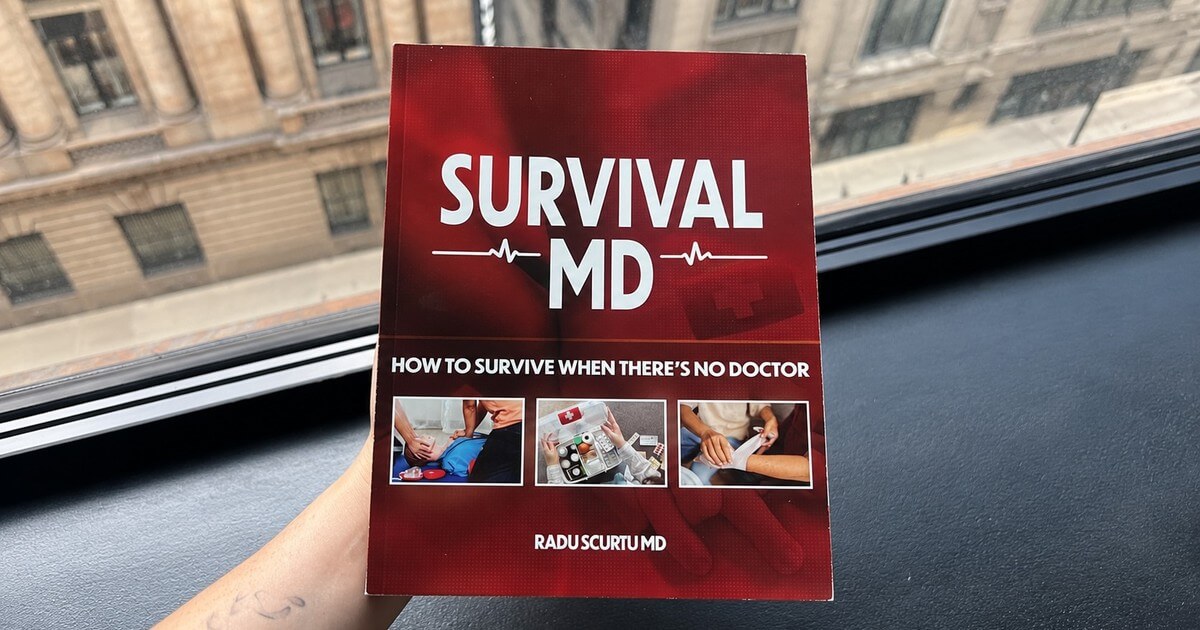
Yes, and That's the Whole Point
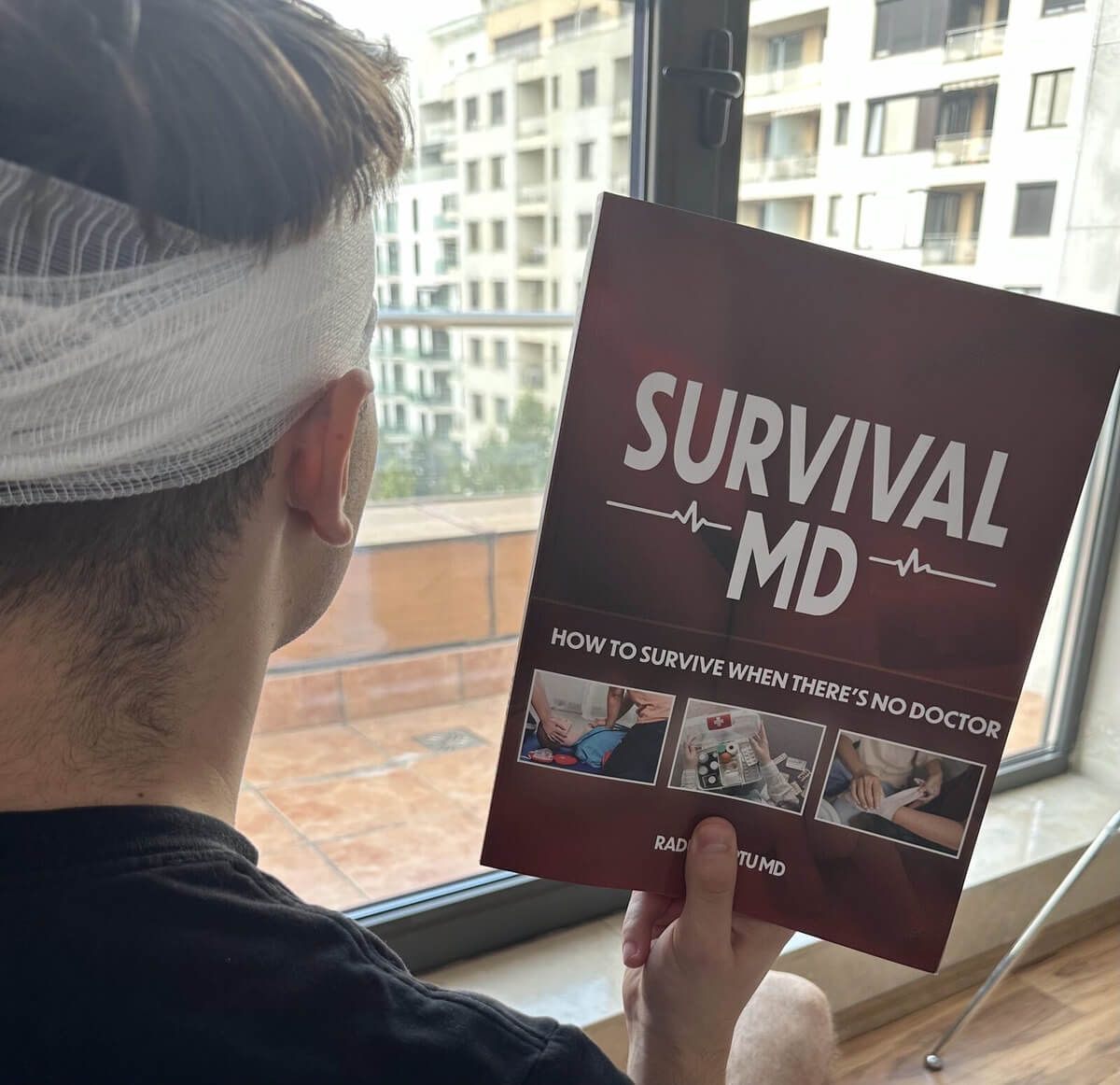
It's a fair question. Survival MD was written by a doctor, covers serious topics like CPR, fractures, infections and chronic disease, and runs 280+ pages. It's natural to wonder whether it's really meant for someone who has never worked in medicine.
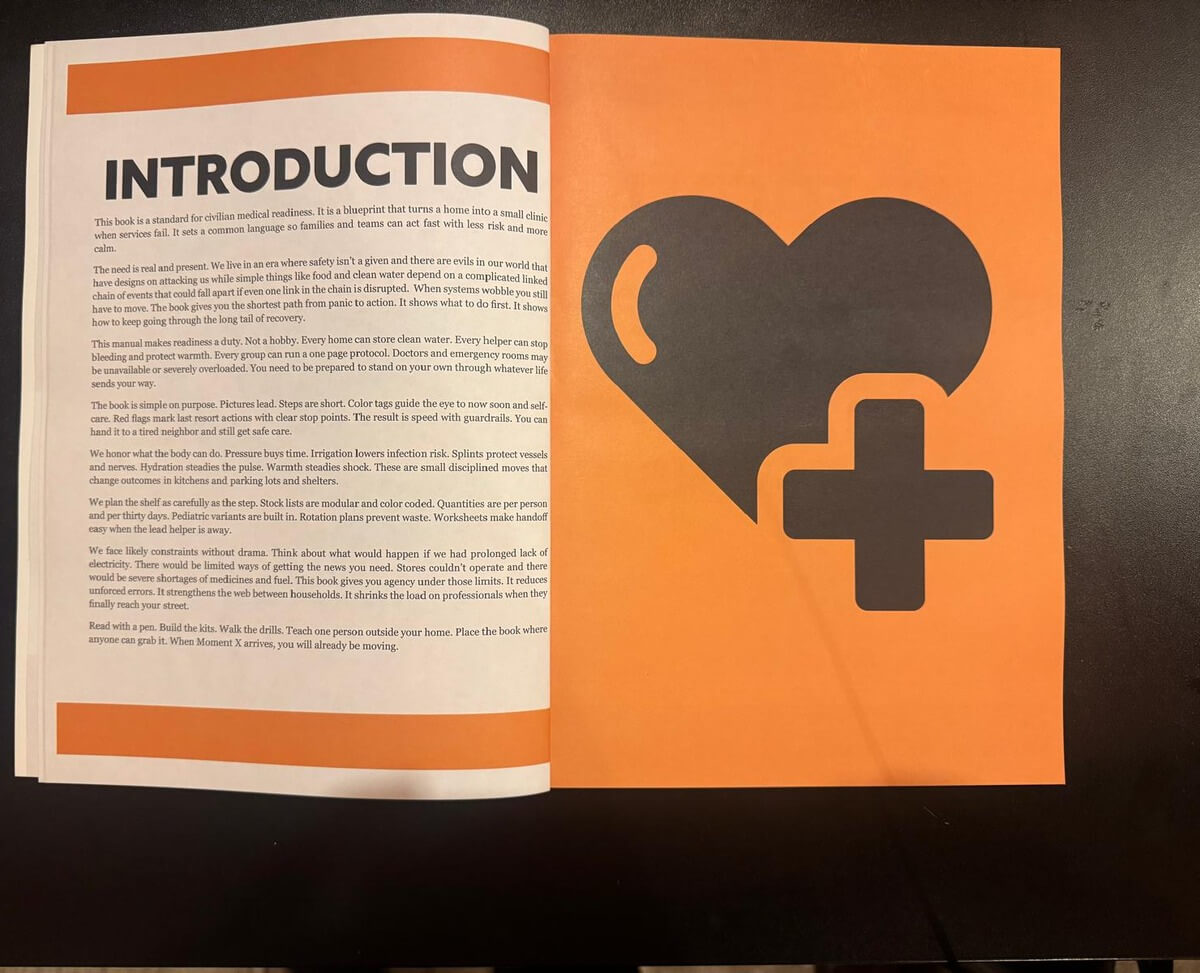
It is. In fact, it was built for exactly that reader. The book's introduction says so directly:
"The book is simple on purpose. Pictures lead. Steps are short. Color tags guide the eye to now, soon and self-care. Red flags mark last resort actions with clear stop points. The result is speed with guardrails. You can hand it to a tired neighbor and still get safe care."
Survival MD, Introduction
That last line is the real test. Survival MD isn't written for a trained professional on a calm day. It's written for a tired, stressed, non-medical person in the middle of an emergency, when there's no doctor to call.
How Survival MD Makes Medicine Usable for Beginners
A lot of medical books are accurate but impossible to use under pressure. Survival MD solves that with a handful of design choices that run through the whole book.
1. Plain English
Medical terms are explained in everyday language, and when the book uses a technical word, it tells you what it means. It also uses stories and comparisons to make ideas stick, like an injured puppy that explains why a fracture hurts, or why medicine works like an airplane cockpit with a pilot and a copilot.
2. Color zones instead of guesswork
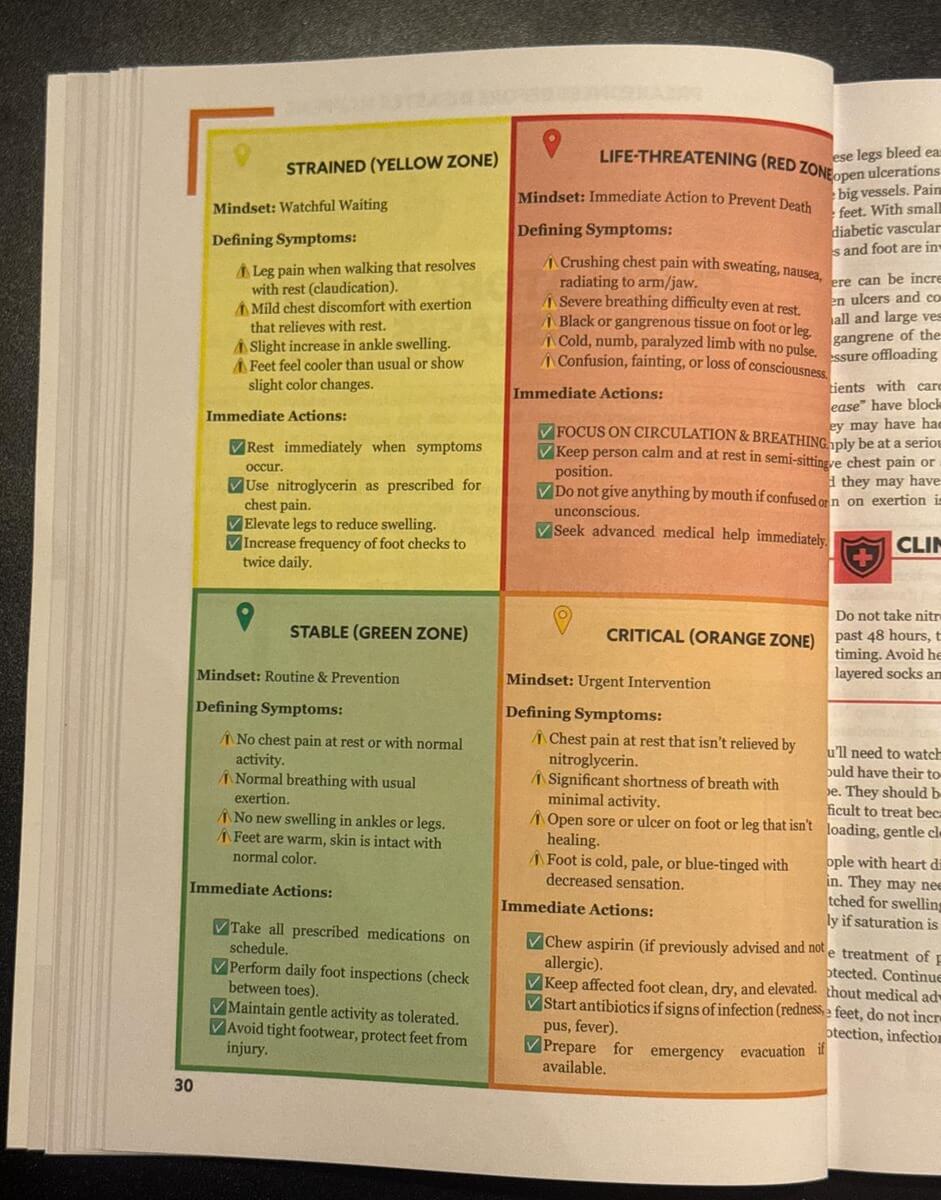
Many sections use a four-zone color system: green (stable), yellow (strained), orange (critical) and red (life-threatening). Each zone tells you the mindset to adopt, the symptoms to look for and the immediate actions to take. You don't need to diagnose anything. You just need to recognize which zone someone is in.
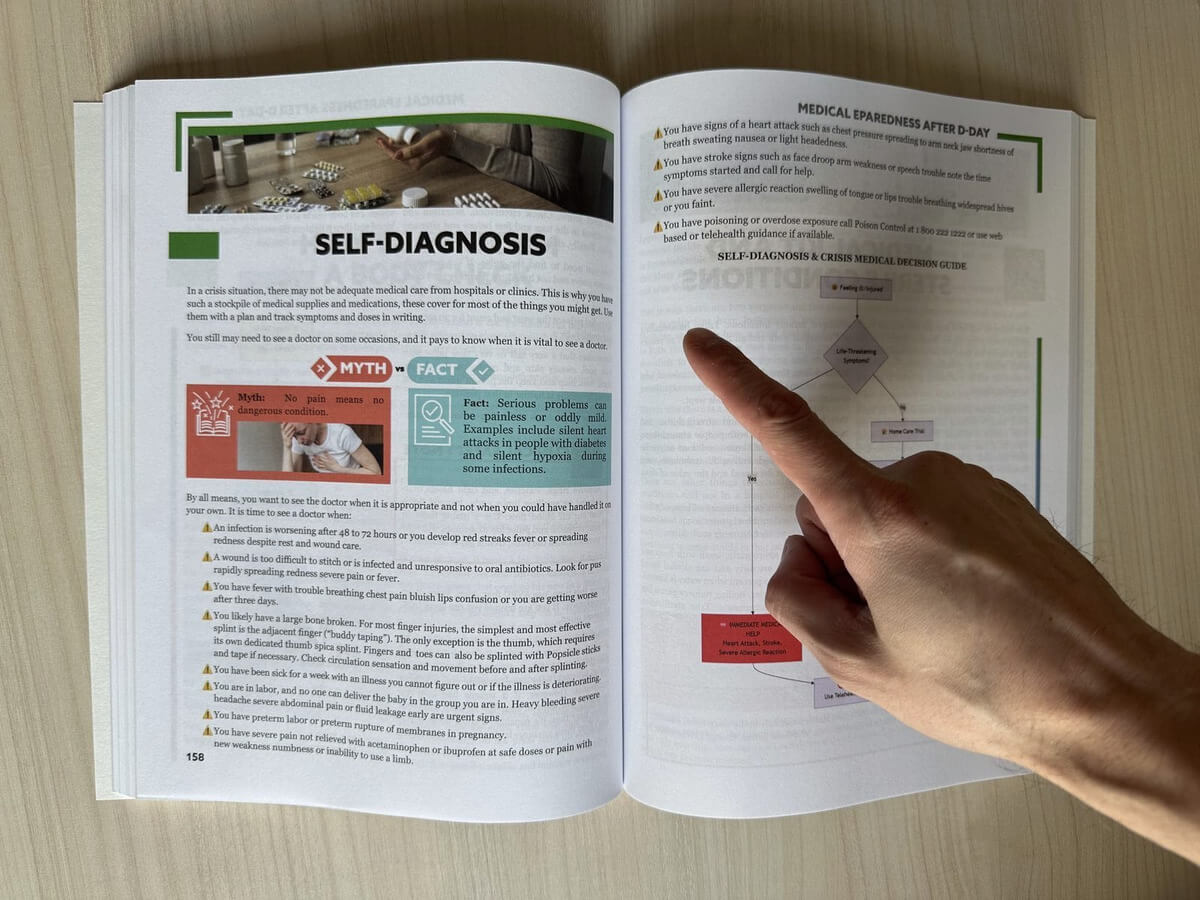
3. Flowcharts for the hard decisions
The book includes 8 flowcharts that walk you through decisions step by step, from CPR to assessing a patient to deciding who to help first. When your mind is racing, you just follow the arrows.
4. "Do first" steps
Many sections start with what to do before anything else. The simple, safe actions come first, so you're never stuck wondering where to begin.
5. Simple memory tools
Survival MD gives you short, memorable methods, like the TeCaMoLo Principle (four questions to understand any injury) and CAB for CPR, so you don't have to memorize long procedures.
6. Checklists you can tick off
Kits, medications, supplies and response packs all come with checklists and quantities, so preparing doesn't require medical knowledge, just a pen.
It Tells You What NOT to Do
This is one of the most important features for non-medical readers, and one that many survival books get wrong.
Survival MD is honest about limits. It clearly marks the steps that are "if trained" and tells you which procedures not to attempt without proper training. It's built on the oldest rule in medicine, which opens the book's 7 Principles to Save a Life: "first, do no harm."
It also includes:
- 50+ Clinical Safety Notes that stop common, dangerous mistakes
- 70 Myth vs. Fact boxes that correct the "home remedies" people try out of desperation
- "When to get help" lines, so you know exactly when home care is no longer enough
For a beginner, knowing what not to do is often more valuable than knowing a complicated procedure.
You Can Find What You Need, Fast
In an emergency, nobody reads a book from page one. Survival MD is organized so you can jump straight to what you need:
- 19 chapters split into two clear sections: preparing before a disaster, and what to do after it hits
- A detailed table of contents
- A full index at the back, so you can look up anything from "AED use" to "cold sores" in seconds
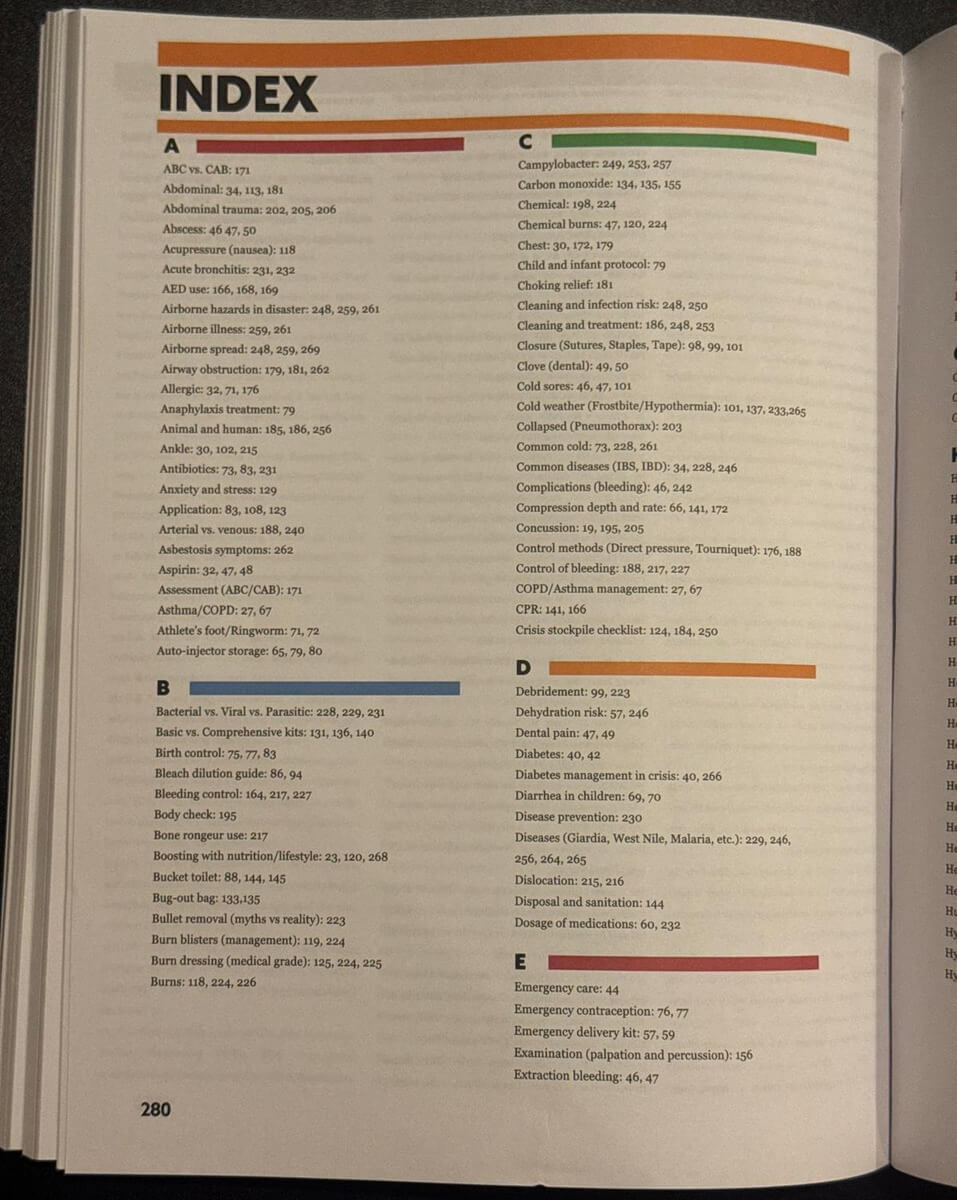
And because it's a printed, full-color book, it works with no power, no internet and no phone signal.
Who It Works For
Because it doesn't assume any background, Survival MD works for:
- Parents who want to be ready for their kids' injuries and illnesses
- Caregivers looking after an older adult or someone with a chronic condition
- People living far from a hospital, where help takes longer to arrive
- Complete beginners who've never taken a first aid class
- People with training, who want a long-term reference for when help isn't coming
Several sections are written specifically so a family member or caregiver can follow them, not just the patient.
What About Readers Who Do Have Training?
They benefit too. Survival MD goes far beyond basic first aid, with chapters on chronic disease, medications, dental emergencies, women's health, infections, sanitation, triage and surviving without prescriptions. It even gives CPR guidance for different training levels, including people who are "trained but unsure."
If you've already taken a class, see: I Already Took a First Aid Class. Do I Still Need This?
The Honest Caveat
Survival MD doesn't turn you into a doctor, and it doesn't pretend to. The book itself recommends taking an accredited CPR class, and it always points you toward professional care whenever it's available.
What it does is give an ordinary person a clear, safe plan for the situations where professional care isn't available, so you can act calmly and avoid making things worse.
Frequently Asked Questions
Do I need medical training to use Survival MD?
No. Survival MD is written in plain English for people without a medical background, with color zones, flowcharts, checklists and "do first" steps.
Is Survival MD too technical for beginners?
No. Technical terms are explained, steps are short, and the book clearly marks which actions are only for trained people.
Will the book tell me to do things that are dangerous without training?
Survival MD is built on "first, do no harm." It marks "if trained" steps, explains what not to attempt and includes 50+ Clinical Safety Notes.
How do I find information quickly in an emergency?
Use the table of contents, the color-zone charts, the flowcharts and the full index at the back of the book.
Should I still take a first aid or CPR class?
Yes, if you can. The book recommends an accredited CPR class. Survival MD complements training by covering long-term care when help isn't available.
The Bottom Line
You don't need medical training to use Survival MD. You need the book, a pen and a few quiet evenings to read it before you need it. It was written so that an ordinary person, even a tired neighbor, can give safe, clear care when no doctor is coming.