"There's an App for That," Right?
If you've ever thought about emergency preparedness, you've probably downloaded a first aid app, or thought about it. They're free, they fit in your pocket, and some of the best ones come from well-known organizations. So why would anyone pay for a book?
It's a fair question, and we'll give apps their due. They're genuinely useful. But they're built for a very specific situation, and it's not the one most preparedness plans are worried about.
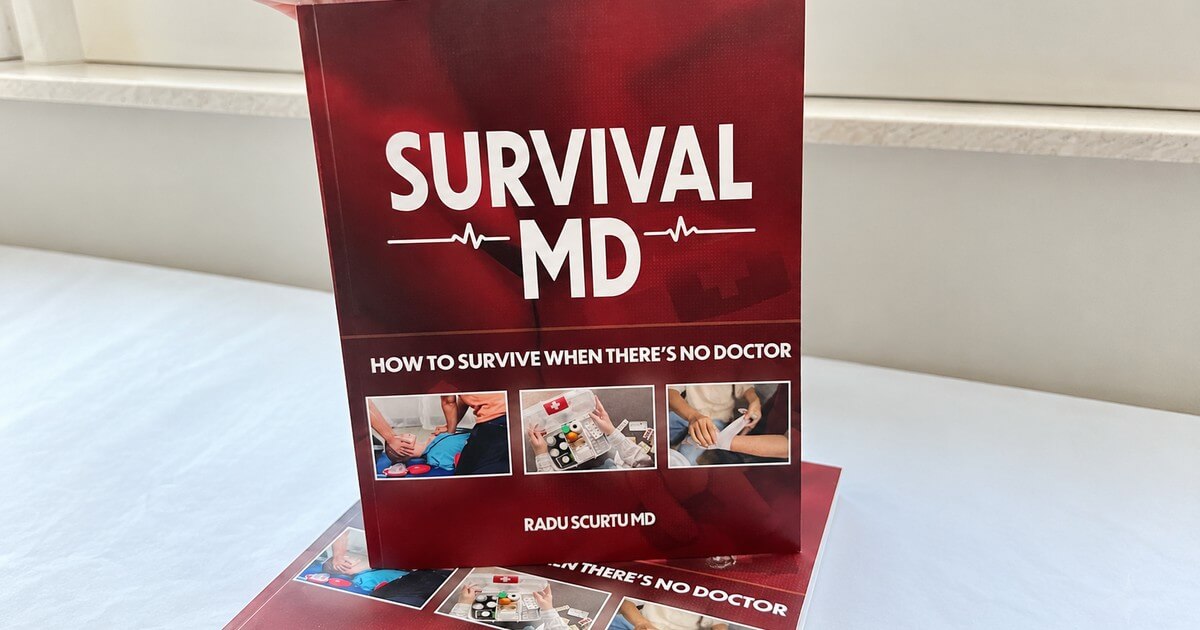
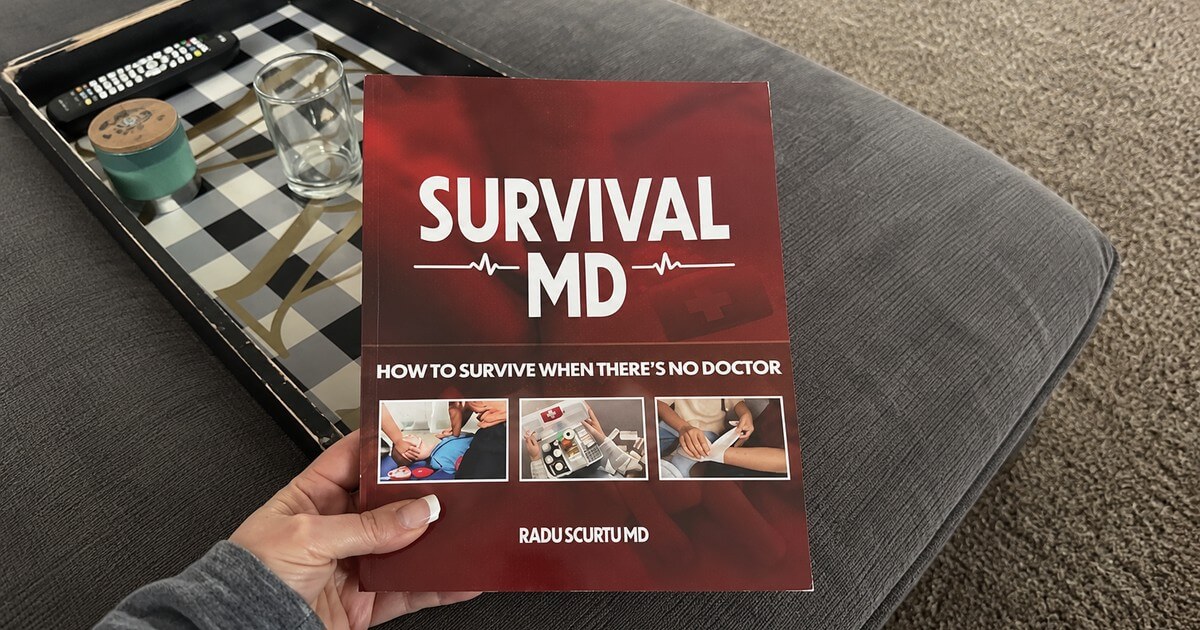
First aid apps are built for the first few minutes before help arrives. Survival MD by Dr. Radu Scurtu is built for the days when help isn't coming at all.
Here's what that difference means in practice.
What First Aid Apps Do Well
Let's start with the good news. A quality first aid app can:
- Cost nothing, or very little
- Show short videos and animations of techniques like CPR or the recovery position
- Guide you through common emergencies step by step
- Prompt you to call emergency services right from the screen
- Work offline, in the case of some apps that preload their content
If you don't have one, it's worth downloading a reputable app from a recognized medical or humanitarian organization. We mean that.
But every one of these strengths assumes three things: your phone is charged, help is on the way, and the problem is a classic first aid situation. In a real disaster, none of those is guaranteed.
Where Apps Fall Short in a Real Crisis
1. They're built for "until the ambulance arrives"
Most first aid apps follow the same logic as a first aid class: keep the person stable for a few minutes, then hand them over to professionals. That's the right approach on a normal day.
But in a hurricane, a flood, a winter storm or a grid failure, the ambulance may not come for hours or days. What do you do on day two? Day five? That's where most apps stop, and where Survival MD keeps going.
2. They don't cover what keeps people alive for days
Think about what actually goes wrong when a family is cut off from care for a week:
- Someone runs out of daily medication
- A chronic condition like diabetes, asthma or heart disease gets worse
- A small wound gets infected
- Someone gets sick from contaminated water or food
- A toothache turns into an emergency
- Nobody knows how to manage sanitation without running water
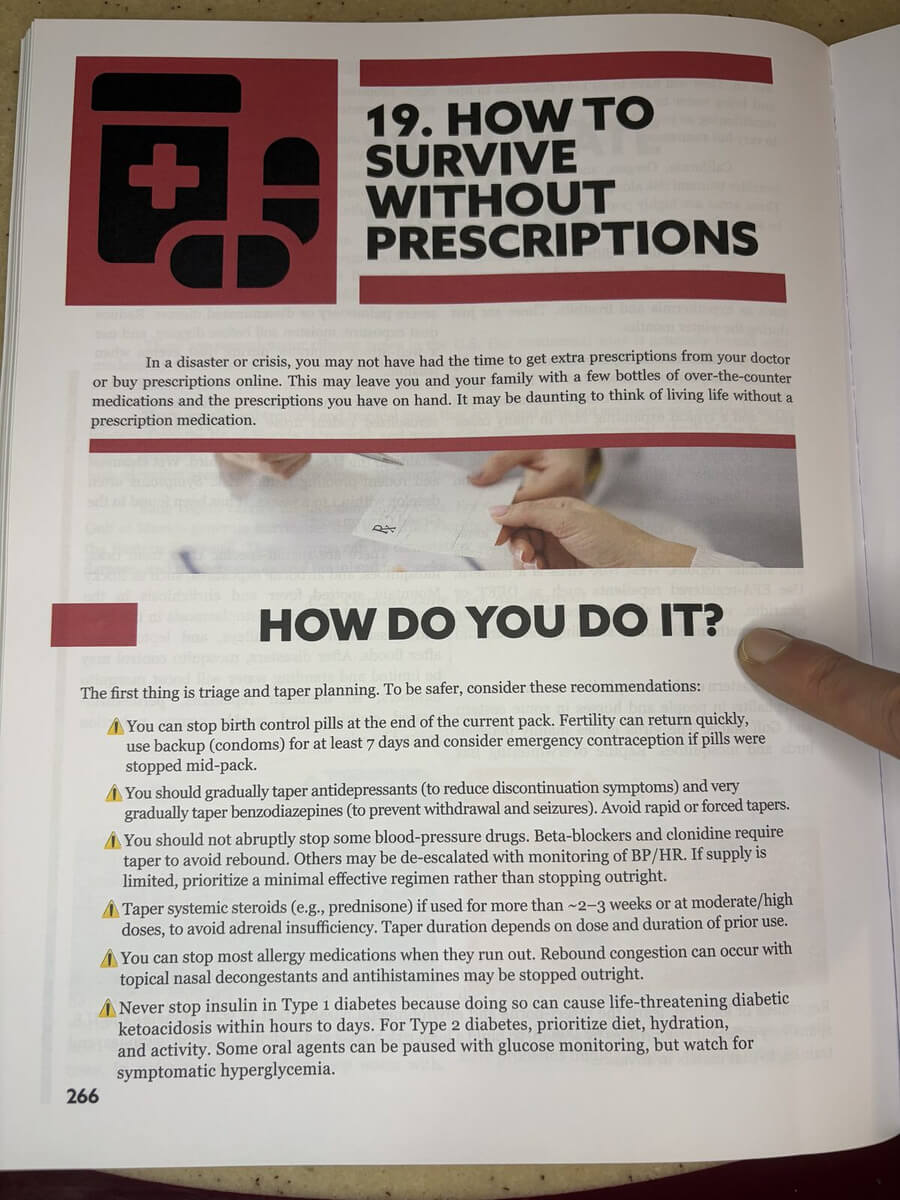
Survival MD covers all of these, across 19 chapters and 150+ topics, including chapters on chronic disease, women's health and pregnancy, dental emergencies, emergency sanitation and how to survive without prescriptions. These are rarely the focus of a first aid app.
3. They depend on a phone you need for other things
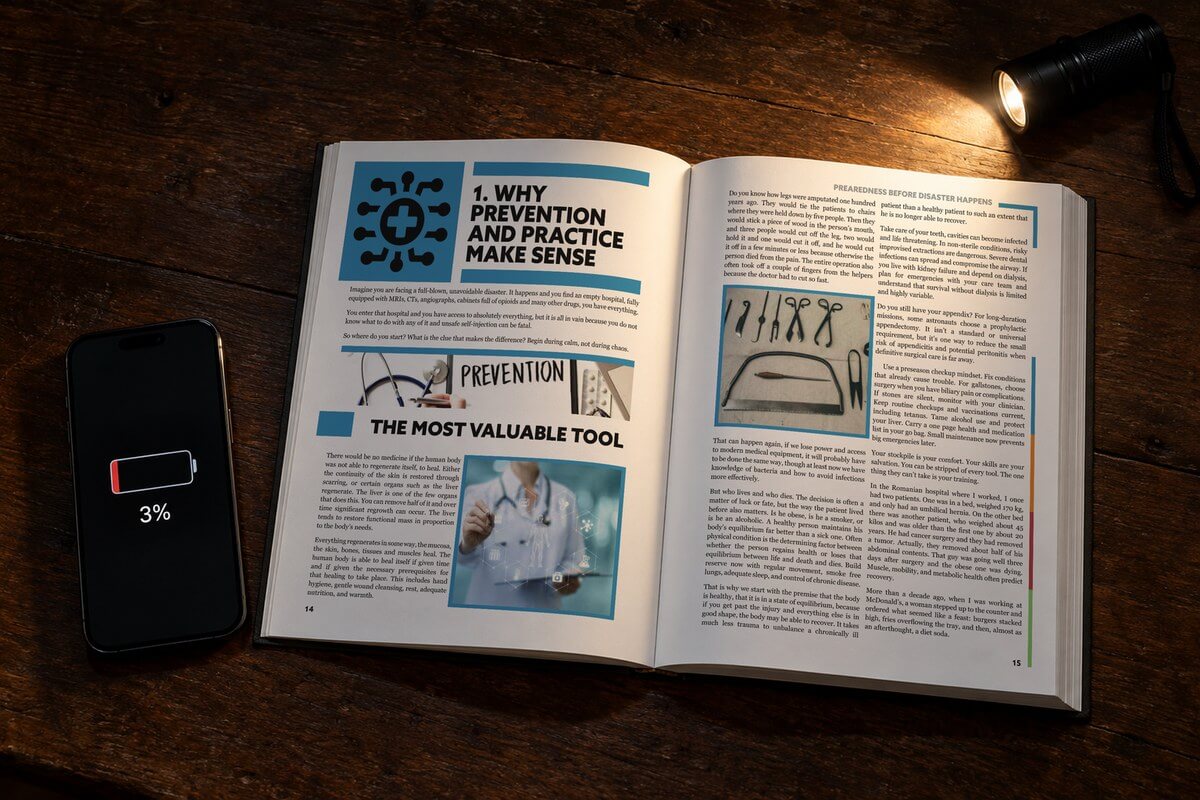
In an emergency, your phone has bigger jobs: calling for help, reaching family, giving you a flashlight. Every minute spent in an app drains a battery you may not be able to recharge for days. A printed book never runs out of power.
4. Small screen, busy hands
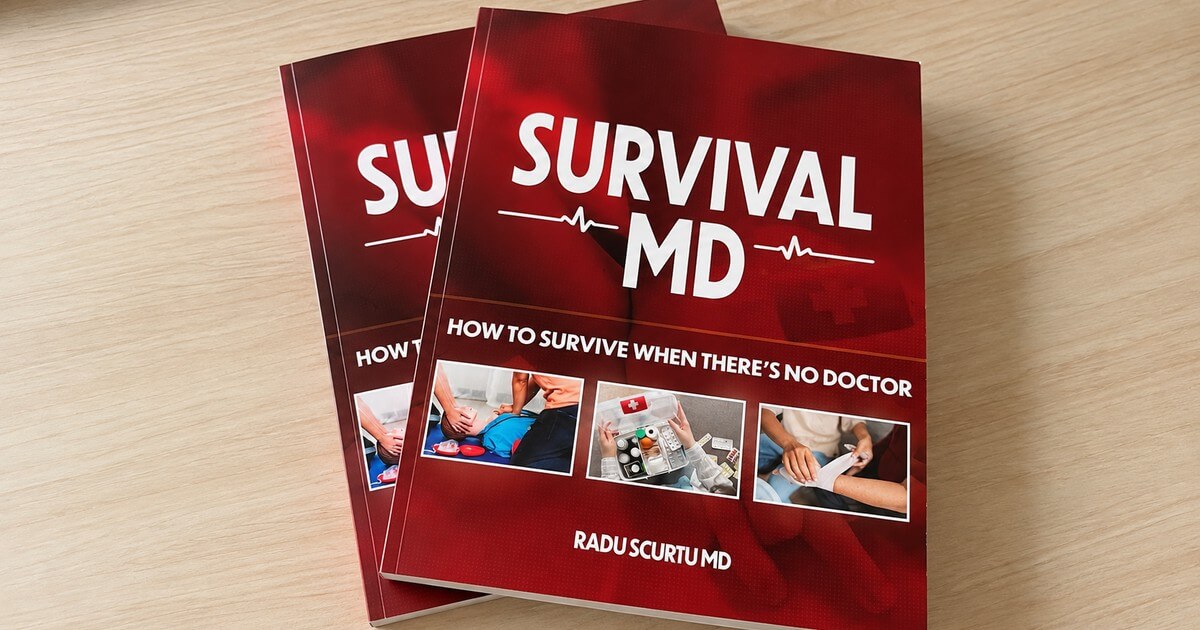
An app shows you one small screen at a time. Survival MD is printed at 11 x 8.5 inches in full color, so a whole flowchart, checklist or color-coded zone chart fits on one page. You can lay it open on the floor beside you, glance at it and keep your hands on the patient.
5. Apps are reactive. A book helps you prepare.
You open an app when something has already gone wrong. Survival MD is meant to be read before that moment, with tools that get your home ready:
- A 147-item home medical inventory with quantities for a real family
- Checklists for first aid kits, response kits, bug-out bags and vehicle kits
- Medication stockpiling and rotation guidance
- A plan for each family member's chronic conditions
In the book's own words: "Begin during calm, not during chaos."
6. Anyone in the house can use a book
If you are the one who's hurt, can your partner, your teenager or your neighbor unlock your phone, find the app and navigate it? A book on the shelf has no passcode, no login and no learning curve.
7. Apps come and go
Apps get updated, change, stop being supported or stop working on older phones. A printed book on your shelf will still be there, unchanged, in ten years.
Survival MD vs. First Aid Apps at a Glance
| First aid apps | Survival MD | |
|---|---|---|
| Cost | ✅ Usually free | $37, plus 4 bonus guides |
| Videos and animations | ✅ Yes | ❌ Printed pages, photos and flowcharts |
| Works with no power or signal | ⚠️ Only while your battery lasts | ✅ Always |
| Built for when help isn't coming | ❌ Mostly "until the ambulance arrives" | ✅ Written for when you can't reach a doctor at all |
| Chronic disease and medications | ❌ Rarely | ✅ Dedicated chapters |
| Dental, pregnancy, sanitation, water | ❌ Rarely | ✅ Covered |
| Home medical inventory and checklists | ❌ Rarely | ✅ 147 items with quantities |
| Whole flowchart on one page | ❌ Small screen | ✅ 11 x 8.5 inch full-color pages |
| Anyone in the family can use it | ⚠️ Needs your unlocked phone | ✅ No passcode needed |
| Lasts for years unchanged | ⚠️ Depends on updates and support | ✅ Yes |
The Best Plan Uses Both
This isn't a contest where you have to pick one. The smartest setup looks like this:
- Keep a reputable first aid app on your phone for quick, everyday situations when help is on the way.
- Take a hands-on first aid or CPR class if you can. Survival MD itself recommends an accredited CPR class. More here: I Already Took a First Aid Class. Do I Still Need This?
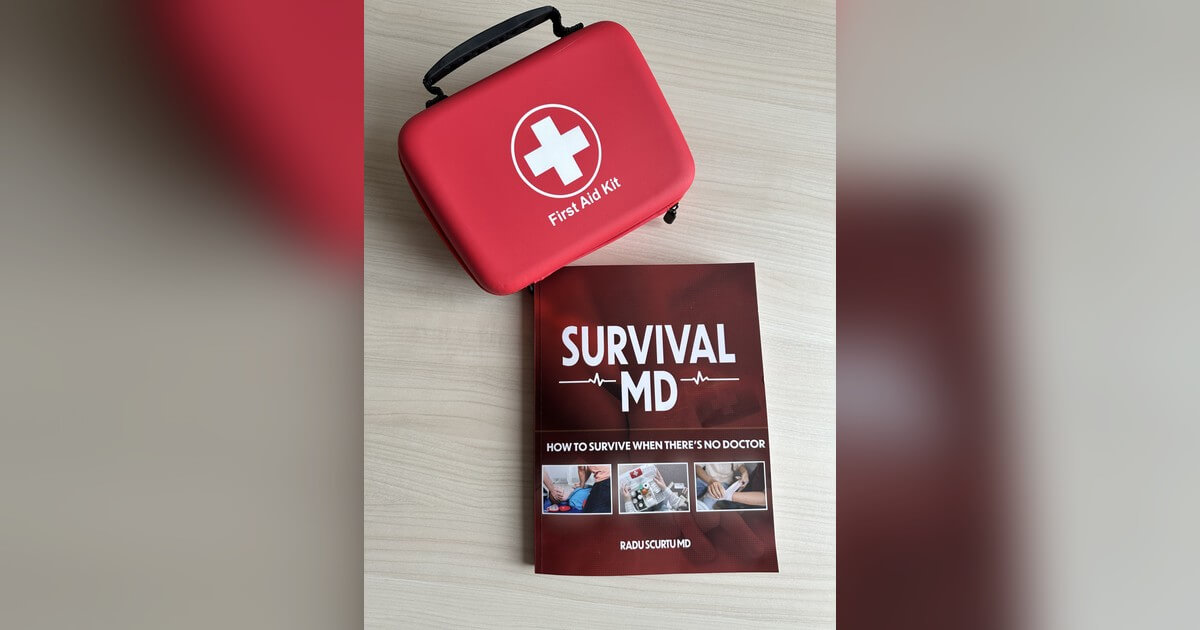
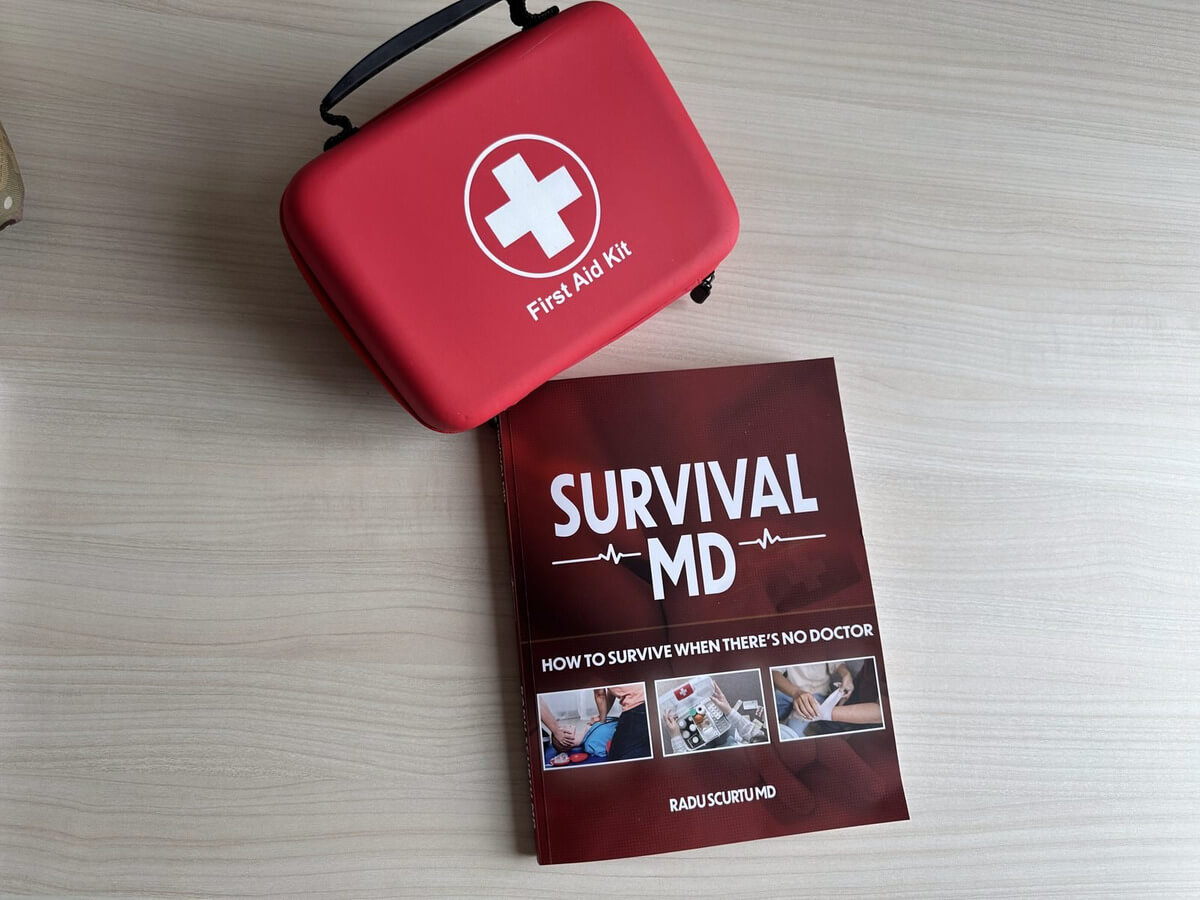
- Keep Survival MD next to your first aid kit for the situations an app was never built for: long outages, closed roads, overwhelmed hospitals and the days when no doctor can reach you.
Picture It: Day Three of an Outage
Picture it: a storm took the power out three days ago. The roads are flooded. Your phone is at 9%, and you're saving it for calls.
Your mother's blood pressure medication is running low. Your son's scraped knee from day one is red and warm. The tap water looks cloudy. Nobody is coming soon.
A first aid app, even a great one, wasn't designed for this moment. Survival MD was. It walks you through what to watch for, what to do now and when a situation has become urgent, in plain English, on paper, without touching your phone.
Frequently Asked Questions
Is a first aid app enough for emergency preparedness?
For everyday emergencies when help is on the way, a good app is useful. For disasters where you can't reach a doctor for days, you need more: guidance on medications, chronic disease, infections, water, sanitation and long-term care, which is what Survival MD covers.
Are first aid apps better than books?
They're better for quick videos and instant access on a normal day. A printed book is better when the power is out, the signal is down, your phone is needed for calls or the emergency lasts for days.
Do first aid apps work offline?
Some apps preload their content and work offline, but they still need a charged phone. Survival MD needs no battery at all.
Should I use Survival MD and a first aid app together?
Yes. Keep an app for quick everyday help, take a hands-on class if you can, and keep Survival MD for the situations where no doctor is available.
How much does Survival MD cost?
$37 for the full-color printed book, with 4 bonus guides and a 60-day refund in which you keep everything.
See also: Why "I'll Just Google It" Fails in a Real Emergency
The Bottom Line
First aid apps are a great tool for the first few minutes of an emergency, when your phone is charged and help is on the way. Survival MD is built for what comes after: the hours and days when the roads are closed, the battery is low and no doctor can reach you. Keep the app. Add the book. Only one of them will still work when everything else has stopped.