The Comparison at a Glance
| Traditional first aid books | Survival MD | Winner | |
|---|---|---|---|
| Built for | The minutes before the ambulance arrives | The hours and days when no doctor can be reached | ✅ Survival MD |
| Preparation before a disaster | Little or none | A full section of 11 chapters | ✅ Survival MD |
| Chronic disease and medications | Rarely covered | Dedicated chapters with color-coded action zones | ✅ Survival MD |
| Several people hurt at once | Usually one patient at a time | Triage guidance, including "Moment X" | ✅ Survival MD |
| Infections, water, sanitation | Brief, if at all | Full chapters | ✅ Survival MD |
| Dental, women's health, pregnancy | Rarely covered | Dedicated chapters | ✅ Survival MD |
| Supply planning | A short kit list, if any | A 147-item home inventory with quantities | ✅ Survival MD |
| Myths and mistakes | Occasional tips | 70 Myth vs. Fact boxes, 50+ Clinical Safety Notes | ✅ Survival MD |
| Sources | Varies; older copies may be outdated | 350+ references, many from 2024 and 2025 | ✅ Survival MD |
| Format | Often small pages and dense text | 11 x 8.5 inches, full color, 8 flowcharts | ✅ Survival MD |
1. Built for the Days After, Not Just the Minutes Before
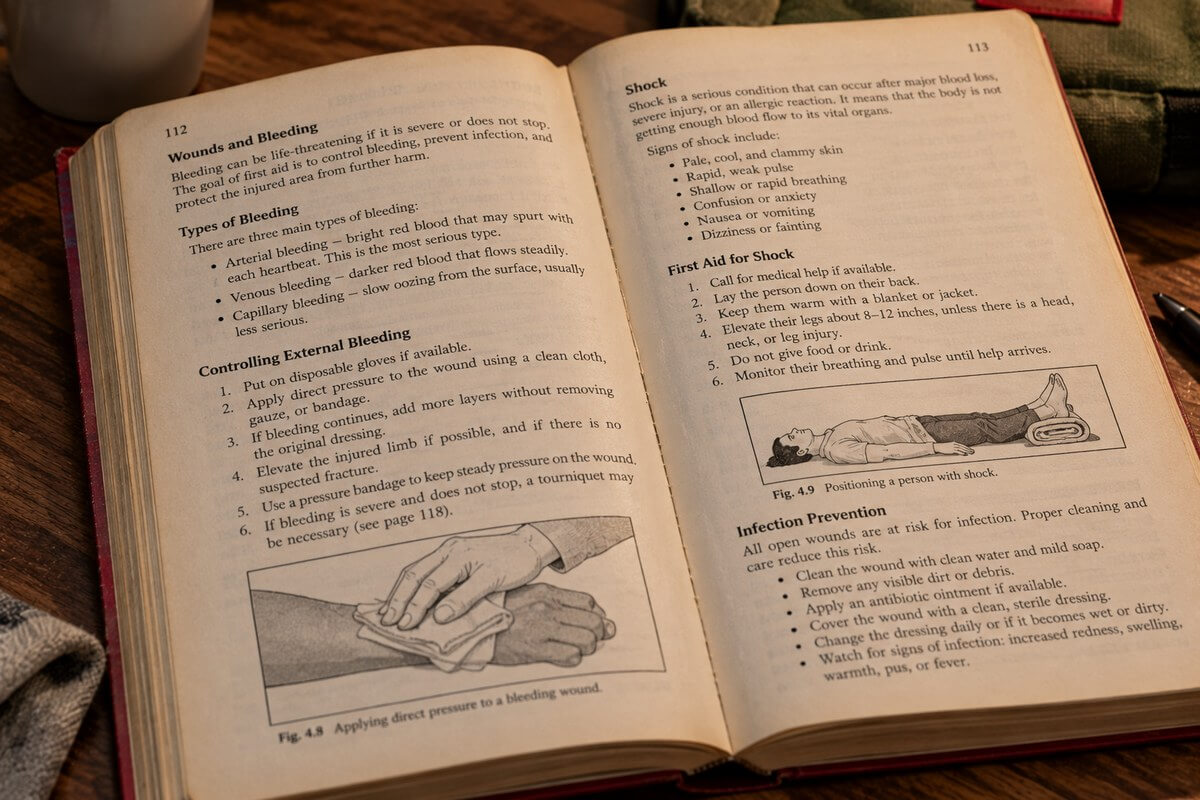
Traditional first aid books are designed around a hand-off. You stop the bleeding, keep the person warm, and then the professionals take over. Most of their instructions end the same way: call for help and wait.
Survival MD picks up exactly where those books stop. Its second section, "Medical Preparedness After D-Day," is written for when the wait never ends. It covers what to do when there's no doctor around, how to assess someone with a simple four-question method (the TeCaMoLo Principle), how to perform a body check, how to recognize signs of medical distress and how to keep a wound clean and safe over days, not minutes.
Winner: Survival MD.
2. It Starts Before Anything Goes Wrong
A traditional first aid book opens when something has already happened. Survival MD starts much earlier.
Its entire first section, "Preparedness Before Disaster Happens," has 11 chapters that get your home ready before you ever need them:
- Preparing for chronic diseases in a crisis
- Medications to stockpile, with a rotation system so nothing expires
- Hygiene supplies and emergency sanitation
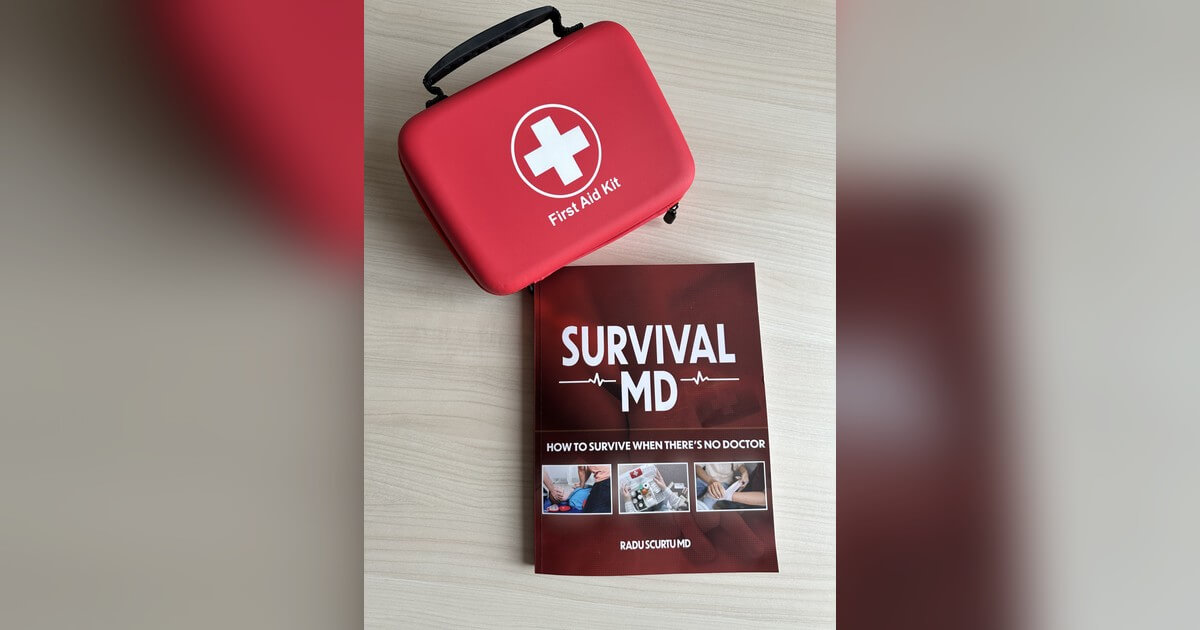
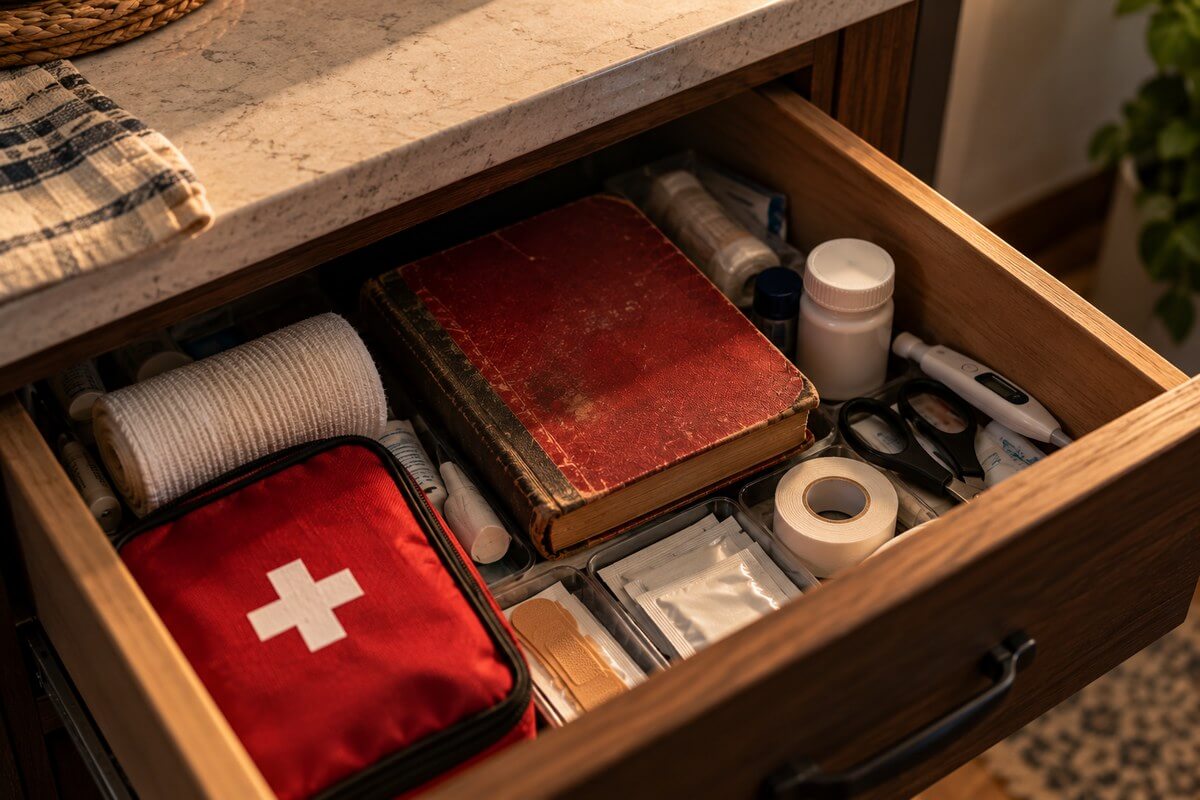
- The Lifeline Kit and medical response kits
- Kit lists for a basic and comprehensive first aid kit, a bug-out bag and a bug-out vehicle
- A 147-item home medical inventory with quantities for 2 adults + 1 child for 30 days
In the book's own words: "Begin during calm, not during chaos."
Winner: Survival MD.
3. Chronic Disease and Medications
Here's something traditional first aid books almost never address: what happens to someone with diabetes, asthma, heart disease or kidney problems when the pharmacy is closed for weeks?
For many families, that's a bigger risk than any injury. Survival MD dedicates a full chapter to Specific Disease Preparedness, organized by body system: nervous, respiratory, circulatory, digestive, urinary and metabolic. Each condition comes with color-coded zones, from stable to life-threatening, showing what each stage means, which supplies to keep on hand and what to do.
It also covers which medications to stockpile, how to rotate them, and a whole chapter on how to survive without prescriptions, always with firm safety rules: no self-tapering, antibiotics only with a clinician's written plan and never veterinary antibiotics for people.
Winner: Survival MD.
4. When More Than One Person Is Hurt
Traditional first aid books usually teach you to help one person. But disasters rarely hurt just one.
Survival MD prepares you for the hardest moment of all, which it calls "Moment X": when you have to decide who to help first. It explains simple triage cues, how to delegate tasks to other people and even how to handle the emotional pull of helping your own family member first. It also includes a medical emergency protocol and triage tools for sorting injuries quickly.
Winner: Survival MD.
5. The Topics Traditional Books Leave Out
Look through the table of contents of a typical first aid book and you'll find bleeding, burns, fractures, choking and CPR. All important. But a long emergency brings problems those books don't cover:
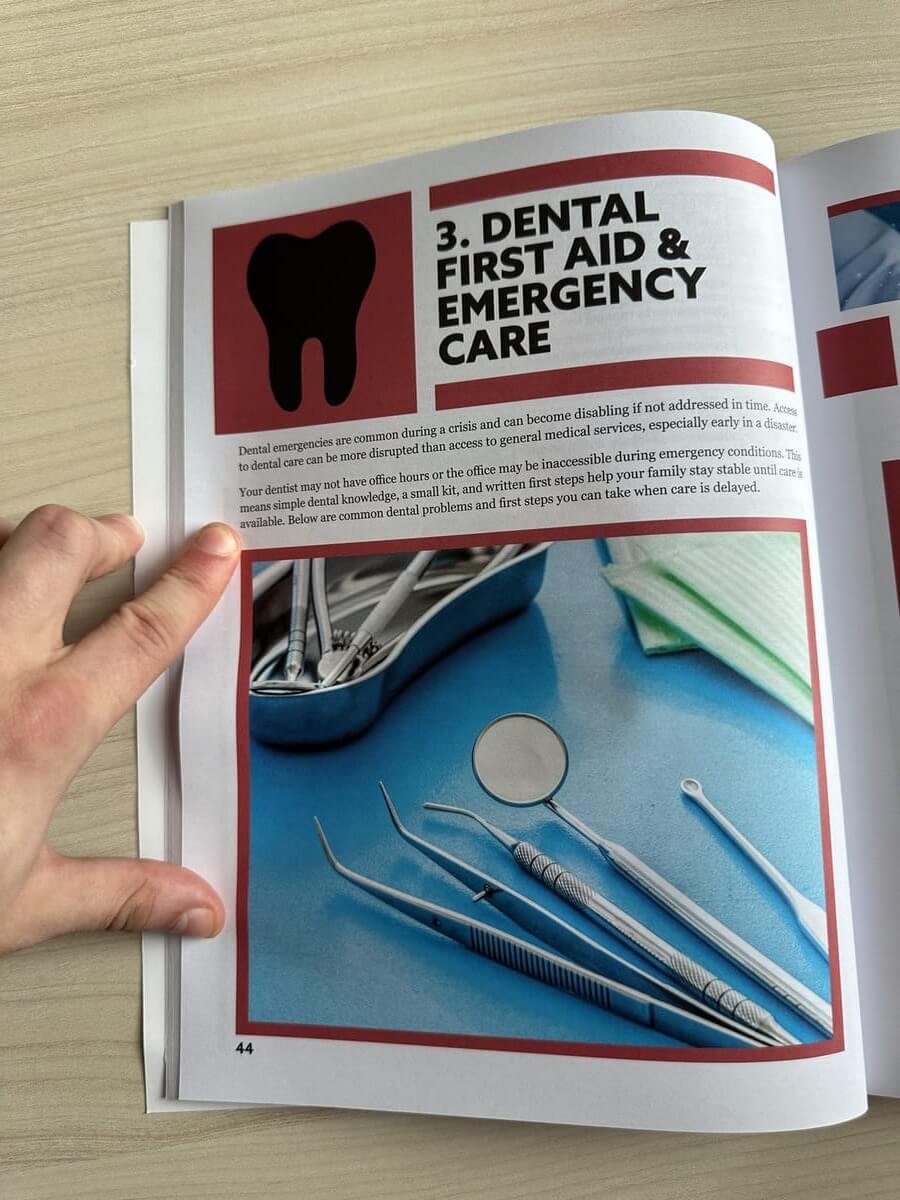
- Dental emergencies: toothaches, swollen jaws, broken teeth and oral injuries
- Women's health and pregnancy when no clinic is open
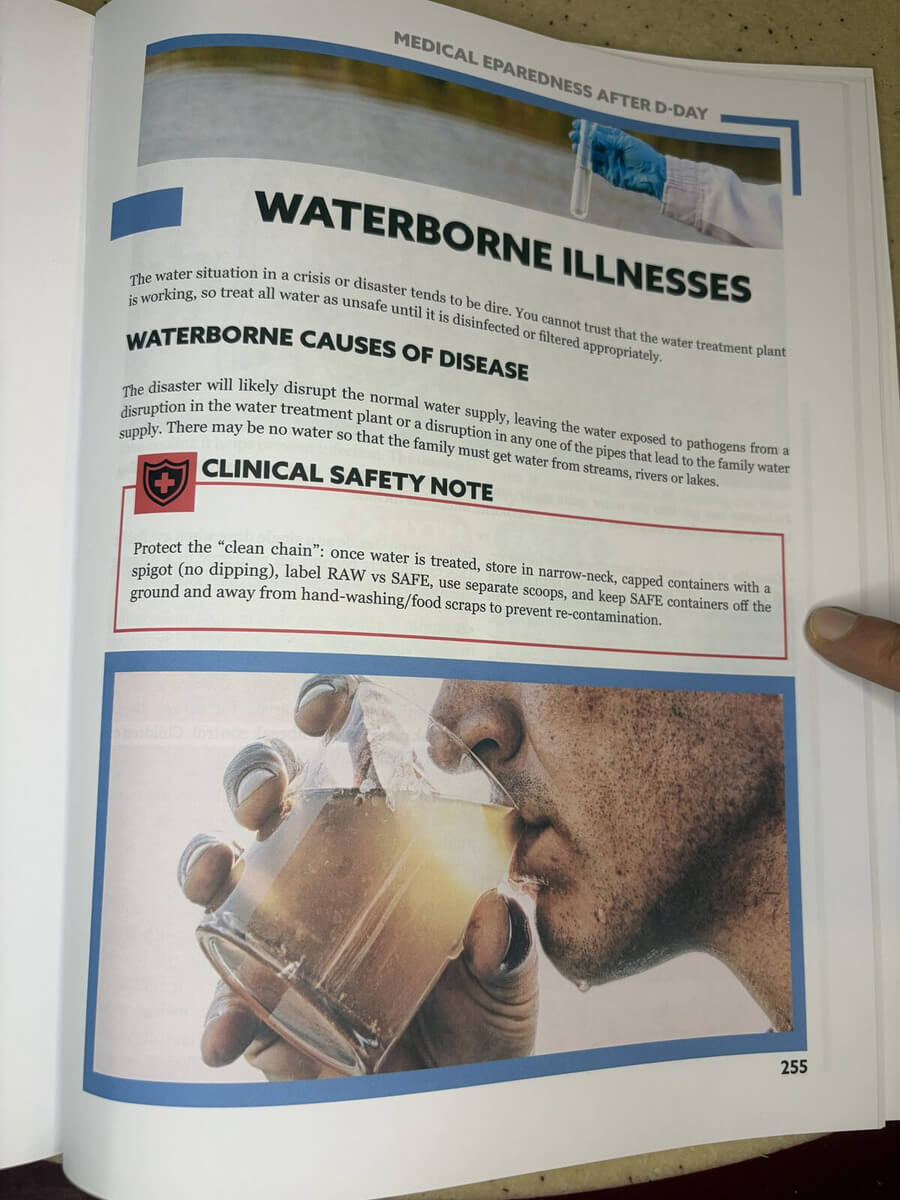
- Infections, including foodborne, waterborne and airborne illnesses
- Emergency sanitation: toilets, waste and handwashing without running water
- Herbal options for 14 common problems, with safety flags
- Climate-specific risks for where you live
- Radiation exposure
Survival MD covers all of them, across 19 chapters and 150+ topics.
Winner: Survival MD.
6. Myths, Mistakes and Up-to-Date Advice
First aid advice changes over time. For example, CPR guidance moved from the old ABC order (airway, breathing, circulation) to CAB, starting with chest compressions for adults who suddenly collapse. If the first aid book in your drawer is an older edition, it may still teach outdated steps.
Survival MD follows current guidance, with 350+ references to sources like the CDC, FDA, NIH, Cochrane reviews and the American Heart Association, many published in 2024 and 2025.
It also goes further than most first aid books in stopping dangerous mistakes:
- 70 Myth vs. Fact boxes that correct popular "home remedies"
- 50+ Clinical Safety Notes that flag the errors people make under stress
- Clear "if trained" markers on advanced steps, so you know what not to attempt
Winner: Survival MD.
7. Format: Easier to Use Under Stress
Many traditional first aid books are small, with dense text and limited illustrations. That's convenient for a glove box, but hard to follow when your hands are shaking.
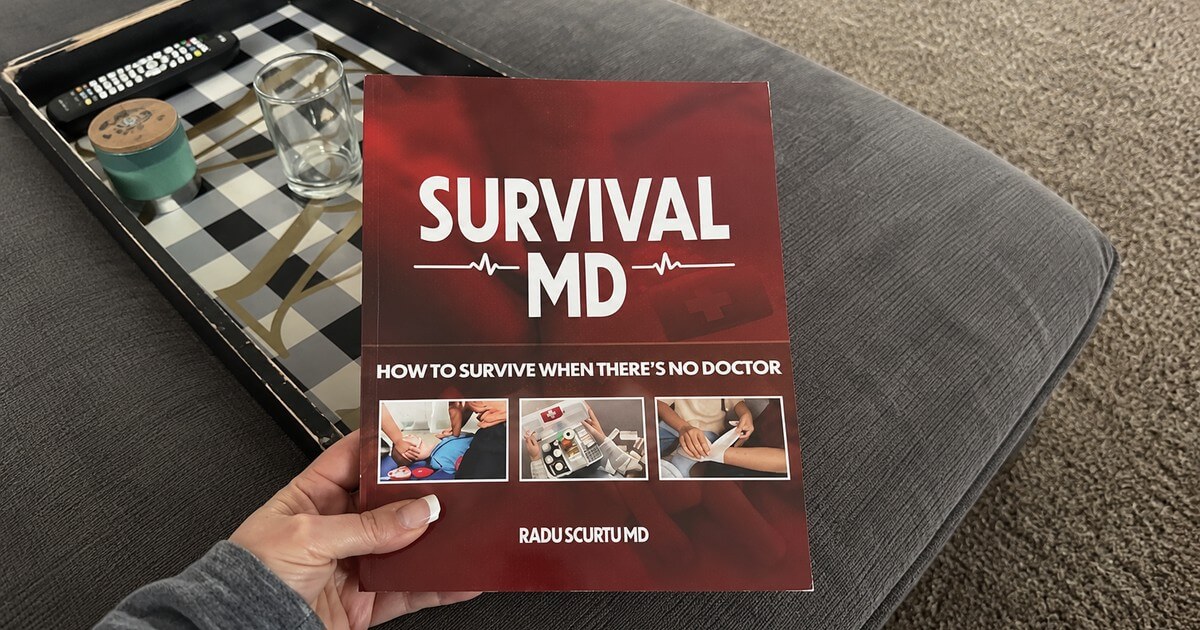
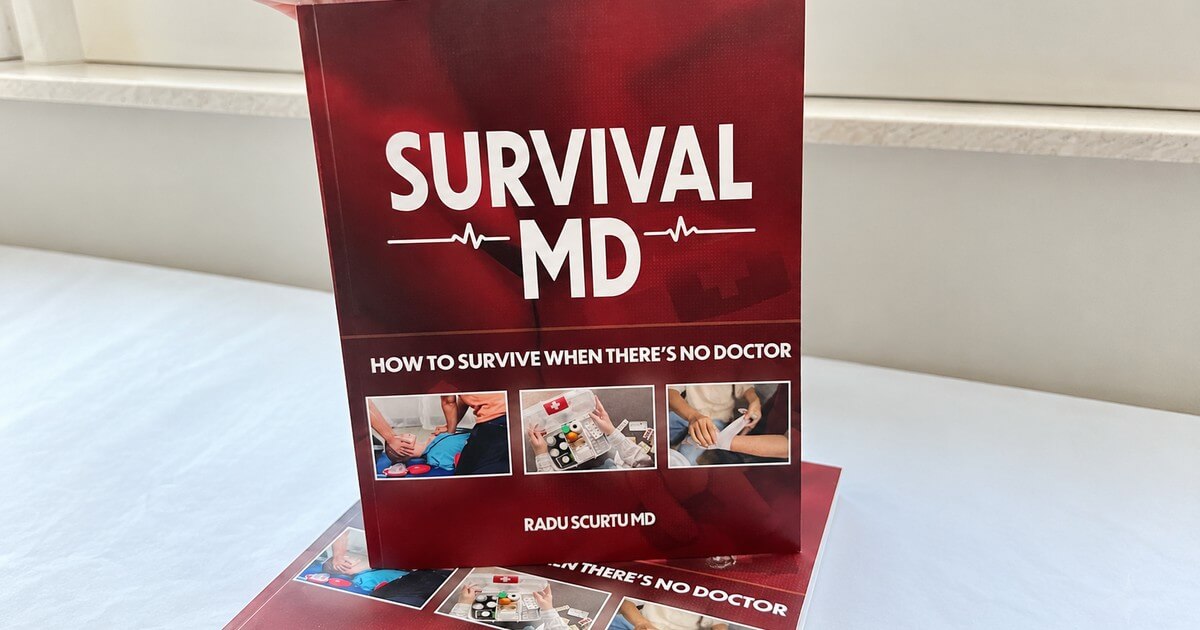
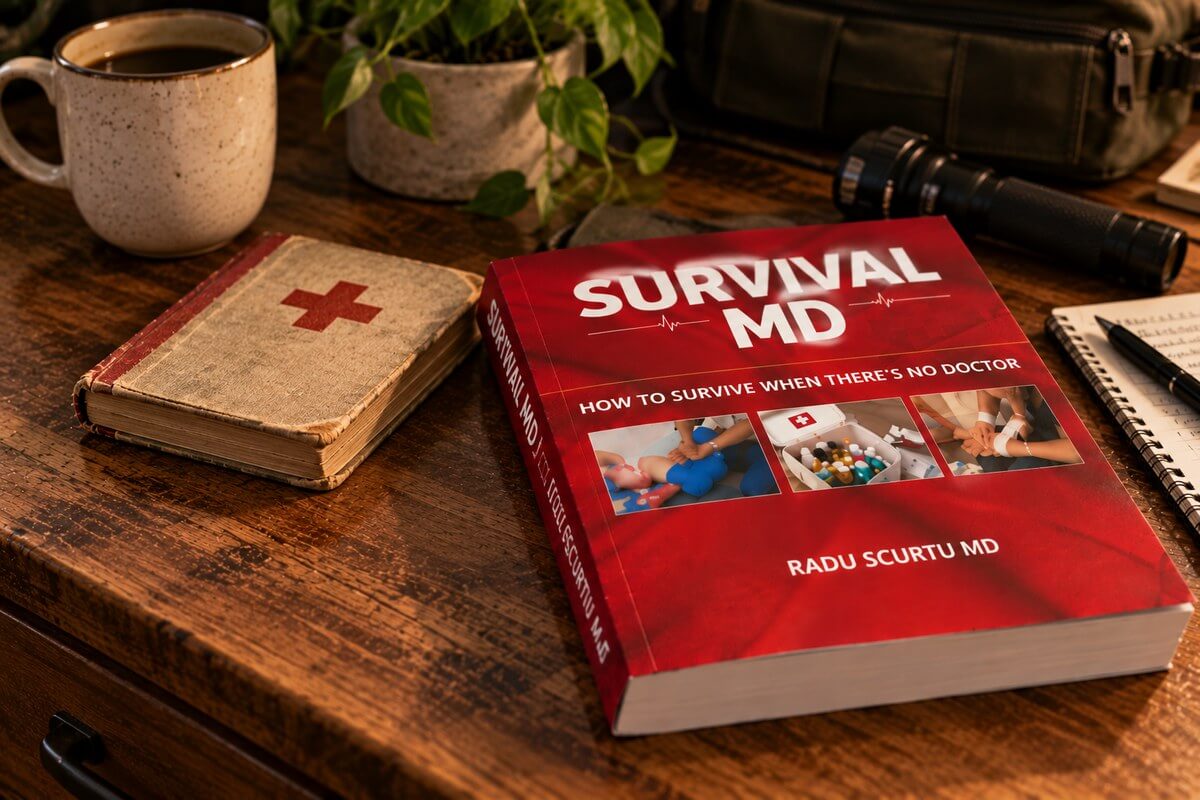
Survival MD is printed in full color on large 11 x 8.5 inch pages, with:
- 8 flowcharts that walk you through decisions step by step
- Color-coded zones that show how serious a situation is at a glance
- Short steps, color photos and clear headings
- A full index to find any topic fast
It's written by a doctor, in plain English, for people with no medical training. More here: Can You Use Survival MD Without Medical Training?
Winner: Survival MD.
The Final Score
| Category | Winner |
|---|---|
| Built for when help isn't coming | ✅ Survival MD |
| Preparation before a disaster | ✅ Survival MD |
| Chronic disease and medications | ✅ Survival MD |
| Several injured people | ✅ Survival MD |
| Topics beyond basic first aid | ✅ Survival MD |
| Current, well-sourced advice | ✅ Survival MD |
| Format under stress | ✅ Survival MD |
Keep your traditional first aid book if you have one. But if you're relying on it for a real disaster, it's covering only the first few minutes of a problem that could last for days. Survival MD covers the rest.
What You Get for $37
- Survival MD, the full-color printed book: 288 pages, 19 chapters, 150+ topics
- 4 bonus guides: When There's No Doctor For Your Child, When There's No Pharmacy, Herbal First Aid For When There's No Doctor and When There's No Vet
- A 60-day refund: your money back within 5 business days, and you keep everything
Frequently Asked Questions
What's the difference between Survival MD and a regular first aid book?
A regular first aid book is built for the minutes before an ambulance arrives. Survival MD is built for when you can't reach a doctor at all, covering preparation, chronic disease, medications, triage, infections, sanitation and long-term care.
Is a traditional first aid book enough for disaster preparedness?
It's a good start for basic injuries. But in a long emergency, you'll also need guidance on medications, chronic conditions, infections, water, sanitation and what to do when help doesn't come. That's what Survival MD adds.
Does Survival MD cover basic first aid too?
Yes. It covers CPR for adults, children and babies, choking, bleeding, wounds, burns, fractures and shock, and then goes far beyond them.
Is Survival MD up to date?
Yes. It includes 350+ references, many from 2024 and 2025, and follows current guidance such as the CAB sequence for CPR.
How much does Survival MD cost?
$37 for the full-color printed book, with 4 bonus guides and a 60-day refund in which you keep everything.
See also: Survival MD vs. First Aid Apps and I Already Took a First Aid Class. Do I Still Need This?
The Bottom Line
Traditional first aid books do one job well: helping you through the first few minutes until professionals arrive. Survival MD is built for the job they leave out, the hours and days when no doctor can be reached. With 19 chapters, chronic disease plans, triage guidance, a 147-item home inventory, 350+ current references and a full-color format made for stress, it's the upgrade every family's emergency shelf needs.