The Safety Net That Isn't There
Most of us have a quiet plan for medical emergencies, even if we've never said it out loud: "If something happens, I'll just look it up."
It feels reasonable. We Google everything else. But a real emergency is the worst possible moment to start searching. The signal may be gone, the phone may be dying, someone may be bleeding or not breathing, and you have minutes, not an afternoon.
Here are eight reasons "I'll just Google it" lets people down when it matters most, and what actually works instead.
1. The Power and the Signal Go First
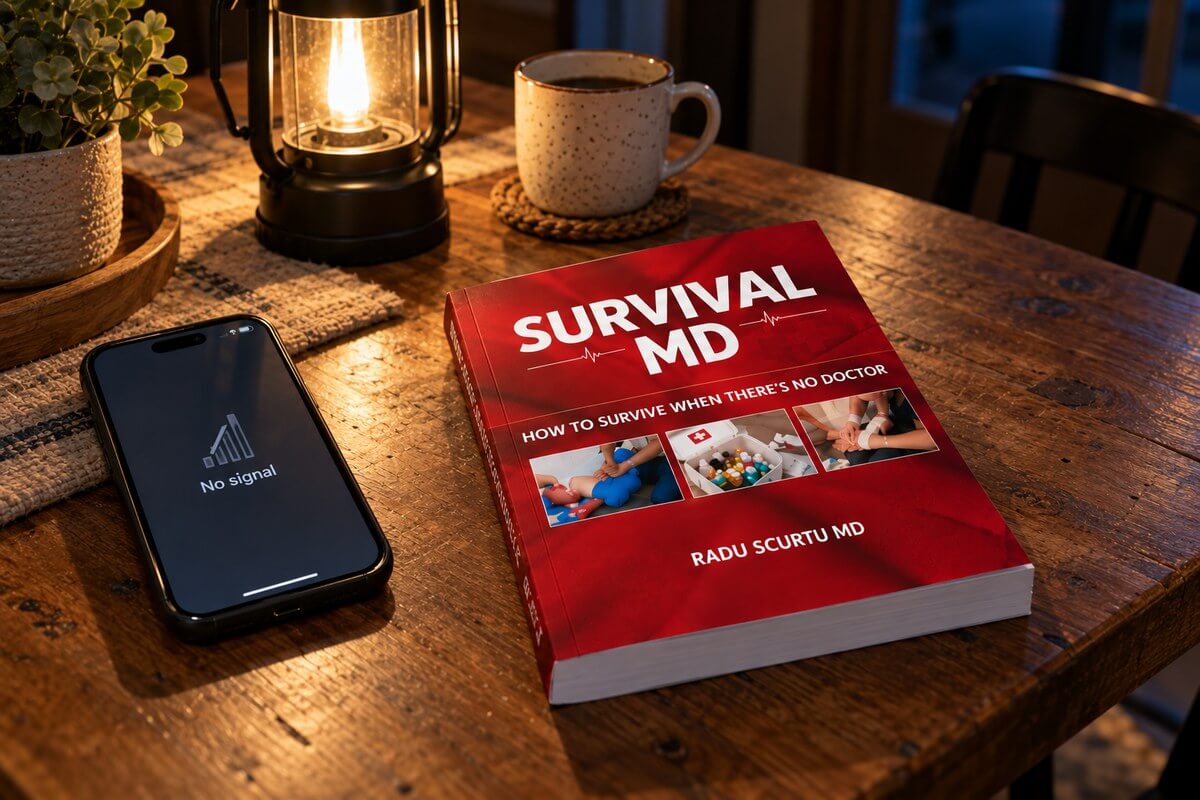
The emergencies most likely to leave you without medical help are the same ones that take out power and phone service: hurricanes, winter storms, floods, wildfires and grid failures.
This isn't rare. According to the U.S. Energy Information Administration, the average American electricity customer went 11 hours without power in 2024, the most in a decade, with most of those hours caused by major storms (EIA). For people in the path of those storms, outages lasted days.
No power means no Wi-Fi and, eventually, no phone. And when everyone in the area is online at once, the cell network often slows to a crawl.
2. Your Phone Has a More Important Job
In an emergency, your phone's most important job is calling for help. Survival MD itself advises putting the dispatcher on speakerphone while you care for the person.
Every minute spent scrolling search results is battery you may need for that call, for a flashlight or for reaching family. A printed book doesn't compete with your phone for power.
3. You Have Minutes, Not Hours
Some emergencies don't wait for page loads. Survival MD explains that irreversible brain injury can begin within 4 to 6 minutes without oxygen, which is why early action matters so much.
In those minutes, you don't have time to type, scroll, close pop-ups, skip ads, compare sites and figure out which one to trust. You need the right steps, in the right order, immediately.
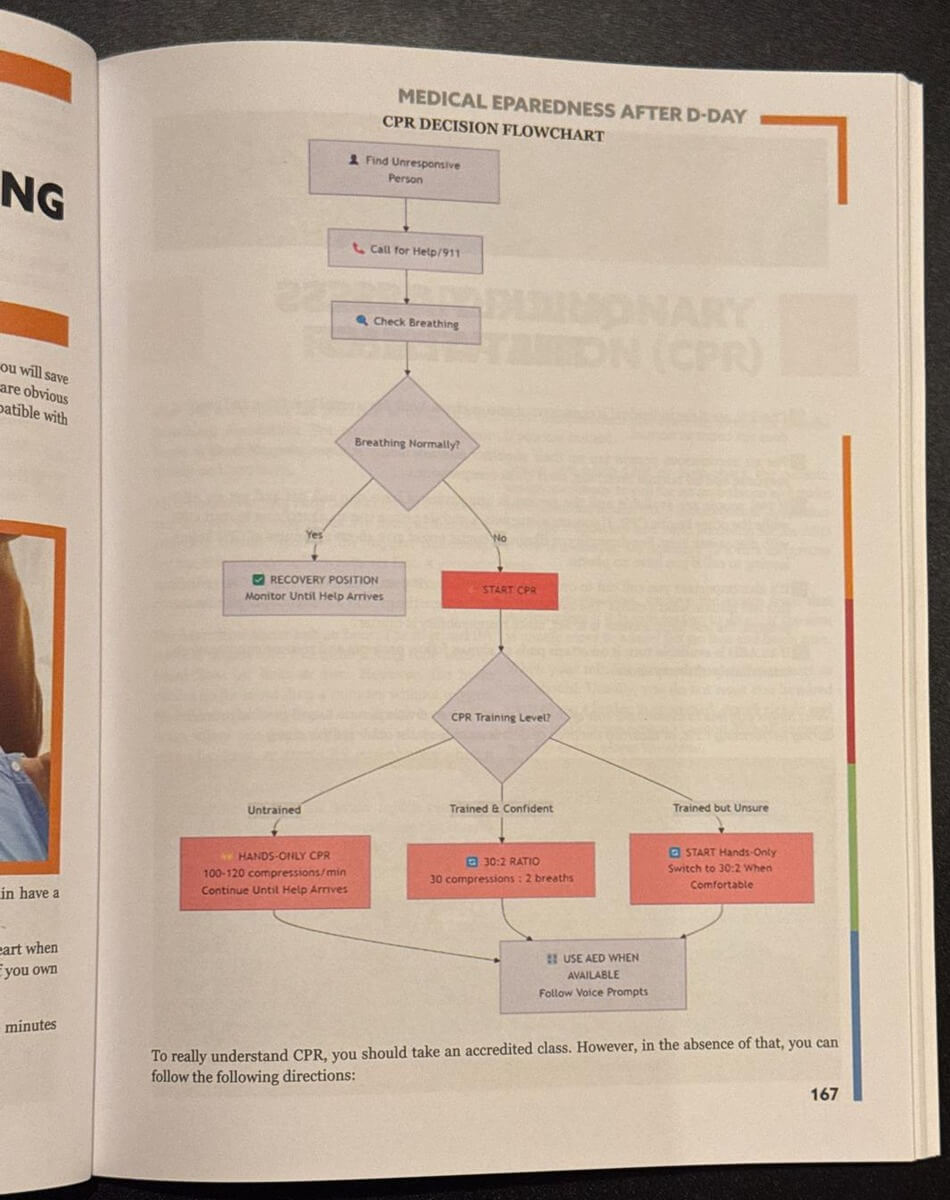
That's exactly how Survival MD is built: one-page decision flowcharts for the most time-critical situations, like CPR, triage, shock and head trauma, so you follow arrows instead of reading articles.
4. Search Gives You Ten Answers. You Need One.
Search "how to stop bleeding" or "what to do for a burn" and you'll get dozens of results: hospital pages, forums, videos, blogs, ads and AI summaries. Some agree. Some don't. Some are outdated.
In a calm moment, you might sort through them. In a panic, conflicting advice is paralyzing. Survival MD gives you one clear, consistent plan, written in a deliberate order by one surgeon, Dr. Radu Scurtu.
5. The Internet Is Full of Dangerous Myths
Plenty of popular "home remedies" and old tips spread online, and some of them make injuries worse. Survival MD includes 70 "Myth vs. Fact" boxes that correct exactly these instincts, from what you should never put on a burn to why a belt makes a poor tourniquet and why hydrogen peroxide isn't the wound cleaner many people think it is.
If you've only got a few seconds to decide, you want a source that has already filtered out the bad advice for you.
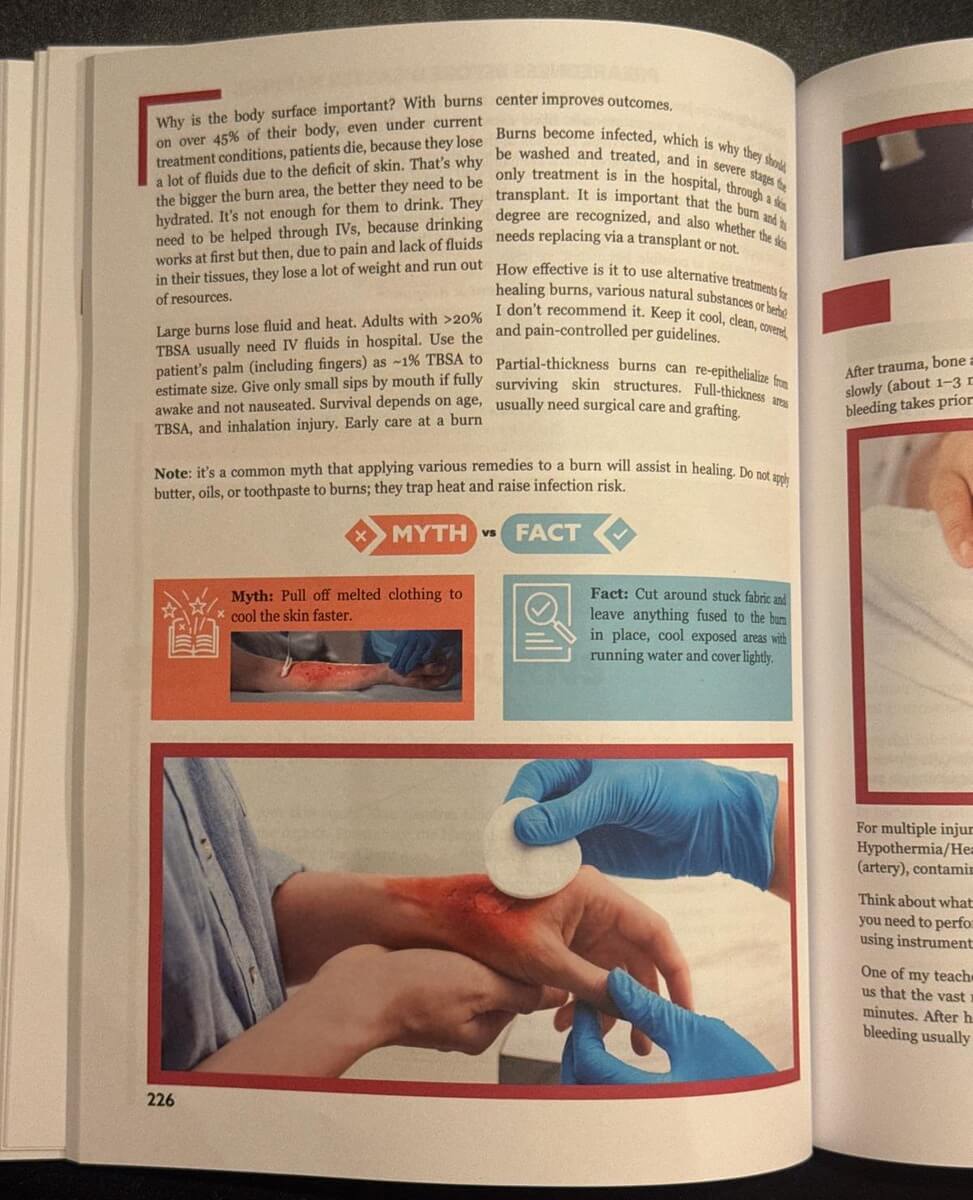
6. You Can't Search for What You Don't Know to Look For
Searching only works if you know what to type. But in a real emergency, the hardest part is often figuring out what's actually happening:
- Is this just a bad bruise, or a broken bone?
- Is this person simply scared, or going into shock?
- Is this fever something to watch, or something to act on now?
- Is this wound fine, or starting to get infected?
Survival MD teaches you how to assess the situation first, with a surgeon's four-question method, simple body checks and warning signs for each condition, so you know what you're dealing with before you act.
7. Your Hands Are Busy
Real emergencies are physical. You may be pressing on a wound, holding a child, supporting someone's head or doing chest compressions. Typing on a slippery touchscreen, scrolling and zooming with gloved or bloody hands simply doesn't work.
A book lies open on the floor beside you. You glance, you act, you glance again.
8. Not Everyone in the House Can Use Your Phone
What if you are the one who's hurt? Your partner, teenager or neighbor may not know your passcode, may not know what to search for, and may be just as panicked as you would be.
A printed guide on the shelf has no password, no battery warning and no learning curve. Anyone can pick it up and follow it.
Google vs. Survival MD at a Glance
| "I'll just Google it" | Survival MD | |
|---|---|---|
| Works in a blackout | ❌ Only while the battery lasts | ✅ Always |
| Works with no signal | ❌ | ✅ |
| Saves your phone for 911 | ❌ | ✅ |
| One clear plan | ❌ Many conflicting answers | ✅ One surgeon, one system |
| Filters out myths | ❌ | ✅ 70 Myth vs. Fact boxes |
| Helps you figure out what's wrong | ❌ Only if you know what to search | ✅ Step-by-step assessment |
| Usable with busy hands | ❌ | ✅ Lies open beside you |
| Anyone can use it | ❌ Needs your phone and passcode | ✅ |
Use Both, but Don't Rely on Search
There's nothing wrong with looking things up when you have time, power and a signal. But for the moments that really matter, you need something that works every time, no matter what.
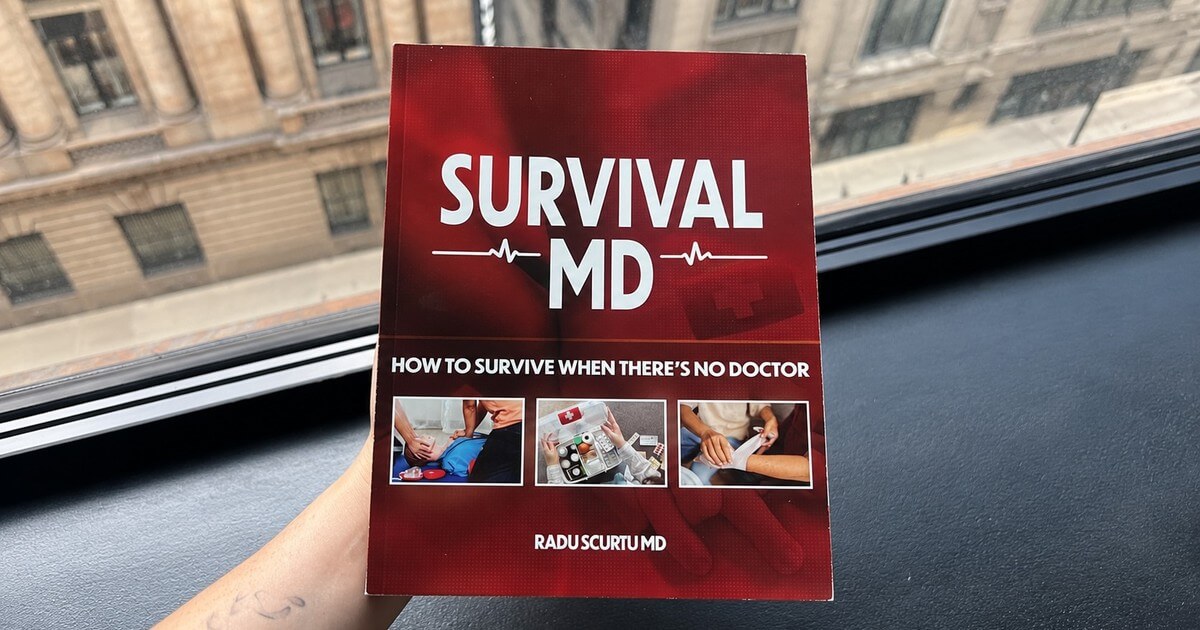
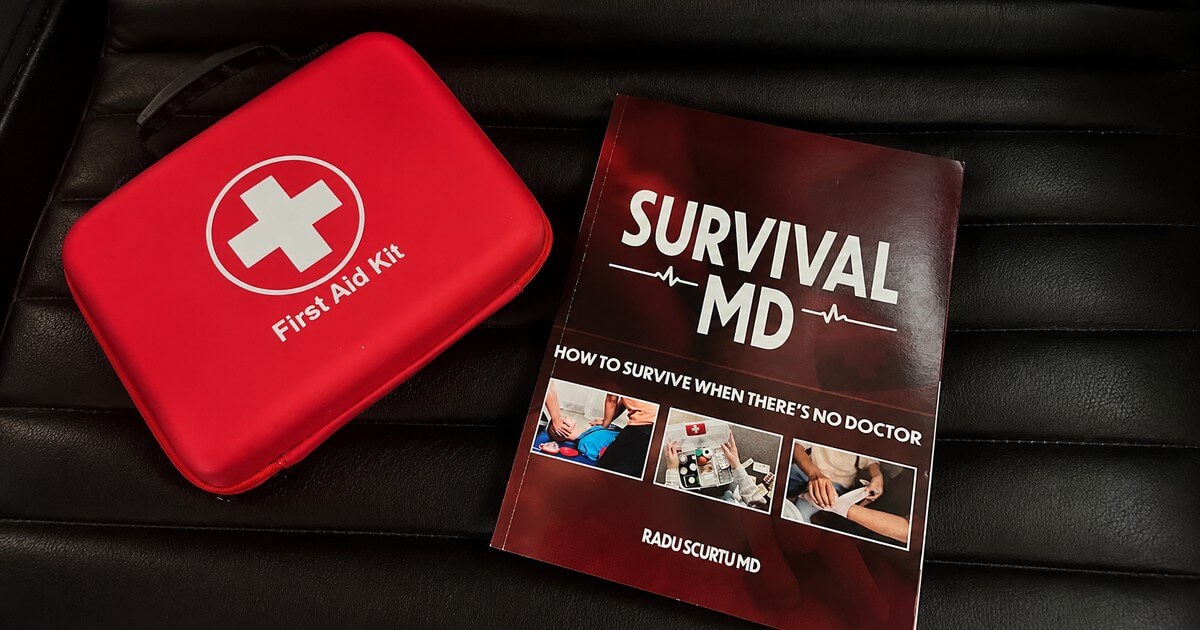
Survival MD is a 280+ page, full-color printed guide with 150+ topics, 8 decision flowcharts, checklists and a 147-item home medical inventory, written for people with no medical training and built for situations where you can't reach a doctor at all.
Buyers notice the difference:
"This guide is such a well put together book that will come in handy when you can't reach the internet or get out."
Verified buyer, TikTok Shop
What You Get for $37
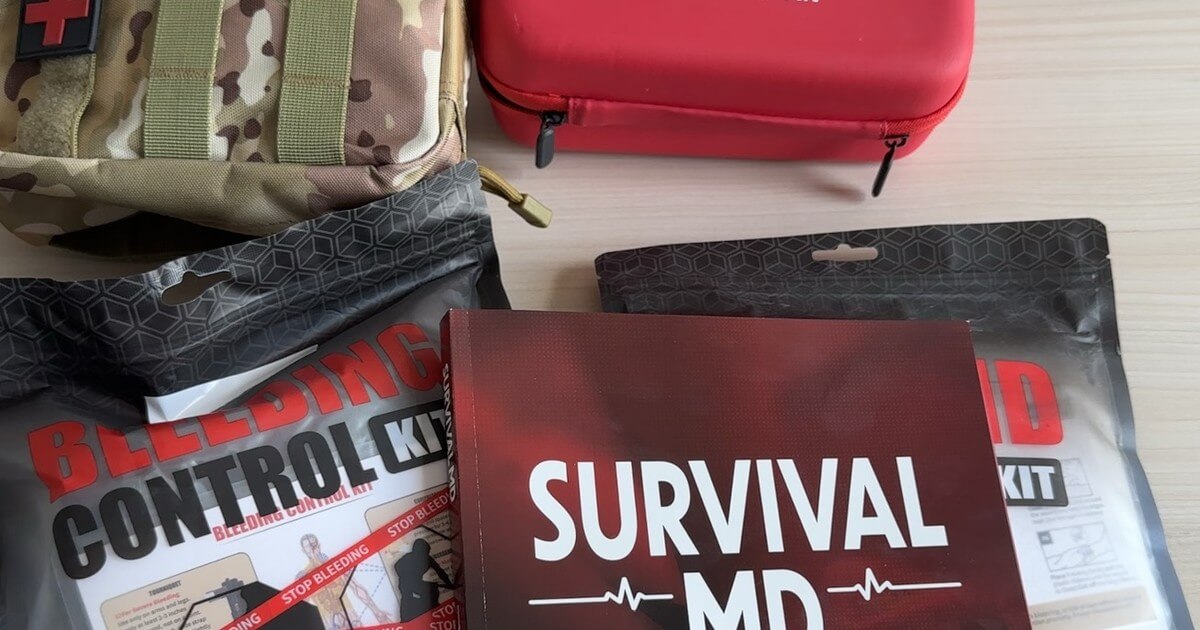
- Survival MD, the full-color printed book: 280+ pages, 19 chapters, 150+ topics
- 4 digital bonus guides: When There's No Doctor For Your Child, When There's No Pharmacy, Herbal First Aid For When There's No Doctor and When There's No Vet
- A 60-day refund window, and you keep the book and the bonuses either way
Frequently Asked Questions
Can't I just look up first aid on my phone?
In a calm moment with power and signal, sometimes. But in storms, blackouts or time-critical emergencies, phones die, signals drop, and search results are slow and contradictory. A printed guide works every time.
Why is a printed medical guide better in an emergency?
It works without power or internet, gives you one clear plan, doesn't drain the phone you need for calling 911, and anyone in the house can use it.
What about AI assistants and apps?
They still depend on a charged device, and most depend on a connection. They can be helpful when everything is working, but they're not a substitute for a reliable plan you can use when nothing is.
Is Survival MD easy to use in a panic?
Yes. It uses big chapter titles, one-page flowcharts, short steps and checklists, written in plain English for people without medical training.
The Bottom Line
"I'll just Google it" works right up until the moment you actually need it. Survival MD is the plan that still works when the power is out, the signal is gone and someone you love needs help right now.