Yes. And You May Need It More Than a Prepper Does.
The word "survival" in the title puts some people off. It brings to mind bunkers, camouflage, freeze-dried food and people waiting for the end of the world. If that's not you, it's easy to think: this book isn't for me.
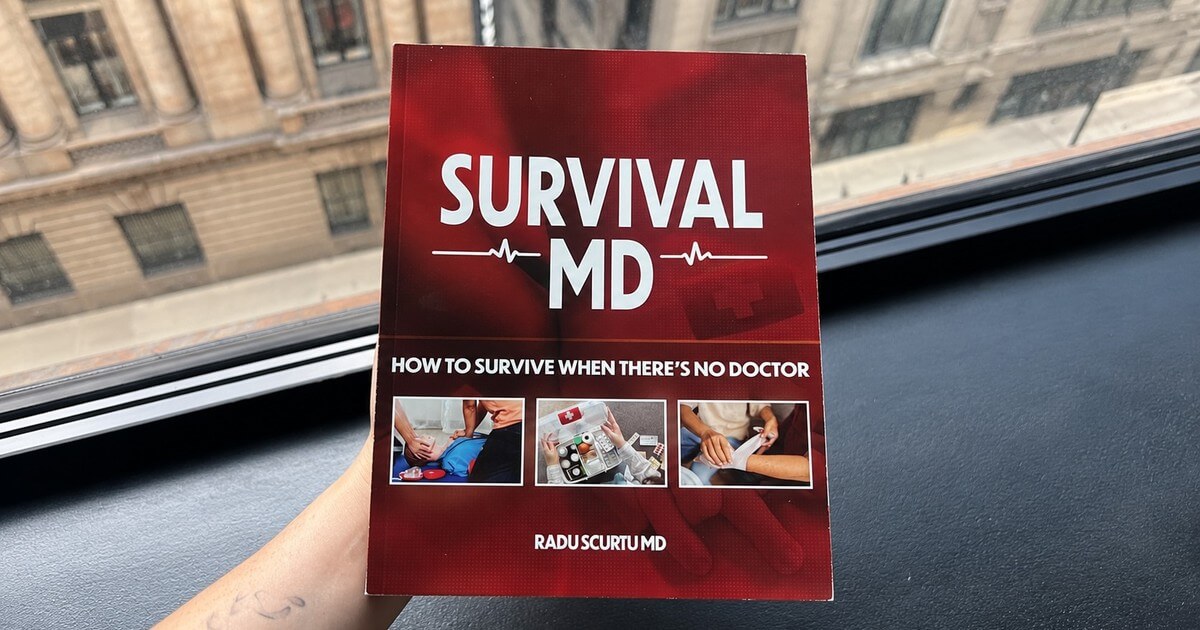
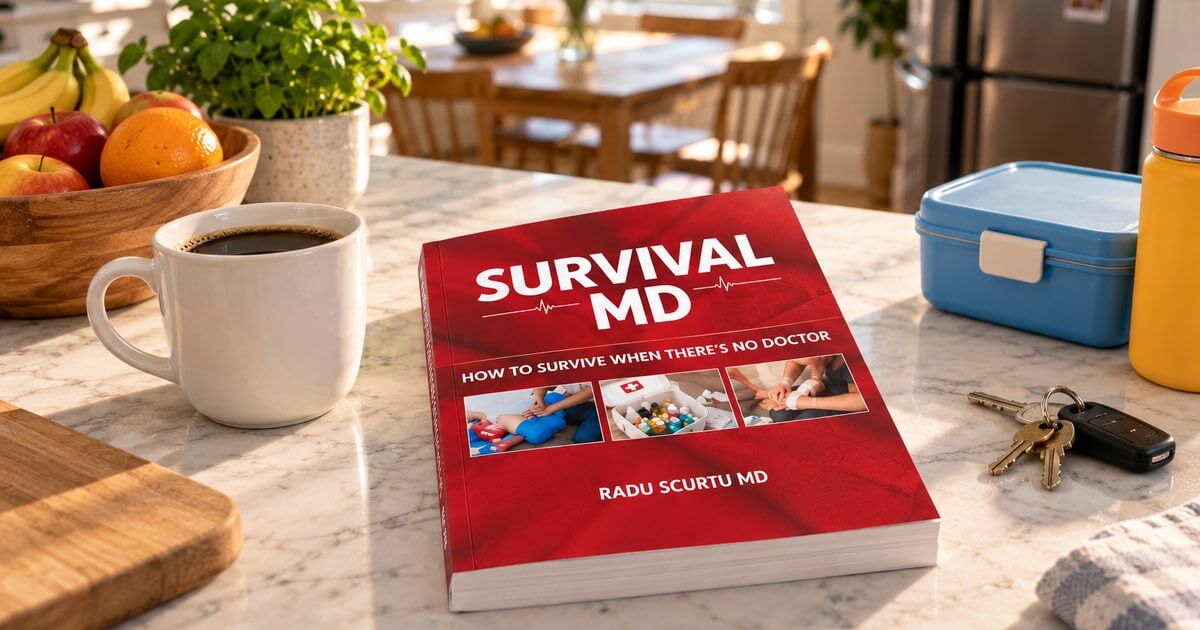
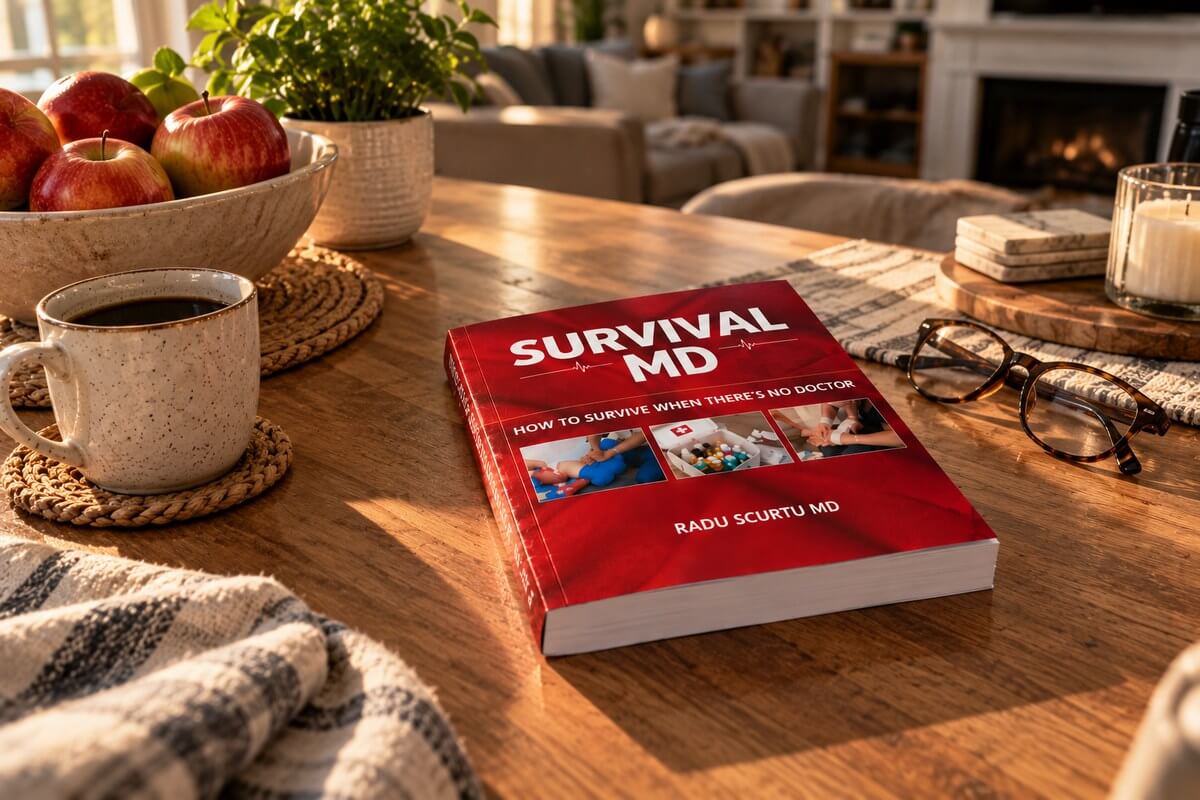
Here's the truth: Survival MD by Dr. Radu Scurtu was written for ordinary families. People with jobs, kids, aging parents and a first-aid kit somewhere in the bathroom cabinet. You don't need a bunker or a survival hobby to use it. You just need to care about the people around you.
In fact, if you're not a prepper, you may need it more. Preppers have usually thought about emergencies. Most families haven't, until one happens.
"Survival" Doesn't Mean the End of the World
When Survival MD talks about survival, it mostly means getting through the minutes or hours before help arrives, or the days when help can't be reached at all.
That doesn't take a collapse of civilization. It happens in very ordinary ways:
- A storm or blackout keeps the ambulance away
- You live 40 minutes from the nearest ER
- The hospital is overwhelmed during a bad flu season or a local disaster
- Roads are blocked by snow, ice or flooding
- It's 2 a.m., your child is sick and you need to know whether it can wait until morning
- You're on a road trip, camping or at a family cabin, far from the nearest doctor
None of those are prepper fantasies. They're things that happen to normal families every year.
What You'd Actually Use It For
Forget doomsday scenarios. These are the kinds of everyday situations Survival MD covers:
| Everyday situation | What Survival MD helps with |
|---|---|
| A deep cut while cooking | Recognizing the type of bleeding and stopping it safely |
| A family member collapses | A step-by-step CPR flowchart for adults, children and babies |
| A child chokes on food | Choking relief for babies and children |
| A burn from the stove or grill | What to do, and what never to put on a burn |
| A bad fall or twisted ankle | Telling a sprain from a fracture, and splinting with what you have |
| A fever that won't go down | Which signs mean "watch" and which mean "get help now" |
| A toothache over a long weekend | Dental first aid, including a common remedy that causes harm |
| A parent with diabetes during a power outage | Color-coded plans for when supplies run low (more on chronic disease) |
| A cut that starts looking infected | The warning signs that mean it's spreading |
| Stuck in the car during a winter storm | Avoiding a danger most people don't think about |
That's not survivalism. That's being the person who knows what to do. (We tested three of these situations in Does Survival MD Really Work?)
You Don't Need a Stockpile to Start
One of the biggest myths about preparedness is that it means buying a garage full of gear. Survival MD says the opposite.
A preparedness pyramid in the book puts your health and mindset at the foundation, then practical skills like bleeding control, airway management and splinting, and only then tools like kits and supplies. In the book's own words, buying gear comes last, not first.
Dr. Scurtu puts it this way:
"Your stockpile is your comfort. Your skills are your salvation. You can be stripped of every tool. The one thing they can't take is your training."
Dr. Radu Scurtu, Survival MD
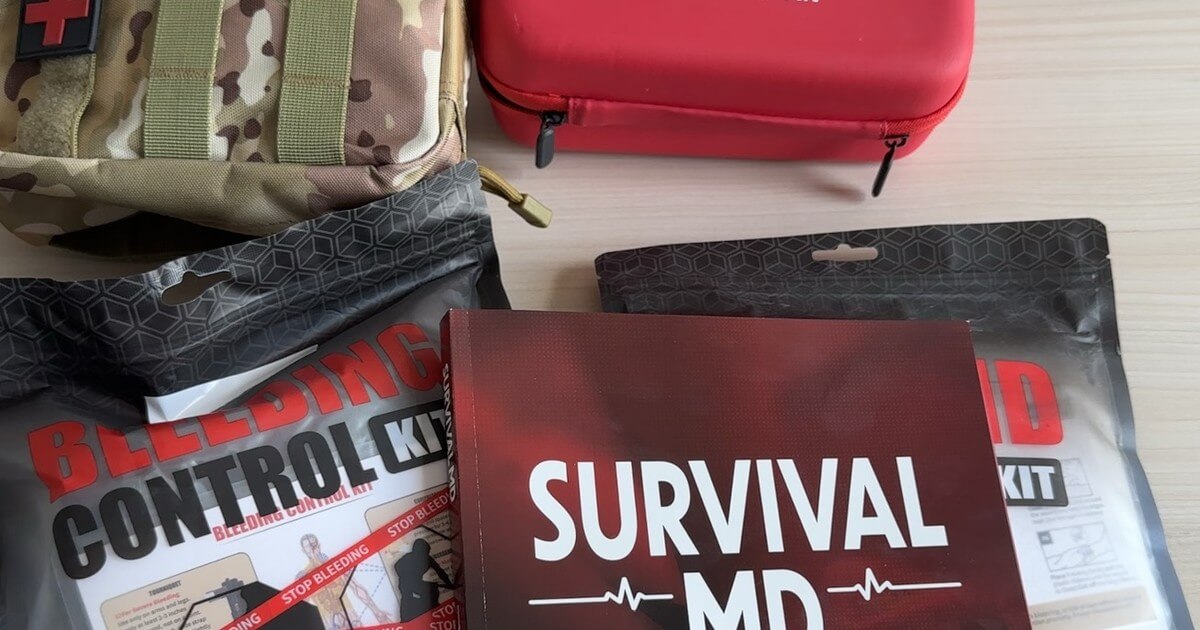
So you don't need to become a prepper. You just need to know a few things before the moment you need them. And when you are ready to put together a sensible home medical kit, the book's checklists tell you exactly what's worth having, so you don't waste money on what isn't.
No Medical Training? No Problem.
Survival MD was written for people who have never taken a first-aid class:
- Plain English, not medical jargon
- Big chapter titles, so you can find the right page fast
- 8 step-by-step flowcharts for the most critical emergencies
- 70 "Myth vs. Fact" boxes that correct common mistakes
- Checklists you can tick off
Buyers who aren't preppers say exactly that:
"It is organized so that the average JOE BLOW can be ready to take care of self and family if needed."
Lottie Lee Hall
"All the information is there for someone that doesn't have any clue on what to look for or how to treat."
Frank
"Survival MD is a clear and reassuring guide. As a parent, I found it especially helpful… This book gives real confidence when help isn't around."
Arezu
More in our roundup of Survival MD reviews from verified buyers.
You Already Prepare. You Just Don't Call It That.
If you've ever done any of these, you already think like someone who prepares:
- Bought home or car insurance
- Installed a smoke detector or kept a fire extinguisher in the kitchen
- Kept a spare tire in your trunk
- Put a first-aid kit in the house
- Learned the Heimlich maneuver or taken a CPR class
- Kept a flashlight in a drawer for power outages
You don't expect your house to burn down, but you keep a fire extinguisher. Survival MD works the same way: it's there for the day you hope never comes. The difference is that, unlike insurance, you only pay once.
Why Non-Preppers Get the Most Out of It
Preppers usually already own several medical books. For most ordinary families, Survival MD is the first and only medical guide in the house. That's why it makes the biggest difference for:
- Parents, because kids get hurt and sick at the worst times
- Adult children of aging parents, who may need to handle falls, confusion or medication problems
- Caregivers of someone with diabetes, heart disease or lung disease
- People who live outside big cities, where help takes longer to arrive
- Anyone who's ever frozen when someone needed help
(For a full breakdown, see Who Survival MD Is For.)
What You Get for $37
- Survival MD, the full-color printed book: 280+ pages, 19 chapters, 150+ topics
- 4 digital bonus guides: When There's No Doctor For Your Child, When There's No Pharmacy, Herbal First Aid For When There's No Doctor and When There's No Vet
- A 60-day refund window, and you keep the book and the bonuses either way
$37 once. No subscription, no gear to buy, no survival hobby required. Just a book on your shelf that you'll be very glad to have the one day you need it. (Full breakdown: Is Survival MD Worth the Money?)
Frequently Asked Questions
Is Survival MD only for preppers?
No. It's written for ordinary families. Most of the book covers everyday emergencies, like cuts, burns, falls, choking, fevers, CPR and chronic illness, that can happen to anyone.
Do I need to buy a lot of gear to use it?
No. The book teaches that skills come first and gear comes last. When you're ready, its checklists show you what's actually worth having.
Do I need medical training?
No. It's written in plain English with flowcharts, checklists and short steps, specifically for people without a medical background.
I live close to a hospital. Do I still need it?
Yes. Being close to a hospital doesn't help if roads are blocked, the power is out or the ER is overwhelmed. And in emergencies like choking or heavy bleeding, what you do in the first minutes matters most, wherever you live.
Is it a good gift for someone who isn't into survival?
Yes. It's a practical, caring gift for new parents, older relatives and adult children, because it's about protecting family, not about survivalism.
The Bottom Line
You don't have to be a prepper to want to protect your family. Survival MD isn't about bunkers or the end of the world. It's about knowing what to do when someone you love is hurt and help isn't there yet.
That's not a hobby. That's just being ready. For everything inside the book, read our complete Survival MD review.