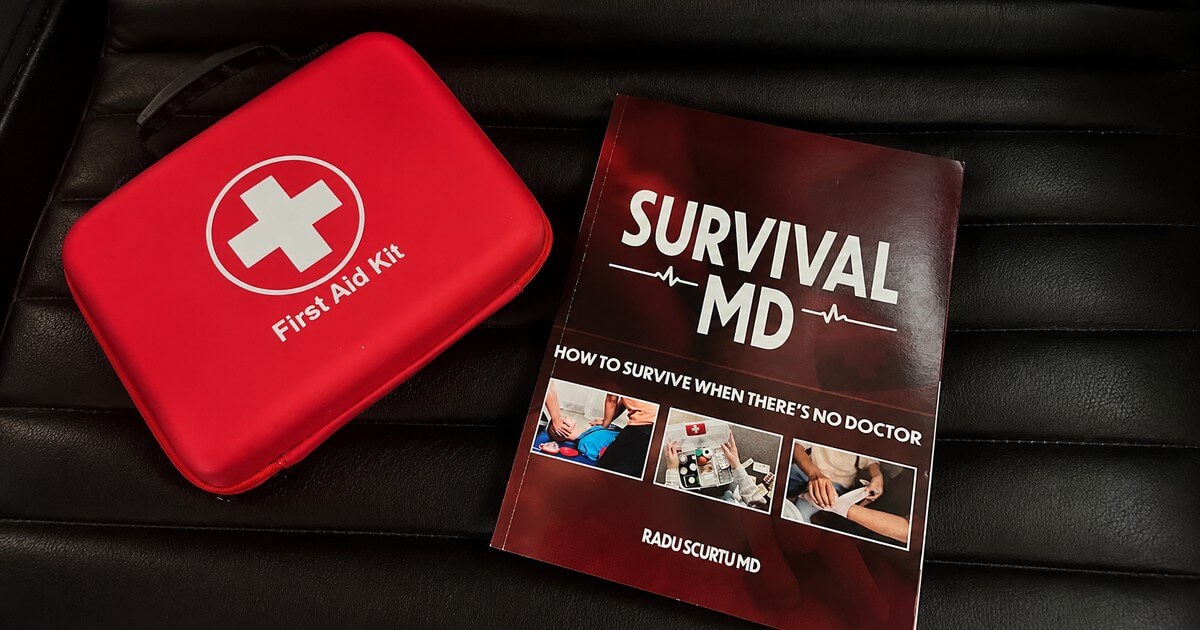
A Kit Is a Great Start. It's Not the Whole Plan.
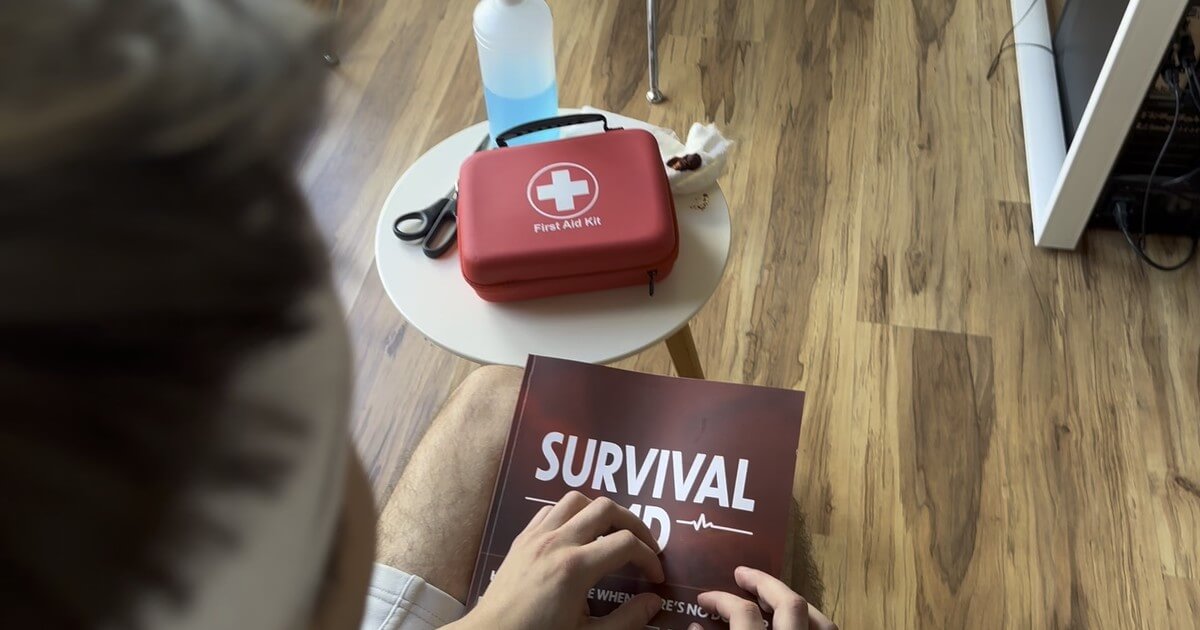
If you already have a first aid kit at home, you're ahead of a lot of people. But here's something most families only discover in a real emergency: owning a kit and being ready are not the same thing.
Most store-bought kits are designed for small, everyday injuries: a scraped knee, a splinter, a paper cut. They're not designed for a deep cut that won't stop bleeding, a bad burn, a broken bone, or a situation where help is an hour away, or can't come at all.
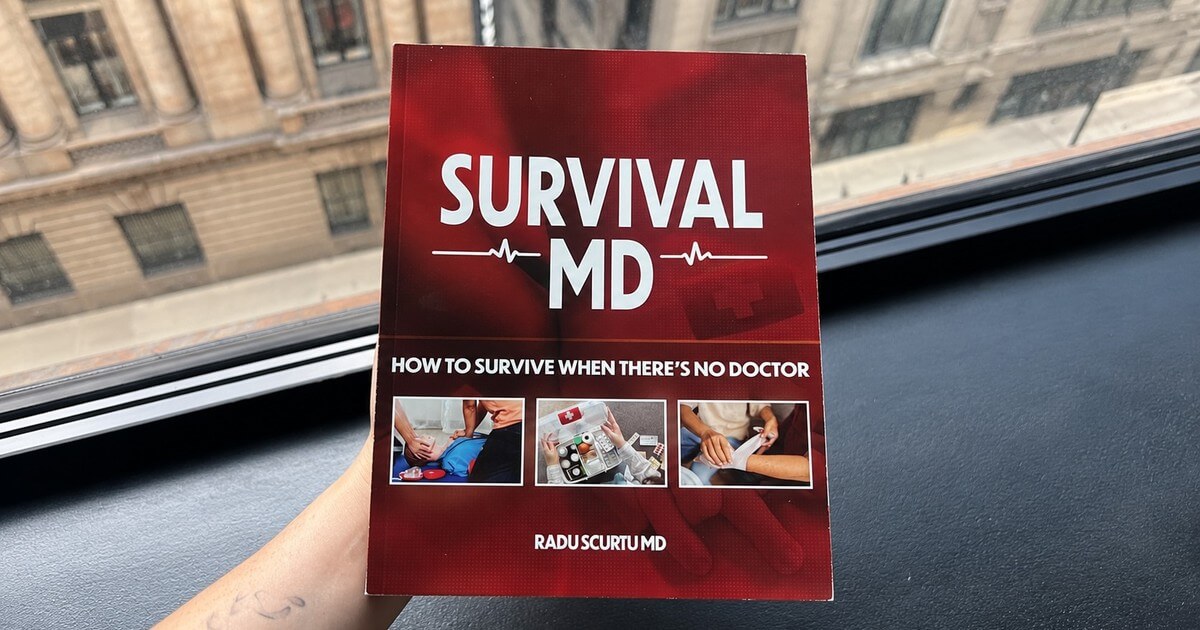
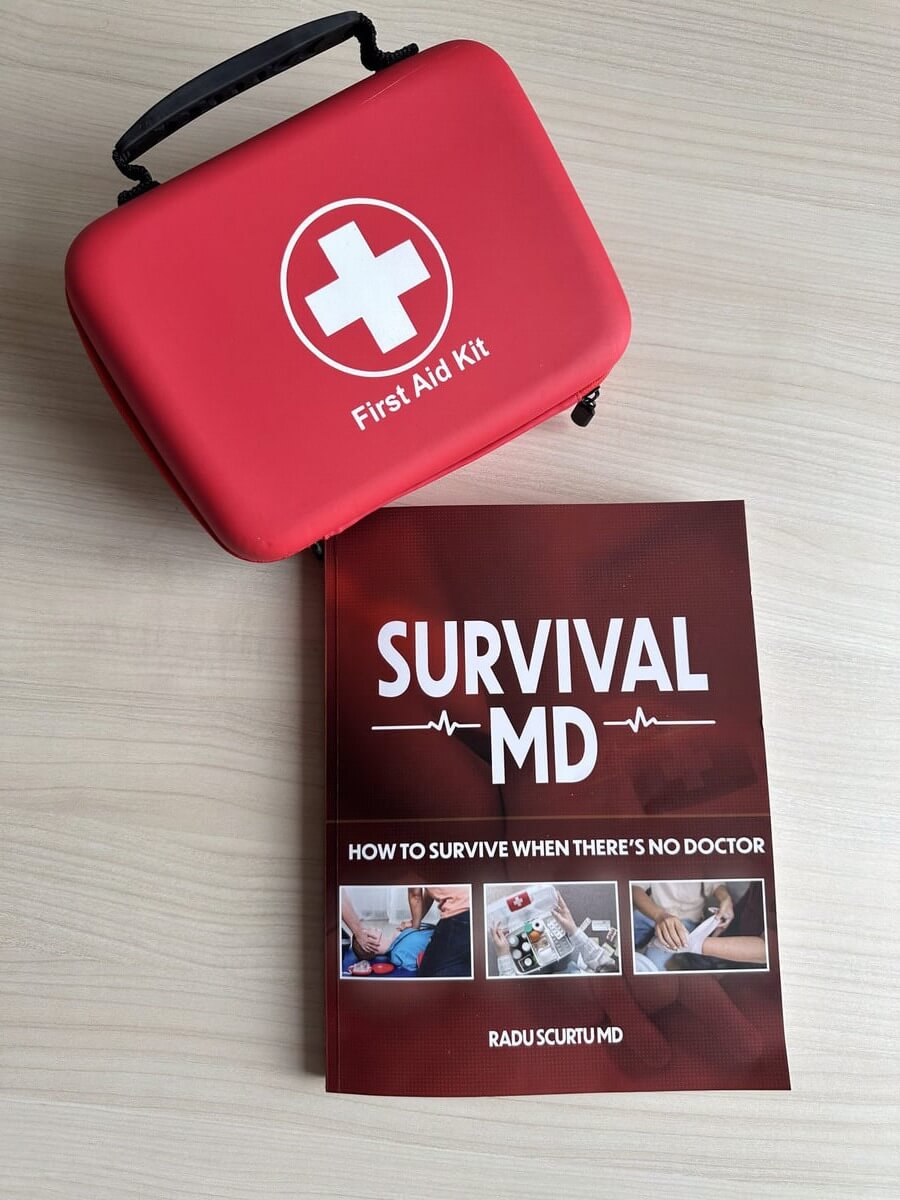
Survival MD by Dr. Radu Scurtu was written to close exactly that gap. Below are the six things most first aid kits are missing, and how the book fills each one.
Gap #1: The Knowledge to Use What's Inside
This is the biggest gap, and no kit can fill it.
Your kit might contain gauze, tape and maybe even a tourniquet. But in a real emergency, would you know:
- What kind of bleeding you're looking at, and what to reach for first?
- When a tourniquet is the right call, and when it isn't?
- Whether a wound should be closed, or whether closing it would make things worse?
- How to tell if someone is going into shock, without a blood pressure cuff?
As the Survival MD sales page puts it: owning a tourniquet is not the same as knowing when to use it. The book gives you the decisions that make the supplies useful, with step-by-step flowcharts, short instructions and 70 "Myth vs. Fact" boxes that stop the common mistakes that make injuries worse.
Gap #2: Supplies for Serious Injuries
Open a typical store kit and you'll find a lot of small adhesive bandages. What you often won't find is much for the injuries that really matter.
Survival MD separates two levels:
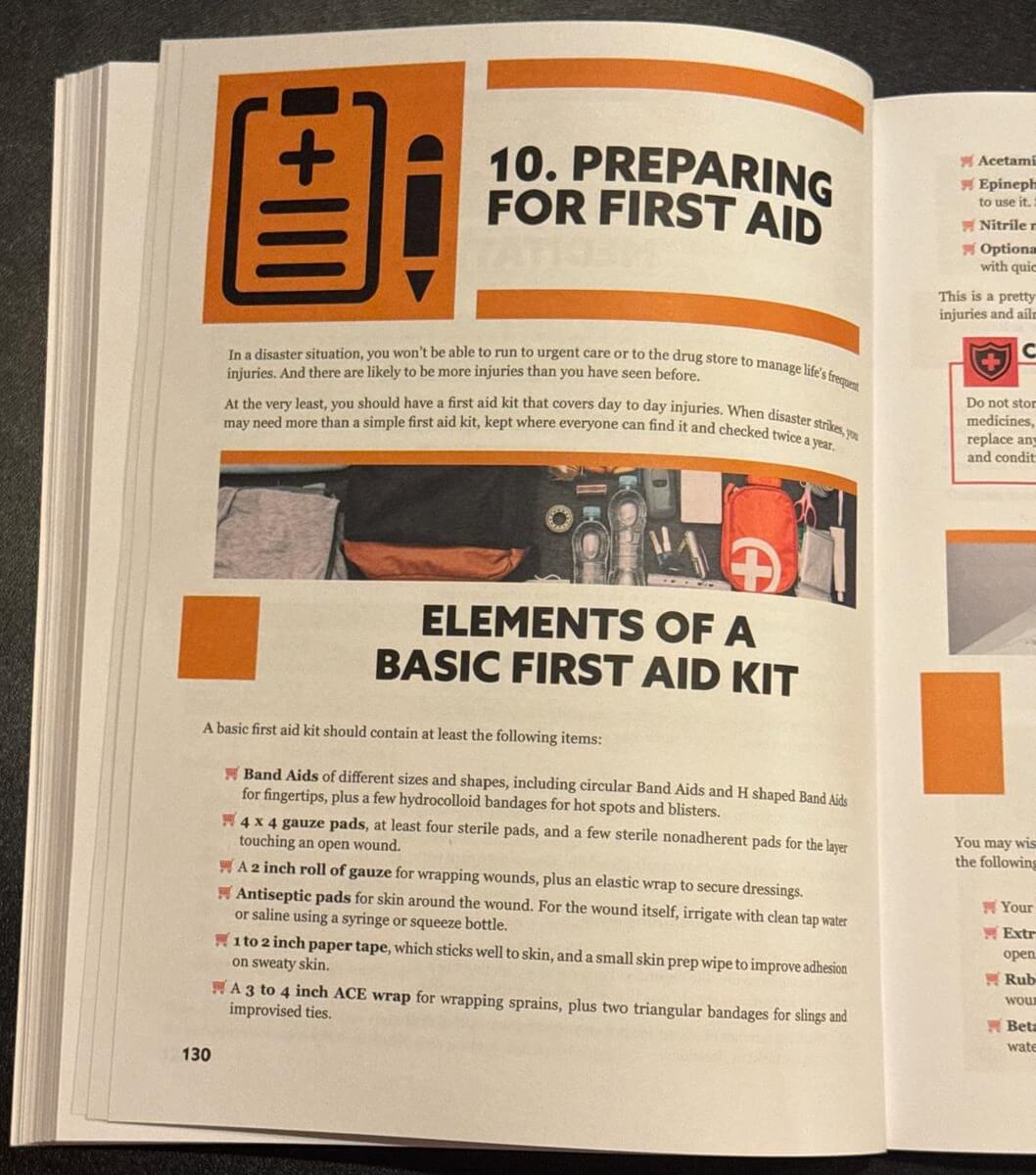
- A basic first aid kit for everyday cuts, scrapes, sprains, pain and fever
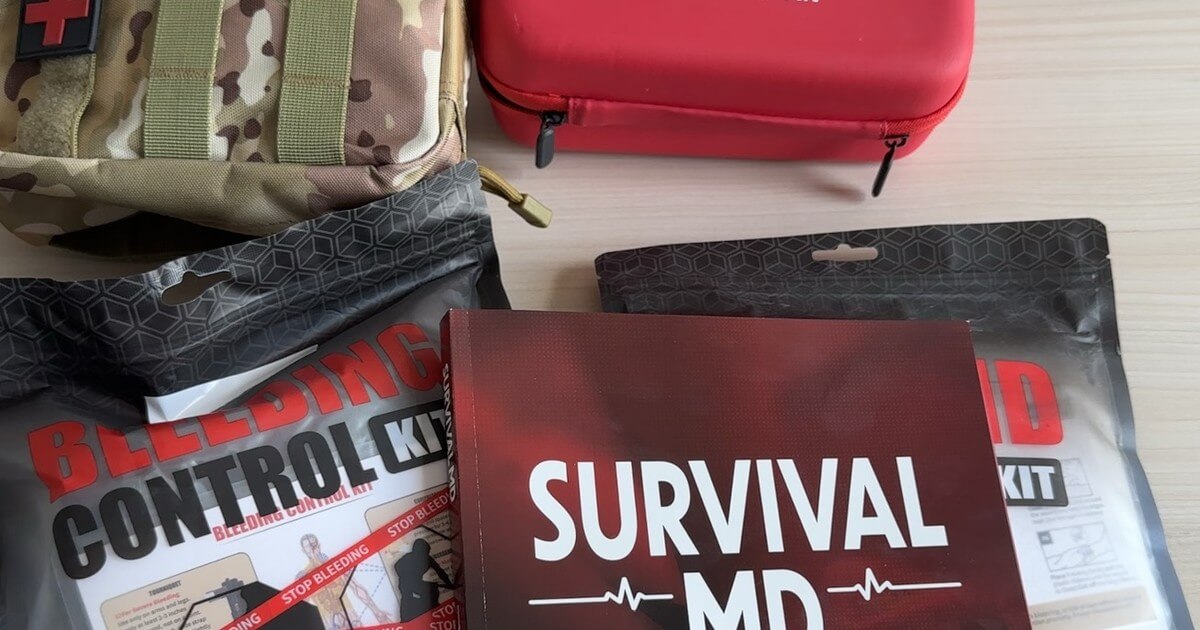
- A comprehensive first aid kit for serious problems: heavy bleeding, burns, fractures, eye injuries and CPR
The comprehensive list covers categories most store kits skip entirely, such as serious bleeding control, burn care, splinting, wound irrigation and breathing barriers for CPR. The exact items, and why each one matters, are in the book. (And don't miss the overlooked item that could save your life.)
Gap #3: The Right Quantities
Most kits are built for one person and one small injury. That's fine for a weekend hike. It's not fine for a family of three dealing with injuries or illness over several days without access to a pharmacy.
Survival MD's 147-item Master Inventory gives a quantity for every item, calculated for two adults and one child for 30 days, and color-codes each item by priority so you know what to get first. You'll probably be surprised how far short a typical kit falls.
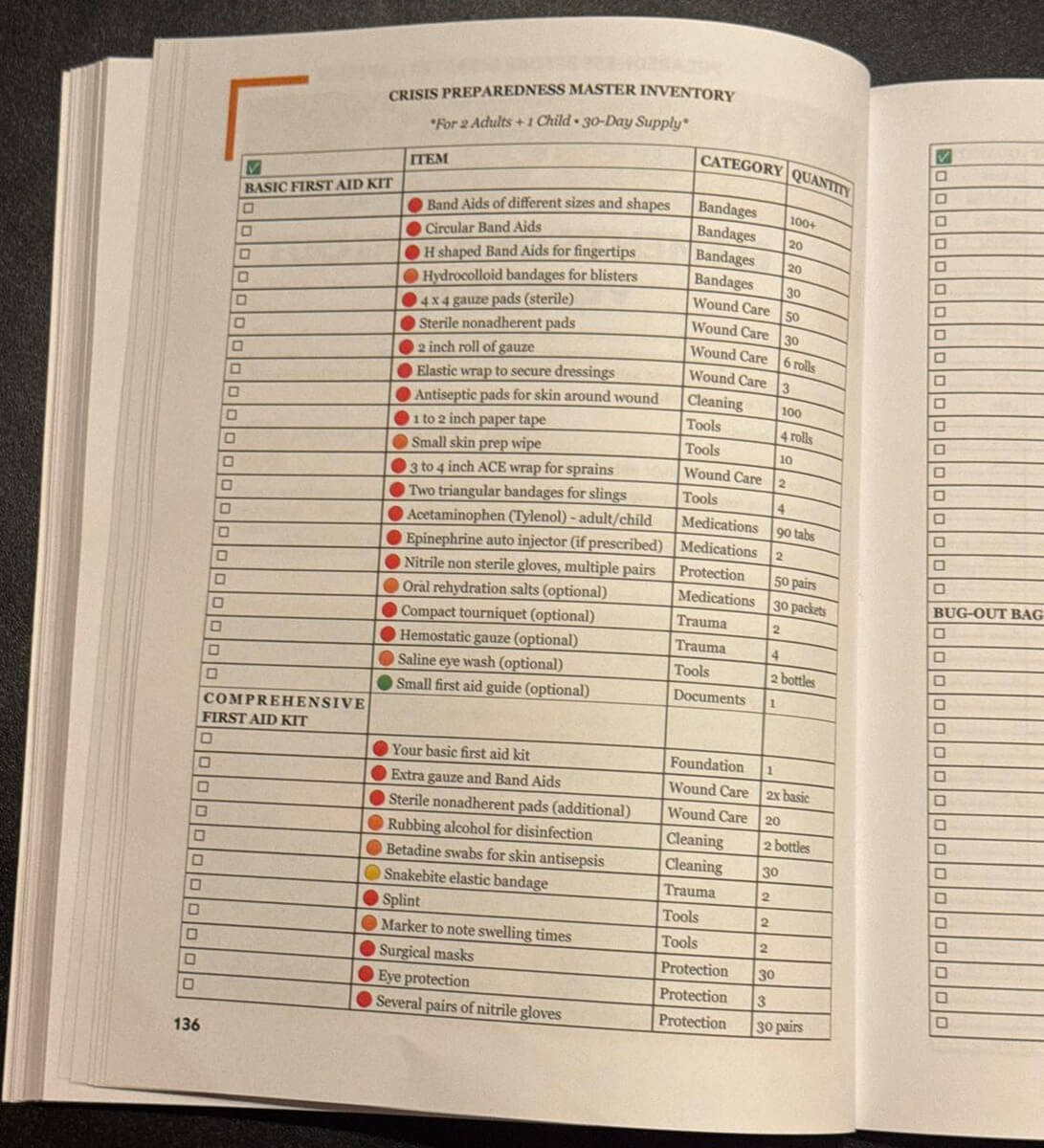
(More on this: The 147-Item Home Medical Inventory.)
Gap #4: Medications and a Way to Keep Them Fresh
A first aid kit usually has a few painkillers and not much else. Survival MD goes much further:
- What medications to keep at home, organized by purpose: pain, fever, allergies, breathing, stomach, skin and children's medicine
- Rotation schedules, so nothing quietly expires at the back of the cabinet
- A plan for daily prescriptions, including why some must never be stopped suddenly
- Color-coded supply plans for chronic conditions like diabetes, heart disease and lung disease, so you know what to do when supplies run low (more on chronic disease)
The bonus guide When There's No Pharmacy adds even more on building a home medicine reserve.
Gap #5: Where and How You Store It
Here's a small detail that makes a big difference, and one we'll share straight from the book: don't keep your kit in a hot car or a damp bathroom. Heat and moisture weaken gloves, degrade medicines and ruin adhesive dressings.
From the book
Keep kits cool and dry, where everyone in the house can find them. Check them every six months, replace anything opened, wet or expired, and add a small card with each person's allergies and conditions.
It's a perfect example of what the book does throughout: small, practical details that most kits and most instruction leaflets never mention.
Gap #6: A Guide That Works When Nothing Else Does
Many kits come with a tiny folded leaflet. Some people plan to "just look it up online."
But the situations where you need a first aid kit most, like storms, blackouts and long waits for help, are often the same situations where your phone is dead and the internet is down. Survival MD is a 280+ page full-color printed guide that works with no power, no signal and no battery, and anyone in the house can pick it up and follow it. (See print vs. digital.)
What's Missing vs. What Survival MD Adds
| What most kits are missing | What Survival MD gives you |
|---|---|
| Knowing what to do first | Step-by-step flowcharts and short instructions |
| Supplies for serious injuries | Basic and comprehensive kit lists |
| Enough for a whole family | A 147-item inventory with quantities for 30 days |
| Medications and rotation | Stockpile lists, rotation schedules, chronic condition plans |
| Proper storage and checks | Practical storage rules and a twice-a-year review routine |
| A guide that works without power | A full-color printed book you can use anywhere |
Keep Your Kit. Add the Book.
You don't need to throw away your first aid kit. It's a good foundation. Survival MD simply turns it into a real plan: what to add, how much of it, how to store it and, most importantly, exactly what to do with it when someone you love is hurt.
As one reviewer put it:
"I used the medical stockpile checklist to completely redo my family's emergency medical supplies. That practical detail separates it from every other survival medicine book."
Brady
More in our roundup of Survival MD reviews from verified buyers.
What You Get for $37
- Survival MD, the full-color printed book: 280+ pages, 19 chapters, 150+ topics
- 4 digital bonus guides: When There's No Doctor For Your Child, When There's No Pharmacy, Herbal First Aid For When There's No Doctor and When There's No Vet
- A 60-day refund window, and you keep the book and the bonuses either way
(Full breakdown: Is Survival MD Worth the Money?)
Frequently Asked Questions
Is a store-bought first aid kit enough?
For small everyday injuries, often yes. For serious bleeding, burns, fractures or several days without access to medical care, most store kits fall short in supplies, quantities and instructions.
What do most first aid kits lack?
Usually supplies for serious injuries, enough quantity for a whole family, medications with a rotation plan, and, most importantly, clear guidance on what to do first.
Does Survival MD tell me what to add to my kit?
Yes. It includes basic and comprehensive first aid kit lists, plus a 147-item Master Inventory with quantities and priority levels.
Do I need medical training to use it?
No. It's written in plain English with flowcharts, checklists and short steps for people without a medical background.
Where should I keep my first aid kit?
Survival MD recommends a cool, dry place where everyone can find it, not a hot car or a damp bathroom, with a check every six months.
The Bottom Line
Your first aid kit is the tools. Survival MD is the knowledge, the plan and the missing pieces. Together, they turn "we have a kit somewhere" into "we know exactly what to do." For everything inside the book, read our complete Survival MD review.