Built for the People Most at Risk
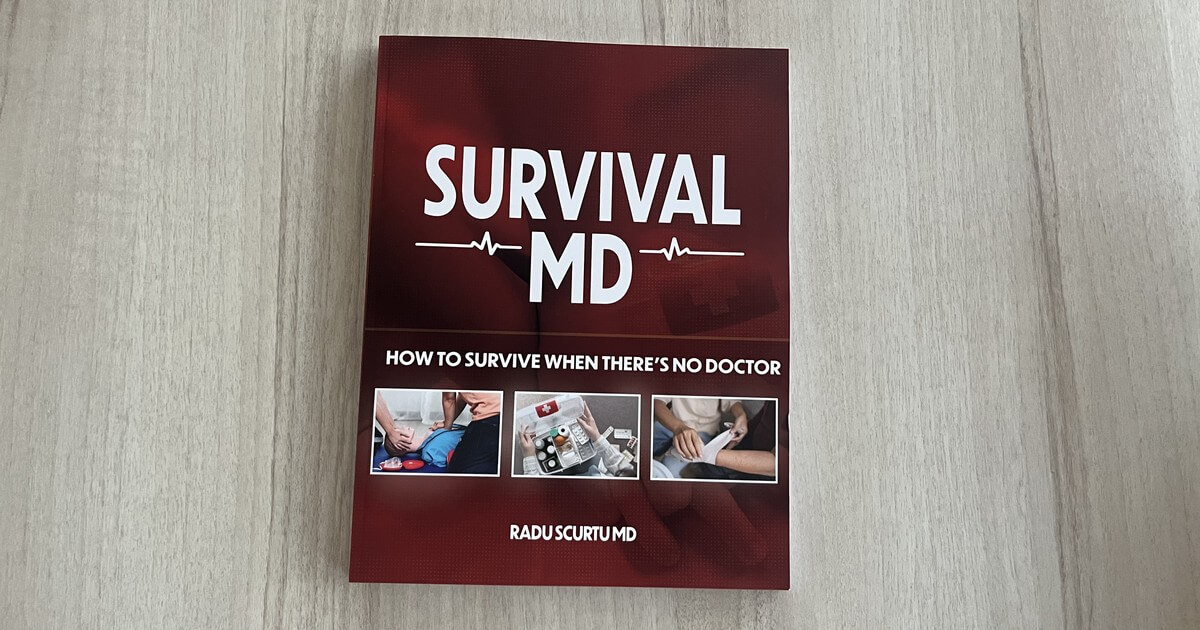
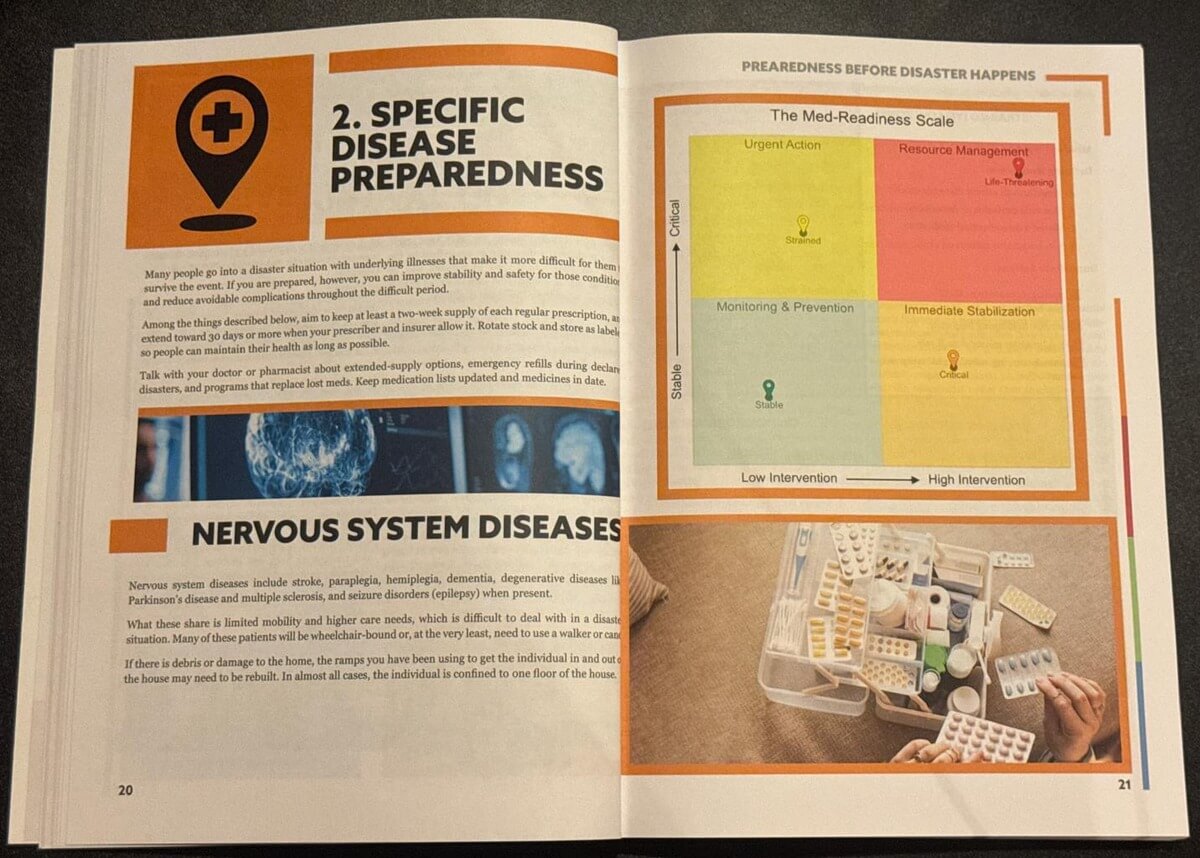
Most survival and first-aid books treat everyone as if they were young and healthy. Survival MD doesn't. Dr. Radu Scurtu dedicates an entire chapter, "Specific Disease Preparedness" (pp. 20–43), to the people who are most at risk when pharmacies close and doctors can't be reached: those living with a chronic condition.
It's one of the strongest parts of the book, and the most complete we've seen in any home medical guide. For each group of conditions you get:
- A clear explanation of how the condition behaves when care is disrupted
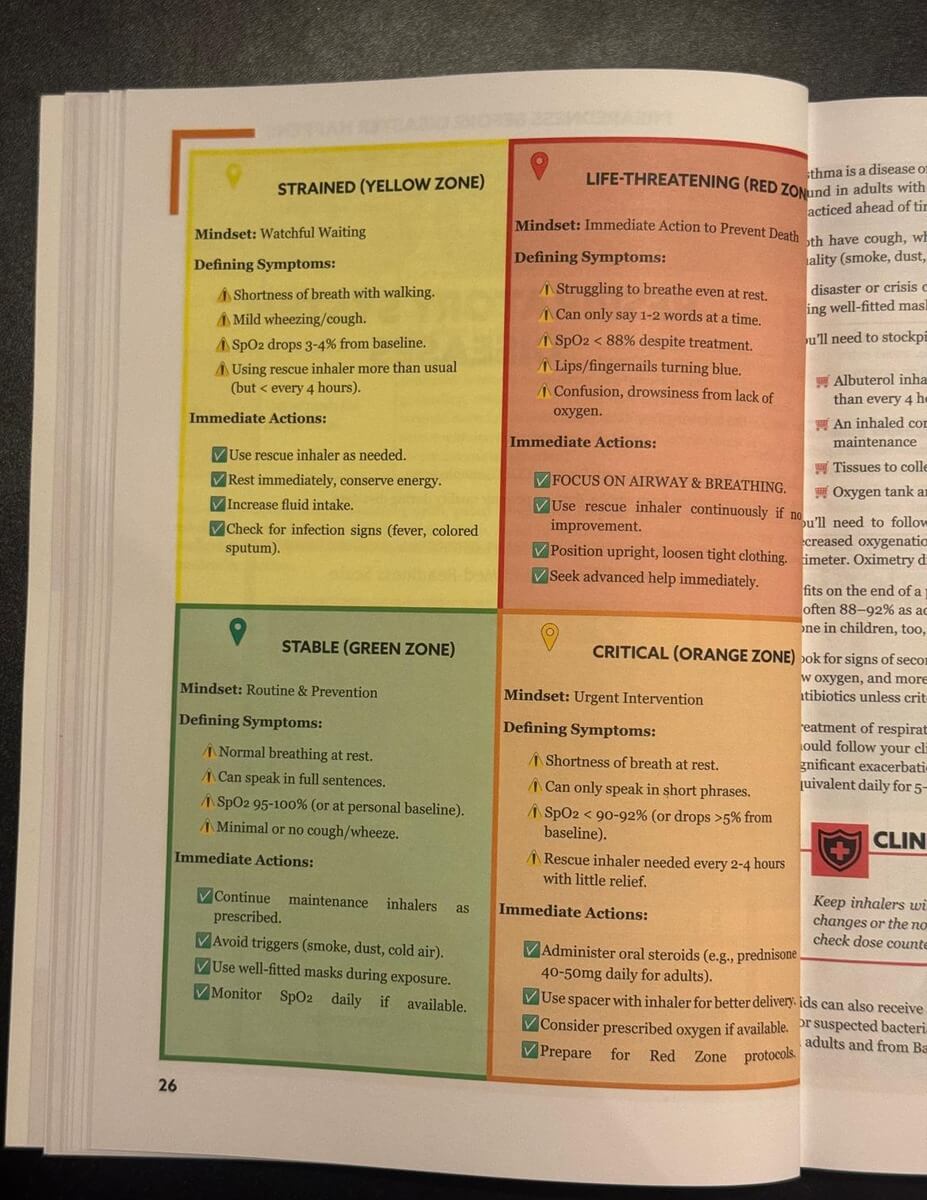
- A four-zone color system (Green, Yellow, Orange, Red) with warning signs and immediate actions for each zone
- A medication supply plan that tells you what to do as your supply runs low, without guessing or rationing
- Stockpile lists built around that specific condition
- Clinical Safety Notes and Myth vs. Fact boxes that stop dangerous mistakes
If someone in your home takes daily medication, this chapter alone is worth the price of the book.
The 6 Groups of Conditions Survival MD Covers
| Body system | Examples covered in the book |
|---|---|
| Nervous system | Stroke, dementia, Parkinson's, multiple sclerosis, seizure disorders, limited mobility |
| Respiratory system | Asthma, COPD, people who depend on inhalers or prescribed oxygen |
| Circulatory system | Heart disease, angina, peripheral artery disease, blood thinners |
| Digestive system | Chronic heartburn and gastritis, celiac disease, lactose intolerance, Crohn's, ulcerative colitis, IBS |
| Urinary system | Recurrent urinary tract infections, kidney stones, kidney failure and dialysis |
| Metabolic | Type 1 and type 2 diabetes |
The chapter also includes a section on mental health medications, with a calm, structured plan for what to do when supplies of daily medications for anxiety or depression run low.
If you recognize someone you love in that table, this book was written with them in mind.
The Four-Zone System: Know Exactly Where You Stand
This is the heart of how Survival MD handles chronic disease, and it's brilliantly simple.
For the major condition groups, the book gives you a color-coded chart:
| Zone | Mindset |
|---|---|
| Green: Stable | Routine and prevention |
| Yellow: Strained | Watchful waiting |
| Orange: Critical | Urgent intervention |
| Red: Life-threatening | Immediate action to prevent death |
Each zone lists the specific warning signs for that condition and the exact actions to take. Instead of panicking or guessing, a caregiver can look at the person, match what they see to a zone and know what to do next.
For someone with lung disease, for example, the zones move from "can speak in full sentences" toward signs like being able to say only a few words at a time. Each step comes with clear actions for that moment, and the full charts with every symptom and every action are in the book.
What to Do When Medication Starts Running Low
This is the question that keeps caregivers up at night: "What do I do when we're almost out?"
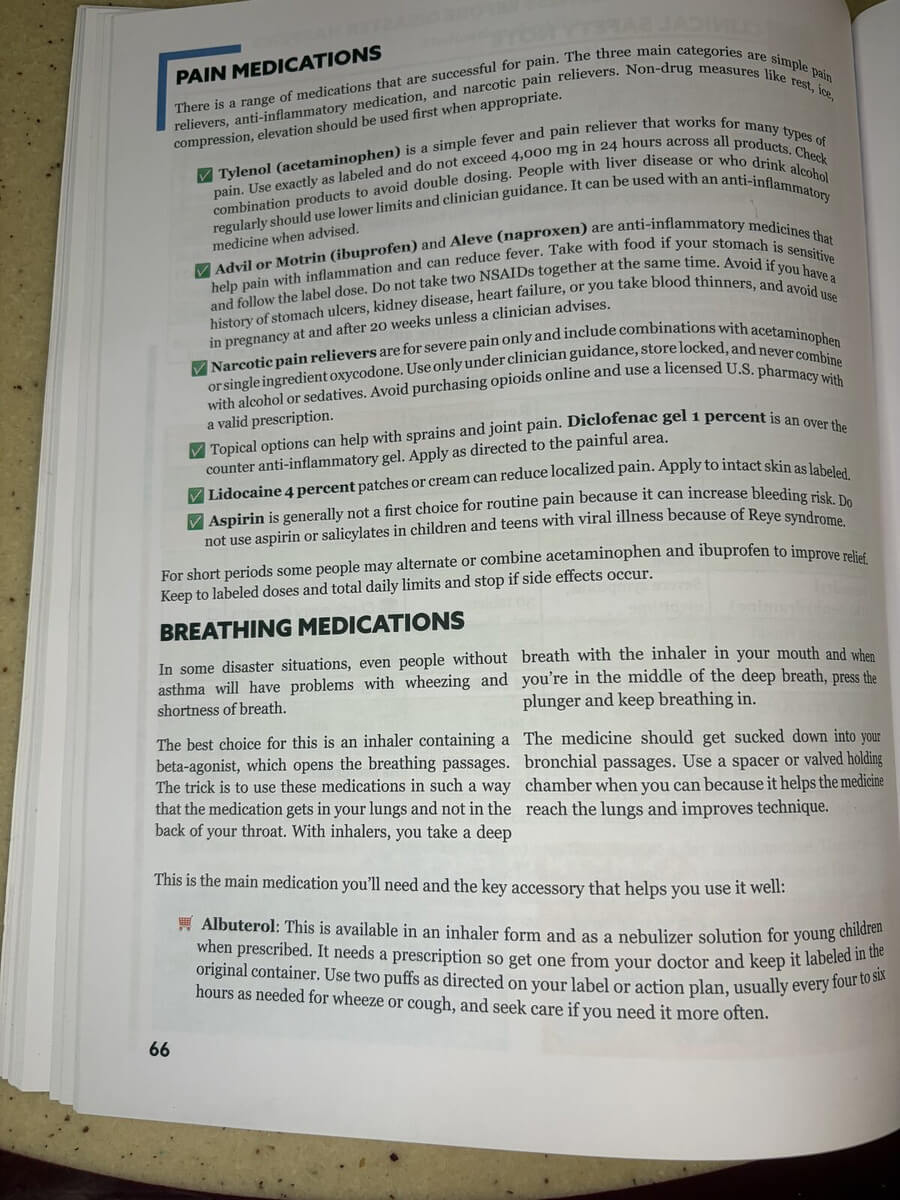
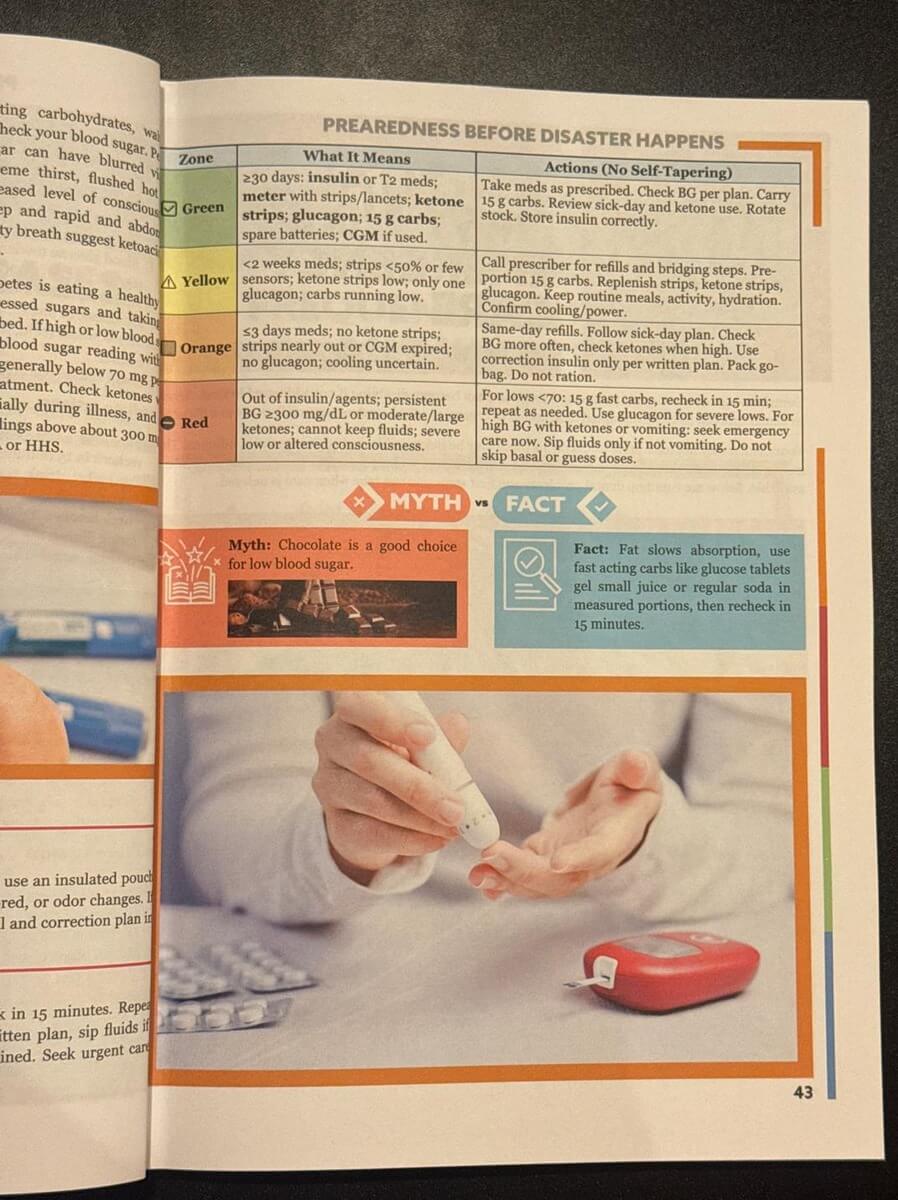
Survival MD answers it with a supply-based color plan, separate from the symptom zones. It tells you what to do at each stage, from a healthy supply, to less than two weeks left, to just a few days left, to completely out.
The most important part is the rule written right into the table header: "No Self-Tapering." The book is clear that you shouldn't change a medication's type, dose or schedule on your own. Instead, it shows you how to:
- Get a written plan from your prescriber before any shortage
- Use non-drug supports that help while you work on refills
- Recognize the signs that mean it's time to seek urgent care
The diabetes version, for example, tracks not just insulin but every supply that matters: meter strips, ketone strips, glucagon, fast-acting carbs and even cooling for insulin.
The book also gives a simple baseline for every family: keep at least a two-week supply of each regular prescription, and work toward 30 days or more when your prescriber and insurer allow it. It also suggests asking your doctor or pharmacist about extended supplies, emergency refills during declared disasters and programs that replace lost medication.
Small Details That Make a Big Difference
What makes this chapter stand out is how practical it gets. A few examples:
- Low blood sugar: a Myth vs. Fact box explains why chocolate is not a good choice. The fat slows absorption, so fast-acting carbs work better.
- Seizures: the book corrects one of the most dangerous myths there is. You should never force something into a person's mouth during a seizure, and the book explains what to do instead, including the time limit that turns a seizure into an emergency.
- Heart medication: a Clinical Safety Note warns about a dangerous combination between nitroglycerin and certain other common medications.
- Poor circulation in the feet: the book explains why heating pads and hot water can harm people with peripheral artery disease, and what to use instead.
- Insulin pumps and glucose monitors: what to keep as backup in case the device fails.
- Caring for someone with limited mobility: practical items to stockpile, including one for preparing food without electricity.
These are the details that only someone with real clinical experience thinks to include, and they're the ones that matter most when there's no one to ask.
Why Survival MD Handles This Better Than Most
It's written by a surgeon. Dr. Scurtu has seen firsthand how much a patient's existing health affects whether they recover.
It's built for caregivers. Most of the chapter is written so a family member can follow it, not just the patient.
It's safe. The book never encourages risky shortcuts. "No self-tapering," "do not ration," "talk to your clinician": the guidance is designed to keep people stable, not to turn readers into amateur doctors.
It's organized for stress. Color zones and tables mean you don't need to read paragraphs while someone is struggling to breathe.
It's for when you can't reach a doctor. The whole point is to keep someone with a chronic condition as stable as possible until real care is available again, even if that takes days.
Who Needs This Chapter Most
- People living with diabetes, heart disease, asthma or COPD
- Caregivers of a parent with dementia, Parkinson's or a past stroke
- Families of someone on dialysis or with kidney disease
- Anyone taking a daily prescription they can't safely go without
- Households in storm, wildfire or blackout areas, where pharmacies may close for days
And if you need more on medications, the book continues with a full chapter on which medications to stockpile and how to rotate them (pp. 60–83). The bonus guide When There's No Pharmacy goes even further. To build the rest of your home supply, see the 147-item home medical inventory from the same book.
Frequently Asked Questions
Does Survival MD cover chronic diseases?
Yes. Its "Specific Disease Preparedness" chapter (pp. 20–43) covers nervous system, respiratory, circulatory, digestive, urinary and metabolic conditions, plus mental health medications.
Does it cover diabetes?
Yes, in detail: type 1 and type 2, a four-zone symptom chart, a supply plan for insulin and other diabetes supplies, insulin storage and what to do if a pump or glucose monitor fails.
Does Survival MD tell you how to ration or change medications?
No. It's explicit about "no self-tapering" and "do not ration." It shows you how to prepare a written plan with your prescriber in advance and what to do at each stage of a shortage.
How much medication should I keep on hand?
Survival MD recommends at least a two-week supply of each regular prescription, working toward 30 days or more when your prescriber and insurer allow it.
Is this useful for caregivers?
Very. The zone charts, stockpile lists and safety notes are designed so family members can monitor and support someone with a chronic condition.
The Bottom Line
When a crisis hits, people with chronic conditions are the ones with the most to lose and the least time to waste. Survival MD handles this better than any home medical guide we've seen: clear zones, a calm plan for running low on medication, condition-specific stockpile lists and safety notes written by a surgeon.
You've seen a few rows and a few highlights. The complete charts, lists and plans for every condition are in the book. For everything else it covers, read our complete Survival MD review.