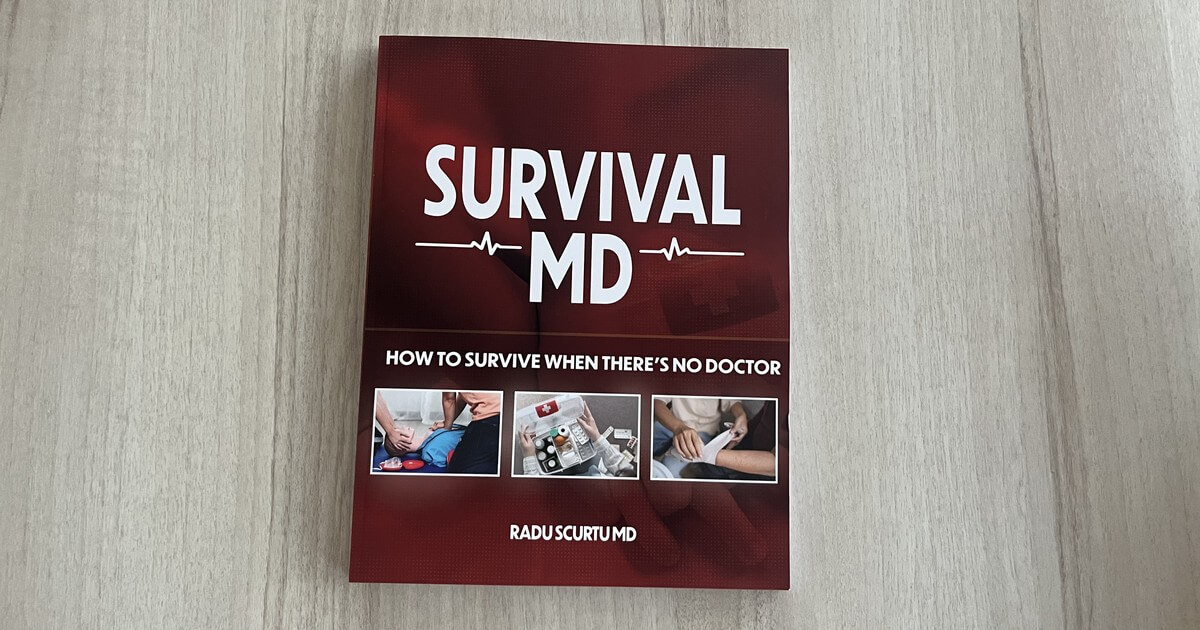
The Short Answer
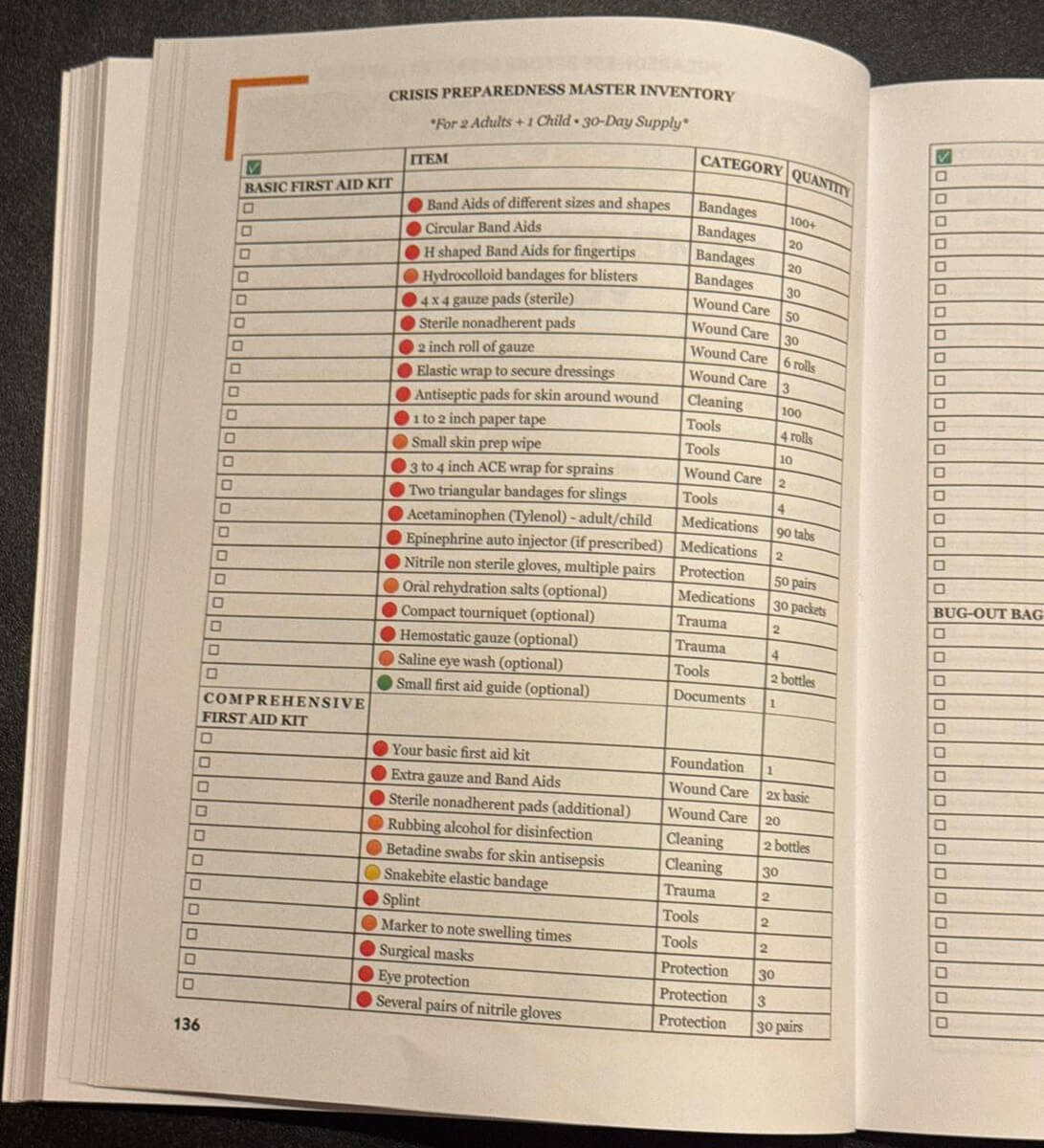
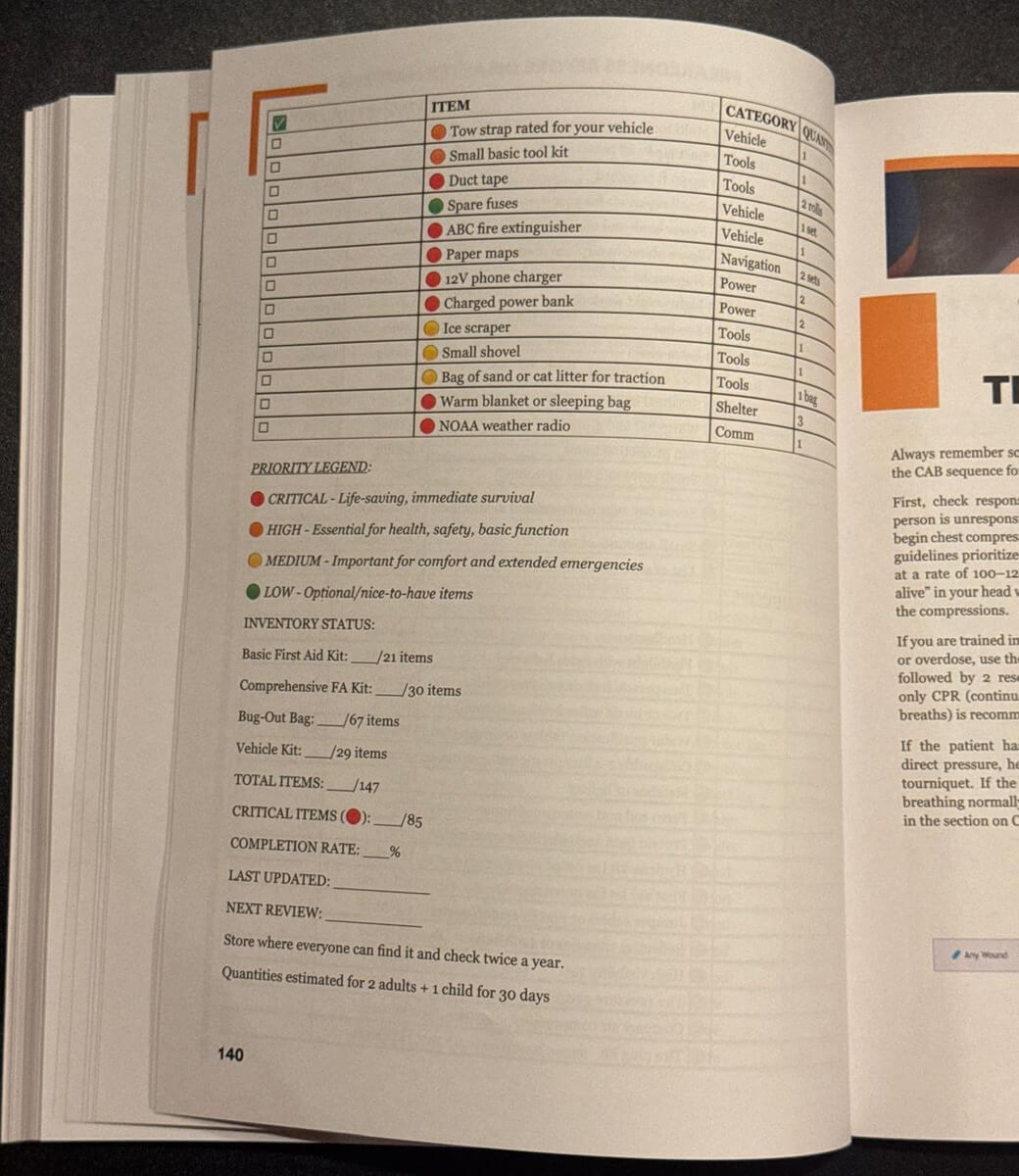
Survival MD by Dr. Radu Scurtu includes a Crisis Preparedness Master Inventory (pages 136–140), a single checklist of 147 items that tells a family exactly what to keep at home for medical emergencies and evacuations.
- 4 kits: Basic First Aid, Comprehensive First Aid, Bug-Out Bag and Vehicle Kit
- 85 items marked critical, so you know what to buy first
- Color-coded priority for every item: critical, high, medium or low
- Exact quantities calculated for 2 adults and 1 child for 30 days
- A built-in status tracker to record what you have, your completion rate and your next review date
It turns "we should probably have a first-aid kit" into a plan you can tick off, one line at a time.
Why Most Home Medical Supplies Fail When You Need Them
Most families do have something: a box of bandages under the sink, half a bottle of painkillers, a first-aid kit that came with the car. The problem shows up in an actual emergency:
- It was bought at random. One kit from the pharmacy, a few things added over the years, no plan behind any of it.
- There's not enough. A kit built for one scraped knee runs out fast with a family of three over several days.
- Nobody knows what's critical. The kit has 40 plastic bandages but nothing that can handle serious bleeding.
- Nobody checks it. Medicines expire, batteries die, and things get used and never replaced.
- It's scattered. Half in the bathroom, half in the car, the rest "somewhere in the garage."
The Survival MD inventory is designed to fix each of these problems.
How the 147 Items Are Organized
The list is split into four kits, each with its own job:
| Kit | Items | What it's for |
|---|---|---|
| Basic First Aid Kit | 21 | Everyday cuts, scrapes, sprains, pain and fever, the things that happen most often |
| Comprehensive First Aid Kit | 30 | Serious injuries: heavier bleeding, burns, fractures, eye injuries, CPR |
| Bug-Out Bag | 67 | Everything the family needs if you have to leave home fast: water, shelter, light, hygiene, documents, food, medical |
| Vehicle Kit | 29 | Staying safe if you're stuck or evacuating by car |
| Total | 147 | 85 of them marked critical |
The two first-aid kits (51 items) are the medical core you keep at home. The bug-out and vehicle kits make sure that medical readiness comes with you if you have to leave.
The 4-Level Priority System
Every one of the 147 items has a color tag:
| Priority | Meaning |
|---|---|
| Critical | Life-saving, immediate survival |
| High | Essential for health, safety and basic function |
| Medium | Important for comfort and longer emergencies |
| Low | Optional, nice to have |
This is what makes the list practical on a real budget. You don't have to buy 147 things at once. Start with the red items, all 85 of them, and you've already covered what matters most. Add orange next, then yellow and green as you can.
Quantities Built for a Real Family
Most checklists say "bandages" or "gauze" and leave you guessing. The Survival MD inventory gives a number for every item, calculated for two adults and one child over 30 days.
A few examples from the Basic First Aid Kit:
| Item | Quantity |
|---|---|
| Sterile 4 x 4 gauze pads | 50 |
| Sterile nonadherent pads | 30 |
| Nitrile gloves | 50 pairs |
| Antiseptic pads for the skin around wounds | 100 |
| Oral rehydration salts | 30 packets |
Those quantities are usually much higher than what's in a store-bought kit, and that's the point. A real emergency rarely lasts one afternoon.
The rest of the list, every item, category and quantity across all four kits, is in the book on pages 136–140. If your household is bigger or smaller, you can scale the numbers up or down.
The Built-In Tracker
At the end of the inventory there's a simple status panel that most checklists don't have:
- Items owned in each kit (out of 21, 30, 67 and 29)
- Total items: ___ / 147
- Critical items: ___ / 85
- Completion rate (%)
- Last updated / next review date
The book's instruction is simple: store the list where everyone can find it, and check it twice a year. That one habit is what keeps a medical supply working instead of quietly expiring in a cupboard.
How to Build Your Inventory Without Overspending
You don't need to do it all in one shopping trip. A simple approach:
- Start with what you already own. Go through the list and tick off everything already in the house. Most families are surprised how much they have, and how much is expired.
- Do the critical items first. Get your critical count as close to 85 as you can before buying anything else.
- Spread the rest over a few months. Add a handful of orange items with each grocery run.
- Keep everything in one place. One labeled bin for each kit, stored where every adult in the house knows to look.
- Set two reminders a year. Pick two dates, such as when the clocks change, to check expiry dates, batteries and anything that's been used.
A List Is Only Half the Job
Owning 147 items doesn't help much if no one in the house knows what to do with them. A tourniquet, hemostatic gauze or a breathing barrier is only useful if you know when and how to use it, and when not to.
That's why the inventory isn't a standalone printout. It sits inside a book that explains the rest:
- What to do with the supplies when someone is bleeding, burned, in shock, not breathing or has a broken bone
- Which medications to stock, how much, and how to rotate them so nothing quietly expires (pp. 60–83)
- Ready-made response kits for superficial wounds, wounds that need closing, and complicated wounds or fractures (pp. 96–102)
- The Lifeline Kit, the core medication and supply set built around your family (p. 90)
The inventory tells you what to have. The rest of Survival MD tells you what to do with it, especially in situations where you can't reach a doctor. For a full look at the book, read our complete Survival MD review.
Who This Inventory Is For
- Families starting from scratch who don't know where to begin
- People with a kit already who want to know what's missing
- Parents who want quantities that actually cover the whole family
- Anyone in storm, wildfire or blackout country who might have to leave home fast
- Organized preppers who want one master list instead of five half-finished ones
Frequently Asked Questions
What should a home medical inventory include?
At a minimum: supplies for cleaning and covering wounds, controlling bleeding, treating burns, supporting sprains and fractures, managing pain and fever, preventing dehydration, plus protective gloves and a way to track expiry dates. Survival MD's inventory covers all of these across 147 items in four kits.
How many items should a family first-aid kit have?
It depends on how prepared you want to be. Survival MD splits it into a 21-item basic kit and a 30-item comprehensive kit, 51 medical items in total, with quantities for two adults and a child for 30 days.
How much medical supply does a family need for 30 days?
Usually far more than a store-bought kit contains. The Survival MD inventory gives an exact quantity for every item, calculated for 2 adults and 1 child over 30 days, so you can scale it to your household.
What should I buy first?
The items marked critical. In Survival MD's inventory, 85 of the 147 items carry the red critical tag.
How often should I check my emergency medical supplies?
Survival MD recommends checking your inventory twice a year, updating the completion rate and setting the next review date.
Where can I get the full 147-item list?
It's on pages 136–140 of Survival MD, the full-color printed book by Dr. Radu Scurtu, available on the official website.
The Bottom Line
A home medical supply only works if it's complete, sized for your family, prioritized and checked. Survival MD's 147-item inventory gives you all four on five pages, and the rest of the book teaches you how to use every item when it matters most, even when no doctor is coming.