Why We Publish Our Method
When a website tells you one book is better than another, you deserve to know how they decided. Was it a real comparison, or just a list of opinions?
Medical books aren't like novels. The advice in them may be what you follow on the worst day of your life, when someone you love is hurt and no doctor can be reached. So we judge them by one main question:
The one question behind every review
If a family with no medical training had only this book in a real emergency, would it help them act safely and correctly?
Everything in our method comes back to that question. Here's exactly how we apply it.
Step 1: We Read the Whole Book
We don't review a book from its back cover, its ads or its table of contents. We read it, chapter by chapter, and take notes on:
- What it covers, and what it leaves out
- How clearly each topic is explained for a non-medical reader
- Whether the instructions are complete enough to act on
- Where it sends the reader for professional help
We also look at the physical book: page size, print quality, color, binding and how easy it is to find a topic quickly.
Step 2: We Score It on 9 Criteria
Every book is scored out of 100 points across nine criteria. The weights reflect what matters most in a real emergency.
| Criterion | Points | What we look for |
|---|---|---|
| 1. Author and expertise | 15 | A real medical professional, with clinical experience visible in the book |
| 2. Built for when help isn't coming | 15 | Guidance for hours and days without a doctor, not just the minutes before an ambulance |
| 3. Safety | 15 | Clear limits, "if trained" markers, warnings against risky shortcuts, guidance on when to get help |
| 4. Accuracy and sources | 15 | Current, mainstream guidance, with references you can check |
| 5. Usability under stress | 15 | Flowcharts, color-coding, short steps, clear headings and a good index |
| 6. Whole-family coverage | 10 | Children, babies, pregnancy, older adults and chronic conditions |
| 7. Preparation tools | 5 | Supply lists with real quantities, medication planning and checklists |
| 8. Format | 5 | A printed, durable, readable book that works without power or signal |
| 9. Seller and guarantee | 5 | Sold through trusted retailers, with a clear refund policy |
| Total | 100 |
Step 3: We Check the Sources
A medical book is only as good as the evidence behind it. For every book, we:
- Count and review the references. Does the book cite its sources at all? Are they organizations like the CDC, FDA, NIH, Cochrane and the American Heart Association, or vague mentions of "studies"?
- Check the dates. Recent references matter, because guidance changes.
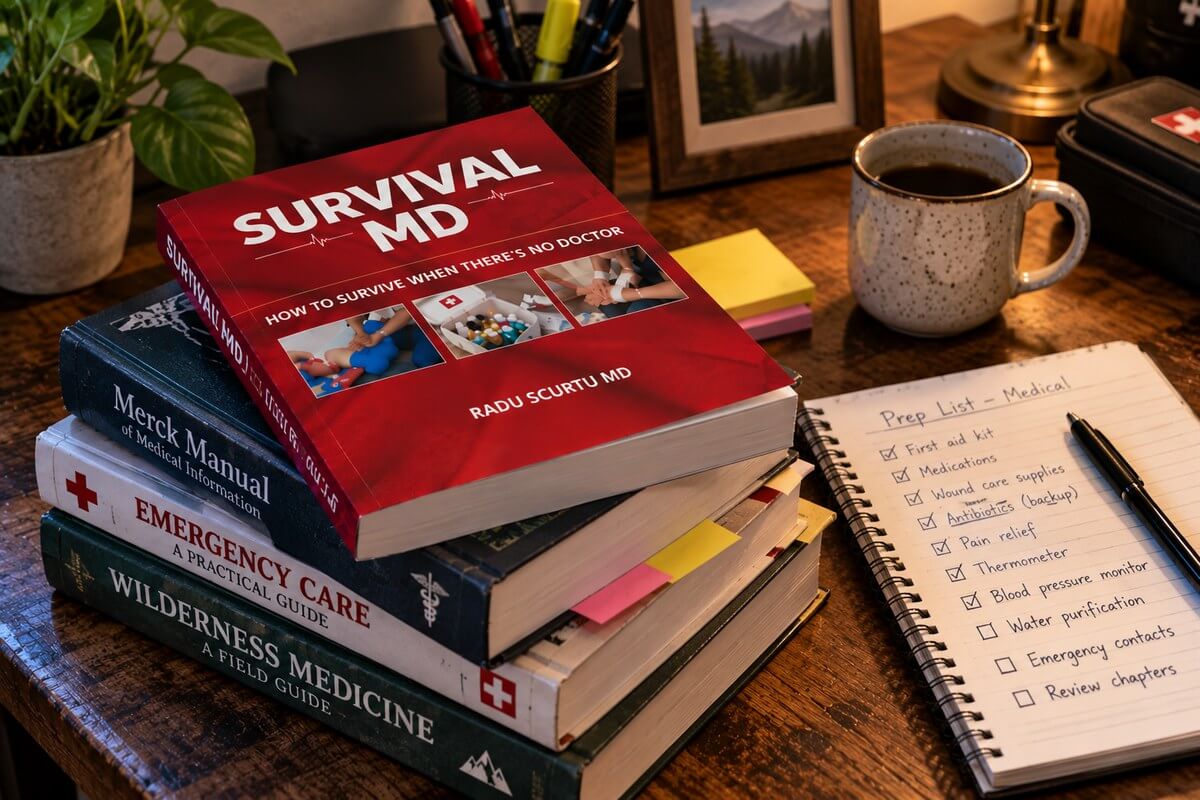
- Spot-check key topics against current mainstream guidance, such as CPR, bleeding control, burns and wound care. For example, does the book teach the current CAB order for CPR, or the outdated ABC?
Step 4: We Test for Safety
This is where many survival medicine books lose the most points. We look for red flags:
- Promising the reader can replace a doctor
- Encouraging fish or veterinary antibiotics for people
- Advising readers to stop or change prescriptions on their own
- Presenting miracle cures without limits or warnings
- Giving advanced procedures with no "if trained" warning and no guidance on when to stop
And we look for green flags: a clear medical disclaimer, Myth vs. Fact corrections, safety notes, "when to get help" lines and a recommendation to take hands-on training.
Step 5: We Test Usability Under Pressure
An emergency book has to work when your hands are shaking. So we run simple, practical tests:
- The find-it-fast test: how quickly can we locate a specific topic, like choking in a child or signs of shock, using only the table of contents and index?
- The follow-it test: can a non-medical reader follow the steps for a common emergency without rereading them?
- The glance test: at a glance, can you tell how serious a situation is and what to do first?
Books with dense text, small print and no visual tools score low here, no matter how much information they contain. More pages don't mean more help.
Step 7: We Keep Our Comparisons Up to Date
Books get new editions, and guidance changes. We revisit our comparisons regularly and update them when a book changes or when new information becomes available.
How Survival MD Scores
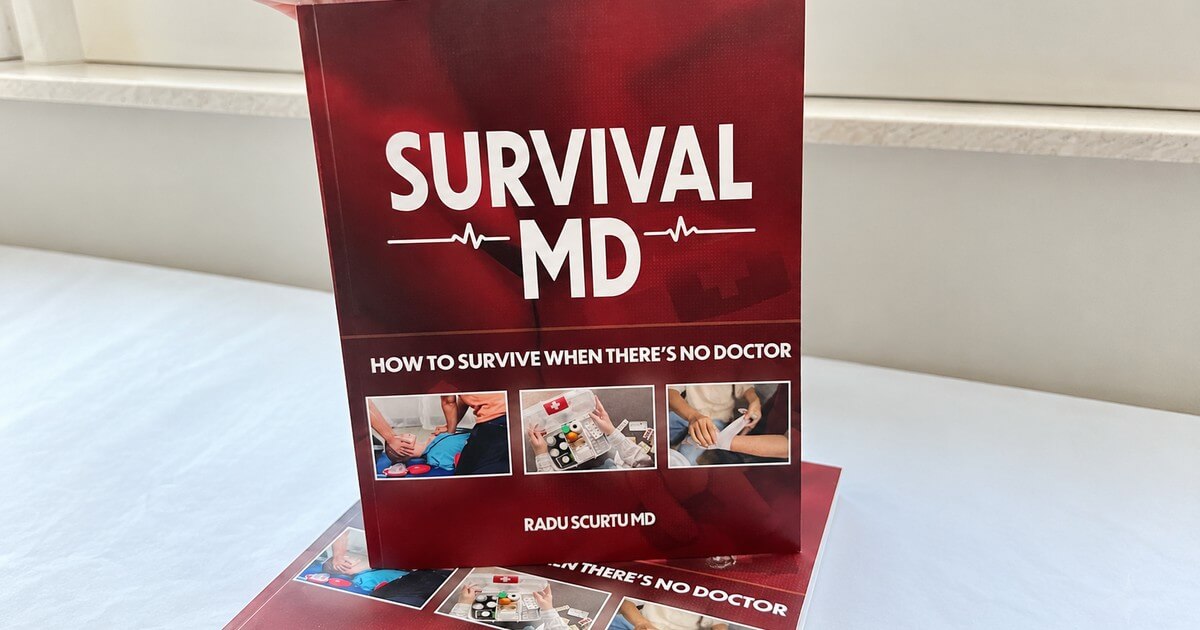
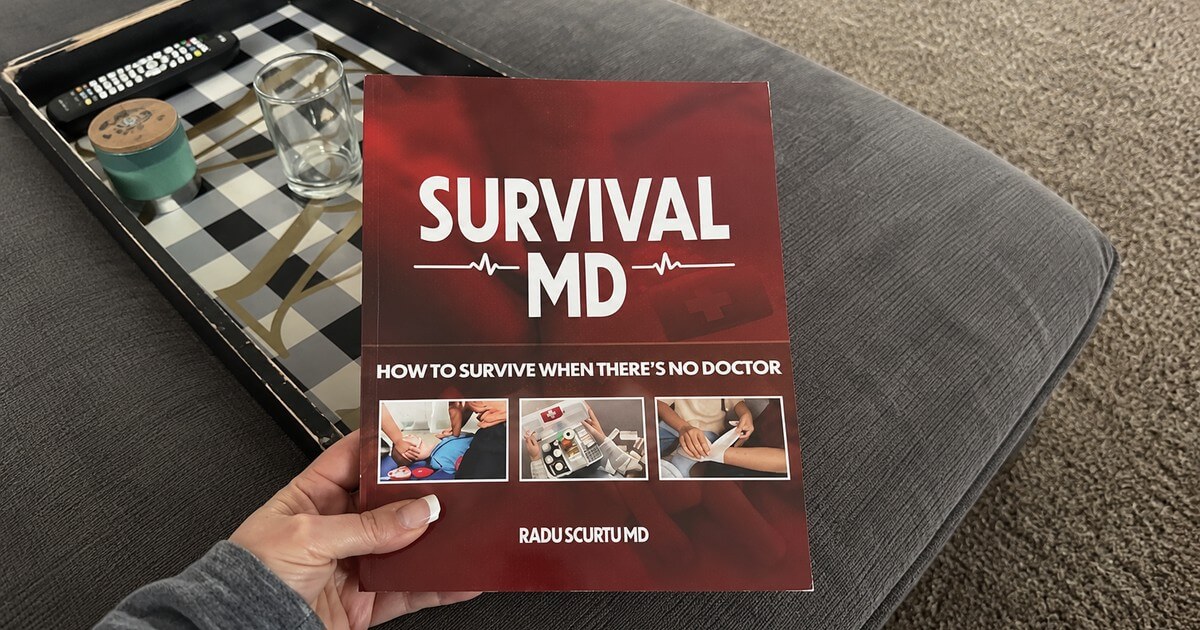
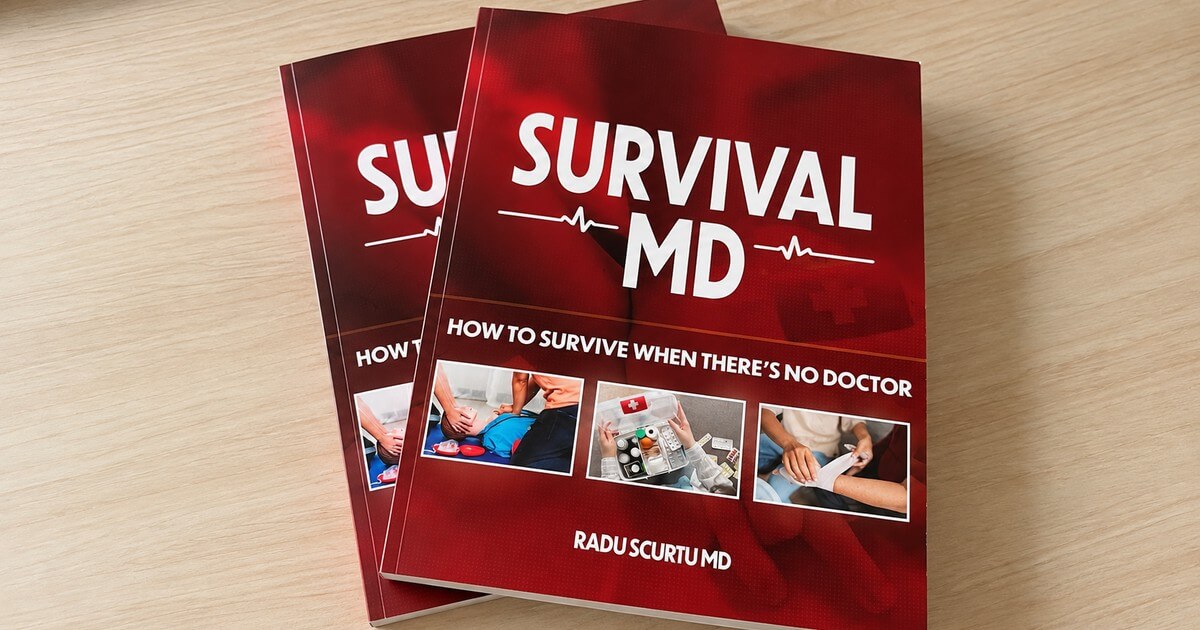
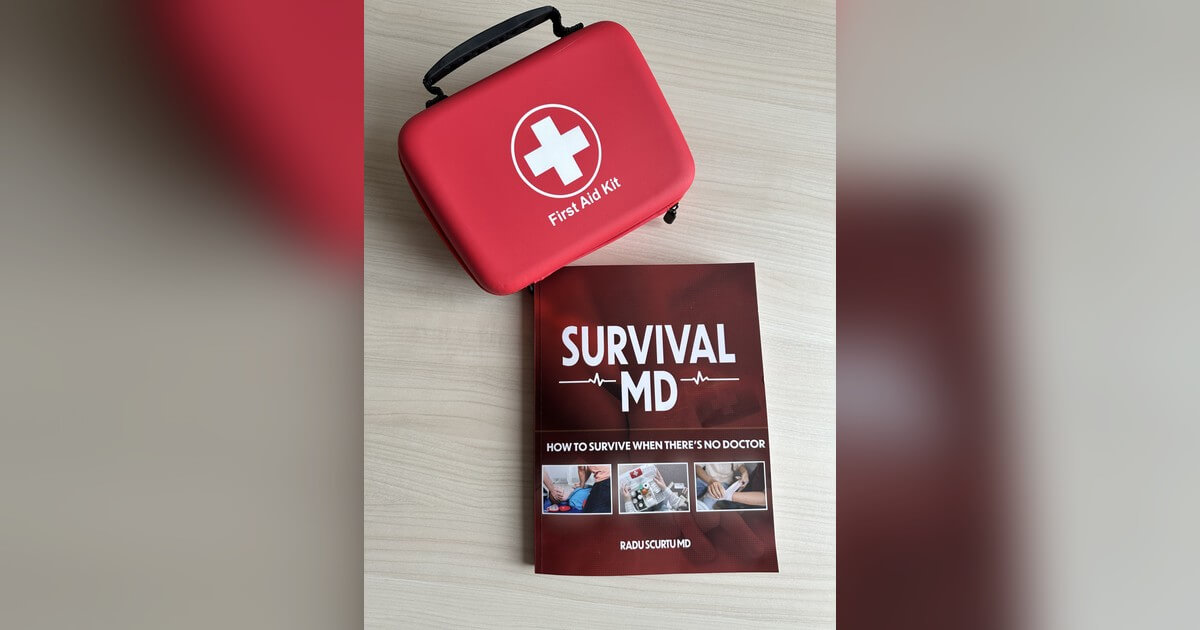
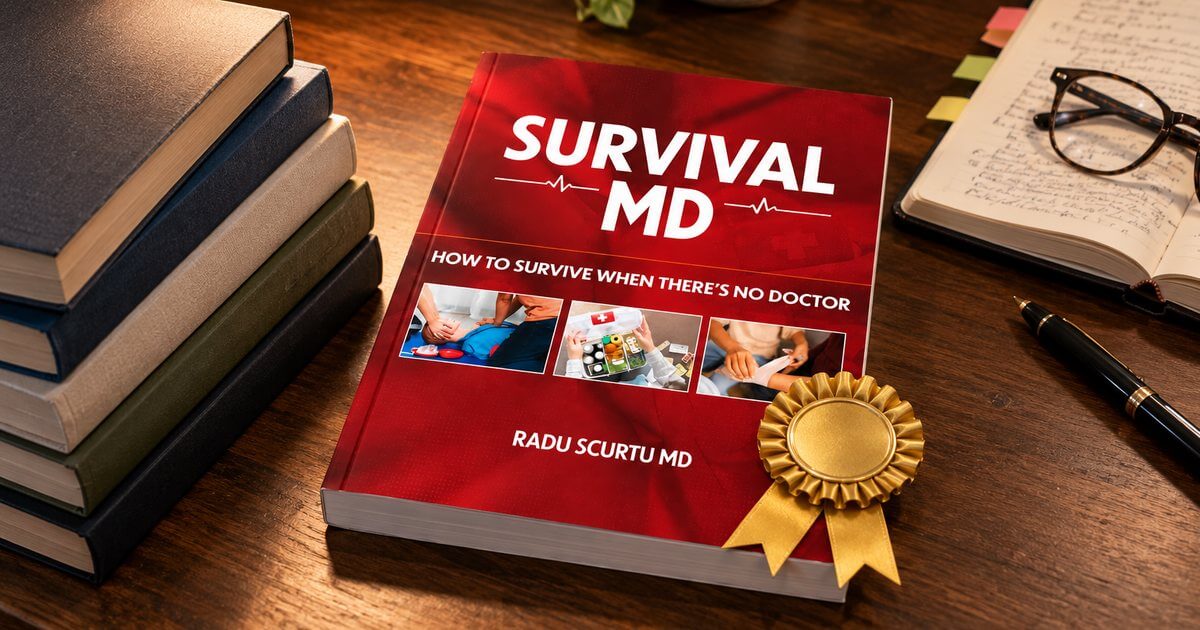
Using this method, Survival MD by Dr. Radu Scurtu currently tops our comparisons. Here's how it scores against each criterion:
| Criterion | What we found | Score |
|---|---|---|
| Author and expertise | Dr. Radu Scurtu, MD, with first-hand cases from hospitals in Romania and Germany | 15/15 |
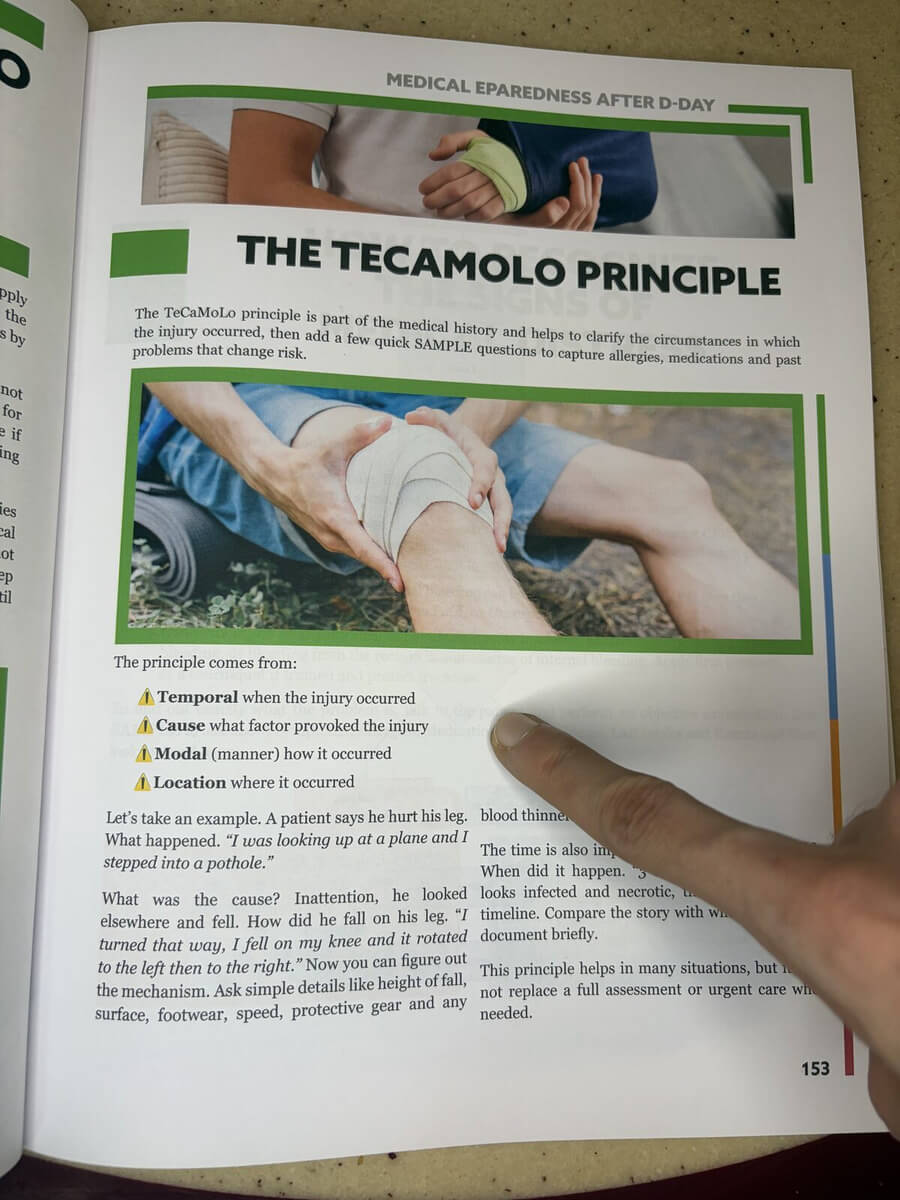
| Built for when help isn't coming | A full section, "Medical Preparedness After D-Day," for when no doctor can be reached | 15/15 |
| Safety | "First, do no harm," "if trained" markers, 50+ Clinical Safety Notes, no veterinary antibiotics, no self-tapering | 15/15 |
| Accuracy and sources | 350+ references, many from 2024–2025; current CAB guidance | 15/15 |
| Usability under stress | 8 flowcharts, color-coded zones, short steps and a full index | 14/15 |
| Whole-family coverage | Children, babies, pregnancy, chronic disease, plus bonus guides for children and pets | 10/10 |
| Preparation tools | A 147-item home inventory with quantities, medication rotation and kit checklists | 5/5 |
| Format | 288-page, full-color printed book, 11 x 8.5 inches | 5/5 |
| Seller and guarantee | Digistore24 or ClickBank, 60-day refund within 5 business days, keep everything | 5/5 |
| Total | 99/100 |
Where did the one point go? Like every reference book, Survival MD works best when you've read the key chapters before an emergency. The book says so itself: "Begin during calm, not during chaos."
Our Comparisons
Here's where we've applied this method:
What We Don't Do
- We don't rank books by page count. A longer book isn't a better book in an emergency.
- We don't give medical advice. We evaluate books; we don't replace your doctor.
- We don't let commissions decide the score. We earn a commission on Survival MD, and we say so on every page. The scores come from the criteria above.
- We don't review unauthorized copies. We evaluate the official edition. More here: Official vs. Fake: How to Spot Unauthorized Survival MD Sellers
Frequently Asked Questions
How do you compare emergency medical books?
We read each book in full and score it out of 100 points on nine criteria: author expertise, focus on when help isn't coming, safety, accuracy and sources, usability under stress, whole-family coverage, preparation tools, format, and seller and guarantee.
Which criteria matter most?
Author expertise, being built for when no doctor can be reached, safety, accuracy and usability under stress, worth 15 points each.
Which emergency medical book scores highest?
Survival MD by Dr. Radu Scurtu, with 99 out of 100 points in our method.
Do commissions affect your rankings?
No. We disclose our commission on every page, and every book is scored with the same criteria.
How often do you update your comparisons?
We revisit them regularly and update them when a book gets a new edition or new information becomes available.
The Bottom Line
We compare emergency medical books the way you'd want them compared: by reading them in full, checking their sources, testing their safety and making sure a stressed, non-medical reader could actually use them. By that standard, Survival MD is the book we recommend to families who want to be ready for the day no doctor can be reached.