The Short Answer
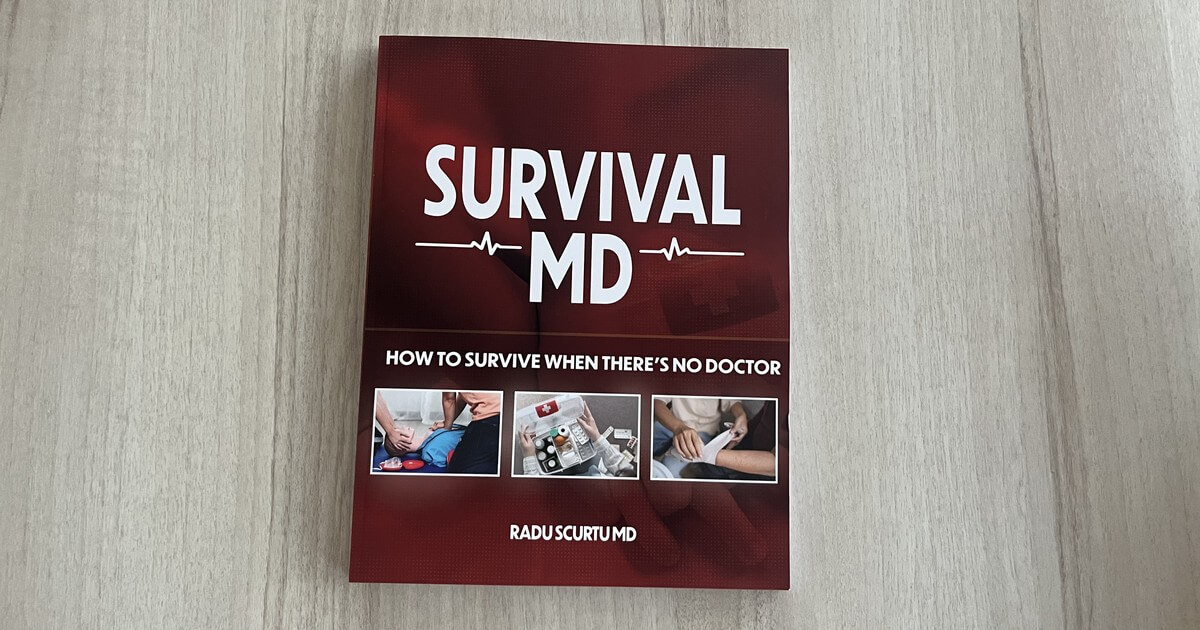
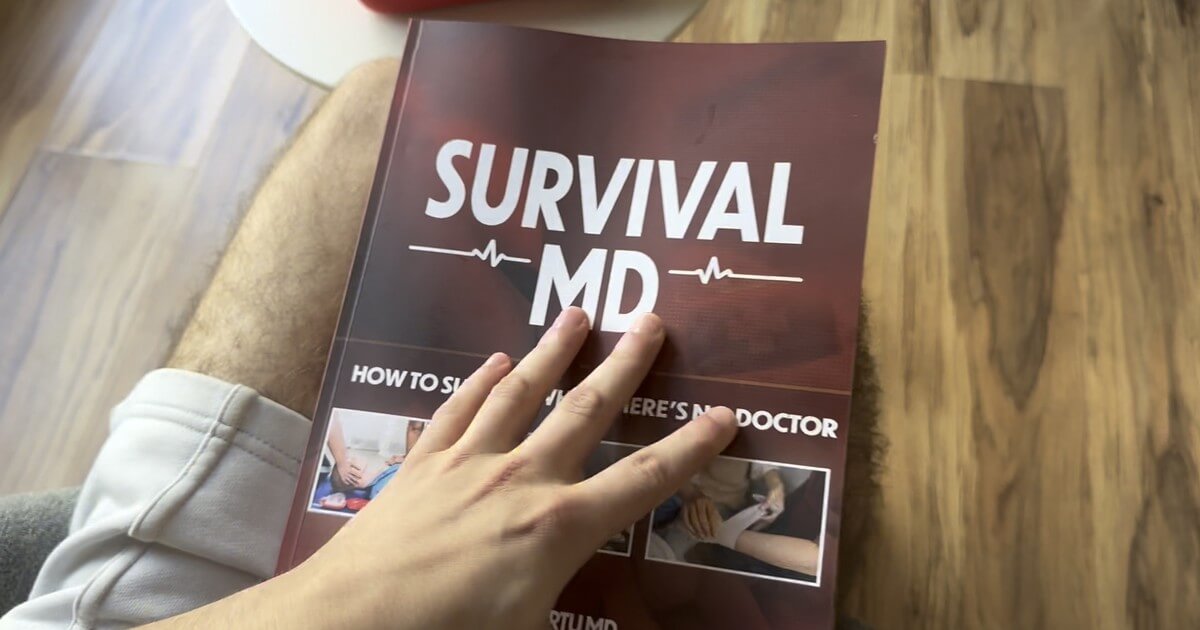
Survival MD is a full-color printed emergency medical manual written by surgeon Dr. Radu Scurtu. It's written for people with no medical training who may have to act before professional help arrives, or in situations where you can't reach a doctor at all.
After going through all of it, three things stood out most: how many common "first-aid" habits it says are wrong or dangerous, how much space it gives to topics other preparedness books skip (teeth, children, chronic medications, women's health), and how often it tells you to stop and get real care. It's not a replacement for a doctor or a hands-on class. It's the book you want on the shelf for the hour before you can reach one, and for the days when you can't reach one at all.
Why I Picked It Up
I've owned first-aid kits for years. What I didn't have was confidence that I'd know what to do with them if someone in my house got badly hurt and an ambulance was a long way off.
Most first-aid material I'd read stops at "call 911." Survival MD starts there and asks the next questions: what if help is late? And what if it doesn't come at all: a storm, a blackout, roads cut off, an ER that's overwhelmed? So I read it the way the introduction suggests, a chapter at a time, marking the pages I'd want to find fast.
Here's what I flagged.
12 Things That Stood Out in Survival MD
1. The first rule in the book is about what not to do
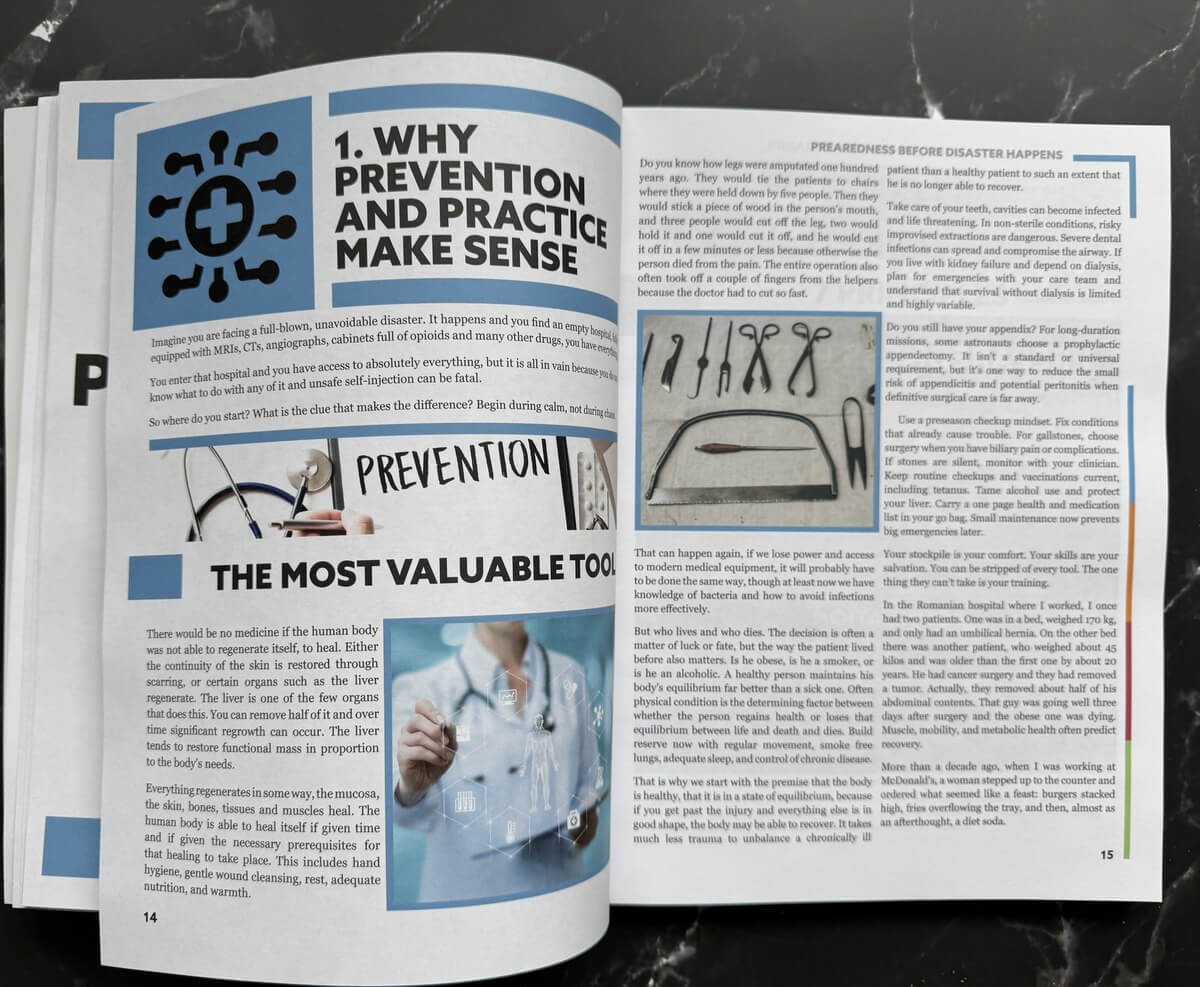
Before any bandages or medications, the book opens its "7 Principles to Save a Life" (p. 17) with the oldest rule in medicine: first, do no harm.
I didn't expect a survival book to tell me to slow down. This one does, again and again: understand the problem before you act, and pick the simplest safe option first. The other six principles build on that, and they quietly shape every chapter after them.
2. It corrects a concussion myth almost everyone believes
You've probably heard you should never let someone with a concussion fall asleep. Survival MD calls that advice outdated (p. 19 and p. 197): sleep matters for brain recovery, and the real danger lies elsewhere.
What the book tells you to do instead during the first 24 hours is something every parent of an active kid should know. It's on page 197, next to the Head Trauma Response Flowchart.
3. A common painkiller you should skip after a head injury
The Clinical Safety Note on page 196 names painkillers to avoid in the first day after a significant head hit and one to use instead. It also covers a warning sign involving the nose or ears that you should never try to "fix" yourself.
I had both of those backwards before reading this page.
4. You don't need a blood pressure cuff to recognize shock
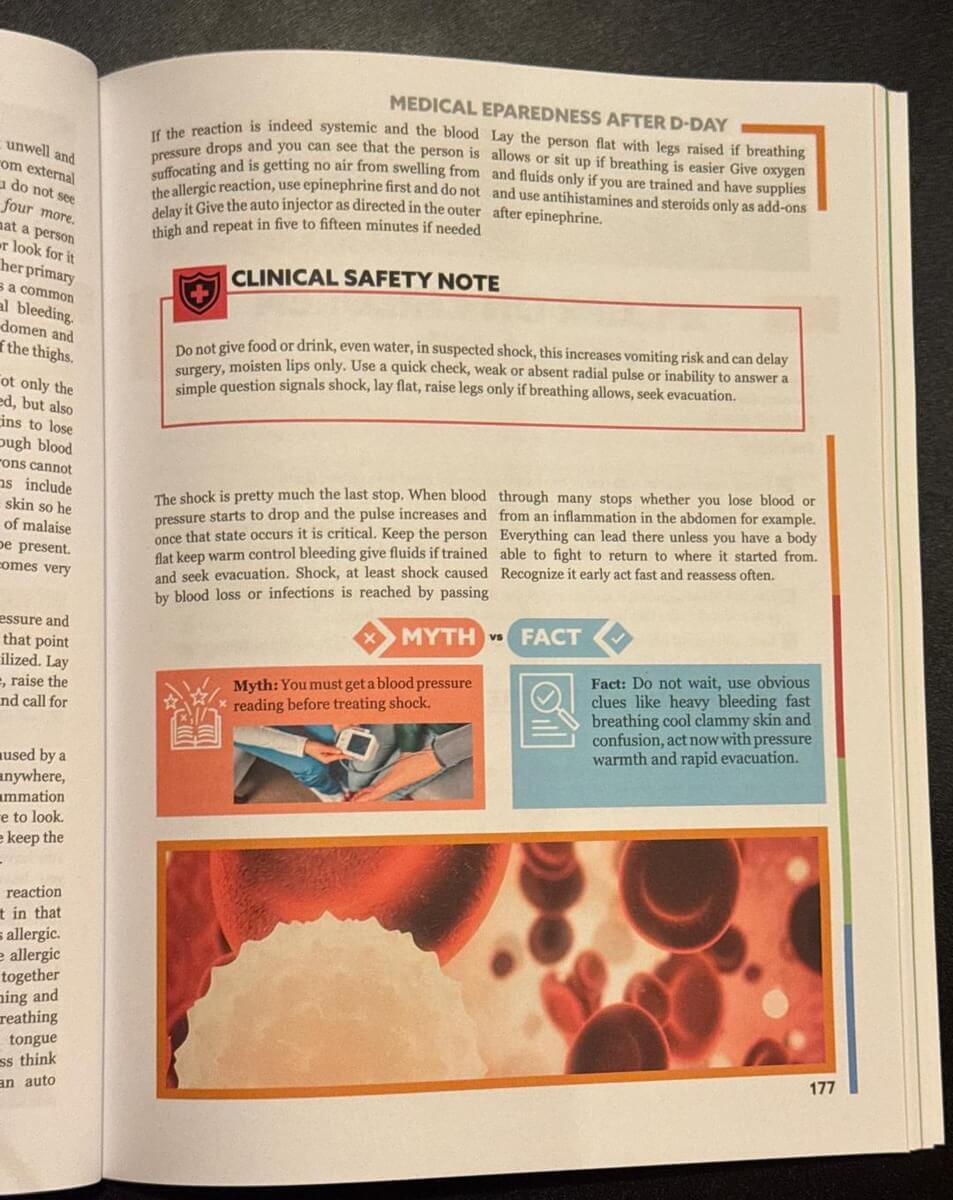
One Myth vs. Fact box (p. 177) goes straight at a dangerous assumption: that you need a blood pressure reading before you treat someone for shock. You don't, and waiting can cost time you don't have.
The book lists the visible clues that tell you shock is happening and the three things to do right away. The full Circulatory Collapse Flowchart is on the pages that follow.
5. "No pain" doesn't mean "no problem"
Page 158 makes a point that stuck with me: some of the most serious conditions can be painless or oddly mild. The book gives real examples, including one that's especially relevant if someone in your family has diabetes.
The same section has a short checklist of when it's time to see a doctor no matter what. I'd photocopy that page and tape it inside the medicine cabinet.
6. Some medications must never be stopped suddenly
The disease preparedness chapter (pp. 18–43) explains why people with chronic conditions often do fine in a crisis as long as their medication continues, and what can happen within days if it doesn't.
It names the categories where an abrupt stop is genuinely dangerous. If anyone in your house takes a daily prescription, this chapter alone justifies the book. Pair it with the medication rotation schedules on pages 81–83.
7. Children get their own rules, and they're stricter than you think
The children's medication section (pp. 79–80) is a reminder that kids are not small adults. It lists common adult remedies that are unsafe for children, explains why one cough syrup ingredient is particularly risky, and covers an age cutoff for over-the-counter cold medicines that surprised me.
There's also a Myth vs. Fact box on page 59 about baby formula during shortages that every new parent should read before an emergency, not during one.
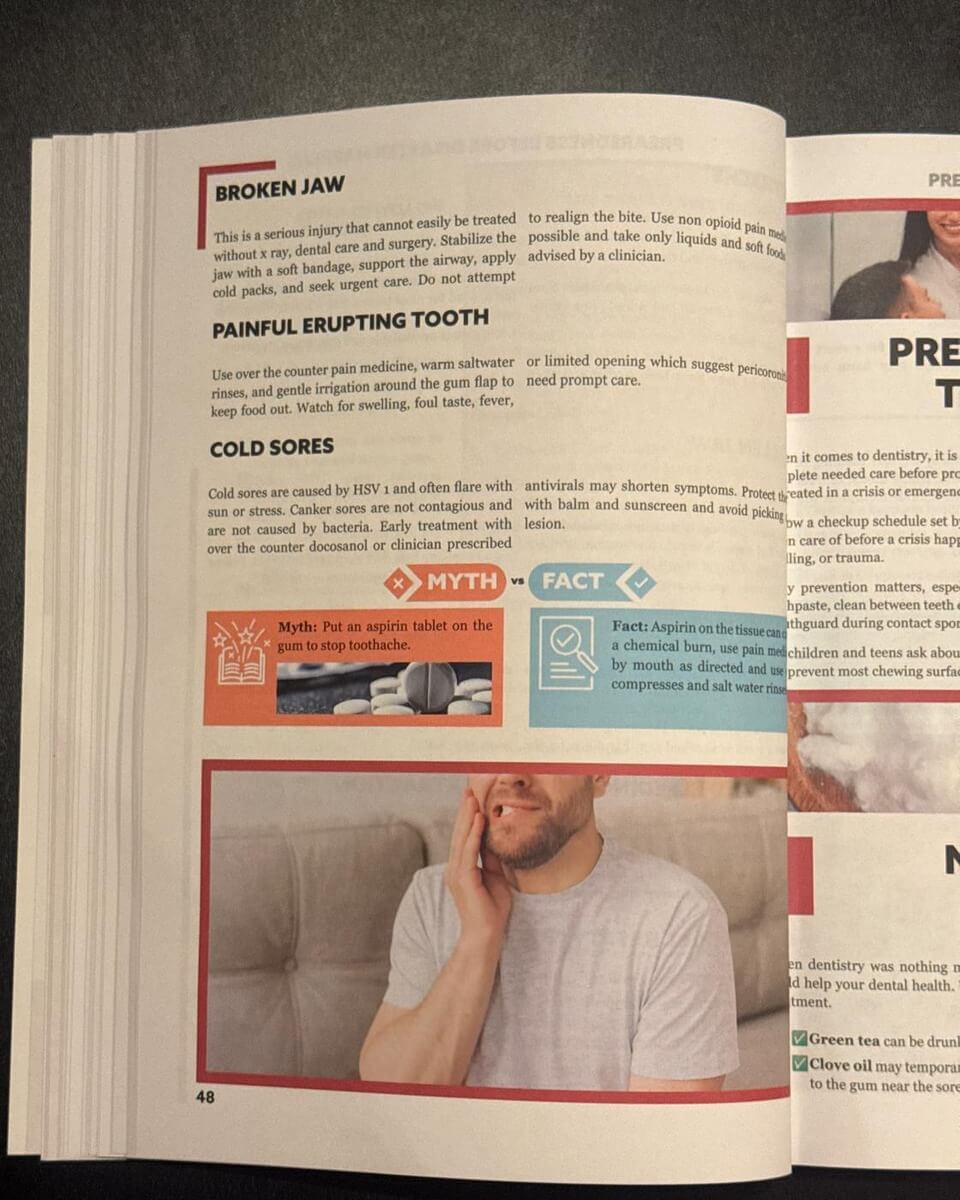
8. Don't put aspirin on a toothache
This one I'll give away because it's so common: placing an aspirin tablet on the gum next to a sore tooth can cause a chemical burn (p. 48).
What stood out more is that Survival MD has a whole chapter on dental emergencies: toothaches, swollen jaws, broken jaws, bleeding after an extraction. It also explains why a bad tooth can become a serious, even airway-threatening infection when no dentist is available. Hardly any other preparedness book I've read covers teeth at all.
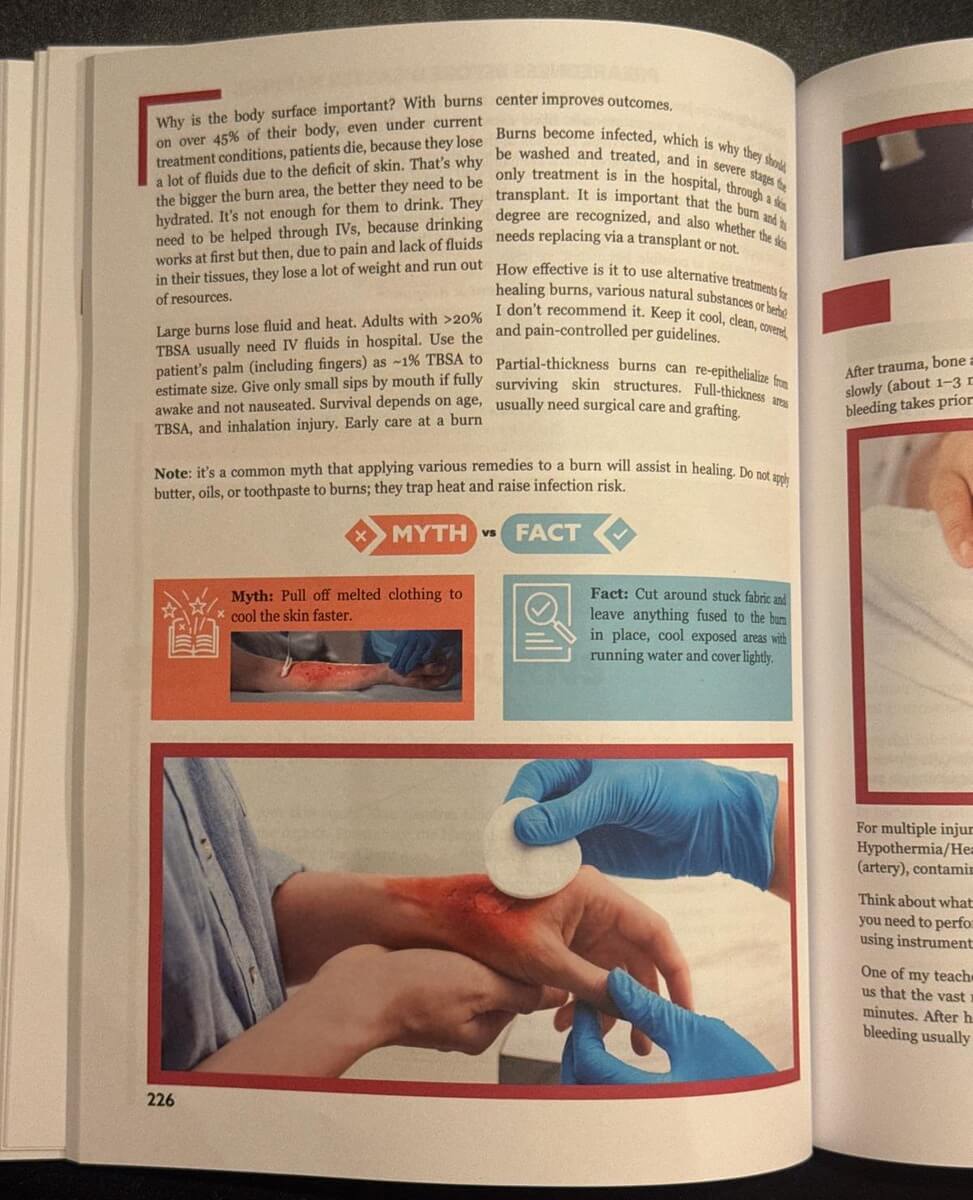
9. What not to put on a burn
The book is blunt here (p. 226): butter, oils and toothpaste don't help burns. They trap heat and raise the risk of infection. It also warns against pulling off clothing that has melted into the skin.
The rest of the chapter explains how to estimate how big a burn really is using something you always have with you, and when a burn is beyond home care.
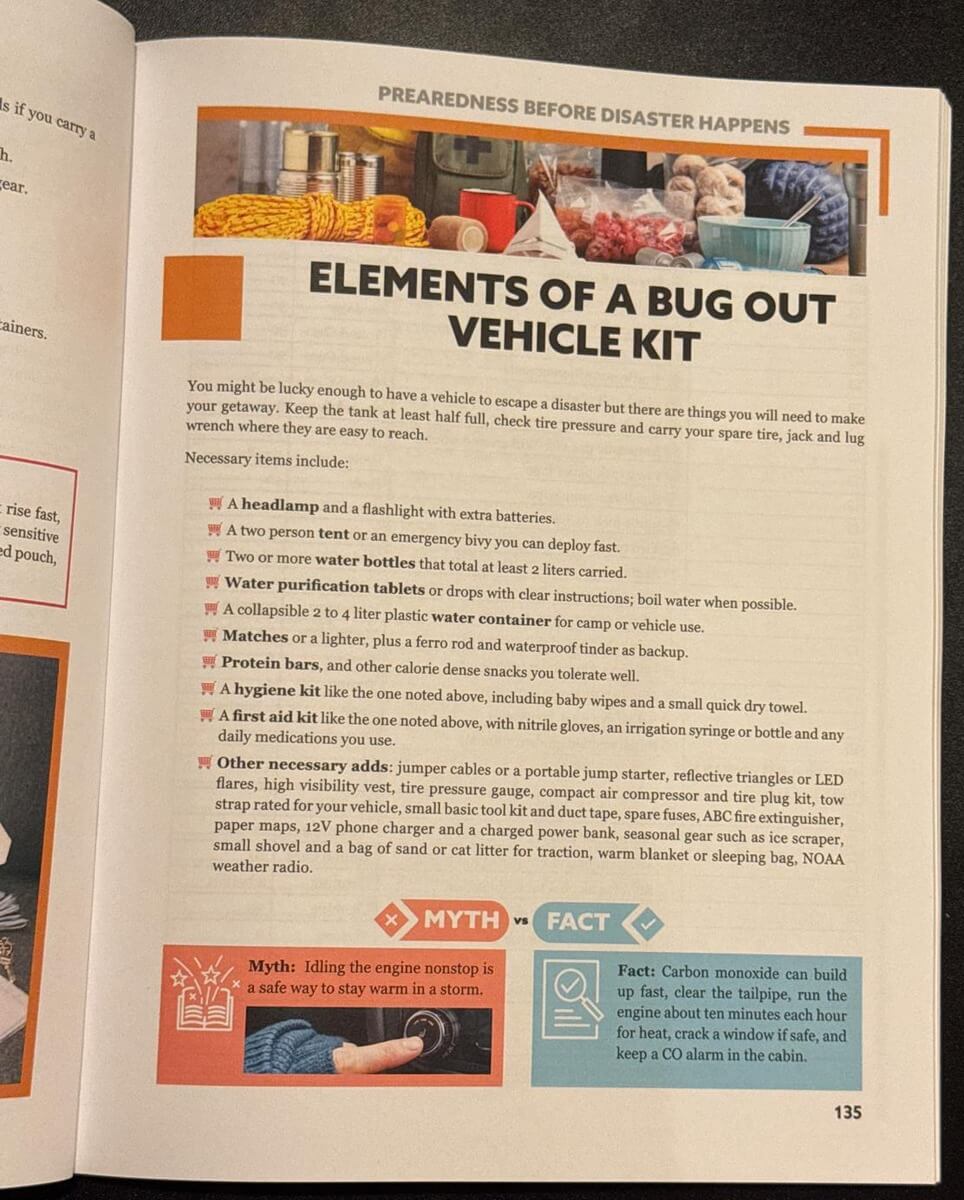
10. Staying warm in a stuck car can be deadly
In the vehicle kit section (p. 135), a Myth vs. Fact box tackles something a lot of people would do in a winter storm: leave the engine running nonstop for heat. The risk is carbon monoxide, and it builds faster than most people think.
The book gives a simple hourly routine for running the engine safely and one inexpensive item to keep in the car. A related box on page 155 explains why carbon monoxide can fool both your eyes and a pulse oximeter.
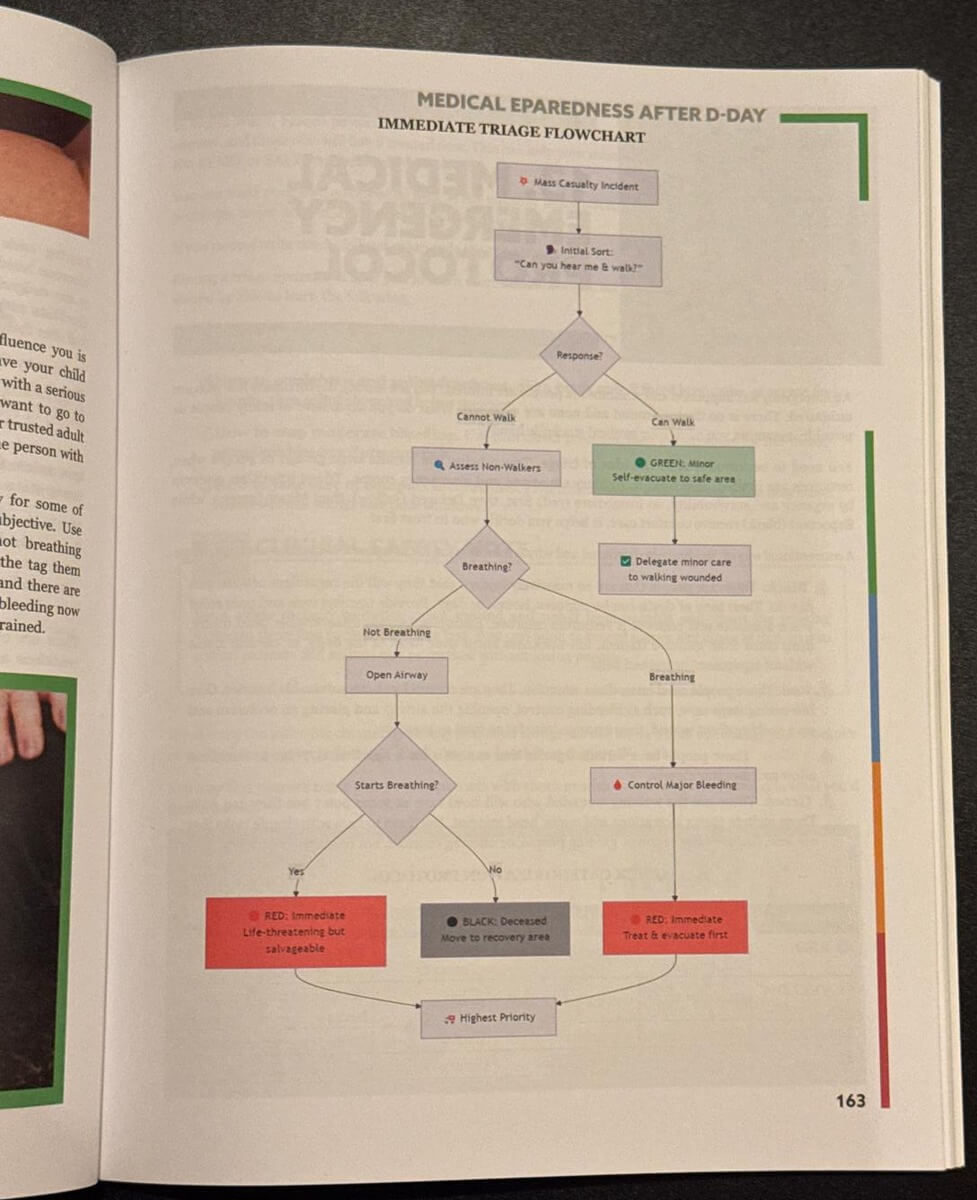
11. What to do when more than one person needs you
The "Moment X" section (p. 162) is the most emotionally honest part of the book. It's about triage: the moment you have to decide who to help first, possibly with your own child in the room.
Dr. Scurtu gives a single sentence to shout that instantly sorts a group of injured people, explains how to put bystanders and even the injured to work, and lays it all out in the Immediate Triage Flowchart on page 163. I hadn't seen this explained so plainly for non-professionals before.
12. Half the "stuff" people stockpile is the wrong stuff
The supply chapters are full of small corrections that save money and mistakes. A few I can share:
| Common belief | What Survival MD says |
|---|---|
| Sports drinks work like oral rehydration solution | Most are too sugary and too low in sodium (p. 70) |
| 99% isopropyl alcohol disinfects better than 70% | 70% works better on surfaces (p. 161) |
| Hydrogen peroxide helps wounds heal faster | It can damage healthy tissue and delay healing (p. 73) |
| Keeping medicine in the fridge makes it last longer | Many tablets absorb moisture there (p. 62) |
| Broad-spectrum antibiotics are "stronger" | Wider isn't better for routine infections (p. 75) |
Those are the easy ones. The harder questions are in the book: what to stock, how much per person for 30 days, how to rotate it, and how to keep antibiotics legally with your clinician's help. That's where it earns its price.
What I'd Change
To be fair, a few things:
- It's a manual, not a page-turner. It's 280+ pages and dense in places. Read it a chapter a week.
- Some skills need practice. The book itself says to use tourniquets and some procedures only if trained. I'd pair it with a local CPR or STOP THE BLEED class.
- It's written for the U.S. Medication names, rules and the "call 911" baseline assume an American reader.
None of these are dealbreakers. They're things to know going in.
Who I'd Hand This Book To
- Parents of young kids, especially the chapters on children's medication, CPR for babies and fever.
- Anyone caring for a parent or partner with a chronic condition who depends on daily medication.
- Rural families and anyone who lives far from an ER.
- People who already prep and have the food and water side covered but not the medical side.
- Anyone who's ever frozen in an emergency and promised themselves "next time I'll know what to do."
Is It Worth Buying?
For me, yes. Most of what stood out wasn't trivia. It was the kind of thing you'd only discover you got wrong at the worst possible moment.
Right now the printed full-color edition is $37 + shipping on the official site (listed regularly at $149). It also comes with four digital guides: one for children's emergencies, one on building a home medicine reserve, one on herbal first aid, and one on pet emergencies. There's a 60-day refund window where you keep the book and the bonuses.
If you want the full breakdown of chapters, bonuses and pricing, see our complete Survival MD review.
Quick Answers
Who wrote Survival MD?
Dr. Radu Scurtu, a surgeon who trained and worked in overloaded hospitals where equipment and staff were often scarce.
What's the most useful part of the book?
For most families, it's Section II, "Medical Preparedness After D-Day" (from p. 150): assessment, triage, CPR, shock, bleeding, burns and fractures. If someone in your home takes daily medication, the disease preparedness and medication chapters are just as important.
Does Survival MD cover children and babies?
Yes. It covers CPR and choking relief for children and babies, a dedicated children's medication section, and formula safety. The bonus guide When There's No Doctor For Your Child goes further.
Is it only for "preppers"?
No. Most of the book applies to everyday emergencies: a kitchen burn, a bad fall, a child's fever at night, a winter storm, a long wait for an ambulance. And it's built for the harder case too: when you simply can't get to a doctor at all.
Is Survival MD a PDF or a real book?
The main product is a printed, full-color book shipped to your door. The four bonus guides are digital.
Where can I buy it?
Through the official Survival MD website, where it comes with the 60-day guarantee and the four bonus guides.